Benjamin Moore Paint vs Valspar: Proven Winner
Quick Summary
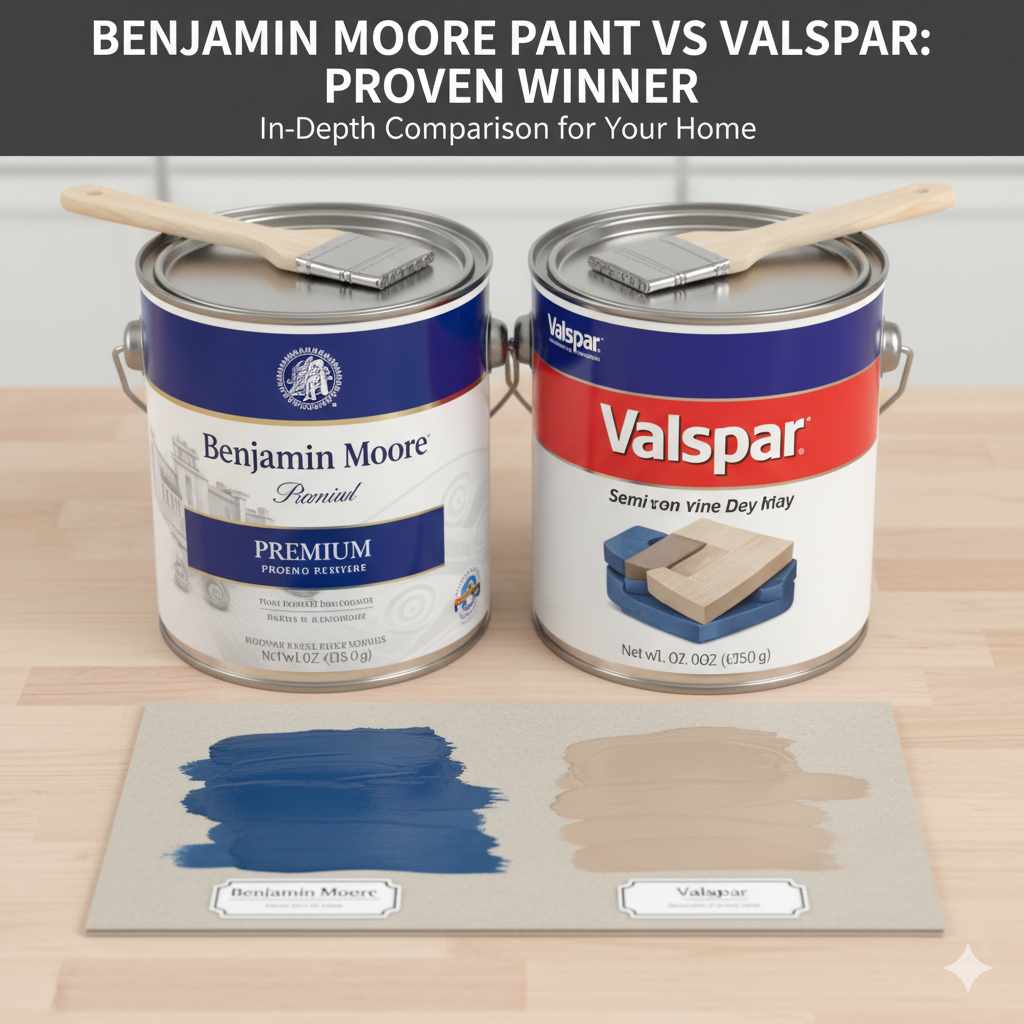
For most DIYers, Benjamin Moore often wins the paint vs. Valspar debate due to superior coverage, durability, and color accuracy. However, Valspar offers a budget-friendly alternative with good performance, especially for less demanding projects. Your best choice depends on your project’s needs and your budget.
Choosing the right paint can feel like a big decision, can’t it? You’re in the paint aisle, staring at all the options, and you wonder, “Which one is actually worth my hard-earned money and time?” Benjamin Moore and Valspar are two big names that pop up a lot. They both promise beautiful, lasting results, but which one truly delivers? It’s a common question for DIYers and homeowners, and frankly, it can be a bit confusing. Don’t worry, though! We’ll break down Benjamin Moore paint versus Valspar so you can make a confident choice for your next project. Let’s find out which brand might be the proven winner for you!
Benjamin Moore vs. Valspar: A Beginner’s Paint Showdown
As a DIY enthusiast and woodworker, I know the importance of good materials. Paint is no different! It’s the finishing touch that protects your wood and makes it look amazing. When it comes to painting walls, furniture, or any home project, Benjamin Moore and Valspar are two of the most popular choices. They’re found in homes and workshops everywhere. But what’s the real difference between them? Is one truly better than the other?
For many, the choice comes down to a few key things: how well the paint goes on, how long it lasts, the colors available, and of course, the price. We’ll dive into each of these areas to help you see which paint might be the best fit for your specific project. Ready to get a clearer picture?
Understanding the Paint Landscape: What We’re Comparing
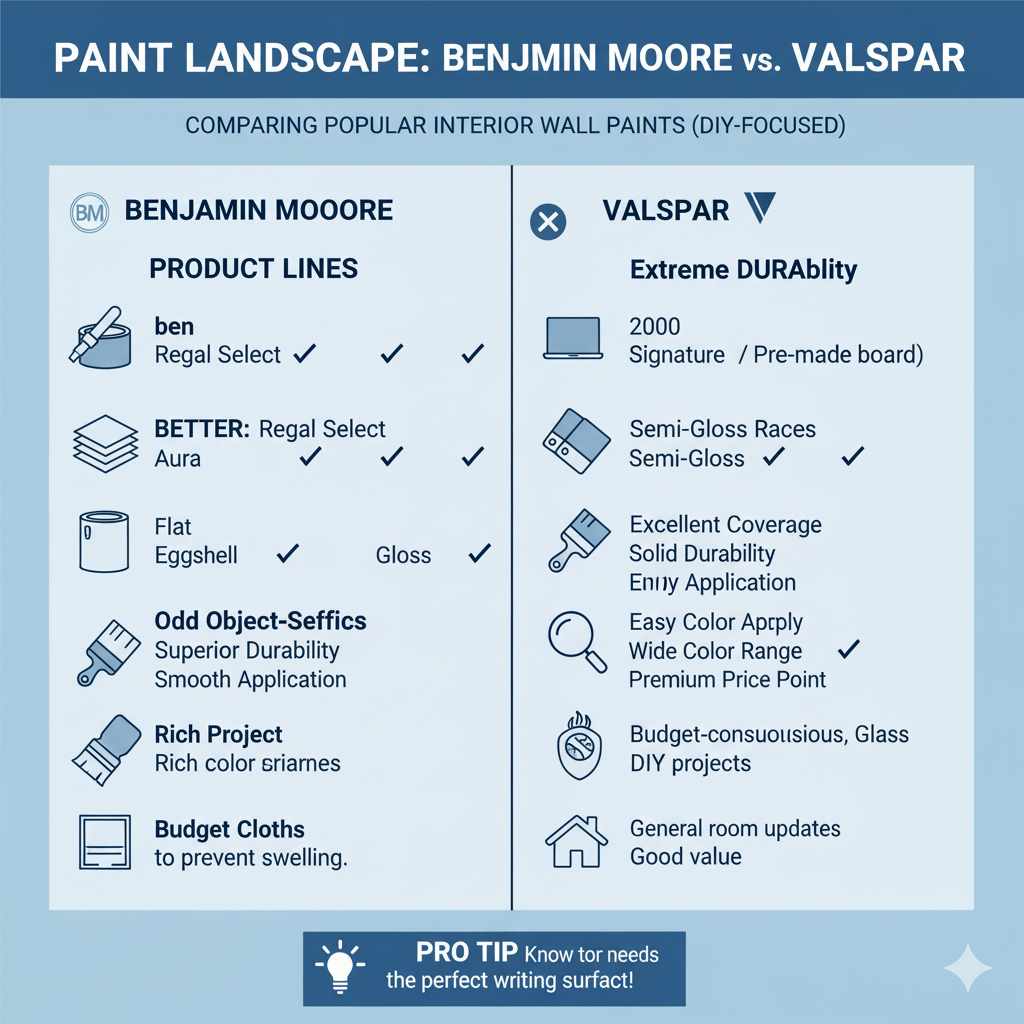
When we talk about Benjamin Moore and Valspar, we’re not just talking about one single type of paint. Both brands offer a wide range of products. This includes different sheens (like flat, eggshell, satin, semi-gloss, and gloss), primers, and specialized paints for various surfaces (like interior walls, exteriors, furniture, and cabinets). For this comparison, we’ll focus on their most popular interior wall paints, as that’s where many DIYers start. We’ll look at their standard, mid-range, and premium lines to give you a good overview.
It’s important to remember that paint performance can vary even within a brand. Generally, the more you pay, the higher the quality you can expect in terms of coverage, durability, and ease of application. Think of it like buying lumber – a knotty pine board will be cheaper and possibly harder to work with than a clear, high-grade maple.
Benjamin Moore: The Premium Choice
Benjamin Moore has a reputation for being a high-quality, premium paint brand. Many professional painters and serious DIYers swear by it. They’re known for their rich colors, excellent coverage, and lasting finish.
Key Benjamin Moore Lines to Consider:
- Regal Select: This is their most popular mid-range interior paint. It offers great coverage and is known for its scrubbability, making it a fantastic choice for busy households. It comes in various sheens.
- Aura: This is one of their premium lines. Aura is prized for its rich color depth, superior durability, and often requires fewer coats thanks to its excellent coverage. It’s a bit pricier but many feel it’s worth it.
- Ultra Spec: Often found in commercial settings or for contractors, this line offers good performance at a slightly more accessible price point than Aura, while still maintaining Benjamin Moore’s quality standards.
Pros of Benjamin Moore Paint:
- Exceptional Coverage: You often need fewer coats to achieve full color, saving you time and paint.
- Durable Finish: Benjamin Moore paints are known for their resistance to wear, fading, and staining.
- Rich, Accurate Colors: Their color palettes are extensive and colors tend to look exactly as they do on the swatch once dry.
- Smooth Application: The paint typically has a nice, consistent texture that glides easily onto surfaces.
- Low VOC Options: Many of their paints are formulated with low or zero Volatile Organic Compounds (VOCs), which is better for indoor air quality. You can learn more about VOCs from the U.S. Environmental Protection Agency (EPA).
Cons of Benjamin Moore Paint:
- Higher Price Point: Benjamin Moore is generally more expensive than many other brands, including Valspar.
- Availability: You can’t find it at every big-box store. It’s typically sold at independent Benjamin Moore retailers, which might require a special trip.
Valspar: The Budget-Friendly Contender
Valspar is another well-known paint brand, often found in major home improvement stores. They are generally more affordable than Benjamin Moore, making them an attractive option for homeowners on a budget or for larger projects where cost is a major factor.
Key Valspar Lines to Consider:
- Valspar® Signature®: This is one of their top-tier interior paints. It’s a paint and primer in one, designed for good coverage and durability.
- Valspar® Optimum®: This line is marketed for its durability and stain resistance, often promising excellent performance for high-traffic areas.
- Valspar® Interior Paint: Their standard interior paint line offers basic coverage and a decent finish at a very accessible price.
Pros of Valspar Paint:
- Affordability: Valspar is typically less expensive per gallon than Benjamin Moore, which can save a lot on bigger jobs.
- Widespread Availability: You can find Valspar paints at major retailers like Lowe’s, making it convenient to pick up.
- Good Coverage (in premium lines): Their higher-end paints offer decent coverage, often comparable to mid-range brands.
- Variety of Sheens and Finishes: Like Benjamin Moore, they offer a wide array of options for different needs.
Cons of Valspar Paint:
- Coverage Can Vary: While their premium lines are good, some users find that Valspar, especially in its lower-end products, requires more coats than Benjamin Moore for full opacity.
- Durability May Be Less: Compared to Benjamin Moore’s premium offerings, some Valspar paints may not hold up as well to scrubbing or wear over the long term.
- Color Accuracy: Sometimes the final dried color can be slightly different from the swatch, especially with darker or highly saturated colors.
- Drip and Sag: Some users report that certain Valspar formulations can be prone to dripping or sagging if not applied carefully.
Benjamin Moore vs. Valspar: A Feature-by-Feature Comparison
Let’s break down how these two brands stack up in key areas that matter to DIYers. This will give you a clearer picture of where each one shines.
1. Coverage and Hiding Power
This is about how much paint you need to cover your surface. Good coverage means fewer coats, which saves time, labor, and money. Benjamin Moore, especially in their Aura and Regal Select lines, generally excels here. They often achieve full opacity (meaning the old color is completely hidden) in two coats, sometimes even one for lighter colors or touch-ups. Valspar’s coverage is good, particularly in their Signature and Optimum lines, but you might find yourself needing a third coat more often, especially if you’re painting over a dark color with a light one.
2. Durability and Washability
How well does the paint hold up to everyday life? Can you scrub off crayon marks or food splatters without damaging the finish? Benjamin Moore paints are well-known for their superior durability and scrubbability. Their premium lines, like Aura, are designed to withstand repeated washing without losing their sheen or color. Valspar’s more premium lines also offer good durability and stain resistance, but many users find that Benjamin Moore’s finishes are just a bit tougher and more forgiving over time. For high-traffic areas like hallways or kitchens, this can be a significant factor.
3. Color Selection and Accuracy
This is where beauty meets reality. Both brands offer hundreds, if not thousands, of colors. Benjamin Moore is often praised for its extensive and sophisticated color palettes. Their colors are also known for their accuracy – what you see on the swatch is very close to what you get on the wall once dry. While Valspar also has a vast color selection, some DIYers report that colors can sometimes shift slightly once the paint dries, especially with very bold or complex hues. If precise color matching is critical, Benjamin Moore often has the edge.
4. Ease of Application
How does the paint feel as you’re applying it? Does it go on smoothly? Benjamin Moore paints are generally praised for their smooth, creamy texture and good flow. They tend to level out nicely, minimizing brush strokes and roller marks. Valspar paints also apply well, but occasionally, some formulations might feel a bit thicker or have a tendency to drip more, requiring a bit more attention during application. This is subjective, and a good brush or roller can make a difference for both brands.
5. Price / Value
Here’s where the biggest difference often lies. Benjamin Moore is a premium product, and it comes with a premium price tag. A gallon of Benjamin Moore Regal Select might cost you $50-$70, with Aura being even more. Valspar is generally more affordable, with their mid-range to higher-end paints often falling in the $30-$50 range per gallon. For a single room, the price difference might not be huge, but for painting an entire house, it can add up significantly. The question here is whether the added cost of Benjamin Moore provides enough benefit in coverage and durability to justify it for your specific project.
6. Environmental Considerations (VOCs)
For those concerned about indoor air quality, both brands offer low-VOC and zero-VOC options. Benjamin Moore has been a leader in developing eco-friendly formulations. Valspar also has lines that are low in VOCs. It’s always a good idea to check the product details for specific VOC content if this is a primary concern for you. You can find resources on VOCs from organizations like the New York State Department of Health.
Head-to-Head: Key Performance Metrics
To help visualize the differences, let’s look at a table comparing typical performance aspects.
| Feature | Benjamin Moore (Typical Mid-to-High Range) | Valspar (Typical Mid-to-High Range) |
|---|---|---|
| Coverage | Excellent; often 2 coats for full opacity. | Good; may require 2-3 coats for full opacity. |
| Durability | Superior; high scrubability and resistance to wear/fading. | Good; solid performance, but may not be as tough as BM premium lines. |
| Color Accuracy | Excellent; colors true to swatch. | Good; occasional minor shifts from swatch to dry color. |
| Ease of Application | Very smooth, good flow, levels well. | Good; can be slightly prone to drips/sags depending on formulation. |
| Price Per Gallon | $50 – $70+ | $30 – $50 |
| Availability | Benjamin Moore retailers. | Major home improvement stores. |
When to Choose Benjamin Moore:
- You need the absolute best coverage and are painting over a dark color or a color with high contrast.
- Durability and washability are top priorities (think kids’ rooms, kitchens, hallways).
- Color accuracy is crucial for your design vision.
- You’re willing to invest a bit more for potentially fewer coats and long-lasting results.
- You don’t mind a short trip to a specialized paint store.
When to Choose Valspar:
- Budget is a primary concern, and you need to cover a large area economically.
- You’re painting a room with less wear and tear, or doing a quick refresh.
- Convenience is key, and you want to pick up paint at your local big-box store.
- You are painting over a similar color or a light, neutral base.
- You’re doing a project where minor color shifts or slightly less extreme durability aren’t deal-breakers.
Applying Paint Like a Pro (Tips for Both Brands)
No matter which brand you choose, a little preparation and good technique will go a long way. Here are some tips to help your project turn out beautifully:
- Prep is Key: Clean your walls thoroughly to remove any dust, grease, or grime. Patch any holes or cracks and sand them smooth. For glossy surfaces, lightly sand them to help the new paint adhere.
- Use a Good Primer: If you’re painting over a dark color, a stain, or a glossy surface, a high-quality primer is your best friend. It ensures better adhesion and coverage for your topcoat. Both brands offer good primers.
- Cut In First: Use an angled brush to paint along the edges of the ceiling, corners, and around trim. This is called “cutting in.”
- Use a Roller Next: For the main wall areas, use a roller. Work in sections, applying paint in a slightly overlapping “W” or “M” pattern. This helps ensure an even coat without roller marks.
- Maintain a Wet Edge: Always paint from a dry area into a wet area. This helps to avoid lap marks (visible lines where the paint has dried before you applied the next stroke).
- Don’t Skimp on Coats: Even with great coverage, two thin coats are almost always better than one thick coat. This leads to a more even finish and better durability.
- Allow Proper Drying Time: Check the paint can for recoat times. Applying the second coat too soon can cause peeling or adhesion issues.
The Verdict: Is There a “Proven Winner”?
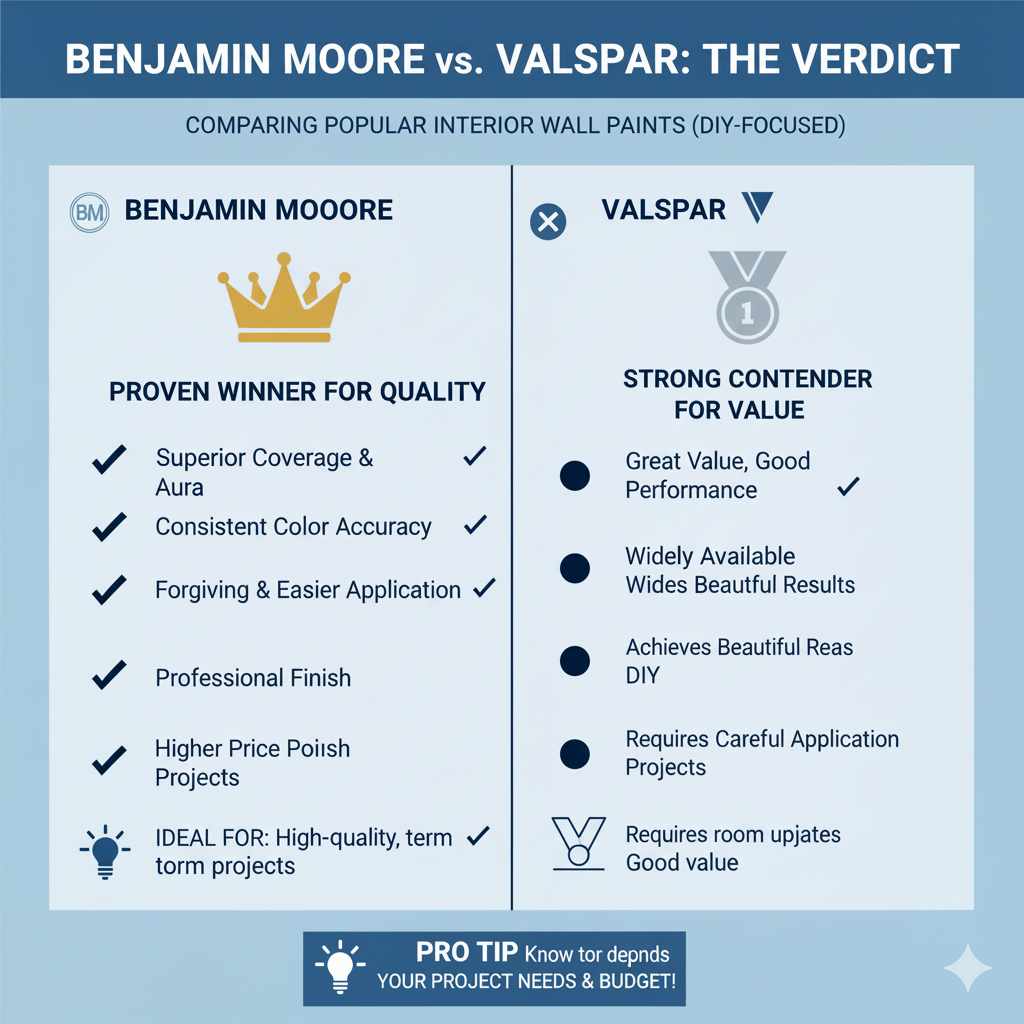
When pitting Benjamin Moore paint vs. Valspar head-to-head, many experienced painters and discerning DIYers will lean towards Benjamin Moore for its generally superior performance. The exceptional coverage, robust durability, and consistent color accuracy of Benjamin Moore paints often make up for the higher price tag. It tends to be a more forgiving paint, leading to fewer headaches and a more professional-looking finish, especially for beginners.
However, this doesn’t mean Valspar is a “bad” paint. Far from it! Valspar offers great value, especially in its higher-end product lines. For projects where budget is a major consideration, or for areas that don’t see heavy wear, Valspar can be an excellent choice. It’s widely available and can achieve beautiful results with careful application.
So, who is the proven winner? For most people prioritizing quality, ease of use, and long-term performance, Benjamin Moore often takes the crown. But for smart budget-conscious projects, Valspar is a very strong contender. The “winner” ultimately depends on your specific project needs, your budget, and what you value most in a paint.
Frequently Asked Questions (FAQ)
Q1: Which paint brand covers better, Benjamin Moore or Valspar?
Generally, Benjamin Moore paints, especially their premium lines like Aura and Regal Select, are known for superior coverage. This means you might need fewer coats to achieve full color, saving you time and paint. Valspar’s coverage is good, particularly in their higher-end lines, but it might sometimes require an extra coat.
Q2: Is Benjamin Moore paint worth the extra cost?
For many, yes. The higher cost of Benjamin Moore is often justified by its excellent coverage (fewer gallons needed), superior durability that lasts longer, and more accurate color replication. If you are looking for a long-lasting, easy-to-maintain finish and are willing to invest a bit more, Benjamin Moore is often considered worth it.
Q3: Can I get Valspar paint in zero-VOC options?
Yes, Valspar offers various paint lines that are low in VOCs. You can check the product labels or the manufacturer’s website for specific formulations that meet your needs for reduced indoor air pollution. Many of their interior paints have been developed with environmental considerations in mind.