Does MDF Paint Well? Yes – With the Right Primer
MDF paints well on its smooth, grain-free faces, but the cut edges are 5-10 times more porous and turn fuzzy or blotchy without sealing first. Skipping edge primer is the single most common reason a painted MDF project looks amateurish, even after two topcoats. This guide covers sealing edges with shellac-based primer, the right sanding-grit sequence, and which paints hold up best on MDF furniture and cabinets.
MDF Basics: Why Its Surface Takes Paint So Well
Best MDF Primer Pick
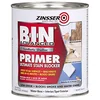
Zinsser B-I-N Advanced Synthetic Shellac Primer, 1 Qt ($23.39)
Shellac-based primer that seals porous MDF edges and faces in one coat and dries fast enough to sand and topcoat the same day.
- Best for: Sealing porous MDF edges and faces before any topcoat
- Why we picked it: Dries to the touch in about 25 minutes and recoats in 45, so edges and faces get primed the same afternoon
- Main drawback: Strong solvent odor while wet, needs denatured alcohol for cleanup
Compare more MDF primer and paint options
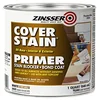 Option 1 Zinsser Cover Stain Oil-Based Primer, Qt ($18.48)
|
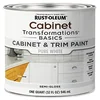 Option 2 Rust-Oleum Cabinet & Trim Paint, Pure White Qt ($19.29)
|
 Option 3 3M Softback Sanding Sponge, Fine Grit, 20-Pack ($31.90)
|
As an Amazon Associate we earn from qualifying purchases.
MDF (medium-density fiberboard) is made from wood fibers bonded with wax and urea-formaldehyde resin under heat and pressure — roughly 82% wood fiber, 9% resin, and the rest water and paraffin wax. Because those fibers press into a uniform, grain-free surface, MDF paints smoother than solid wood or plywood, with no grain lines telegraphing through the finish.
What Is MDF?
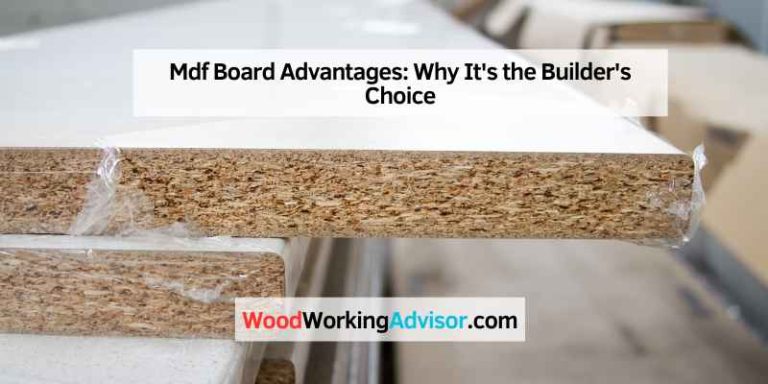
MDF stands for medium-density fiberboard. It is an engineered wood panel made from wood fibers pressed under heat with resin and wax, rather than sawn from a log like solid wood or layered like plywood. That makes it denser and more uniform than particle board, with a smooth surface that is ideal for painting. It is also cheaper than solid wood and easy to cut and shape, which is why it is a popular choice for MDF furniture, cabinets, and shelving.
Common Uses of MDF
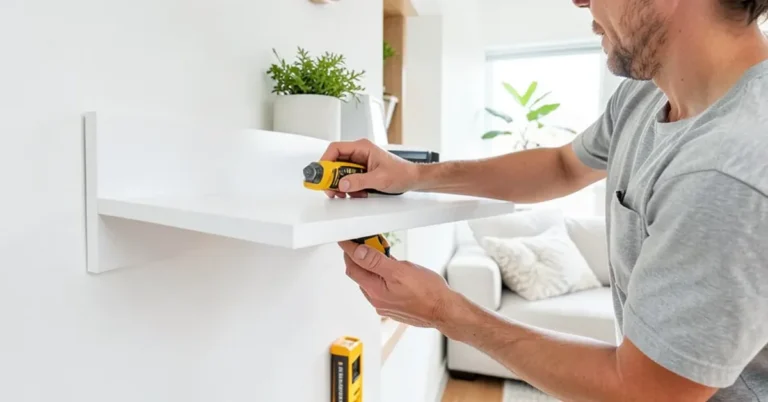
MDF shows up in cabinet doors, baseboards, crown molding, bookshelves, and interior door skins — anywhere a smooth, paintable surface matters more than natural wood grain. Most cabinet and built-in work uses 3/4-inch (18mm) MDF, which balances rigidity with fastener-holding strength.
Preparing MDF for Paint: The Sanding Sequence That Actually Works
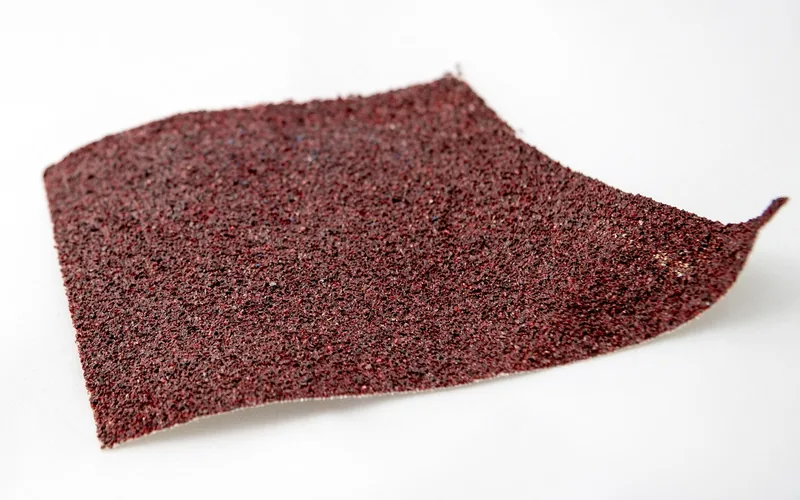
Sand raw MDF in three grits: 120 grit first to cut through any waxy mill glaze and give primer something to grip, 150 grit to knock down raised fibers, then 220 grit to remove leftover scratches before priming. Do not go finer than 220 before the first coat of primer — overly fine sanding burnishes the fibers and actually reduces adhesion. Save a light 320-grit pass for after priming, to knock down any fuzz the primer raises. For a full walkthrough of cleaning, filling, and sanding before you open the primer can, see our guide to prepping MDF for paint.
📊 Wear an N95-rated mask or better when sanding or cutting MDF. MDF is bonded with urea-formaldehyde resin, and California’s CARB Phase 2 rule caps MDF formaldehyde emissions at 0.11 ppm — a limit set specifically because the fine dust and resin content make standard dust masks inadequate. Source: California Air Resources Board, Composite Wood Products Program
Priming MDF: Why Water-Based Primer Fails on Raw MDF
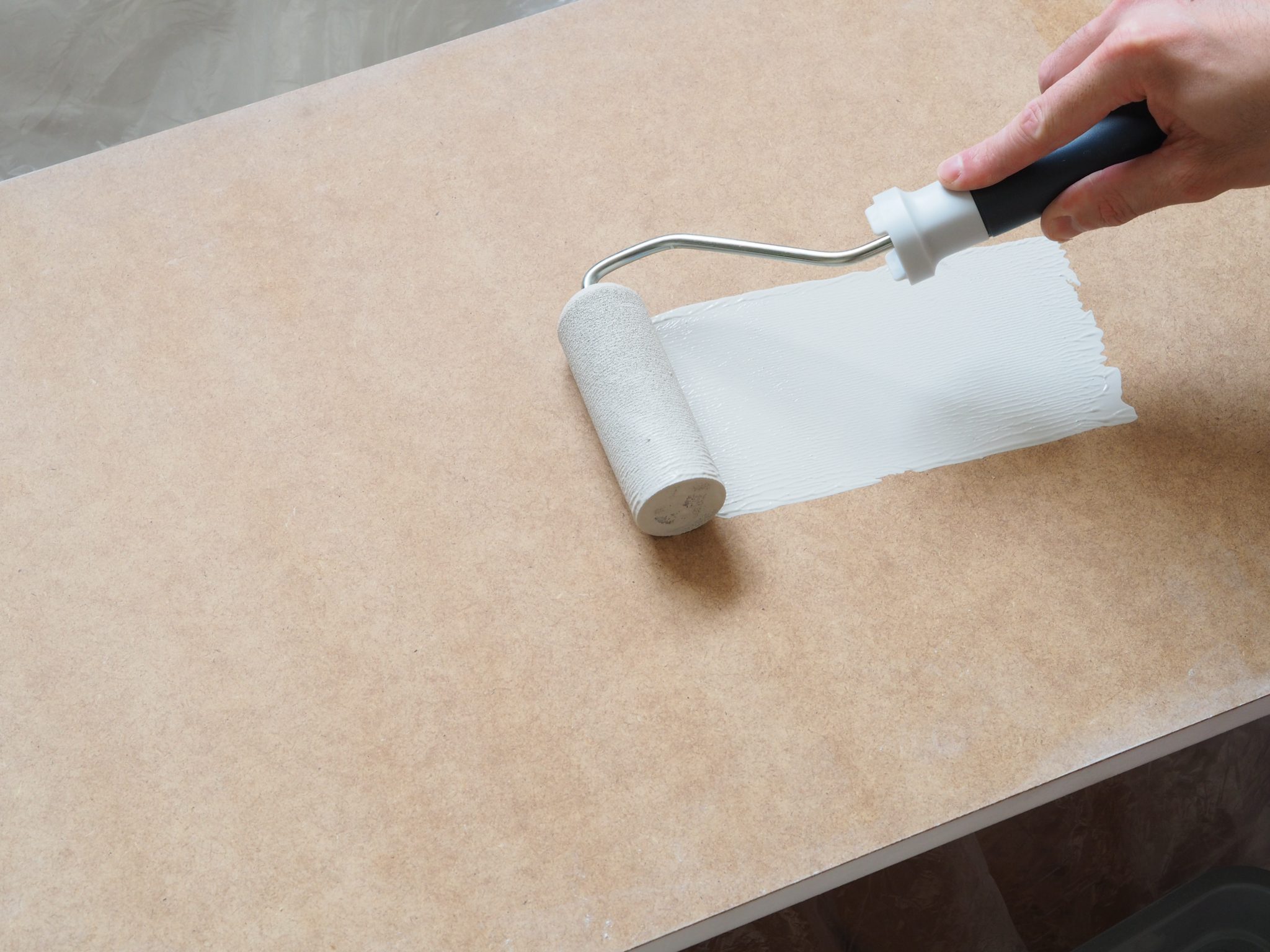
Plain water-based latex primer raises MDF’s fibers on the face and swells the cut edges — sanding afterward will not fully undo it. A shellac-based or oil-based primer seals the surface instead of soaking into it, which is why professional painters standardize on one of the two. Prime the edges first with an extra coat since they are the most porous part, then prime the faces.
“B-I-N shellac-based primer dries to the touch in 20-25 minutes and can be recoated in 45 minutes at 70°F — fast enough to seal, sand, and prime MDF edges and faces in a single afternoon.”
For a full breakdown of when to reach for shellac-based B-I-N versus oil-based Cover Stain versus a water-based MDF-rated primer, see our guide to picking the right primer for MDF.
| Product Type | Dry / Recoat Time | Best For |
|---|---|---|
| Shellac-based primer (Zinsser B-I-N) | Recoat in 45 min | Furniture, cabinets, fastest turnaround |
| Oil-based primer (Zinsser Cover Stain) | Recoat in 4-24 hrs | Baseboards, trim, hardest edge finish |
| MDF-rated water-based primer | Recoat in 2-6 hrs | Low-odor indoor projects, if MDF-specific |
| Acrylic latex topcoat | Recoat in 2-4 hrs | Furniture color coat over primer |
Painting Techniques: Spray, Roller, or Brush?
A foam roller or fine-finish sprayer gives the smoothest results on MDF’s flat faces — natural bristle brushes tend to leave faint lines on a surface this uniform. Use a brush only to cut in on edges and corners, then roll or spray the open faces. Apply several thin coats rather than one heavy one; thick coats are the main cause of drips, uneven texture, and longer dry times.
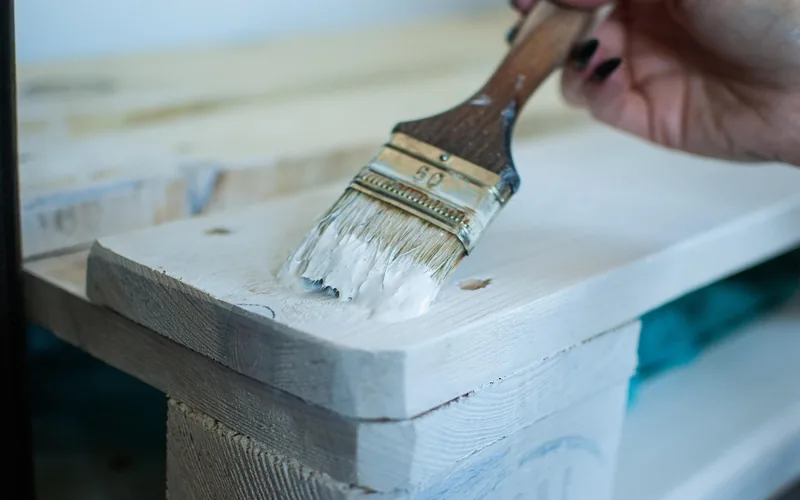
For the complete step-by-step process, from filling screw holes to final topcoat, see our full guide to the best way to paint MDF.
Best Paint Types for MDF Furniture and Cabinets
Acrylic latex paint is the easiest choice for most MDF furniture: it cleans up with water, dries fast, and flexes slightly as MDF expands and contracts, which reduces cracking at joints. Oil-based enamels and hybrid alkyd paints cure to a harder, more chip-resistant finish and are worth the extra dry time on cabinets and high-touch pieces. For sheen, semi-gloss or gloss suits MDF better than matte — the smooth, grain-free surface takes shine evenly and semi-gloss wipes clean more easily, which matters since MDF is more moisture-sensitive than plywood in cabinet applications. For a deeper comparison of oil- vs. water-based options and why MDF’s cut edges need their own prep step, see our guide on what paint to use on MDF wood.
Finishing Touches
Sealing Painted MDF
A clear topcoat — water-based polyurethane for light colors, since oil-based topcoats yellow over time — adds scratch and moisture resistance on top of the paint itself. Two to three thin coats is standard for furniture; kitchen cabinets benefit from three, since they see daily handling and steam.
Enhancing Durability
Let paint cure fully before hard use — most paints feel dry within hours but take days to reach full hardness, and a hybrid alkyd-in-water paint can cure to roughly 2B pencil hardness once fully set. Avoid setting anything on a freshly painted surface for at least a week, and keep painted MDF away from standing water — a spilled glass left overnight can cause permanent swelling even through paint.
Common Mistakes When Painting MDF
- Skipping the primer: the single most common reason a painted MDF project fails months later, even if it looks fine on day one.
- Neglecting the edges: cut edges absorb far more primer and moisture than the faces — treat them as their own step, not an afterthought.
- Rushing between coats: recoating before the previous layer cures traps moisture and causes bubbling or a soft finish.
- Applying thick coats: heavy coats drip, texture unevenly, and take far longer to dry than several thin ones.
- Mixing incompatible products: an oil-based topcoat over water-based primer that has not fully cured is a common cause of bubbling.
Maintenance Tips for Painted MDF
Dust painted MDF with a soft, dry cloth regularly, and wipe spills immediately rather than letting moisture sit on the surface or pool at edges. For fingerprints or light grime, a barely damp cloth with a drop of dish soap works — dry the surface fully afterward. Keep a small amount of your matching paint on hand; a light sand and touch-up on chips or scuffs, done promptly, prevents moisture from getting under the finish at that spot. If you need to strip old paint entirely before repainting, sand rather than use a heavy chemical stripper, which can oversaturate the fibers.
Frequently Asked Questions
What kind of paint do you use on MDF?
Acrylic latex paint works for most MDF furniture and is the easiest to apply and clean up. Oil-based enamels or hybrid alkyd paints give a harder, more chip-resistant finish and are worth using on cabinets and high-traffic pieces. Either way, prime the MDF first — the paint choice matters less than the prep underneath it.
Can you paint straight onto MDF without primer?
No, not for a durable result. Skipping primer lets MDF’s porous fibers soak up paint unevenly, leaving a blotchy, patchy finish, and it’s the leading cause of paint peeling months later. A handful of enamel or chalk-style paints claim no-primer adhesion, but even their own manufacturers recommend priming raw MDF edges first.
Is it better to spray or brush paint MDF?
A fine-finish sprayer gives the smoothest possible result on MDF’s flat faces since it leaves no brush texture, but it needs good ventilation and practice on scrap first. For most DIYers, a foam roller on the faces and a brush only at edges and corners gets a nearly identical result with far less overspray risk.
Why is paint not sticking to MDF?
Paint usually fails to bond on MDF because the surface wasn’t sanded or primed before application, because a water-based primer was used on raw MDF and raised the fibers, or because a new coat went on before the previous one fully cured. Clean, sand to 220 grit, prime with a shellac- or oil-based product, and let each coat cure on schedule.
Do MDF edges need special preparation before painting?
Yes. Cut edges expose raw fiber that absorbs primer and paint 5-10 times faster than the compressed face, and this mismatch is the single biggest cause of fuzzy or blotchy results on painted MDF. Give edges an extra coat of primer beyond what the faces get, and sand lightly between coats to knock down raised fibers.
Is water-based or oil-based primer better for MDF?
Oil-based or shellac-based primer is the safer default for MDF, since it seals the surface with a solvent carrier that won’t raise the fibers the way water can. A quality MDF-rated water-based primer can work too, but only if it’s specifically formulated for composite wood — a standard all-purpose water-based primer will swell raw MDF edges.
Conclusion
MDF paints well and takes color more evenly than solid wood, provided the porous edges get sealed before anything else happens. Sand to 220 grit, prime edges and faces with a shellac- or oil-based product, then apply thin coats of your chosen topcoat and let each one cure fully. Skip any one of those steps and the fuzzy-edge, blotchy-face problems that give MDF a bad reputation with painters will show up within weeks.
Sponsored / affiliate links. As an Amazon Associate I earn from qualifying purchases. I may earn additional commission from eligible campaigns.