Best Biscuit Joiners for DIY Woodworkers (2026): We Compared
The best biscuit joiner for most DIY woodworkers is often a corded 4-inch plunge model with an adjustable fence, positive depth stops, and a dust port. Choose cordless only for light trim work and a larger plate capacity for cabinet panels. Pick the wrong one and you get weak alignment, loose glue joints, and wasted material. This guide compares biscuit joiners by project type, failure mode, workspace, and budget, so you can match the tool to the job.
Quick comparison
| Product | Badge | Best for | Price | ||
|---|---|---|---|---|---|
 |
DEWALT 20V MAX XR Biscuit Joiner, Brushless, Tool OnlyDEWALT | Our pick | 20V MAX XR · Brushless · Tool Only | $239.00
Price as of 15 Oct 2026
|
View |
 |
BOSCH GFF18V-086N 18V Brushless Biscuit Joiner – CordlessBosch | Upgrade pick | 18V Brushless · Adjustable Depth · Dust Port | $294.50
Price as of 15 Oct 2026
|
View |
 |
DEWALT Biscuit Joiner, 6.5 Amp, 10,000 RPM, Retractable 45DEWALT | Also great | 6.5 Amp · 10,000 RPM · Retractable Notch | $229.96
Price as of 15 Oct 2026
|
View |
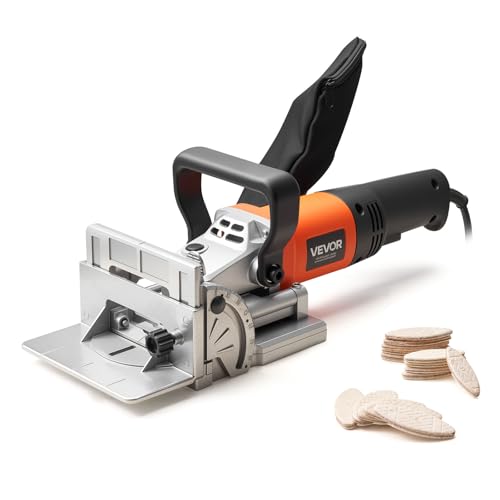 |
VEVOR Biscuit Plate Joiner, 5.9A, Plate Joiner Tool KitVEVOR | Pair with it | 5.9A · 11,600 RPM · Carbide Blade | $54.99
Price as of 15 Oct 2026
|
View |
For shop work, corded models usually make more sense because you avoid battery cost and keep cutting speed steady. Cordless models fit better when the work moves around the house or outside the shop, but only if the fence adjustment and dust port are easy to live with.
How we chose
The comparison centers on project fit, not brand loyalty. A good biscuit joiner should control alignment with an adjustable fence and depth setting, handle the joinery you actually cut, and avoid making setup slower than the glue-up itself.
We also weighed power source, because a cordless tool changes portability and cost, while a corded tool usually gives a simpler workflow for repeated cuts. Dust collection mattered too, since biscuit joiners throw fine chips and many users work on finished panels or indoors.
Included accessories count, too. A case, biscuits, or useful fence hardware can matter more than a small spec difference when you are setting up for the first cabinet face frame or tabletop glue-up.
Best biscuit joiner: top pick and why
The best biscuit joiner for most DIY woodworkers is the DEWALT 20V MAX XR Biscuit Joiner, Brushless, Tool Only (DCW682B) because it combines cordless convenience with a brushless motor and a dual rack-and-pinion fence, which helps keep setup accurate for concealed joints.

This is the better fit if you move between cabinets, built-ins, and site work. It keeps the tool portable without giving up the fence control that matters when you need clean centering on face frames, butt joints, or mitered joints.
Quick picks
| Pick | Best for | Key spec | Price range |
|---|---|---|---|
| DEWALT DCW682B | Mobile cabinet and trim work | 20V brushless, rack-and-pinion fence | Mid to upper midrange |
| DEWALT DW682K | Shop joinery with strong fence control | 6.5 amp, 10,000 RPM, miter locating notch | Midrange |
| Wen JN8504 | Budget shop use | 8.5 amp, 10,000 RPM, preset stops for #0, #10, #20 | Budget |
| Festool Domino Joiner | Premium floating-tenon work | Alternative to standard biscuit joiners | Premium |
DeWalt DCW682: best cordless option
This fits woodworkers who need a cordless biscuit joiner for assembly work away from outlets. The brushless motor and dual rack-and-pinion fence help when you are cutting repetitive slots for panel glue-ups or cabinet parts and do not want fence drift to slow you down.
It uses the DeWalt PowerStack 20-volt battery platform, and the battery is sold separately, so the real buy-in is higher than the tool-only price suggests. That matters if you are starting from zero batteries or want a single tool for occasional use.
The tradeoff is simple: cordless convenience costs more, and battery planning becomes part of the project. If your joinery stays in one shop corner, a corded model usually gives a cleaner value split.
Wen JN8504: best budget choice
This is the practical choice for a shop-only buyer who wants a corded biscuit joiner without moving into premium pricing. The 8.5-amp motor and 10,000 RPM setup make more sense for repeated cuts on face frames, butt joints, and mitered work than a bargain tool with weak fence control.
Preset stops for #0, #10, and #20 biscuits remove some guesswork, and the included case and biscuits improve the first setup. That is useful if you want to start cutting the day the tool arrives.
The drawback is obvious: it is corded, so portability is limited, and budget tools can be less forgiving if you rush centerline marking or fence calibration.
Festool Domino joiner: when to step up
The Festool Domino Joiner belongs in the premium-alternative conversation, not the standard biscuit joiner one. A Domino-style floating-tenon system makes more sense when you need stronger alignment and more joinery strength than a biscuit joint can provide.
That matters for furniture parts where you want the joint to carry more of the load, not merely help with alignment and glue spread. If your work is mostly tabletops, face frames, and concealed alignment joints, a biscuit joiner is usually enough. If you need a stronger joint for repeated stress, floating tenons are the better step up.
Do not buy into this category just because it is premium. Use it when the joint design needs more strength than compressed wood biscuits can provide.
Biscuit joiner decision table
| Project type | Join strength need | Portability need | Dust-control priority | Best biscuit joiner style |
|---|---|---|---|---|
| Tabletops and panel glue-ups | Medium alignment, not primary strength | Low if you work in a shop | High, especially indoors | Corded model with accurate fence, dust port, and a large plate capacity |
| Cabinet face frames | Medium | Medium | Medium | Brushless cordless or corded model with easy depth stops |
| Butt joints and face-to-edge joints | Low to medium | Low | Medium | Budget corded tool with clear centerline reference |
| Mitered joints and veneered panels | Medium alignment help | Medium | High | Model with angled dust port, vacuum hose compatibility, and stable fence locks |
| Jobsite assembly | Medium | High | High if working in occupied spaces | Cordless biscuit joiner with good fence adjustment and easy battery access |
Say your next project is a 30-inch tabletop made from narrow boards. A biscuit joiner helps align the glue-up, but it does not replace clamps or flat reference surfaces; if the fence is off by even a little, the slots can pull the boards into a worse joint instead of a better one.
Suppose you are assembling a face frame with repeated 3/4-inch stock. A biscuit joiner can work well if the centerline is marked cleanly and the depth stop matches the biscuit size, but pocket holes may be faster if alignment is less important than speed.
What should you check before buying?
A biscuit joiner can fail in predictable ways: the fence can be out of alignment, the slot can land off center, the blade depth can be wrong for the biscuit size, and tear-out can ruin thin or veneered stock. This checklist focuses on those failures before they waste material.
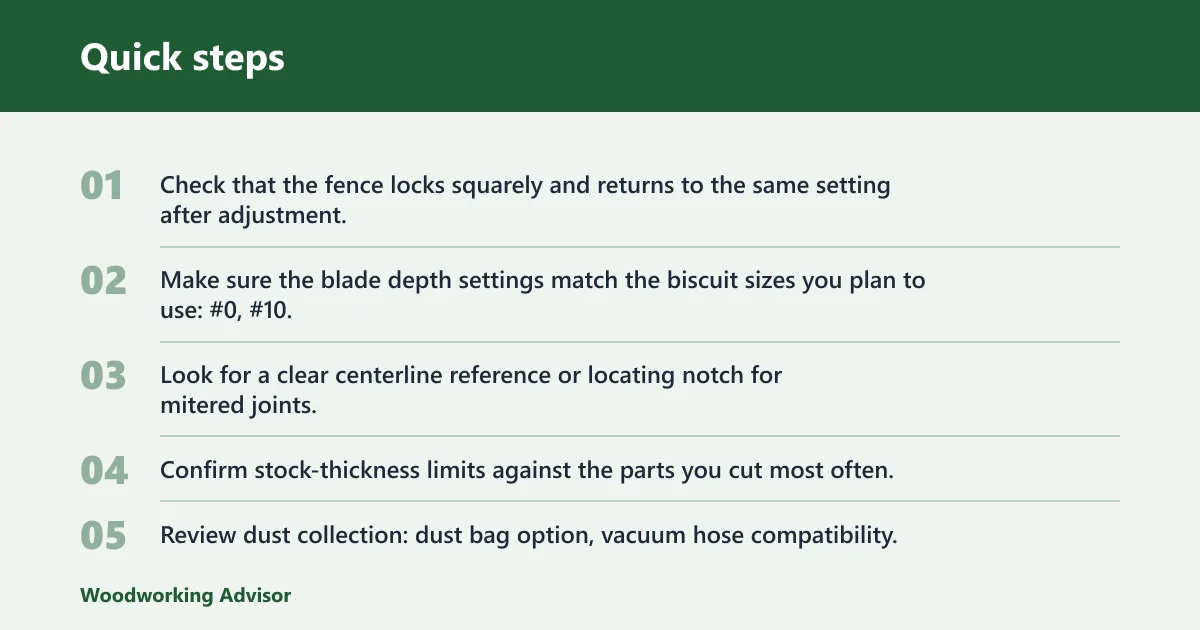
It also helps you decide when another joinery method is a better fit. Dowels are better when you want hidden alignment pins with more strength than biscuits can provide. Pocket holes suit fast assembly when the screw heads stay hidden. Floating tenons make sense when strength matters more than biscuit-style glue assistance.
Failure-mode checklist before you buy
- Check that the fence locks squarely and returns to the same setting after adjustment.
- Make sure the blade depth settings match the biscuit sizes you plan to use: #0, #10, and #20.
- Look for a clear centerline reference or locating notch for mitered joints.
- Confirm stock-thickness limits against the parts you cut most often.
- Review dust collection: dust bag option, vacuum hose compatibility, and whether the port points well for your bench setup.
- Check whether the tool includes biscuits, a case, or both, if first-day use matters.
Before your first cut
- Mark the centerline on both mating parts.
- Set the fence and confirm it is square to the work surface.
- Choose the biscuit size that matches the joint and stock thickness.
- Set blade depth so the slot is deep enough without breaking through thin material.
- Make a test cut in scrap and check biscuit fit before cutting the real parts.
- Dry-clamp the joint to verify alignment, then cut the full set.
When a biscuit joiner is the wrong tool
If the joint needs primary structural strength, a biscuit joiner is usually not the right answer. Use dowels, pocket holes, or floating tenons instead when the joint has to resist more than alignment forces and glue spread.
If the part is thin enough that the fence cannot register cleanly, or the face has fragile veneer, another method may reduce tear-out and setup risk. Biscuit joiners are useful tools, but they are not the right answer for every joint.
How do I use a biscuit joiner for woodworking?
You use a biscuit joiner by marking a centerline, setting the fence and depth, and cutting matching slots in both workpieces so the compressed wood biscuit can bridge them. The biscuit then swells slightly with glue, helping align panel glue-ups, frames, butt joints, face-to-edge joints, and mitered joints.
The common workflow is simple. Mark both parts, set the fence to the same reference face, cut the first slot, then cut the mating slot without changing the reference setup. Clamp the parts after glue goes in, because the biscuit helps alignment but does not replace clamping pressure.
Wood biscuits are commonly described as football-shaped pieces of compressed wood, usually beech. Common sizes are #0, #10, and #20, and the right size depends on the stock thickness and how much glue area you want in the joint.
Best biscuit joiner: how to pick by job
For tabletop glue-ups and cabinetry face frames, a biscuit joiner is worth it because it speeds alignment and reduces the fight for flush edges. For rough framing or joints that must carry major load, it is the wrong tool.
The best biscuit joiner choice depends on failure mode. If alignment is your biggest problem, buy the model with the most accurate fence and depth control. If dust is your biggest problem, prioritize vacuum compatibility and an angled dust port. If movement around the house matters, cordless makes sense; if repeated shop work matters more, corded usually wins.
What features matter most when buying a biscuit joiner?
Start with fence accuracy, blade depth adjustment, and the way the tool references the centerline. Those three features decide whether the slot lands where the biscuit can actually help or whether it introduces slop into the joint.
Next look at power source and dust control. Corded models suit bench-based work and long sessions. Cordless models suit mobile work, but battery cost and runtime become part of the purchase. A dust bag is useful, vacuum hose compatibility is better, and an angled dust port can keep the hose out of the way on cramped setups.
Finally, check the biscuit sizes the machine supports and whether the package includes useful setup items. That matters more than a minor cosmetic difference or a generic accessories bundle.
Which one should you buy?
Choose the DEWALT DCW682B if you move often, cut in finished spaces, and want cordless convenience with a fence system aimed at accuracy. Choose the Wen JN8504 if you want a lower-cost corded tool for shop joinery and value the included case and biscuits.
Choose the DEWALT DW682K if you want a corded option with a locating notch that helps on mitered joints and you do not need batteries. If you need stronger joinery than biscuits can deliver, move up to a Domino-style floating-tenon tool instead of buying a better biscuit joiner.
Do not choose based on price alone. A cheap model with poor fence control can cost more in ruined stock than a midrange tool with a better depth stop and cleaner setup.
Frequently asked questions
Are biscuit joiners worth it?
Yes, if you build cabinets, frames, or tabletops where alignment matters. They help keep parts flush and can speed setup, but they do not replace clamps or provide major structural strength. If your projects need hidden alignment more than load-bearing joinery, they are a practical buy.
What’s a biscuit joiner?
It is a woodworking machine that cuts curved slots with a 4-inch circle blade for compressed wood biscuits. Those biscuits are usually beech and fit in common sizes like #0, #10, and #20. The tool is used for concealed joints in panels, frames, and miters.
What biscuit sizes do biscuit joiners use?
The common sizes are #0, #10, and #20. Smaller biscuits fit narrow stock and lighter joints, while larger biscuits suit bigger boards and more glue area. Always match the size to the slot setting, stock thickness, and the amount of alignment help you need.
Is a cordless biscuit joiner better than corded?
Not always. Cordless is better for mobility and quick setup in different rooms or jobsites, but it adds battery cost and runtime planning. Corded is usually better for shop work, repeated cuts, and buyers who want simpler ownership without battery compatibility concerns.
Can I use a biscuit joiner for table tops?
Yes, and tabletop glue-ups are one of the common uses. The tool helps align the boards so the surface stays flatter during clamping, but it is not a substitute for good clamping pressure, straight reference edges, or careful board matching. Alignment aid is the main benefit.
Sponsored / affiliate links. As an Amazon Associate I earn from qualifying purchases. I may earn additional commission from eligible campaigns.