Woodworking Saws: Tools, Types, and Uses
Beginner buying summary: If I were setting up from scratch, I would rank the first saw by shop type this way: 1) Small cabinet or built-in shop: track saw, then table saw. 2) Small furniture shop with solid wood parts: table saw first if I can support stock safely, or bandsaw first if I work from rough lumber and cut curves. 3) Jobsite or remodel work: circular saw first, then miter saw if repeated length cuts dominate. 4) Curve-heavy or resaw-focused work: bandsaw first. That quick ranking is the short answer; the rest of this guide explains where those picks change based on safety, blade geometry, stock handling, and finish quality.
Choose woodworking saws by cut first: table saw for repeatable rips and dados, miter saw for crosscuts, band saw for curves and resawing thicker stock, track or circular saw for sheet goods, and hand saws for fitting and joinery. Pick badly and you will scorch stock, fight tear-out, lose floor space, and spend extra time sanding or fixing cuts that never should have gone wrong. I use this task-first approach in the shop because blade choice, setup, dust control, and each saw’s common failure points decide which tool gets me the cleanest, safest, fastest result.
How to choose a saw by the cut you need


Start with three things: cut direction, stock size, and the finish quality you need off the tool. The best saw for a clean result is often different from the fastest saw, and the safest option changes again when sheet goods, narrow offcuts, or curves enter the job.
Ripping solid lumber needs straight tracking, good stock control, and a blade that clears chips without burning. Crosscutting needs support across the grain and clean exit fibers. Curves need blade width that fits the radius. Sheet goods need broad support under a big panel more than raw motor power.
One saw often creates the problem another saw fixes. A table saw rips faster than a bandsaw, but it handles full sheets poorly and raises kickback risk when support is weak. A circular saw breaks sheets down safely on foam or sacrificial strips, but it rarely leaves an edge as straight and splinter-free as a track saw. A jigsaw can make a sink cutout in place, yet the edge usually needs cleanup if it will stay visible.
That task-first view matters more than any broad ranking of machines. Fine Woodworking has a shop machines guide, and it is a good reminder that saws belong in a larger machine system, with each machine earning space only when it improves a specific operation. (finewoodworking.com)
For the evidence behind the rule of thumb, I lean on machine manuals and safety guidance more than brand marketing. SawStop and other table-saw makers consistently stress the riving knife, guard use, and controlled rip support to reduce binding and kickback. Festool and Makita track-saw guidance repeatedly emphasizes full-panel support, splinter strips, and proper plunge setup for cleaner sheet-good cuts. Bandsaw makers such as Laguna and Rikon, along with blade specialists such as Carter Products, are also consistent on one point: resaw performance depends on blade width, tooth form, and tension at least as much as motor size.
Selecting the Right Random Orbital Sander for Your Projects
Achieving a flawless, scratch-free surface depends heavily on matching your finishing tool to the specific demands of the timber and task. Different orbital strokes and motor configurations directly influence stock removal rates, vibration levels, and overall finish quality. To find a model that balances hand comfort, efficient dust collection, and reliable performance, consult the best random orbital sander guide. It evaluates top options across various budgets and use cases, helping you avoid common pitfalls like swirl marks and clogged abrasives.
Choosing the Right Sander for Your Finishing Needs
Achieving a flawless surface requires matching your tool’s specifications to the demands of your specific project. Selecting the appropriate best random orbital sander prevents common issues like stubborn swirl marks, excessive vibration, and poor dust collection that ruin otherwise solid craftsmanship. Different orbital sizes and motor configurations handle tasks ranging from rapid stock removal to ultra-fine surface preparation differently.
Reviewing detailed comparisons of ergonomics, dust management, and finish quality helps you invest in equipment that streamlines your workflow. Finding the right balance of control and power ensures cleaner results and extends abrasive lifespan across your shop projects.
What types of woodworking saws do you actually need?
Most woodworkers do not need every saw category. For furniture and cabinet work, the core choices are usually a table saw or track saw for straight sizing, a bandsaw for curves and resawing, and a few hand saws for fitting. Miter saws, panel saws, scroll saws, and specialty hand saws usually come later, or never.
Core shop saws for furniture and cabinet work
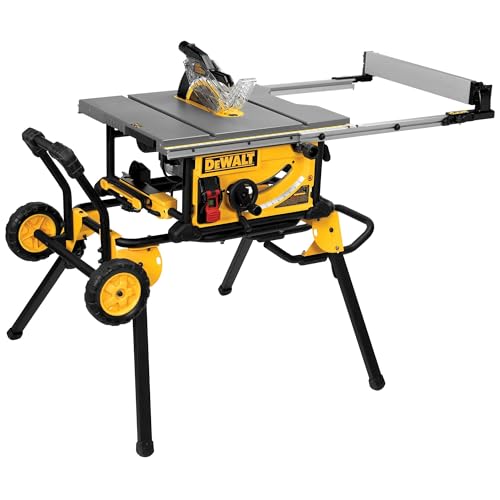
If the work is mainly hardwood parts, joinery, face frames, and repeatable components, a table saw usually carries the straight-cut load. It handles rips well, and crosscuts get more accurate when I use a sled rather than the fence with unsupported stock. Woodcraft groups saws into bandsaws, miter saws, panel saws, radial arm saws, scroll saws, and table saws, which is a practical shop-centered breakdown.
A bandsaw earns its place when I need to cut chair parts and templates, break down rough lumber before jointing, slice thick blanks that would crowd a table saw, or resaw boards into veneer. It solves jobs a table saw does poorly or unsafely, especially resawing and curved work in real stock thickness.
Portable saws for sheet goods and site work
Portable straight cutting falls to circular saws and track saws. Woodcraft lists circular and track saws together under handheld power saws. That grouping matches real work: both go to the material, both break down panels, and both solve the handling problem that makes a table saw awkward with full sheets.
A track saw is the cleaner option when visible plywood edges matter, especially on prefinished maple ply, veneered panels, or melamine that will go straight to edge banding or assembly. A plain circular saw with a guide is the faster, cheaper option when the parts will be jointed later, edge-banded, or hidden.
Hand saws and specialty saws worth owning later
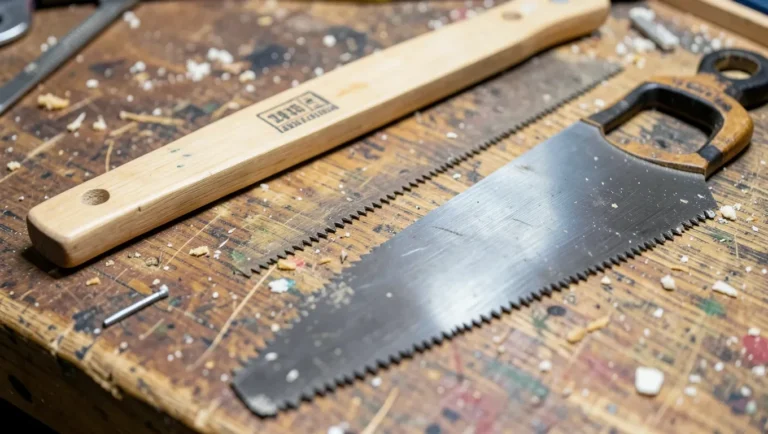
Woodcraft also separates jigsaws and reciprocating saws from circular and track saws, which reflects their different jobs. A jigsaw is a cutout and curve tool, not a precision panel saw. A scroll saw is a specialty machine for thin stock, tight curves, and interior details. Hand saws handle trim-to-fit work, shoulder cuts, and one-off joinery that power tools often turn into a longer setup than the cut itself.
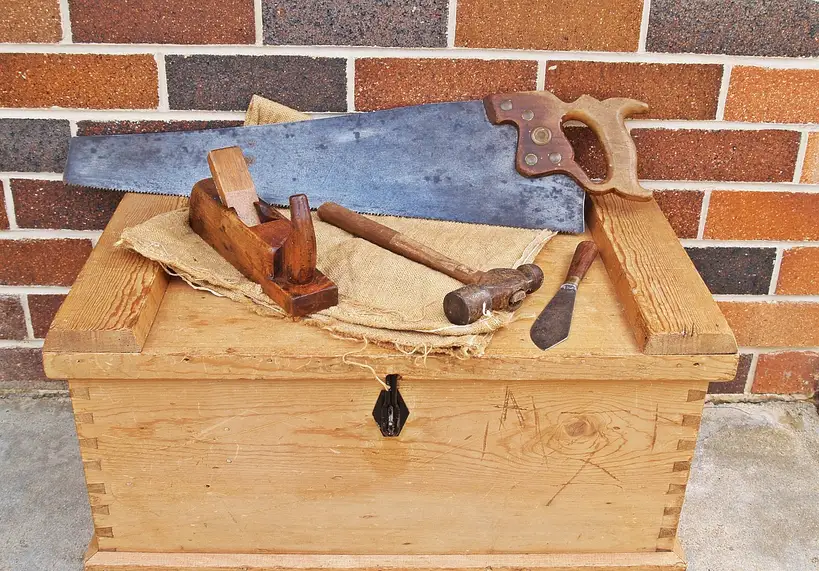
Dovetail saws, coping saws, flush-cut saws, and Japanese pull saws each solve a narrow class of cuts with less setup and less risk. For a hybrid shop, that matters. A flush-cut saw trims proud plugs without scarring nearby surfaces. A coping saw cleans inside corners after a fretwork or molding cut. A fine Japanese saw can trim tenon cheeks or cut a shoulder quietly and accurately.

Task-to-saw decision table
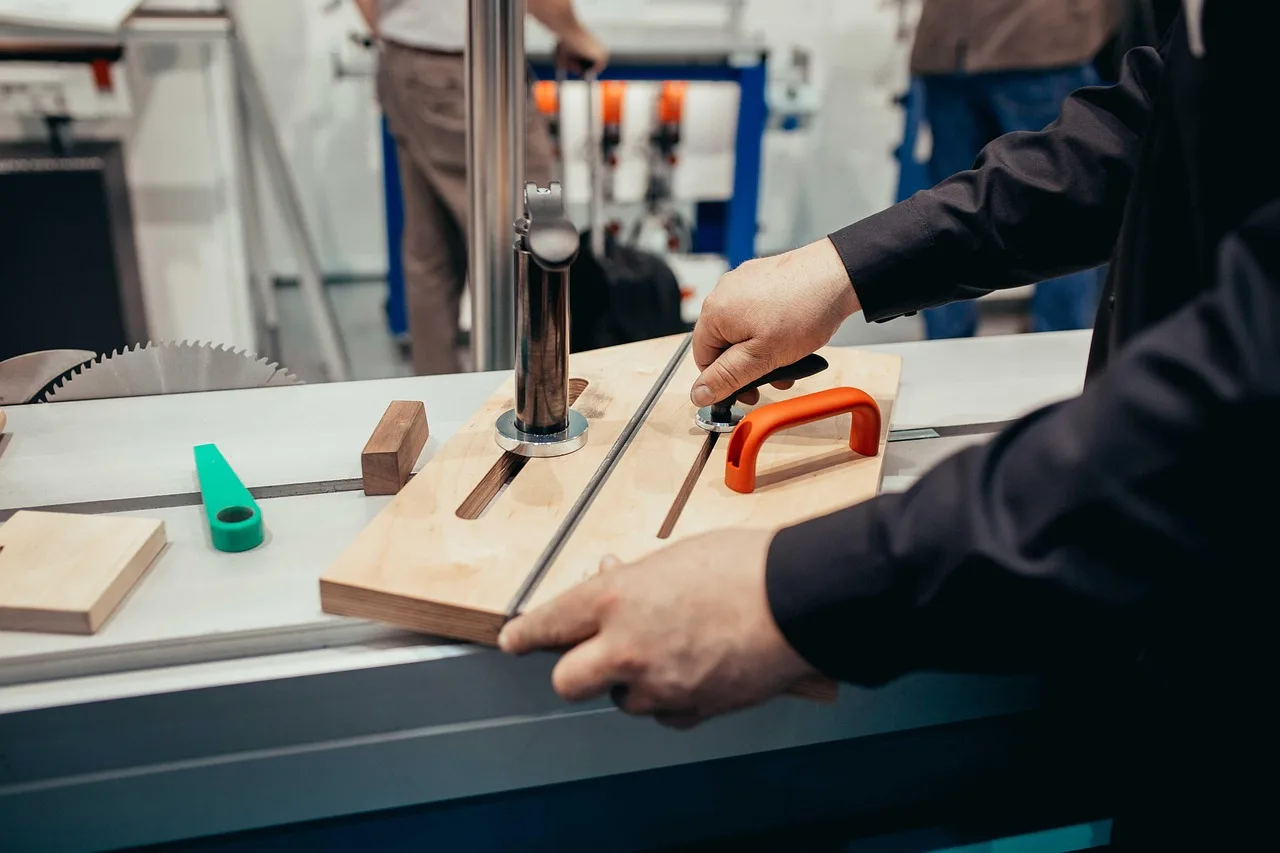
Best saw by task, blade, setup notes, and likely failure mode
| Task | Best saw | Runner-up | Blade type | Setup notes | Likely failure mode |
|---|---|---|---|---|---|
| Rip solid lumber to width | Table saw | Bandsaw | Rip blade with lower tooth count and suitable rake angle | Set fence parallel to blade, support outfeed, set blade height just above stock | Burn marks, kickback, wandering cut from poor fence alignment |
| Crosscut cabinet parts | Table saw with sled | Miter saw | Crosscut or combination blade with higher tooth count | Use sled fence for squareness, keep cutoff supported | Tear-out at exit, unsafe loose offcut near blade |
| Break down plywood sheets | Track saw | Circular saw with guide | Fine-tooth plywood blade, thin kerf if saw allows | Support full sheet, use splinter strip, choose rail length to cover cut | Chip-out, rail slip, unsupported sheet pinching blade |
| Rough sheet breakdown on site | Circular saw | Track saw | General-purpose or plywood blade matched to material | Use guide, support both sides of cut, check cord or battery runtime | Wandering line, tear-out, sagging panel closing kerf |
| Cut tight curves in thick stock | Bandsaw | Jigsaw | Narrow bandsaw blade sized for desired radius | Track blade correctly, set tension well, use slow feed to limit drift | Blade drift, twist marks, throat depth limit |
| Interior cutout in installed top | Jigsaw | Scroll saw | Reverse-tooth or clean-cut blade suited to material thickness | Drill starter hole, support near cut, keep base flat | Blade deflection, beveled edge, chipped face veneer |
| Resaw lumber or make veneer | Bandsaw | Table saw | Wide resaw blade with tooth form for chip clearance | Set fence for drift, track blade on wheel, tension properly | Drift, washboard surface, limited height on smaller machines |
| Cut trim to length and angle | Miter saw | Hand saw with miter box | Fine crosscut blade | Use extension support, confirm bevel and miter settings before cutting pairs | Deflection in wide trim, slight angle error, unsupported long stock |
| Fine interior fretwork in thin stock | Scroll saw | Coping saw | Fine scroll blade matched to wood thickness | Thread blade through starter hole, keep stock flat on table | Blade breakage, burning, rough edge from overfeeding |
| Flush trimming dowels or plugs | Flush-cut hand saw | Jigsaw | Setless flush-cut blade | Mask nearby surface if needed, keep blade flat to work | Surface scratching with wrong saw set or flexible stroke |
Outcome priorities: cleanest, safest, fastest, and when a saw is the wrong choice
| Task | Cleanest result | Safest practical choice | Fastest practical choice | Bad choice when |
|---|---|---|---|---|
| Rip solid lumber to width | Table saw with a true fence and sharp rip blade | Table saw with riving knife, push devices, and full support; bandsaw if stock is twisted or tall | Table saw | A circular saw is a bad choice when a dead-parallel edge is required; a table saw is a bad choice when the board is badly bowed, unstable, or poorly supported |
| Crosscut cabinet parts | Table saw with sled and backer | Table saw sled or well-supported miter saw station | Miter saw for rough length, table saw sled for final sizing | Using a table saw fence alone for short crosscuts is a bad choice because trapped offcuts can bind |
| Break down plywood sheets | Track saw | Track saw or circular saw on fully supported sheet | Circular saw for rough cuts, track saw for finish cuts | A table saw is a bad choice when one person is wrestling full sheets without infeed and outfeed support |
| Rough sheet breakdown on site | Track saw | Circular saw with guide on sacrificial support | Circular saw | A miter saw is a bad choice because it does not solve panel handling; a jigsaw is a bad choice for long straight edges |
| Cut tight curves in thick stock | Bandsaw | Bandsaw | Bandsaw | A jigsaw is a bad choice when edge square matters in thick stock because blade deflection shows on the underside |
| Interior cutout in installed top | Jigsaw followed by cleanup if visible | Jigsaw | Jigsaw | A bandsaw or table saw is a bad choice because the work cannot be brought to the machine safely |
| Resaw lumber or make veneer | Bandsaw with wide resaw blade and tuned fence | Bandsaw | Bandsaw | A table saw is a bad choice once height, blade exposure, or internal stress exceed safe control |
| Cut trim to length and angle | Miter saw with fine blade and support wings | Miter saw with stock held tight to fence and table | Miter saw | A table saw is a bad choice for long trim unless a sled and support are excellent; a circular saw is a bad choice for precise repeated angles |
| Fine interior fretwork in thin stock | Scroll saw | Scroll saw | Scroll saw | A jigsaw is a bad choice when delicate inside turns and low cleanup are the priority |
| Flush trimming dowels or plugs | Flush-cut hand saw | Flush-cut hand saw | Flush-cut hand saw | Powered saws are a bad choice when the surrounding surface must stay pristine |
Which saw is best for straight cuts, sheet goods, and repeatable sizing?
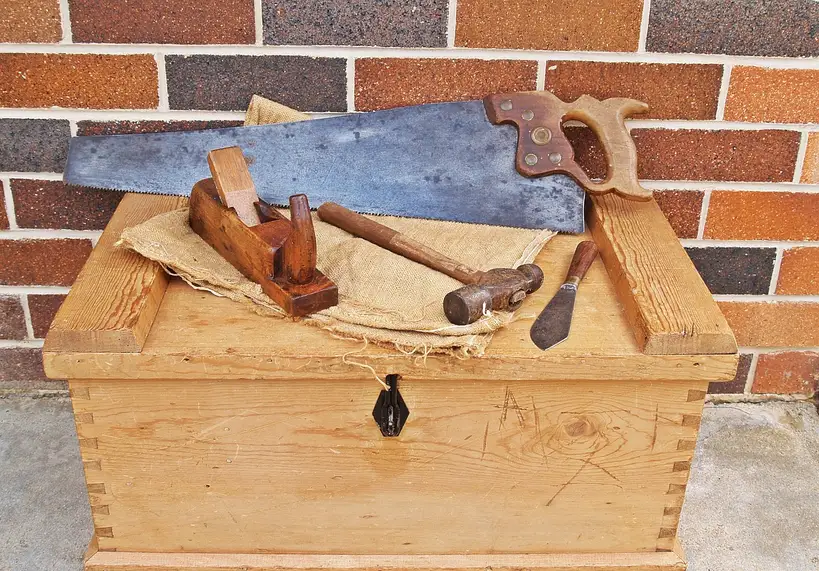
For repeatable straight cuts in solid wood, the table saw usually gives the best blend of speed and accuracy. For sheet goods, a track saw is often cleaner and safer. For rough panel breakdown, a circular saw wins on portability. For high-volume shop sheet processing, a panel saw solves handling and space problems better than either.
Table saw for ripping and sled-based crosscuts
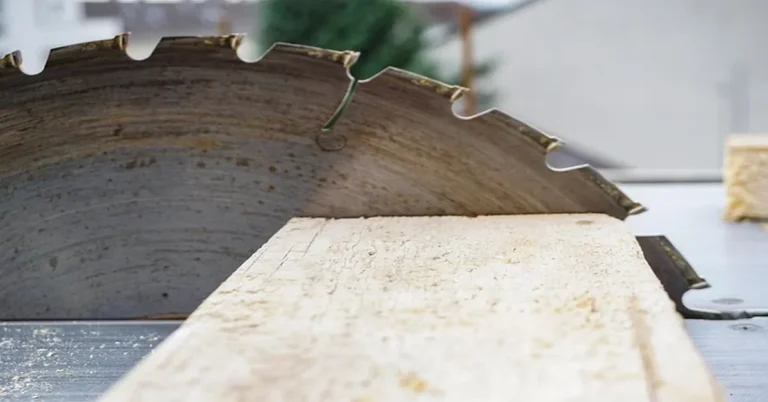
The table saw is at its best when stock is already manageable and needs repeatable sizing. Rip cuts are its strongest case. Crosscuts improve dramatically with a sled because the stock stays square to the blade, the cutoff stays controlled, and tear-out drops with a backer fence.
Blade height matters. Family Handyman notes that a quick blade-height gauge is used to set table saw blade height. The principle is simple: too high leaves more tooth exposed and roughens the cut; too low can increase rubbing and heat. Most table-saw makers also show blade height set just above the workpiece, not buried far below it and not towering over it. Fence setup matters just as much. A fence that is not truly parallel invites burn marks, binding, and kickback.
Common blade sizes matter because they shape blade availability more than cut quality theory does. Some saws have better blade choices and accessory support than others. Woodcraft sells table saw blades and table saw accessories as separate categories, and it even includes a table saw safety category for shop-specific guidance. That matches what I see in use: setup, support, and safety devices change outcomes on this machine more than raw horsepower claims do.
Shop footprint is the table saw’s tax. The machine itself may fit, yet the infeed and outfeed zones are what really eat floor space.
Track saw and circular saw for breaking down panels
A track saw shines on plywood, veneered panels, melamine, and large workpieces that become awkward or risky on a table saw. The rail guides the cut, the splinter strip supports face fibers, and the sheet stays still while the saw moves. That is often the cleanest path from full sheet to rough cabinet part.
The circular saw remains useful because it is quick to grab, easy to carry, and relatively inexpensive to add to a shop. Blade diameter affects depth and cut feel. Corded versions keep cutting through a full breakdown session. Cordless versions remove cord management and speed up site work, but runtime and power delivery can become part of the planning.
The runner-up gap is predictable. A circular saw with a shop-made guide can cut straight enough for many jobs, but it more often leaves edge splintering and small deviations that show up during assembly. A track saw fixes those two issues first. Tool-maker guidance from Festool, Makita, and Bosch is remarkably consistent here: support the full sheet, keep the rail flat, use the correct tooth count for veneered or brittle faces, and let the blade reach speed before entering the cut. In practice, those basics matter more than chasing tiny spec differences between rails.
Panel saw for higher-volume sheet processing
Panel saws belong in the conversation whenever the work centers on repeated sheet breakdown. They can reduce material handling by supporting the sheet vertically or in a dedicated frame, improve workflow, and may control dust better than breaking down sheets on the floor with a circular saw. The tradeoff is specialization. Most small furniture shops can postpone this category.
Which saw is best for curves, cutouts, and inside work?
For curves in thick stock, the bandsaw is usually the best answer because it tracks better and leaves a more controlled edge than a jigsaw. For interior cutouts or installed work, the jigsaw is the practical choice. For tiny radii and delicate interior shapes in thin stock, the scroll saw leads.
Bandsaw for controlled curves and thicker stock
Bandsaw results depend heavily on blade width, tension, and tracking. Narrow blades turn tighter curves. Wider blades resist twisting and help in straighter cuts and resawing. Throat depth limits how far a workpiece can reach into the machine before the frame gets in the way.
Fine Woodworking features a bandsaw-jig article, which points to an important truth: accessories and setup matter on this saw. Woodcraft also sells bandsaw blades and bandsaw accessories as dedicated categories. That is a clue, not marketing noise. Blade choice, drift compensation, and support jigs decide whether the saw behaves.
The main failure mode is drift. If tracking and tension are off, the blade will not follow the fence or the line cleanly. Feed pressure rises, surfaces get washboard marks, and curves flatten when they should not. For resawing, reputable bandsaw guidance lines up well across Laguna, Rikon, and Carter Products: use the widest blade your saw tensions well, choose a coarse tooth pattern with enough gullets for chip clearance, and tune tracking before blaming the fence. In my shop, poor resaw results are usually setup and blade issues first, horsepower second.
Jigsaw for cutouts, installed work, and rougher curves
A jigsaw reaches places no stationary saw can. It handles sink cutouts, toe-kick notches, outlet openings, and curved cuts on large parts that are too awkward for a bandsaw. It is the answer when the work cannot come to the saw.
It is also a saw that gets overpromised. In thick stock, or whenever the blade is long and narrow, deflection becomes the issue. The top face may follow the line while the underside drifts away. Blade type helps. Reverse-tooth and clean-cut patterns reduce tear-out on veneered faces, but they do not turn a jigsaw into a finish-edge machine on demanding visible parts. Bosch, Makita, and other jigsaw makers all make the same point in their manuals in different words: keep the shoe flat, do not force feed, and match blade length and tooth pattern to thickness.
Scroll saw and coping saw for fine interior shapes
For thin stock, small craft work, and pierced cuts inside a panel, the scroll saw leaves a cleaner result than a jigsaw. It handles interior turns better because the blade is finer and the work stays flat on a small table. A coping saw remains useful for hand-cut inside shapes and trim fitting where setup time matters more than speed.
When should you use a bandsaw, table saw, miter saw, or hand saw?
Use the table saw when straight, repeatable sizing is the goal and the stock can be controlled safely. Use the bandsaw when the cut is curved, tall, or likely to bind on a table saw. Use the miter saw for length cuts in trim or framing parts. Use hand saws for fitting, joinery, and single cuts that do not call for machine setup.
What is the difference between a bandsaw and a table saw?
The table saw is faster and cleaner for straight, repeatable ripping in dimensioned stock. The bandsaw is safer on many awkward cuts, handles curves, and is the better machine for resawing. Where the table saw can kick stock back, the bandsaw usually fails more gently by drifting or leaving a rougher surface.
That runner-up gap matters in real work. A bandsaw can rip, but the cut often needs jointing or planing afterward. A table saw can resaw within its capacity, but it is a poor substitute once thickness, blade exposure, and internal stress start working against the operator.
Do I need a miter saw, table saw, or hand saw for crosscuts?
A miter saw is best when the work is trim, framing stock, or repeated length cuts on long boards. A table saw with a sled is often better for furniture parts because it supports the work more accurately. A hand saw is the right choice for one-off cuts, joinery shoulders, and quiet fitting at the bench.
Bevel capacity matters on a miter saw if casing, crown, or compound-angle parts are common. It matters less in many cabinet shops than buyers expect. The miter saw’s weak point in fine work is tiny error repeated many times, especially when stock is not held against the fence consistently.
When should I use a circular saw instead of a track saw?
Use a circular saw instead of a track saw when portability, speed, and lower setup matter more than finished edge quality. It is the right tool for rough breakdown, jobsite trimming, and cuts that will be cleaned up later. The track saw takes over when splinter control and dead-straight panel edges matter.
How blade choice changes the result
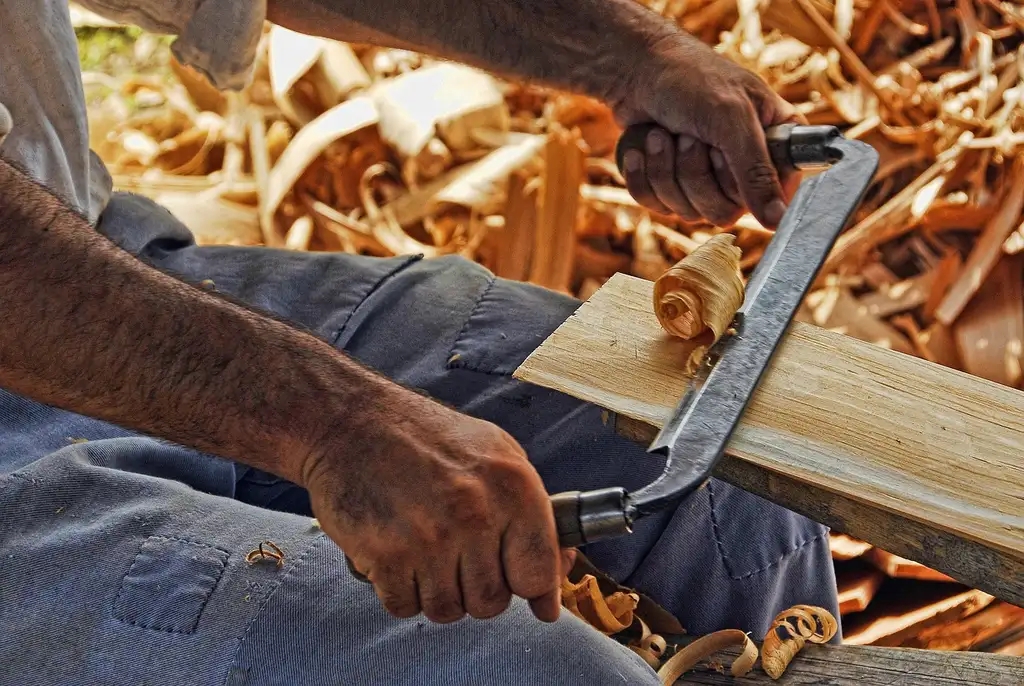
Blade choice changes cut quality more than most saw comparisons admit. Higher tooth count usually improves crosscut finish and sheet-good edges, while lower tooth count clears chips better in thick rips. Hook or rake angle affects how aggressively the blade feeds. Kerf affects power demand, waste, and sometimes stability in the cut.
Tooth count, rake angle, and kerf in plain language
For table saws and miter saws, rip blades favor fewer teeth and faster chip clearing. Crosscut and plywood blades use more teeth for cleaner surfaces. A more aggressive hook angle pulls stock into the cut faster, which helps in ripping but can feel grabby on some saws and materials.
Thin-kerf blades reduce feed effort and can help smaller saws. Full-kerf blades often feel steadier in heavier stock if the saw has the power. Neither choice is universal. The right pick depends on material thickness, motor strength, and whether cut surface or production speed matters more. Freud, Forrest, CMT, and major tool makers all describe the same tradeoff in slightly different terms: fewer teeth and more gullet volume for efficient ripping, more teeth and finer entry/exit for cleaner crosscuts. That is why a blade that feels excellent in maple rips can feel wrong on veneered plywood.
Material-specific blades for hardwood, plywood, melamine, and composites
Hardwood rips need chip clearance. Plywood and veneered panels need support at the face veneer. Melamine and brittle composites need tooth geometry that limits chipping. If a visible panel edge is blowing out, the problem is often blade selection or support at the cut line before it is operator skill.
Track saws and circular saws benefit from dedicated plywood blades when finish matters. Miter saws need a finer blade for trim than for framing stock. Jigsaws vary widely by blade pattern, and the wrong blade will telegraph every weakness in the machine. For sheet goods, the strongest practical guidance I know is still simple: use a sharp fine-tooth blade, support the panel fully, and put the good face where your saw’s tooth exit pattern favors it. On many track saws, the splinter guard reduces the need for extra scoring cuts; on ordinary circular saws, zero-clearance support is usually worse, so feed control and blade quality matter even more.
Blade width and tooth form for bandsaws, jigsaws, and hand saws
On a bandsaw, blade width determines curve capacity and straight-line stability. Wider blades suit resawing. Narrow blades suit tighter radii. Tooth form and spacing matter because thick stock needs room to clear waste. Too fine a tooth pattern in deep stock often burns and wanders.
Jigsaw blades should be chosen by material thickness first, then finish requirement. Hand saws are even more task specific. A dovetail saw tracks fine joinery cuts. A flush-cut saw avoids damaging surrounding surfaces because its teeth usually have no set or minimal set. Japanese saws cut on the pull stroke, which helps thin blades stay straight.
What should a beginner or small-shop woodworker buy first?
A beginner should buy the first saw that matches the first real project category, not the saw with the widest reputation. For cabinets and sheet goods, that is often a track saw or circular saw with a reliable guide. For small furniture in solid wood, it is often a table saw or bandsaw. Small shops should favor lower handling risk and lower space demand.
Best first saw by project type
- Cabinets, built-ins, plywood projects: track saw first, then table saw if repeatable ripping becomes frequent.
- Small furniture, boxes, shop fixtures: table saw first if space and stock support are available.
- Curved work, bandsawn boxes, rough lumber, veneers: bandsaw first.
- Trim, framing, punch-list carpentry: miter saw first.
Smart ownership order for growing a shop
- Buy the saw that handles most stock at the lowest risk.
- Add the saw that fixes the first saw’s biggest weakness.
- Add hand saws early because they solve fitting jobs cheaply.
- Postpone specialty machines until a repeated task keeps stealing time.
That often means track saw then table saw, or table saw then bandsaw, depending on material. Many shops never need a panel saw. Many furniture makers can postpone a miter saw for a long time if they own a solid crosscut sled and a good bench saw.
Which saws many woodworkers can skip or postpone
Skip the scroll saw unless thin-stock fretwork is a real part of the work. Postpone the panel saw unless sheet processing volume is high. Postpone the miter saw if the work is mostly furniture parts rather than long trim. Keep a few hand saws regardless, because machine-heavy shops still need fitting tools.
Picking a starter router that fits your first projects
Routers introduce new variables like speed, collet size, and base stability that can cause tearout if you buy the wrong tool. This guide identifies which fixed-base or compact models are safest for your first edge profiles and dado work, matching specific machines to your setup confidence and shop space. best beginner router picks
Instead of guessing, use these recommendations to choose a tool with soft start and variable speed that handles your initial tasks without being intimidating. Focusing on a machine that aligns with your specific project goals prevents wasted spending on features you do not need yet.
Setup, shop footprint, and safety by saw type
Stock support, infeed and outfeed, and space planning
Small shops should count support zones, not only machine footprints. A compact table saw can still dominate a room once infeed and outfeed are accounted for. Track saws and circular saws store easily and use floor space only during the cut. A bandsaw often fits tighter against a wall because the stock feeds straight through a smaller table area.
Fence, rail, tension, and tracking setups that affect accuracy
Accuracy starts at setup. Table saw fences must be trustworthy. Track saw rails must sit flat and stay put. Bandsaw blades must track correctly on the wheels and hold tension through the cut. Family Handyman notes that paste wax helps a table saw top stay slick and resist rust, which also reduces feed resistance on long rips.
Miter saw fences must be co-planar, and long stock needs side support. Jigsaws need sharp blades and a flat shoe. These details sound small until they become the reason a cut goes off line.
Kickback, tear-out, drift, dust, and other common failure modes
Table saws carry the highest kickback concern in this group because the work is fed into an exposed rising blade. Safety features matter here more than marketing copy. Riving knives, blade guards, push devices, and sane cutoff handling all change the risk.
Track saws and circular saws move the blade across stationary stock, which lowers some handling risk during sheet breakdown. Bandsaws rarely kick back like table saws, but they drift and can tempt operators into twisting work aggressively. Jigsaws wander. Miter saws can launch short offcuts if they are trapped or unsupported. Dust collection demand rises sharply with panel processing and composite materials.
For safety citations, I trust the boring sources: manufacturer manuals, OSHA shop guidance, and machine-specific safety bulletins. They agree on the basics. On a table saw, use the riving knife and avoid trapping stock between blade and fence on crosscuts. On a miter saw, keep short offcuts from rotating into the blade. On a track saw or circular saw, support both sides of the cut so the kerf does not close. On a bandsaw, keep the blade guard low over the work and do not force turns tighter than blade width allows. None of that is glamorous, but it prevents the most common failures.
Frequently asked questions
What types of woodworking saws do I need?
Most shops need one primary straight-cut saw, one curve or rough-stock saw, and a few hand saws. That usually means a table saw or track saw, a bandsaw, and basic joinery or fitting saws. Add a miter saw only if trim, framing stock, or repeated length cuts are common.
What is the difference between a bandsaw and a table saw?
A table saw is best for fast, repeatable straight cuts with a cleaner finished surface. A bandsaw handles curves, thicker stock, and resawing better, and it is often calmer on awkward pieces. The table saw tends to fail through kickback or burning; the bandsaw through drift or rougher surfaces.
When should I use a circular saw instead of a track saw?
Use a circular saw when the cut is rough, portable, or temporary, and when lower setup time matters more than edge quality. Choose a track saw when working with plywood, melamine, or visible panel edges that need straighter cuts and better splinter control straight off the saw.
What saw is best for curved cuts in woodworking?
The bandsaw is usually best for curved cuts because it controls thicker stock better and leaves a steadier edge than a jigsaw. For interior cutouts or work that cannot reach a stationary machine, a jigsaw is the practical answer. For tiny curves in thin stock, use a scroll saw.
What saw should a beginner buy first for woodworking?
A beginner should buy according to project type. For plywood cabinets and built-ins, start with a track saw or guided circular saw. For smaller solid-wood parts, start with a table saw if space allows. For curved work and rough lumber, start with a bandsaw and add straight-cut capacity next.
What blades do I need for different woodworking saws?
Start with one rip blade and one fine crosscut or plywood blade for table or miter saw work. Add a material-specific blade for melamine or composites if those are common. On bandsaws and jigsaws, keep different blade widths and tooth patterns so thickness and curve radius can drive the choice.
What is the safest saw for cutting plywood sheets alone?
The safest common option for solo sheet breakdown is usually a track saw on a fully supported sheet, followed by a circular saw with a guide on foam or sacrificial strips. That setup keeps the stock still and lets me move the saw instead of wrestling a full panel across a table saw. A table saw can still be safe with proper support and technique, but for one person handling full sheets, it is rarely my first choice.
Can a bandsaw replace a table saw?
A bandsaw can replace some table-saw tasks, but not all of them well. It can rip, resaw, and cut curves, and it often handles rough or awkward stock more comfortably. What it usually does not replace is the table saw’s speed and ready-to-glue edge quality on repeatable straight cuts. If I had to choose one for curve work, rough lumber, and safety margin on tricky stock, I would lean bandsaw. If I had to choose one for production straight cuts, I would lean table saw.
Can a circular saw replace a track saw?
It can replace it for rough breakdown and many budget-conscious projects, especially with a reliable guide. It does not fully replace the track saw for clean visible panel edges, repeatable plunge cuts, or low-chip cutting in veneered plywood and melamine. In other words, the circular saw gets close on function; the track saw usually wins on finish quality and convenience.
Is a miter saw necessary for furniture making?
No. For many furniture shops, a miter saw is optional rather than essential. A table saw with a good crosscut sled can handle precise furniture-part crosscuts more accurately than a portable miter saw setup. I add a miter saw when long stock, trim, or repeated rough-to-final length cuts start slowing the rest of the shop.
What is the best saw for resawing?
The bandsaw is the best saw for resawing because it exposes less blade to the cut, wastes less material in the kerf, and handles greater height more safely than a table saw. The best result usually comes from a wide resaw blade with coarse tooth spacing, proper tension, and a fence set to the saw’s actual tracking behavior. If a resaw cut wanders, I check blade sharpness, tension, tracking, and feed pressure before blaming the machine.
What is the best saw for melamine and veneered plywood?
A track saw is usually my first choice because the rail and splinter strip help protect the face and keep the cut straight. A table saw with a sharp high-tooth-count blade and good support can also do excellent work. A basic circular saw can still cut these materials, but chipping is more likely unless the blade and support are right.
Sources
- Fine Woodworking shop and machinery guidance: finewoodworking.com
- Woodworking Advisor reference pages used in this article: table saw, track saw, circular saw, first saw
- Tool-maker and woodworking references consulted for safety, blade geometry, resawing, and sheet-good cutting: SawStop owner and safety materials, Festool track saw manuals and splinter-control guidance, Makita and Bosch circular saw and jigsaw manuals, Laguna and Rikon bandsaw setup guidance, and Carter Products bandsaw blade selection resources.
Sponsored / affiliate links. As an Amazon Associate I earn from qualifying purchases. I may earn additional commission from eligible campaigns.