Is the Stihl MS 391 a Pro Saw? No – Here Is the Real Difference
No — the Stihl MS 391 is not a Pro saw. Stihl sells it under its Farm and Ranch lineup, not its Professional Series, and the company’s own product pages confirm that placement. That doesn’t mean it’s underpowered. At 64.1 cc and 4.5 bhp, the MS 391 actually out-displaces some of Stihl’s true Pro-series saws — it’s simply built and priced for a different kind of owner.
If that seems like a contradiction — a “farm” saw with more displacement than some “pro” ones — it’s worth clearing up what actually separates the two tiers, because it isn’t raw cubic centimeters. It’s duty cycle, parts distribution, and what Stihl expects the saw to survive over a multi-year working life. The MS 391’s sibling in this lineup, the smaller Stihl MS 311, sits in exactly the same Farm and Ranch category for the same reasons — if you’re cross-shopping the two, the classification logic below applies to both.
Where The MS 391 Actually Sits In Stihl’s Lineup
Fits The MS 391’s 20" Bar
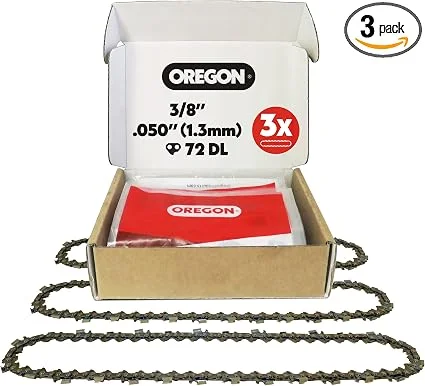 |
Oregon 20″ Chainsaw Chain, 3/8″ LP .050″ Gauge, 72DL – $67.99 Stihl doesn’t sell complete MS 391 saws through Amazon – they’re dealer-only – but this Oregon chain is a listed direct fit for the MS 391’s 20″ bar and is the wear part every MS 391 owner eventually needs.
|
Stihl splits its gas chainsaws into a few clear tiers, and the naming isn’t marketing fluff — it maps to real hardware differences. The Professional Series (saws like the MS 400, MS 462, and MS 500i) is built for people running a saw all day, every day: forestry crews, tree services, commercial loggers. Those saws get magnesium crankcases, full-wrap handles rated for continuous use, and a parts and warranty structure built around heavy daily hours. The Farm and Ranch Series — where the MS 391 lives alongside the MS 271, MS 291, and MS 311 — is built for the person who runs a saw hard for a weekend of firewood cutting or storm cleanup, then puts it away for a month.
One myth worth correcting here: “MS” in a Stihl model number doesn’t stand for anything like “Magnum Series” or “Motor Saw” as a marketing term — it’s short for Motorsäge, the German word for chainsaw, since Stihl is a German-founded company (Andreas Stihl, 1926). The number after it isn’t a power rating either; it’s simply a model designation Stihl assigns internally, which is why a 64.1 cc Farm and Ranch saw like the MS 391 can have a higher number than some smaller Professional saws.
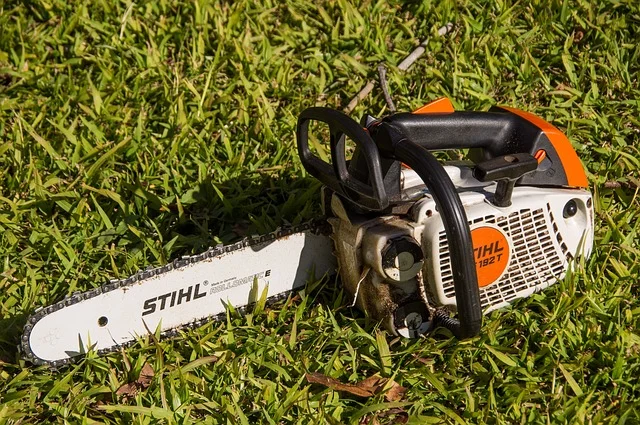
MS 391 Specifications (Straight From Stihl)
These are Stihl’s own published numbers for the MS 391, not estimates:
| Spec | MS 391 |
|---|---|
| Engine displacement | 64.1 cc |
| Power output | 3.3 kW / 4.5 bhp |
| Power head weight | 13.7–13.8 lbs (6.2 kg), bar and chain not included |
| Recommended bar lengths | 16″, 18″, 20″, up to 25″ on some configurations |
| Chain pitch | 3/8″ |
| Fuel tank capacity | 20.3 oz |
| Sound pressure level | 105 dB(A) |
That 64.1 cc displacement is the number that trips people up. It’s larger than the engine in Stihl’s own MS 261 Professional saw (50.2 cc) and close to the MS 362 Professional (59.0 cc). Displacement alone has never been Stihl’s dividing line between Farm and Ranch and Professional — it’s construction and duty cycle. A plastic-reinforced housing takes the place of the magnesium components found on the Professional line, and Stihl doesn’t rate this saw for the same continuous-run hours a Pro saw is built to survive.
What Actually Separates A Pro Saw From The MS 391
If you’re trying to decide whether the MS 391 will hold up for your specific use case, these are the real differences — not marketing language:
- Duty cycle rating: Professional saws are built and warrantied around all-day, daily commercial use. Farm and Ranch saws like the MS 391 are rated for heavy but intermittent use — weekends, seasonal firewood cutting, storm cleanup, not eight-hour daily shifts.
- Handle and vibration system: Pro saws use a full-wrap handle design that lets an operator rotate the saw for limbing and bucking without repositioning their grip, which matters over a full workday. A standard rear-handle layout on the MS 391 suits general cutting well but wasn’t designed around continuous professional felling work.
- Housing and internal components: Stihl’s Professional Series uses magnesium crankcases and components engineered for a longer commercial service life. A more cost-effective housing on the MS 391 holds up fine for its intended use, but it isn’t built to the same spec.
- Parts and service tier: Stihl dealers stock and prioritize Professional-series parts differently, since those saws are expected to need service more often under commercial hours.
None of this means the MS 391 is a weak saw. At 64.1 cc it will comfortably handle felling small to medium trees, bucking firewood, and clearing storm damage on a property — tasks plenty of self-described “pros” on small crews use it for daily anyway. It just isn’t the saw Stihl itself classifies or engineers for full-time commercial duty.
Maintenance: What Actually Keeps An MS 391 Running
Because the MS 391 is aimed at intermittent rather than daily use, most of the maintenance that matters happens between jobs rather than during them. The three things that actually cause problems on this saw are stale fuel, a clogged air filter, and a dull or improperly tensioned chain — in that order.
Stihl’s ethanol-blended pump gas will start breaking down in the tank within 30-60 days if the saw sits, which gums up the carburetor on a saw that only runs a few weekends a season. Running an ethanol-free fuel or a bottled pre-mix, and draining the tank before storage, prevents the single most common reason a Farm and Ranch saw ends up at the dealer for carburetor work. The MS 391’s pre-separation air filtration system extends the interval between cleanings, but it still needs to be checked after any dusty cutting session — a clogged filter is the fastest way to starve a 64.1 cc engine of the airflow it needs.
The carburetor on Stihl saws is factory-set and rarely needs adjustment unless the saw has been sitting with old fuel in it — if an MS 391 is bogging down or won’t idle after winter storage, stale fuel is the first thing to rule out before assuming it needs a shop visit.
Who Should Actually Buy The MS 391
The MS 391 makes the most sense for a rural homeowner, hobby farmer, or landowner who needs real cutting power for firewood, land clearing, or storm cleanup, but doesn’t run a saw commercially. Its 64.1 cc engine and 20″ bar capacity put it well above entry-level homeowner saws in the 30-40 cc range, while its price stays meaningfully below Stihl’s Professional Series.
If you’re cutting timber for a living, felling trees eight hours a day, or running a tree service, a Professional-series Stihl (the MS 400 or MS 462, for example) is the saw built and warrantied for that workload — the MS 391’s Farm and Ranch rating isn’t designed around that kind of daily duty cycle, and running it that way will wear it out faster than a saw actually built for it.
Frequently Asked Questions
Is the Stihl MS 391 a Pro saw?
No. Stihl lists the MS 391 under its Farm and Ranch Series, not its Professional Series. It has strong specs for that category – 64.1 cc displacement and 4.5 bhp – but it lacks the magnesium housing, full-wrap handle, and continuous-duty-cycle rating that define Stihl’s true Pro saws like the MS 400 or MS 462.
What is the displacement and power of the Stihl MS 391?
The MS 391 has a 64.1 cc engine producing 3.3 kW (4.5 bhp), according to Stihl’s own published specifications. The power head weighs approximately 13.7-13.8 lbs without the bar and chain.
What’s the difference between the Stihl MS 391 and MS 400?
The MS 400 is a genuine Stihl Professional-series saw with a lighter magnesium build, a full-wrap handle, and a duty cycle rated for daily commercial use. The MS 391 has similar displacement but is built to a Farm and Ranch spec – heavier construction, a standard handle, and a duty cycle meant for heavy but occasional use rather than all-day professional work.
Is the Stihl MS 391 the same category as the MS 311?
Yes. Both the MS 391 and the smaller MS 311 are part of Stihl’s Farm and Ranch Series, not the Professional Series. The MS 391 has a larger 64.1 cc engine versus the MS 311’s smaller displacement, giving it more cutting capacity, but neither carries Stihl’s Professional classification.
The Bottom Line
The Stihl MS 391 is a genuinely capable 64.1 cc chainsaw, but it isn’t a Professional-series saw by Stihl’s own classification – it belongs to the Farm and Ranch lineup, built for heavy, intermittent use rather than daily commercial cutting. For firewood, land clearing, and occasional felling on a rural property, it’s more saw than most homeowner-grade options and priced well below Stihl’s true Pro tier. If your work is commercial and daily, look to Stihl’s actual Professional Series instead – that’s the classification difference that matters, not the model number.
Sponsored / affiliate links. As an Amazon Associate I earn from qualifying purchases. I may earn additional commission from eligible campaigns.