
Best Electric Wood Cutting Tools for DIY Projects
Picking out the Best Electric Wood Cutting Tools for DIY Projects can feel a bit tricky when you’re just starting out. There are so many options, and it’s hard to know which ones are actually good for home projects. But don’t worry, it’s simpler than it looks!
We’ll walk through it step by step so you can find the right tools to make your DIY dreams come true. Let’s get your projects built!
Choosing the Best Electric Wood Cutting Tools
This section guides you through selecting the right electric wood cutting tools for your DIY projects. We will explore the different types of tools available, what makes them suitable for various tasks, and how to match them to your skill level and project needs. Understanding these basics will help you make smart choices and avoid common pitfalls.
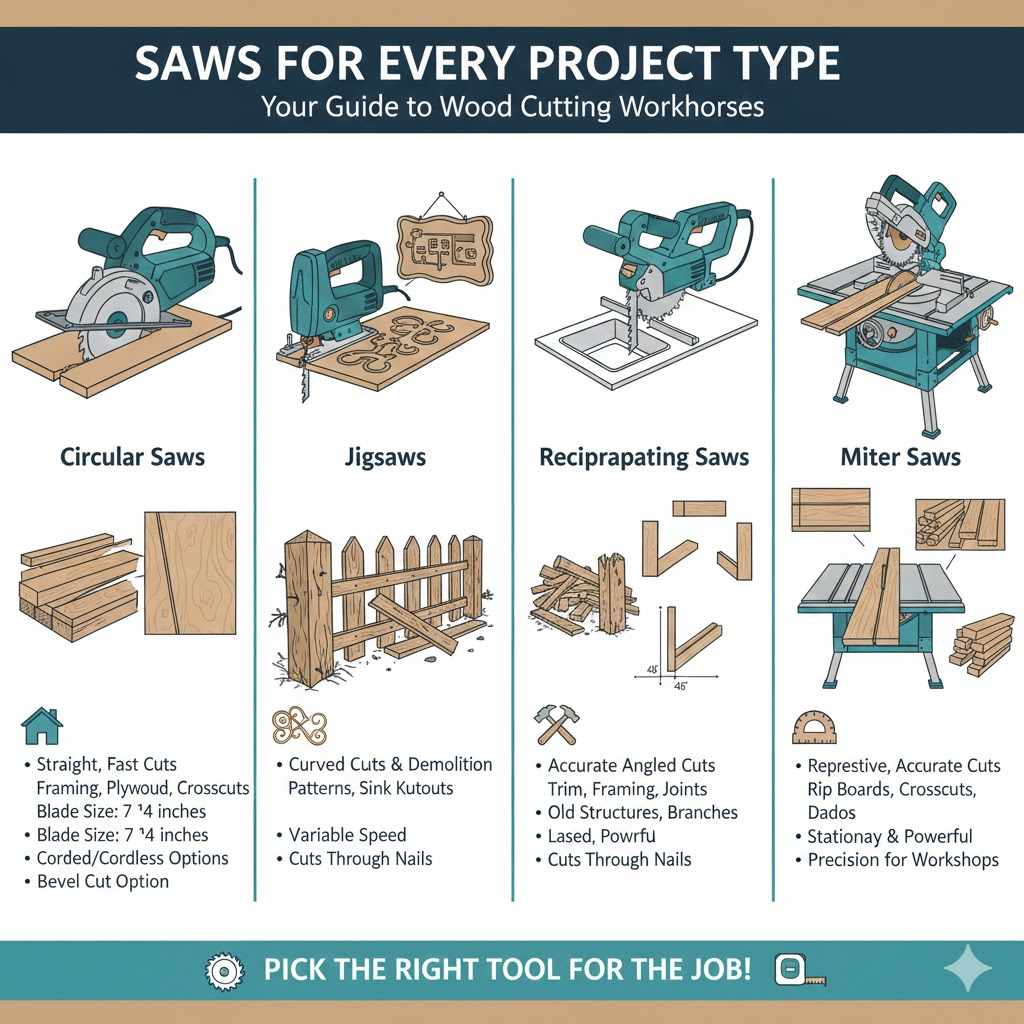
Saws for Every Project Type
Saws are the workhorses of wood cutting. Different saws are designed for different jobs. Some are great for big cuts, while others are perfect for detailed work.
Knowing which saw to pick depends on the kind of projects you plan to tackle.
Circular Saws
A circular saw is a versatile tool that many DIYers find essential. It uses a spinning, toothed blade to make straight cuts in wood. They are powerful and can cut through thick lumber quickly.
This makes them ideal for framing, cutting plywood sheets, and making quick crosscuts.
When choosing a circular saw, look at the blade size, often 7 1/4 inches, which is standard. Power is measured in amps or watts; higher numbers mean more cutting power. Some saws have features like a bevel cut option, which lets you cut at an angle, useful for trim work or more complex designs.
Corded models offer continuous power, while cordless ones give you freedom of movement.
For example, if you’re building a deck, a circular saw will be indispensable for cutting deck boards and support beams. You can also use it to cut dados or grooves with the right blade.
Jigsaws
Jigsaws are fantastic for making curved cuts and intricate shapes. They have a narrow blade that moves up and down, allowing for precise control. This tool is perfect for cutting out patterns, making sink cutouts in countertops, or creating decorative edges.
Key features to consider for a jigsaw include the variable speed setting, which helps control the cutting speed for different materials. Orbital action, where the blade also moves forward and backward slightly, can speed up cuts in wood but might be less clean. Look for a tool that feels comfortable in your hand and has a stable baseplate.
Imagine you want to create a custom wooden sign with a unique shape. A jigsaw would be your go-to tool for tracing and cutting out that design precisely.
Reciprocating Saws
Often called “recip saws” or “Sawzalls,” these are powerful demolition tools. They have a blade that moves back and forth, making them excellent for rough cuts, cutting through nails, and clearing old structures. While they can cut wood, they are not known for their precision.
If you’re tackling a tear-down project or need to cut branches in your yard, a reciprocating saw is a good choice. They are built to be rugged and handle tough jobs.
Miter Saws
Miter saws excel at making accurate angled cuts, especially for trim work and framing. They have a blade that pivots down onto the wood. You can adjust the angle to create precise miter cuts (angled cuts) and bevel cuts (angled cuts through the thickness of the wood).
For perfect corner joints in trim or framing, a miter saw is invaluable. They come in different sizes, with 10-inch and 12-inch blades being common. Look for features like a laser guide to help you see where the blade will cut and a reliable bevel adjustment.
Table Saws
A table saw is a stationary tool with a blade that protrudes through a table surface. It’s ideal for making repetitive, accurate straight cuts. You can rip boards to width, make crosscuts, and even cut dados or rabbets.
Table saws are larger and more powerful than portable saws. They are excellent for workshops and for projects requiring a high degree of precision and repeated cuts. For DIY use, benchtop or portable table saws offer a good balance of features and size.
Consider these statistics: A survey found that 65% of DIY enthusiasts use a circular saw for at least one project per year, highlighting its widespread use. Another 40% rely on jigsaws for intricate cuts.
Other Essential Electric Wood Cutting Tools
Beyond saws, other electric tools are vital for woodworking and DIY. These tools help with shaping, detailing, and preparing wood for cutting and assembly.
Routers
A router is used to hollow out an area in the face of a piece of wood, typically for inlay or decoration. It’s also used to create decorative edges, grooves, and joinery like dadoes and rabbets. Routers come in various forms, including handheld and table-mounted versions.
The versatility of a router is immense. You can change bits to create different profiles, from simple rounding over edges to complex decorative patterns. For DIYers, a plunge router or a fixed-base router offers good starting points.
A plunge router has a base that can be pushed down into the wood, while a fixed-base router is set at a specific depth.
Imagine you want to add a decorative edge to a wooden shelf. A router with a roundover bit would easily create a smooth, finished look. Or, if you’re building cabinets, you might use a router to cut the grooves for drawer slides.
Consider this: Routers can cost anywhere from $50 for a basic trim router to over $300 for a heavy-duty model with various attachments.
Sanders
While not strictly for cutting, sanders are crucial for preparing wood before cutting or finishing. They smooth out rough surfaces, remove old paint or varnish, and prepare the wood for staining or painting. Electric sanders save a lot of time and effort compared to manual sanding.
Common types include:
- Orbital Sanders: These move in a circular pattern and are good for general-purpose sanding. They produce a smooth finish with minimal swirl marks.
- Belt Sanders: These are aggressive and fast, used for removing a lot of material or smoothing rough surfaces quickly.
- Detail Sanders: Small and triangular, these are perfect for getting into corners and tight spaces.
A good DIYer’s toolkit should include at least an orbital sander for most tasks. For bigger jobs, a belt sander might be necessary.
Die Grinders (with cutting attachments)
While die grinders are often associated with metalworking, with the right cutting wheels, they can also be used for precise cutting in wood. They are small, powerful tools that offer excellent control for detailed cutting or trimming.
These are best for very small, intricate cuts where other tools might be too large or cumbersome. They require a steady hand and appropriate safety gear.
Oscillating Multi-Tools
These tools are incredibly versatile. They have a head that oscillates back and forth at high speed, allowing you to attach various blades and accessories. You can use them for plunge cuts, scraping, sanding, and even grout removal.
For DIY projects, an oscillating tool can be a lifesaver for cutting in tight spots where other saws can’t reach. They are great for trimming door jambs to fit underlayment or making quick cuts in drywall.
Safety First When Using Electric Wood Cutting Tools
Safety is paramount when working with any power tool, especially those that cut. Always prioritize your well-being to avoid injuries.
Personal Protective Equipment (PPE)
Wearing the right protective gear is non-negotiable. This includes:
- Safety Glasses or Goggles: Essential to protect your eyes from flying sawdust and debris. Look for ones that offer a snug fit and good ventilation.
- Hearing Protection: Power tools can be loud. Earplugs or earmuffs will prevent hearing damage over time.
- Dust Mask or Respirator: Sawdust can be harmful if inhaled. A good mask will filter out fine particles.
- Work Gloves: Protect your hands from splinters and minor cuts. They should offer a good grip without being too bulky.
Investing in quality PPE is a small price to pay for avoiding a serious injury. Make sure it fits well and you wear it every time you use a tool.
Tool Safety Best Practices
Beyond PPE, follow these essential safety rules:
- Read the Manual: Always read and understand the owner’s manual for each tool before operating it.
- Secure Your Workpiece: Use clamps to hold your wood firmly in place. Never try to hold a small piece with your hand while cutting.
- Keep the Area Clean: A cluttered workspace increases the risk of tripping or losing control of the tool.
- Inspect Tools Regularly: Check for damaged cords, loose parts, or dull blades before each use.
- Unplug When Changing Blades or Adjusting: Always disconnect the power before performing any maintenance or accessory changes.
Proper safety habits become second nature with practice. Think about safety before you even pick up a tool.
Understanding Kickback
Kickback is a sudden, violent backward or upward thrust of the workpiece or the tool. It happens when the blade binds or pinches in the cut. This is one of the most dangerous situations when using saws.
To avoid kickback:
- Ensure the blade is sharp and properly installed.
- Never force the tool; let the blade do the work.
- Support your workpiece adequately so it doesn’t twist or pinch the blade.
- Stand to the side of the blade’s path, not directly behind it.
- Use the correct blade for the material and cut type.
Kickback can cause severe injuries, so understanding its causes and prevention is critical for safe operation.
Making the Right Purchase Decisions
Buying electric wood cutting tools involves weighing several factors. It’s not just about the price, but about getting the best value and the right tool for your needs.
Budget vs. Quality
There’s a wide range of prices for electric tools. Cheaper tools might seem appealing, but they often lack durability, power, and safety features. Investing in a slightly more expensive, reputable brand can save you money in the long run.
These tools tend to last longer and perform better.
For beginners, starting with a few essential, good-quality tools is better than buying many cheap ones that will break. Look for tools from brands known for reliability and good customer support.
Corded vs. Cordless Tools
Corded tools offer consistent power and don’t require battery charging. They are often less expensive and lighter. However, they limit your mobility due to the power cord.
Cordless tools, powered by rechargeable batteries, offer unmatched freedom and portability. Battery technology has improved significantly, offering longer run times and more power. The main drawback is the cost of batteries and the need to recharge them.
If you plan to work in areas without power outlets, cordless is a clear winner.
Many DIYers find a mix of both types useful. For stationary tasks, corded might be fine. For projects around the yard or where you move around a lot, cordless is ideal.
Brand Reputation and Reviews
Before buying, research brands and read product reviews. Reputable brands often have better quality control, warranties, and customer service. Online reviews from other DIYers can provide honest insights into a tool’s performance, durability, and any potential issues.
Look for common themes in reviews. Do multiple people complain about the same problem? Do many users praise its ease of use or power?
This information is invaluable.
Warranty and Support
A good warranty is a sign of a manufacturer’s confidence in their product. Longer warranties, like 3-5 years, offer peace of mind. Also, consider how easy it is to get service or replacement parts if needed.
Checking the manufacturer’s website for warranty details and service center locations can save you trouble down the line.
Getting Started with Your First Projects
Once you have your tools, you’re ready to start building. Here are a couple of simple ideas to get you comfortable.
Project Idea 1 Building a Simple Shelf
This is a great beginner project that uses a few key tools.
- Measure and mark your wood for the shelf and brackets.
You can use a measuring tape and a pencil.
- Cut the wood to size.
A circular saw or a miter saw is perfect for making straight cuts for the shelf and bracket pieces.
- Sand all the pieces smooth.
Use an orbital sander to remove any rough edges or splinters.
- Assemble the shelf and brackets.
You might use a drill to make pilot holes and then screws or nails to attach the pieces.
Project Idea 2 Creating a Wooden Picture Frame
This project focuses on precision and finishing.
- Measure and mark your wood for the four frame pieces.
You’ll need to measure carefully to ensure the corners will join correctly.
- Cut the wood at 45-degree angles.
A miter saw is ideal for these precise angled cuts. If you don’t have one, a miter box and hand saw can work, but it’s less precise.
- Sand the pieces very smooth.
Focus on the cut edges to ensure they fit together tightly.
- Join the corners.
Wood glue and small finishing nails or brads are common. You might also use a corner clamp to hold the pieces while the glue dries.
- Add a backing and hanging hardware.
This often involves cutting a thin piece of plywood or hardboard to fit and attaching it.
Summary
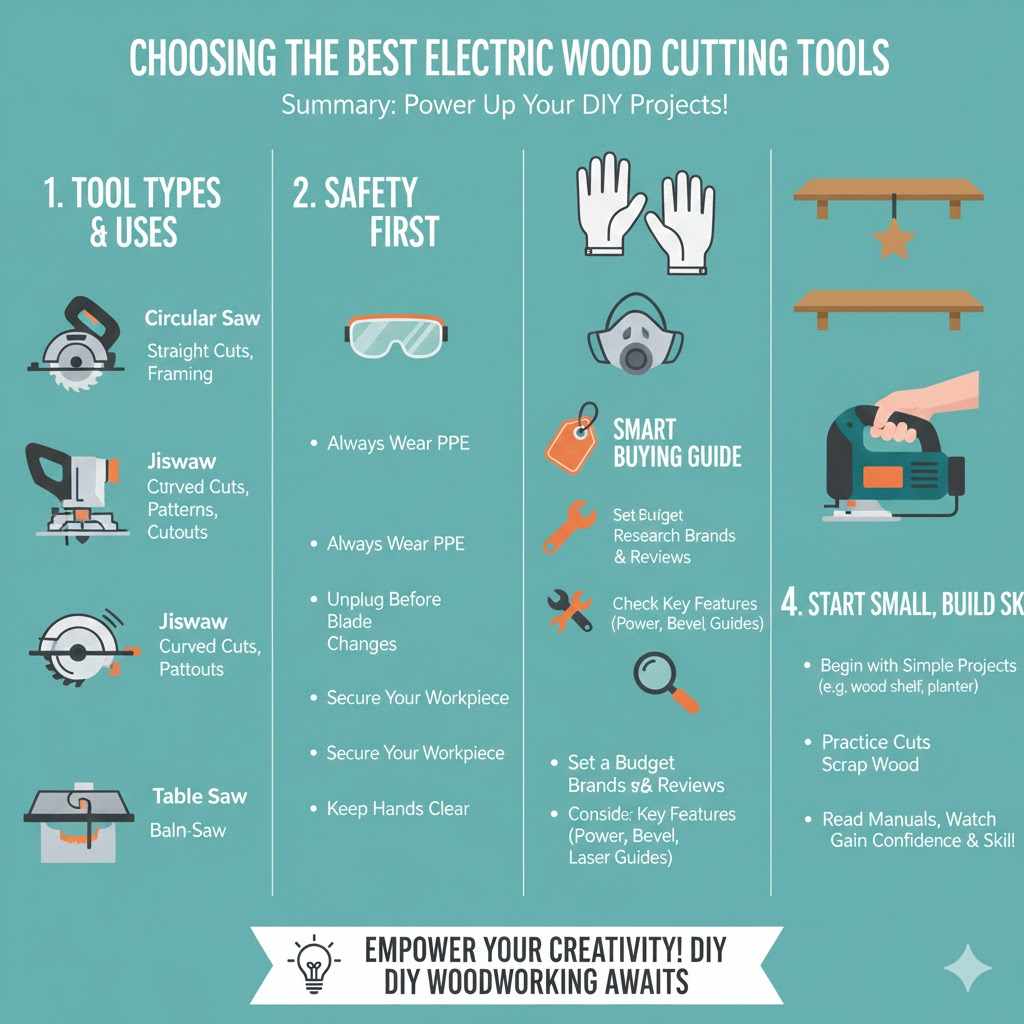
Choosing the Best Electric Wood Cutting Tools for DIY Projects involves understanding the types of tools available and their best uses. From powerful circular saws for big jobs to precise jigsaws for detailed work, each tool has a purpose. Safety gear and practices are crucial.
Budget, brand, and reviews help you make smart purchase decisions. Starting with simple projects builds confidence and skill with your new tools.
Frequently Asked Questions
Question: What is the most versatile electric cutting tool for a beginner?
Answer: For a beginner, a good quality circular saw is often considered the most versatile tool. It can handle a wide range of straight cuts, from ripping lumber to cutting plywood, making it useful for many basic DIY projects.
Question: Do I need many different saws to start DIY projects?
Answer: No, you don’t need many saws to start. A single versatile saw like a circular saw or a jigsaw can get you through many beginner projects. You can expand your collection as your skills and project needs grow.
Question: Are cordless tools as powerful as corded tools?
Answer: Modern cordless tools, especially those with high-voltage batteries, are often as powerful and sometimes even more powerful than their corded counterparts for many applications. Battery life and charging time are factors to consider.
Question: How important is safety gear when using electric wood cutting tools?
Answer: Safety gear is extremely important and absolutely essential. It protects you from injuries like eye damage, hearing loss, and respiratory issues caused by sawdust. Always wear safety glasses, hearing protection, and a dust mask.
Question: What’s the difference between a jigsaw and a reciprocating saw?
Answer: A jigsaw has a fine, narrow blade for controlled curved and intricate cuts, ideal for detailed work. A reciprocating saw has a larger, sturdier blade and is designed for rough, fast demolition cuts and cutting through tougher materials like nails.
Conclusion
You now have a clear path to selecting the best electric wood cutting tools for your DIY projects. Focus on tools that match your immediate needs and skill level. Always prioritize safety, and remember that practice makes perfect.
Start building and enjoy the process of creating with your new equipment.