Portable Table Saw Buying Guide: Weight & Power Compared (2026)
A portable table saw is a benchtop or stand-mounted saw built for one-person transport between job sites, not a scaled-down cabinet saw. Buy the wrong one and you will fight a wobbly folding stand every morning or trip a breaker the moment your dust collector kicks on. This guide compares real weight and rip-capacity numbers across five current jobsite models, explains the 15-amp circuit math that causes breaker trips, and covers what actually matters before you buy.
Quick Answer
A good portable table saw pairs a 15-amp motor with 24″+ rip capacity and a stand that locks solid in under a minute — once the saw-plus-stand weight climbs past about 90 lbs, it stops being realistic for one person to load alone. For jobsite work, prioritize a folding or wheeled stand and a riving knife. For a saw that stays in one spot in a garage or shop, a lighter benchtop model without a stand saves both weight and money.
What Makes a Table Saw “Portable”?
Best Overall Portable Table Saw Pick
DEWALT DWE7491RS 10-Inch Portable Table Saw with Rolling Stand
15-amp motor, 32-1/2″ rip capacity, and a folding rolling stand — the widest rip capacity of any saw here that one person can still fold up and roll away.
- Best for: Contractors ripping full sheet goods on site
- Why we picked it: Widest rip capacity in this class without exceeding one-person rolling weight
- Main drawback: At ~90 lbs with the stand, it is a two-hand carry up stairs
Compare more portable table saw options
 Option 1 SKIL TS6307-00 with Folding Stand
|
 Option 2 DEWALT DWE7485 Compact Table Saw
|
 Option 3 BOSCH GTS15-10 with Gravity-Rise Stand
|
As an Amazon Associate we earn from qualifying purchases.
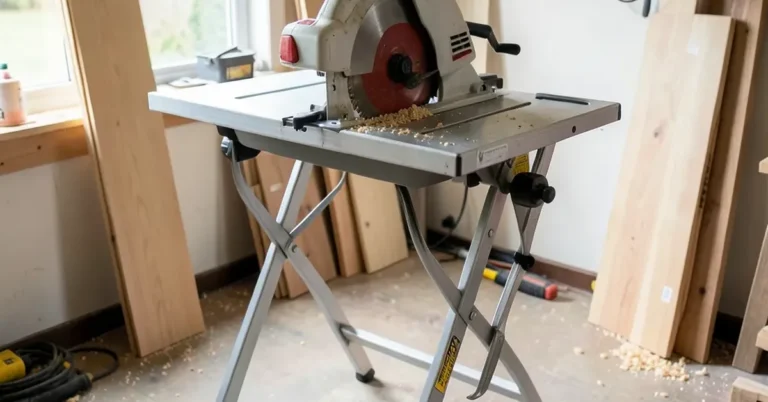
A portable table saw is built around two things a stationary cabinet saw is not: a lightweight aluminum or steel table instead of cast iron, and a universal (direct-drive) motor instead of an induction motor bolted to a heavy base. That combination is what makes a saw that can rip 2x lumber also fold up and ride in a truck bed.
It is a different tool from a stationary or hybrid cabinet saw, and it is also a slightly different tool from what most people mean by a “small table saw” — that term usually points to a compact benchtop unit meant to live permanently on one workbench, where portability just means it is light enough to lift once. A true jobsite saw is built to be folded, carried, and set back up daily. If you want the full lineup across every table saw category, including cabinet and contractor saws, see our complete table saw buying guide.
Weight & Portability Compared by Model
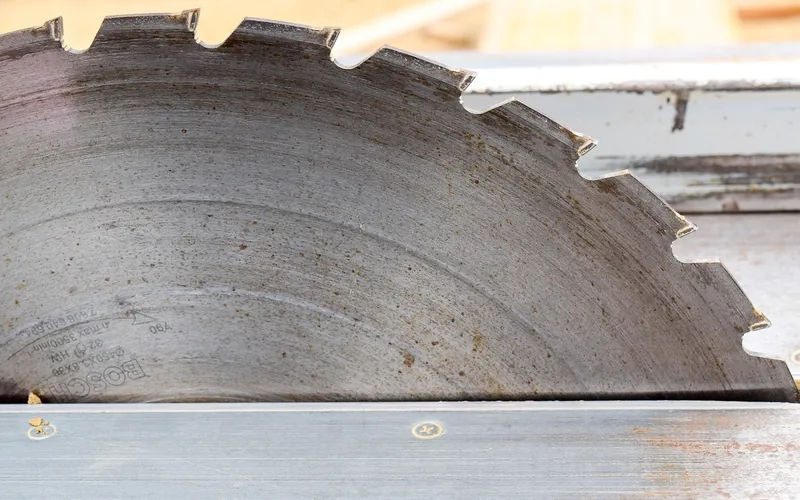
Every spec sheet lists rip capacity and amperage. Almost none of them put actual carry weight side by side with rip capacity, which is the number that decides whether one person can load the saw into a truck alone. Here is that comparison across five current jobsite models, based on published manufacturer and retailer specs:
| Model | Weight (w/ stand) | Rip Capacity | Stand Type | Best For |
|---|---|---|---|---|
| DEWALT DWE7485 | ~46 lbs (no stand) | 24-1/2″ | Benchtop, no stand | Lightest overall; small workshops, truck-bed transport |
| SKIL TS6307-00 | ~67 lbs | 25-1/2″ | Integrated folding stand | Best one-person carry with a stand included |
| DEWALT DWE7491RS | ~90 lbs | 32-1/2″ | Folding rolling stand | Widest rip capacity most people can still roll solo |
| SKILSAW SPT99-11 | ~90 lbs | 30-1/2″ | Rolling stand, 16″ wheels | Worm-drive torque in thick hardwood or treated lumber |
| BOSCH GTS15-10 | ~103 lbs | 32-1/8″ | Gravity-rise wheeled stand | Heaviest of the five — rolls into place instead of getting carried |
Weights are saw-plus-stand as published by the manufacturer or retailer; actual shipping weight can vary by a few pounds between revisions.
The pattern worth noticing: rip capacity and weight do not move together in a straight line. The SKILSAW and the DEWALT DWE7491RS weigh about the same, but the SKILSAW trades two inches of rip capacity for worm-drive gearing that handles thick stock without bogging down. And the Bosch is the heaviest saw here specifically because its gravity-rise stand is built to be rolled, not carried — it is the right trade if your job site has flat ground and you are working alone. For a closer look at day-to-day use of the DEWALT DWE7491RS specifically, see our hands-on notes on the DEWALT 10-inch portable table saw; if you want a heavier-duty brand outside this table, our Grizzly portable table saw review covers a hybrid option built for shop use as much as job sites — or see our Grizzly vs Ridgid table saw comparison if you are weighing those two brands directly.
Motor Power and What 15 Amps Actually Means on a Job Site
Nearly every portable table saw on the market ships with a 15-amp universal motor — it is the largest motor that runs on a standard 120-volt household circuit, so there is not much spec-sheet difference to shop between models. What actually varies is how that power gets to the wood: worm-drive saws like the SKILSAW trade a bit of rip capacity for more torque at low RPM, which matters when you are ripping pressure-treated 2x lumber or thick hardwood that would bog down a direct-drive motor.
📊 A 15-amp circuit at 120V tops out at 1,800 watts, and a 15-amp saw motor draws close to that under load. The National Electrical Code’s continuous-load rule (NEC 210.19(A)(1)) caps sustained draw at 80% of breaker rating — about 1,440 watts on a 15A circuit. That leaves almost no headroom for a shop vac or dust collector plugged into the same circuit, which is why the breaker trips the moment both machines are running at once. Source: National Electrical Code, continuous-load provision.
The fix is not a bigger saw — it is a second circuit. Run the dust collection off a separate 15- or 20-amp circuit whenever the panel allows it, or accept that you will be running the vac in short bursts between cuts rather than continuously.
Rip Capacity: How Much Do You Actually Need?
Rip capacity is the distance from the blade to the far edge of the fence’s travel, and it is the single spec that determines whether you can break down a full 4×8 sheet of plywood in one pass. A 24″–26″ rip capacity handles most framing and trim work. You need 30″+ specifically if you are ripping full sheet goods down the middle, since a standard 4×8 sheet needs about 24″ of capacity on each side of a center cut — anything less and you are flipping the sheet or using a circular saw and a track for the long cut instead.
If long stock outrunning the table is a regular problem rather than an occasional one, the fix is outfeed support rather than a bigger saw — a folding roller stand behind the saw does more for cut accuracy on long boards than another few inches of rip capacity.
Stand Types: Folding, Rolling, Gravity-Rise, or Bare Benchtop
- Folding stand (integrated): legs fold flat against the saw body for storage; typically the lightest stand option and standard on budget-to-mid saws like the SKIL TS6307-00.
- Rolling stand: adds wheels so the saw can be dragged rather than carried once folded; common on saws in the 85–95 lb class where full lifting gets impractical.
- Gravity-rise stand: a foot pedal releases the saw to rise into working height using its own weight, then folds back down the same way; the smoothest setup motion but the heaviest stand hardware of the three.
- No stand (benchtop): the saw sits directly on a workbench or a set of sawhorses; lightest option by weight, but you supply the stable surface every time.
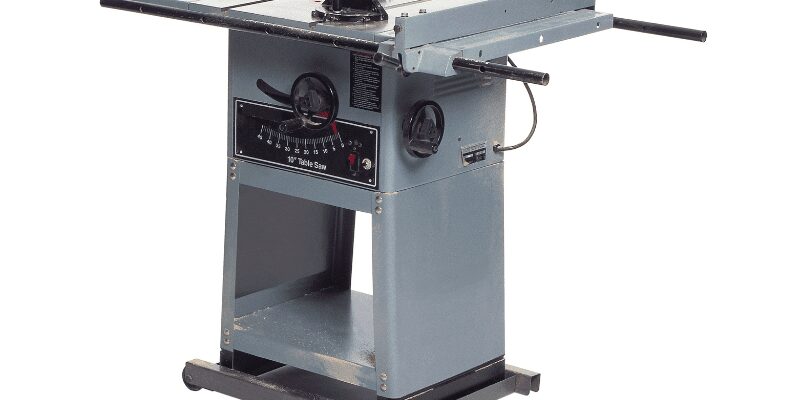
A saw that rides in a truck bed between jobs also picks up moisture faster than one that stays in a climate-controlled shop — wipe the table down at the end of the day and see our guide on removing rust from a table saw top if surface rust already shows up on the aluminum or steel table.
Corded vs. Battery-Powered Portable Table Saws
Battery-powered platform saws (Milwaukee M18 FUEL and similar) have closed most of the performance gap with corded saws on thin stock, but corded 15-amp saws still win on sustained cuts through thick hardwood, on cost per cut, and on not needing a charged battery to start the day. A cordless saw earns its price when the job site has no power — a remodel with the panel off, an outbuilding, a trailer — not as a default upgrade over a corded saw on a site that already has power.
Safety Features That Matter More on a Portable Saw
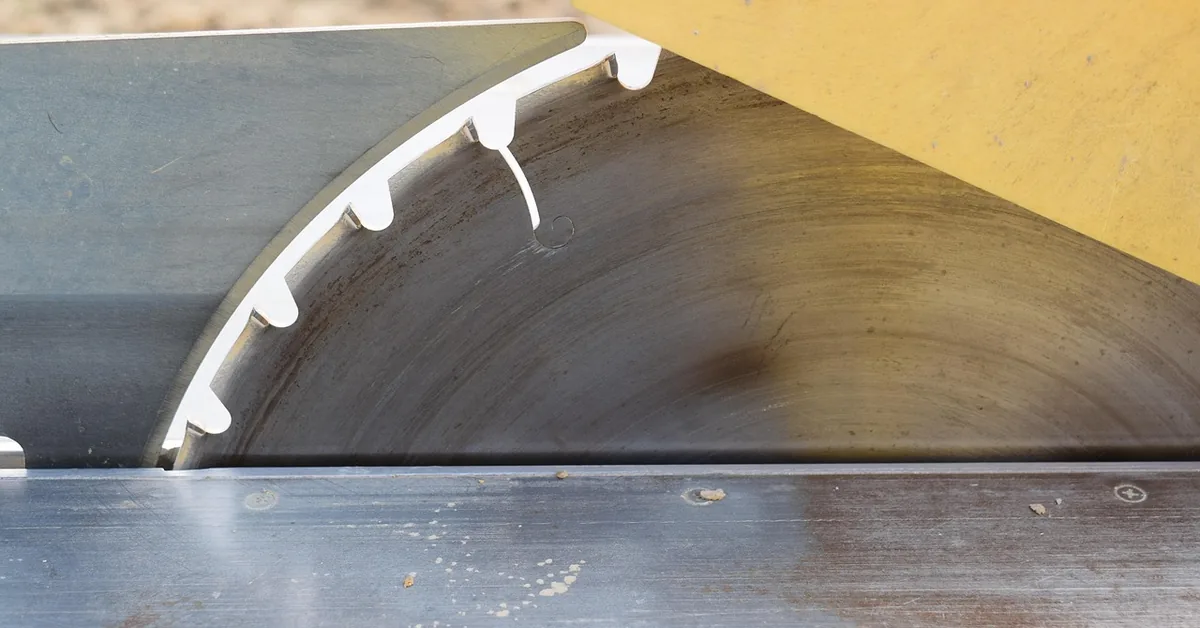
A riving knife that moves with the blade height, a blade guard, and anti-kickback pawls are standard on every current jobsite saw — the real safety variable on a portable saw is how well the stand locks. A stand that is not fully seated can rock mid-cut, and a fence that has drifted out of parallel from repeated folding is a common cause of kickback that has nothing to do with the blade guard at all.
“The maintenance item that actually matters on a folding saw isn’t the motor, it’s the fence. A cheap folding stand loses a fraction of an inch of fence-to-blade parallelism within a season of folding and unfolding — check it with a tape measure at the front and back of the blade slot before every job, not just when a cut starts drifting.”
How to Set Up a Portable Table Saw Safely on a Jobsite
- Lock the stand fully before you plug in: confirm every leg latch or gravity-rise catch is seated — a half-locked stand is the most common cause of mid-cut wobble.
- Check fence-to-blade parallel alignment: measure the distance from the miter slot to the blade at the front tooth and the back tooth; if the two numbers differ by more than about 1/32″, realign the fence before cutting.
- Install the riving knife and blade guard: set the riving knife to match the current blade height and confirm the guard swings freely before the saw is powered on.
- Plan your circuit before you cut: confirm what else is on the same breaker — a shop vac or dust collector on the same 15-amp circuit as the saw is the most common cause of a mid-cut trip.
- Do a dry run with the power off: push the workpiece through the cut path by hand with the saw unplugged to confirm the outfeed side is clear and supported.
Common Mistakes First-Time Buyers Make
- Buying more rip capacity than the truck can carry: a 32″ rip saw is dead weight if it never leaves the garage — match capacity to the jobs you actually run, not the biggest number on the shelf.
- Removing the riving knife because it “gets in the way”: most kickback incidents on portable saws happen after the riving knife has been taken off and never reinstalled.
- Ignoring circuit capacity: pairing a 15-amp saw with a shop vac on the same breaker (see the circuit math above) causes more lost work time than any spec on the saw itself.
- Skipping the fence-alignment check: a folding stand that has drifted out of parallel produces cuts that taper without any obvious cause — check it before assuming the blade is dull.
- Assuming “portable” means “light”: a saw-and-stand combo pushing 100 lbs is portable in the sense that it rolls, not in the sense that one person lifts it into a truck bed solo — check the weight table above before you buy.
Frequently Asked Questions
What’s the lightest portable table saw you can buy?
The DEWALT DWE7485 is the lightest saw in this comparison at about 46 lbs, but it is a bare benchtop unit with no stand. Among saws that include a stand, the SKIL TS6307-00 is the lightest at roughly 67 lbs.
Is a portable table saw powerful enough for hardwood?
Yes — nearly every current jobsite saw runs a 15-amp motor, which is enough for hardwood as long as the blade is matched to the cut. A 24-tooth ripping blade bogs down far less in thick hardwood than a 40-tooth combination blade, regardless of which 15-amp saw you own.
Do I need a stand for a portable table saw?
Not if the saw has a stable, level surface to sit on every time, such as a dedicated workbench. A stand earns its weight when the saw moves between locations, since it removes the need to find a bench or sawhorses on-site.
Can I run a portable table saw and a shop vac on the same circuit?
Usually not without tripping the breaker. A 15-amp saw under load already draws close to the continuous-load limit of a 15-amp circuit, leaving little headroom for a shop vac or dust collector on the same line — run dust collection off a separate circuit when the panel allows it.
What’s the difference between a portable table saw and a benchtop table saw?
The terms overlap, but a portable or jobsite table saw is built for daily transport with a folding or rolling stand, while a benchtop table saw is typically lighter, has no stand of its own, and is meant to sit on a workbench in one place.
How dangerous are portable table saws compared to stationary cabinet saws?
The blade itself carries the same risk on either type of saw. The added risk on a portable saw comes from the stand — a saw that rocks because the stand is not fully locked is a more common cause of an accidental kickback than the blade guard or riving knife failing.
Conclusion
The right portable table saw comes down to two numbers most buying guides bury in spec sheets: the weight you are actually willing to lift, and the rip capacity the jobs you run actually require. Match those two first, then let motor power and stand type break the tie — every current 15-amp saw will cut the wood, but not every stand will still hold its alignment a year from now. If you’re still deciding between saw categories entirely, see our types of table saws guide for how benchtop, jobsite, contractor, and cabinet saws actually differ.
Sponsored / affiliate links. As an Amazon Associate I earn from qualifying purchases. I may earn additional commission from eligible campaigns.
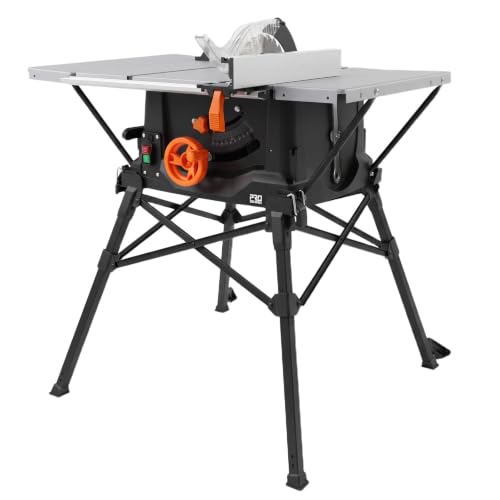 10-Inch Portable Table Saw with Folding Stand, 0-45° Bevel Cut, 15A 5000RPM, Adjustable Blade Height, Multifunctional Benchtop Wood Saw for DIY & Woodworking
 4" Mini Portable Table Saw, Compact Electric Cutting Machine with 3 Blades, Adjustable Miter Guide, High-Speed Motor – Perfect for DIY Crafts, Wood, Metal, Ceramic, Glass