10 Simple Wood Carving Designs for Beginners
A simple wood carving design uses basswood — at 410 lbf on the Janka scale, the softest common carving wood — and needs only 2 to 3 clean knife strokes per detail rather than dozens. Choose a design too detailed for your skill level and you will fight tear-out and snapped tips before finishing. This guide covers 10 real beginner designs sorted by time and difficulty, the mistake that ruins most first attempts, and a 5-step mushroom you can finish tonight. Looking for project categories instead of a difficulty-ranked list? See our easy whittling projects guide for spoons, keychains, and figures grouped by type.
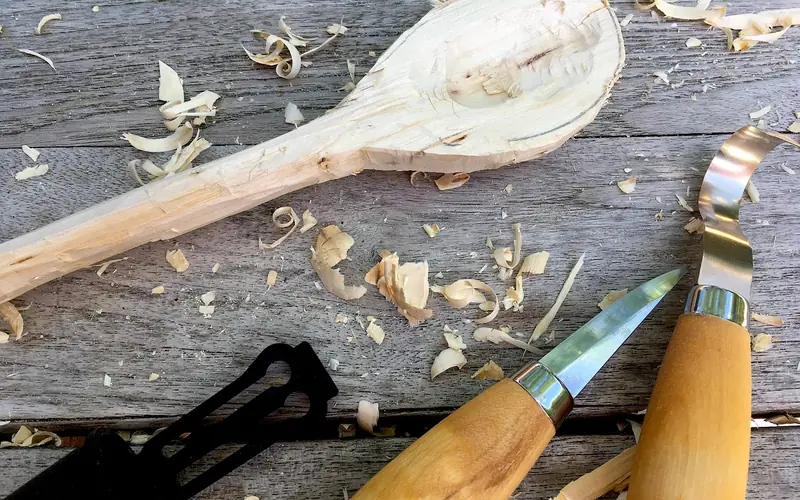
Quick-Pick Guide: 10 Designs by Difficulty and Time
Best Beginner Carving Kit Pick
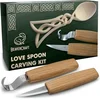
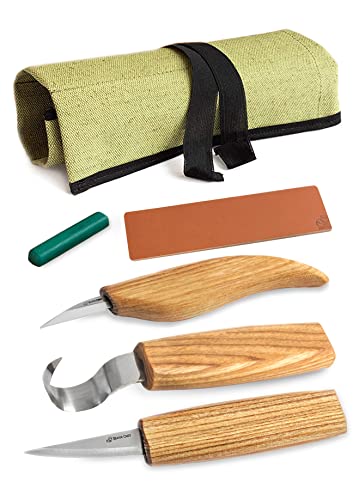
BeaverCraft Wood Spoon Carving Kit for Beginners – $36.99
Comes with a sloyd knife, a hook knife, and a basswood blank already sized — the same basswood this guide recommends for every design in the table above.
- Best for: a first knife set plus a guided spoon project in one box
- Why we picked it: the included blank is already basswood, so you’re not guessing at wood choice for your first cut
- Main drawback: only one blank included — you’ll need to buy more basswood for the other 9 designs here
Compare more beginner carving kit options
 Option 1 Wood Carving Tools Kit for Beginners – $22.99
|
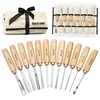 Option 2 HURRICANE 12-Piece Starter Set – $49.99
|
 Option 3 Flexcut Beginner Palm & Knife Set – $75.96
|
As an Amazon Associate we earn from qualifying purchases.
Match a design to the time you actually have before you pick up a knife. This table is the one thing most carving-idea roundups skip — a straight comparison of difficulty, time, and wood, side by side.
| Design | Difficulty | Time | Best Wood |
|---|---|---|---|
| Basswood Mushroom | Beginner | 30–45 min | Basswood |
| Worry Stone | Beginner | 20–30 min | Basswood or butternut |
| Simple Heart Keepsake | Beginner | 30–45 min | Basswood |
| Whittled Wooden Spoon | Beginner–Intermediate | 2–3 hrs | Basswood or cherry |
| Chip-Carved Coaster | Beginner | 1–2 hrs | Basswood |
| Carved Wooden Initial Sign | Beginner | 2–3 hrs | Pine or basswood |
| Small Wooden Bird | Beginner–Intermediate | 1.5–2.5 hrs | Basswood |
| Wooden Gnome | Intermediate | 3–4 hrs | Basswood |
| Relief-Carved Wall Plaque | Intermediate | 4–6 hrs | Butternut or basswood |
| Walking Stick Handle | Intermediate | 3–5 hrs | Oak or hickory branch |
3 Simple Wood Carving Designs Under an Hour
Basswood Mushroom
A mushroom is two basic shapes joined at one seam — a dome cap and a tapered cylinder stem — which makes it the fastest real project a first-time carver can finish. Start from a 2×2×3 inch basswood blank and expect 30–45 minutes total, most of it on the dome.
How to Carve a Simple Wooden Mushroom (5 Steps)
- Rough out the blank: Sketch the mushroom outline on all four faces of the blank, then remove the corners with a straight knife cut until you have a rough cylinder topped by a dome.
- Separate cap from stem: Make a stop cut straight down around the full circumference where the cap meets the stem, then pare from the cap’s edge in toward that stop cut to define the underside of the cap.
- Round the dome: Carve the top of the cap into a smooth dome, cutting downhill with the grain the whole time — cutting the wrong direction here is the single most common reason this project tears out.
- Taper the stem: Thin the stem gradually from cap to base, leaving it slightly wider at the base than the top so the finished piece stands without tipping.
- Sand and seal: Sand through 120, 220, and 400 grit, then finish with food-safe mineral oil or beeswax if the piece will sit somewhere food touches it.
“The mushroom cap is where beginners tear out most often, and it’s always at the same spot — the underside where the cap meets the stem. Grain runs up through the stem, so once you’re carving the underside of the cap you’re cutting into end grain no matter which way you turn the piece. Take smaller bites there and roll the knife instead of pushing straight through.”
Worry Stone
A worry stone is a flat, palm-sized oval with a thumb-depth hollow carved into one face — no fine detail, just two scooping cuts and sanding. Use a 2×3 inch basswood offcut and a shallow gouge or the tip of a knife; most carvers finish in 20–30 minutes.
Simple Heart Keepsake
A heart teaches symmetry and concave cuts on a design small enough to forgive mistakes on either side. Draw a centerline first, carve one half, then mirror your cuts on the second half — matching the two sides by eye, not by measuring, is the actual skill this project builds.
4 Weekend Wood Carving Designs (2–3 Hours)
Whittled Wooden Spoon
A spoon is the project that actually teaches grain awareness, because the bowl has to be hollowed across end grain no matter how the blank is oriented. Rough the profile with a straight knife, hollow the bowl with a hook knife, and expect 2–3 hours from blank to a spoon you can actually use once it’s food-safe finished.
Chip-Carved Coaster
Chip carving removes small triangular wedges from a flat basswood blank to build a geometric pattern — the same three-cut triangle repeated in a grid or star layout. A 4-inch round or square coaster blank takes 1–2 hours once you have the stop-cut, sloping-cut, sloping-cut sequence down for one triangle.
Carved Wooden Initial Sign
A single carved letter on a small board is a V-tool project, not a knife project — the letter’s edges are cut with a V-gouge held at a consistent angle for the whole outline. Pencil the letter first in a bold, simple font; script letters with thin strokes are the most common reason beginners abandon this project halfway through. Once carved, the same techniques apply if you want a full sign that stands on its own.
Small Wooden Bird
A simple songbird silhouette — body, tail, and a suggestion of a beak, no individual feathers — is the easiest animal shape to carve because it has no legs or thin protrusions to snap off. Keep the design chunky and rounded rather than detailed for your first attempt; if you want to carve a specific animal step by step instead of a generic bird, our full cat carving tutorial walks through one start to finish, and this animal-carving roundup has more shapes to pick from.
3 Next-Level Beginner Carving Projects
Wooden Gnome
A gnome is a cone-shaped body, a rounded hat, and a simple bearded face — three separate shapes combined, which is why it runs 3–4 hours instead of one. Carve the hat and body as one continuous taper before you touch the face; adding the beard and nose too early makes it easy to carve away wood you needed for the final proportions.
Relief-Carved Wall Plaque
Relief carving keeps a background flat while raising a design above it — a leaf, a simple animal outline, or initials work well for a first attempt. Outline the design with a V-tool stop cut first, then remove the background wood evenly to a consistent depth (about ⅛ inch is enough for most beginner designs) before shaping the raised element itself.
Walking Stick Handle
Carving a handle onto a straight oak or hickory branch means working with curved, uneven grain instead of a squared blank, which is what makes this the hardest project on this list. If you want dedicated patterns for the shaft itself rather than just the handle, our stick carving patterns guide covers spiral and diamond-point designs for the rest of the stick.
Tools and Wood You’ll Actually Need
Every design above needs only a straight whittling knife to start; add a hook knife for the spoon and a V-tool once you reach chip carving or the initial sign. Basswood is the wood to buy for 8 of these 10 designs — it is soft enough to carve with hand pressure alone and forgiving of a crooked cut. For the full breakdown of knife types, gouge profiles, and carving safety gear, see our complete beginner’s guide to carving wood.
📊 Basswood measures 410 lbf on the Janka hardness scale, versus roughly 1,290 lbf for red oak — more than 3 times softer, which is why it takes only hand pressure to carve where oak needs a mallet. Source: The Wood Database, Basswood
Common Mistakes When Choosing a First Carving Design
- Picking a design with fine detail: a detailed face or feathered wings looks appealing in a photo, but thin, isolated details are exactly what snaps off on a first attempt. Every design in the table above was chosen for having no thin unsupported pieces.
- Skipping the pattern transfer: sketching the outline directly onto the wood before cutting takes two minutes and prevents the single most common beginner error — cutting a shape that looks fine from one angle and wrong from every other.
- Starting on hardwood: oak, walnut, and cherry all carve harder than basswood by a factor of 2 to 3 on the Janka scale. Save them for after you’ve finished 3–4 basswood projects.
- Ignoring grain direction on curved cuts: the mushroom cap and gnome hat both tear out at the same kind of spot — a curve that crosses from long grain into end grain. Slow down and take smaller cuts through that transition rather than one long stroke.
Frequently Asked Questions
What is the easiest thing to carve out of wood?
A basswood mushroom or worry stone is the easiest starting project — both use only two basic shapes and no fine detail, and most beginners finish either in under 45 minutes.
What is the best wood for beginner carving?
Basswood is the best wood for beginner carving. At 410 lbf on the Janka hardness scale it carves with hand pressure alone, holds fine detail without crumbling, and is inexpensive and widely sold in pre-cut carving blanks.
What is the best thing to whittle for beginners?
A wooden spoon or a small rounded animal shape like a bird are the best beginner whittling projects. Both use basic push, pull, and stop cuts without requiring gouges or V-tools.
Can you carve wood with just a pocket knife?
Yes. A sharp pocket knife can carve any of the knife-only designs in this guide, including the mushroom, worry stone, heart, and spoon. A dedicated whittling knife adds comfort and control but is not required to start.
What is the rule of three in wood carving?
The rule of three in wood carving means judging every piece on design, technique, and finishing together, not any one alone. A technically clean carving with a poor design choice, or a great design with a rough finish, both fall short of a piece that gets all three right.
Conclusion
Start with one design from the under-an-hour tier, not the one that looks most impressive in a photo — the mushroom or worry stone will teach you more about controlling a knife than a half-finished gnome ever will. Work through the difficulty tiers in order and basswood the whole way, and the walking stick handle at the end of this list will feel like a natural next step instead of a leap.
Sponsored / affiliate links. As an Amazon Associate I earn from qualifying purchases. I may earn additional commission from eligible campaigns.