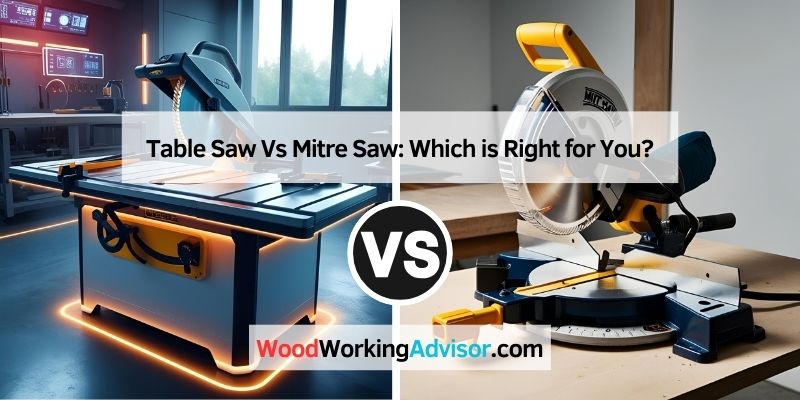
Table Saw vs Miter Saw: Which to Buy First? (Real Injury Data)
A miter saw is the better first purchase for most home shops — it costs less ($130-$280), handles trim and framing crosscuts, and is far less intimidating than a table saw’s exposed blade. But once you’re ripping plywood, resizing boards, or cutting cabinet parts, only a table saw does that safely. CPSC data even shows table saws cause roughly 4-5 times more ER-treated injuries than miter saws each year. This guide covers real specs, safety data, cost, and which to buy first.
What a Table Saw Does Best
Best First Saw Pick for Ripping Full Sheets
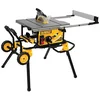
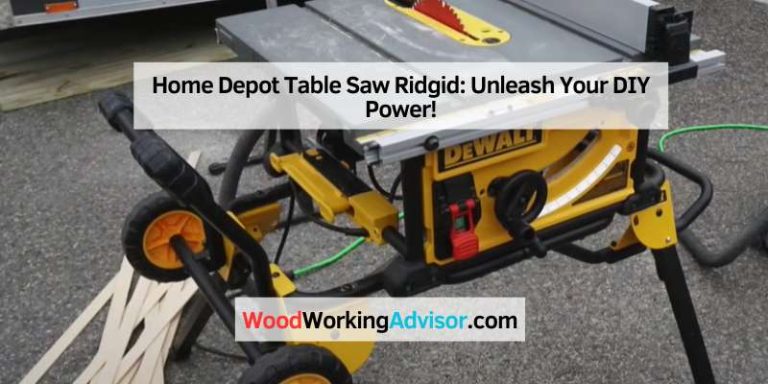
DEWALT 10-Inch Jobsite Table Saw with Rolling Stand (DWE7491RS)
A 32-1/2 inch rip capacity and telescoping fence handle full sheets of plywood, and the rolling stand folds down for storage between projects.
- Best for: Ripping sheet goods and building furniture or cabinets
- Why we picked it: 32-1/2″ rip capacity and a rack-and-pinion fence handle the exact cuts a miter saw can’t make
- Main drawback: Still needs floor space to set up and break down; not a true benchtop unit
Compare more table saw and miter saw options
 Option 1 DEWALT 10″ Compound Miter Saw (DWS713)
|
 Option 2 SKIL 10″ Dual Bevel Sliding Miter Saw (MS6305)
|
 Option 3 SKIL 10″ Portable Jobsite Table Saw (TS6307)
|
As an Amazon Associate we earn from qualifying purchases.
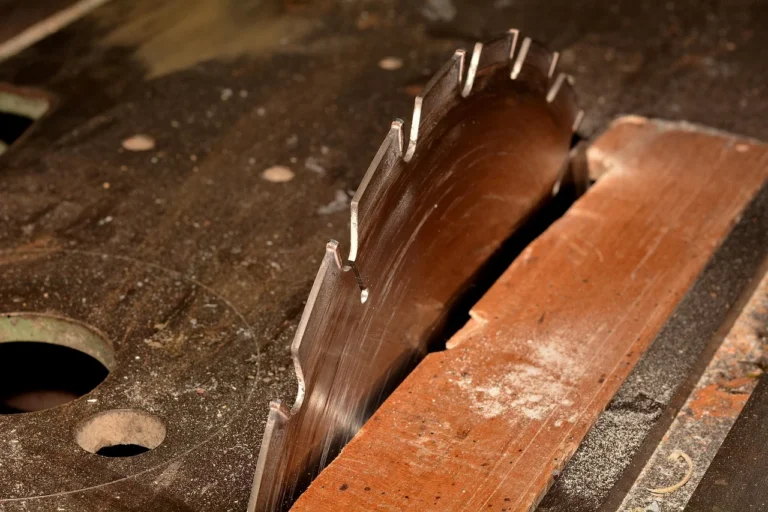
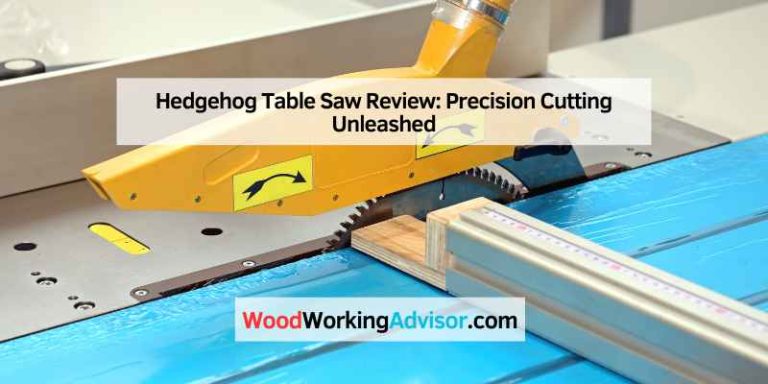
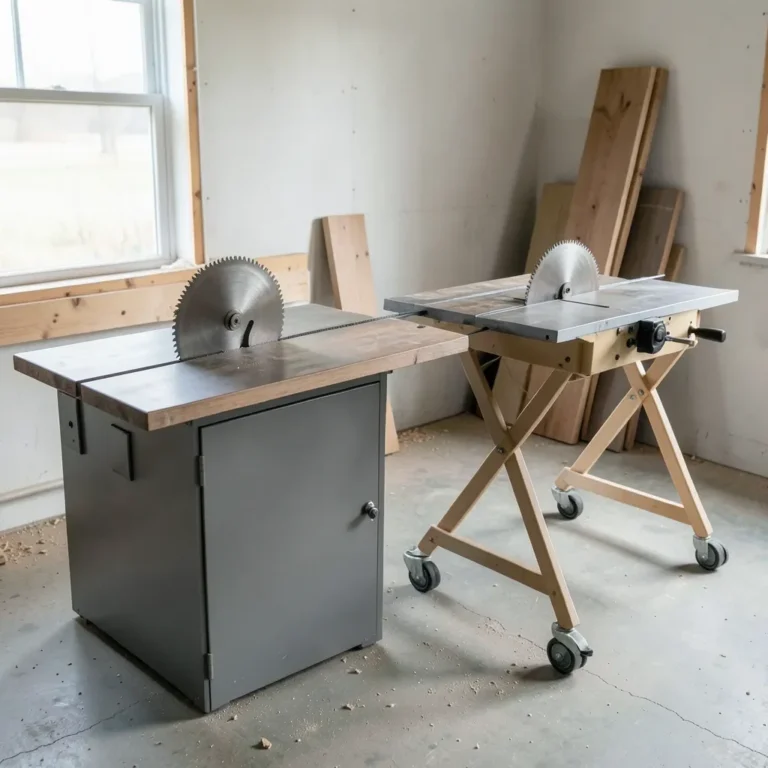
A table saw is a stationary shop tool with the blade mounted in a flat table, spinning up through the workpiece as you push the board across it. A fence keeps the cut parallel to the blade, and a riving knife behind the blade stops the wood from pinching and kicking back. That combination is what makes it the only practical way to rip long boards or break down a full sheet of plywood into usable panels. Both tools covered here are part of a much wider saw family — see our full woodworking tools and saw types guide if you are weighing more than just these two.
Most consumer table saws run a 10″ blade (8-1/4″ on compact benchtop and jobsite models), with cabinet saws in dedicated shops sometimes stepping up to 12″. A typical 15-amp jobsite saw like the DEWALT DWE7491RS spins at roughly 4,800 RPM and offers a 32-1/2″ rip capacity, wide enough to break down a 4×8 sheet of plywood into two even halves in one pass. Blade-and-fence accuracy is also where a dedicated table saw jig earns its keep, since a stock fence alone won’t hold that tolerance on repeat cuts.
A table saw can also miter and bevel by tilting the blade or using a miter gauge in the table slot, but that gauge is usually the weakest stock part of the saw — see our guide to calibrating a table saw miter gauge if your angled cuts are drifting off square.
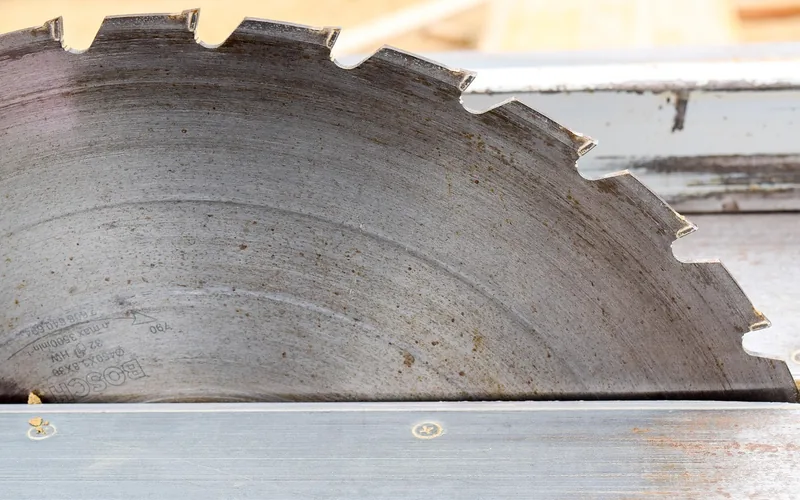
What a Miter Saw Does Best (Also Spelled Mitre Saw)
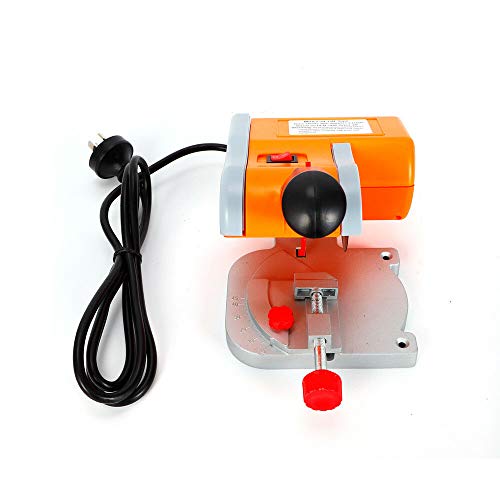
A miter saw is a chop-style tool with a spinning blade mounted on a pivoting arm that you pull down onto a stationary board, rather than pushing the board through the blade. That design trades ripping capacity for speed and repeatability on crosscuts and angles, which is why it dominates trim, molding, framing, and picture-frame work.
Miter saw blades run 8″, 10″, or 12″, and the saw itself typically weighs 20-60 lbs, light enough to move between a garage and a jobsite. A standard (non-sliding) miter saw usually crosscuts up to about 6″ wide at 90 degrees; a sliding compound miter saw adds a rail that lets the head travel forward and back, adding up to roughly 2″ more crosscut width for baseboard and wide trim. Dual-bevel models tilt the blade both directions, so you don’t have to flip the board for opposing crown-molding angles. See our full breakdown of what a miter saw machine is and how it cuts for the mechanics behind each type.
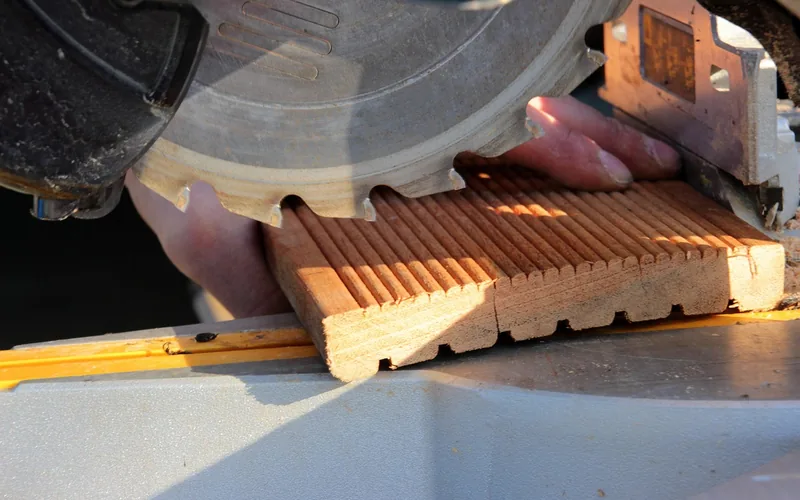
Table Saw vs Miter Saw: Side-by-Side Comparison
The specs below line up the two tools directly. Use it to see at a glance which one matches the cuts your current project list actually needs.
| Feature | Table Saw | Miter Saw |
|---|---|---|
| Primary cut type | Long rips, straight cuts, sheet goods | Crosscuts and angle cuts |
| Typical blade size | 10″ (8-1/4″ benchtop, up to 12″ cabinet) | 8″, 10″, or 12″ |
| Typical weight | 50-300 lbs | 20-60 lbs |
| Starter price (2026) | ~$300-$600 (jobsite), $1,000+ (cabinet) | ~$130-$280 (10″ compound) |
| Best first buy for | Furniture, cabinets, plywood/sheet goods | Trim, molding, framing, decking |
Which Tool Is Actually Safer? Real Injury and Noise Data
Table saws pose a meaningfully higher injury risk than miter saws, and the numbers back that up rather than just “feeling” true.
“Table saws are associated with roughly 32,000 emergency-room-treated blade-contact injuries a year, versus an estimated 6,800 a year for miter saws — table saws account for more stationary-saw injuries than any other single tool type.”
Noise tells a different part of the story. NIOSH testing has measured miter saws as loud as 113 dBA at the operator’s ear — louder than most table saws, which typically run 80-100 dB with occasional peaks near 104 dB. Miter saws use a universal motor that spins faster and runs louder than the belt-driven induction motor in most table saws. Both tools regularly exceed the 85 dB threshold where OSHA and NIOSH recommend hearing protection, so wear ear protection for either one, not just the one that “feels” more dangerous.
📊 Table saws: ~32,000 ER-treated injuries/year vs. miter saws: ~6,800/year — Source: CPSC NEISS data
Cost: What to Actually Budget
A solid 10″ compound miter saw from a name brand currently runs about $130-$280 — a basic single-bevel model like the DEWALT DWS713 lands around $279, while simpler options start closer to $130-$140. A jobsite table saw with a folding or rolling stand runs roughly $300-$600; a full-size cabinet saw for a dedicated shop starts around $1,000 and climbs well past $3,000 for a professional model. If budget is the deciding factor and your projects are mostly trim and framing, the miter saw is both the cheaper and more directly useful first purchase.
Space and Portability
At 20-60 lbs, a miter saw sets up on a workbench or a pair of portable saw horses and breaks down again in minutes, which makes it the realistic choice for a one-car garage or jobsite work. A table saw’s 50-300 lb range and permanent-feeling footprint make it harder to store unless you buy a jobsite model with a folding stand — and even then, you still need floor space to actually use the full rip capacity once it’s unfolded.
Can a Miter Saw Replace a Table Saw?
No, and the reason is mechanical, not just a rule of thumb: a miter saw has no rip fence and no table long enough to guide a full board or sheet through the blade in a straight line. It can only crosscut and angle-cut material that’s already been sized. A table saw, by contrast, can technically make many of the same crosscuts a miter saw makes (by tilting the blade or using a miter gauge), just less conveniently for repeat trim work. If you only own a miter saw and need to rip a board narrower without buying a table saw yet, a circular saw with a straightedge guide or a track saw is the realistic stopgap — not the miter saw.
Which Should You Buy First?
- Buy a miter saw first if: your projects are mostly trim, molding, picture frames, decking, or framing crosscuts, and budget or space is tight.
- Buy a table saw first if: you’re building furniture or cabinets, or regularly breaking down plywood and other sheet goods — nothing else in this comparison substitutes for that.
- Buy both eventually if: your project list grows past one category. Most home shops end up with both tools within a year or two; the question is only which one earns its cost first.
Frequently Asked Questions
What Is Better, a Table Saw or a Miter Saw?
Neither is universally better; they cut differently. A table saw rips long boards and breaks down sheet goods like plywood. A miter saw makes fast, repeatable crosscuts and angle cuts for trim and framing. Most home shops eventually need both, but if you are buying one first, match it to the cuts your current projects actually require.
Can a Miter Saw Replace a Table Saw?
No. A miter saw has no rip fence and no table long enough to guide a full sheet of plywood through the blade, so it can’t safely rip long boards or resize panels. It can make angled crosscuts a table saw also handles, but the reverse isn’t true: nothing about a miter saw substitutes for ripping capacity.
What Are the Disadvantages of a Table Saw?
Table saws need more floor space than a miter saw, cost more to start (typically $300 and up versus $130-$280 for a solid miter saw), and carry real kickback and blade-contact risk if the fence, riving knife, or push stick aren’t used correctly. CPSC data puts table saws at roughly 32,000 emergency-room-treated injuries a year, more than any other stationary shop saw.
What Should You Never Cut With a Miter Saw?
Never cut metal, concrete, or ceramic tiles with a miter saw. These materials can shatter a wood-rated blade or overload the motor. Use a dedicated tool, like a metal chop saw or wet tile saw, and confirm your material and cut angle are within the saw’s rated range before cutting.
Is a Miter Saw Louder Than a Table Saw?
Usually, yes. NIOSH testing has measured miter saws as loud as 113 dBA at the operator’s ear, while table saws typically run 80-100 dB with occasional peaks near 104 dB. Both exceed the 85 dB threshold where hearing protection is recommended, so wear ear protection for either tool.
Conclusion
A table saw and a miter saw solve different problems: one rips and resizes, the other crosscuts and angles fast. If you’re buying your first shop saw, match it to what your current projects actually demand rather than which tool “feels” more essential — a miter saw covers more ground for less money and less risk if your work is trim and framing, while a table saw is the only real option once you’re cutting sheet goods or building furniture.
Sponsored / affiliate links. As an Amazon Associate I earn from qualifying purchases. I may earn additional commission from eligible campaigns.