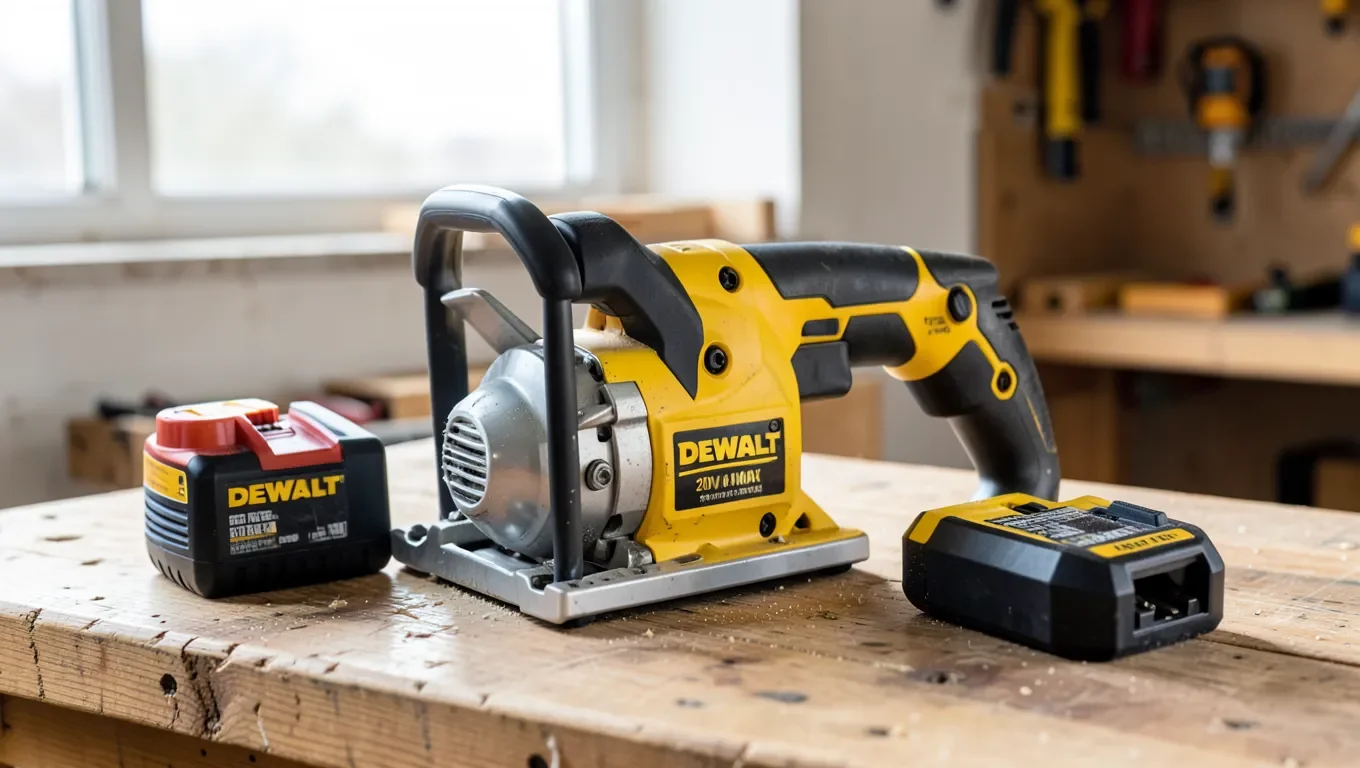
DeWalt Reciprocating Saw Kit (DCS387P1): What’s Actually Inside
A “DeWalt reciprocating saw kit” almost always means one specific saw, the DCS387, sold in two different bundles: the DCS387D1 with a 2.0Ah battery, and the DCS387P1 with a 5.0Ah battery and a faster charger. The saw itself doesn’t change between them. What changes is runtime, charge speed, and price, and picking the wrong one means either paying $40-$60 more than you need to or running out of battery halfway through a demolition job.
This guide breaks down what’s actually in each kit box, how the compact DCS387 stacks up against DeWalt’s full-size DCS380, and when it’s smarter to skip the kit entirely and buy the bare tool. If you already own 20V MAX batteries, that last option can save real money.
The DeWalt Reciprocating Saw Kit We’d Buy
Best DeWalt Kit for Daily Job-Site Use
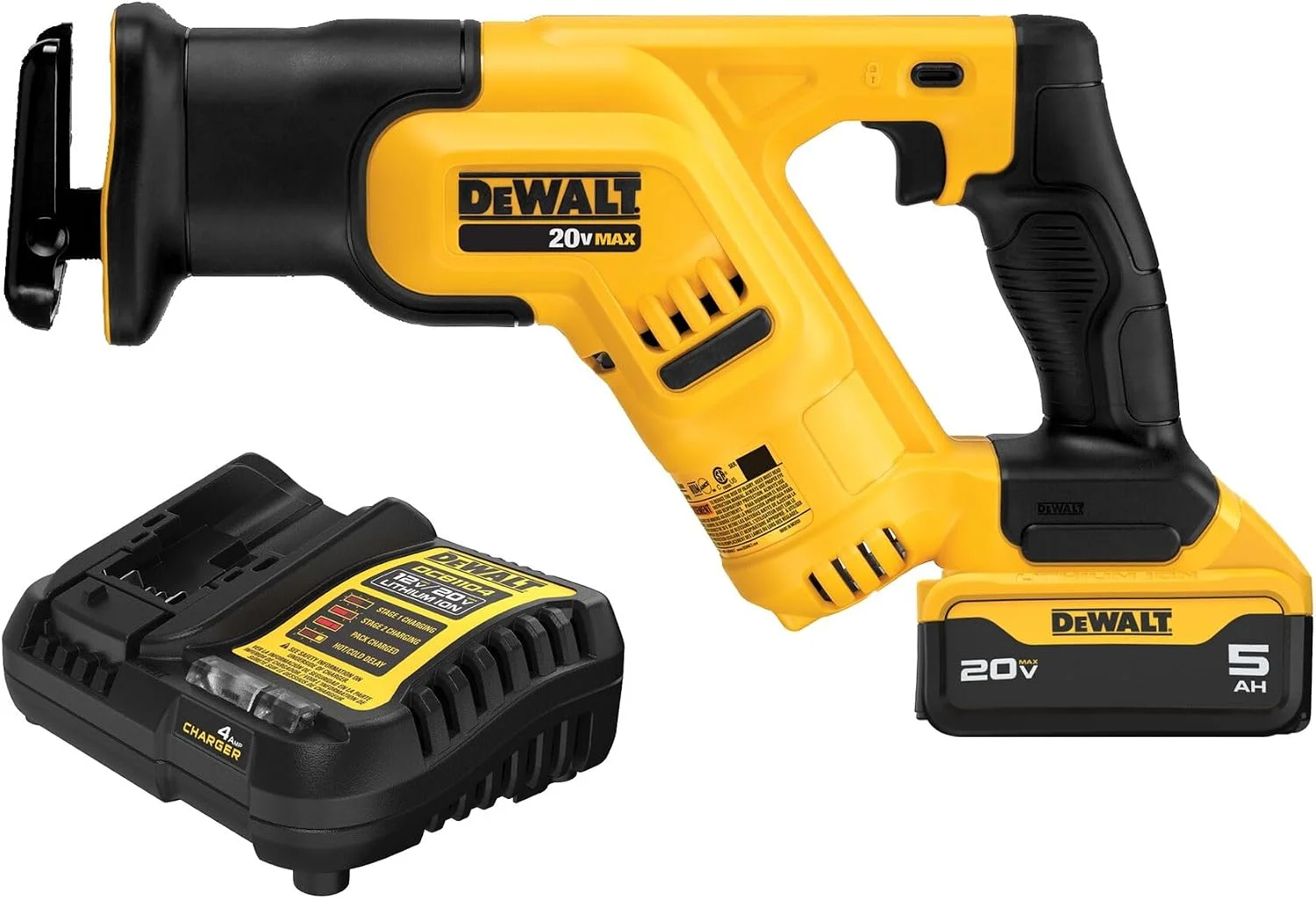 |
DeWalt DCS387P1 20V MAX Reciprocating Saw Kit – $219 The 5.0Ah battery and fast charger combo covers a full day of demolition without a battery swap.
|
The DCS387P1 is the kit most people should buy. It pairs the compact DCS387 saw with a 5.0Ah DCB205 battery and DeWalt’s DCB101 fast charger, which brings that battery back to full in roughly 90 minutes instead of the several hours a smaller pack takes. On a demolition or renovation job where the saw runs on and off all day, the difference between a 2.0Ah and 5.0Ah pack is the difference between swapping batteries twice and not thinking about it at all.
DCS387D1 vs DCS387P1: What Actually Changes Between the Two Kits
Both kits ship the identical DCS387 saw head, a soft-sided contractor bag, and a bi-metal blade or two. Everything else in the box is different, and it’s worth knowing before you pay for the wrong one.
| Kit | Battery | Charger | Best for |
|---|---|---|---|
| DCS387D1 | DCB203 20V MAX XR, 2.0Ah | DCB112 standard charger | Light, occasional cutting; already own bigger batteries for other tools |
| DCS387P1 | DCB205 20V MAX Premium XR, 5.0Ah | DCB101 fast charger | Daily job-site use, demolition, longer unattended runtime |
Neither kit includes a second battery, so if the saw is going to be your primary demo tool, budgeting for a spare 20V MAX pack is worth it regardless of which kit you start with.
Compact DCS387 vs Full-Size DCS380: Picking the Right Platform
DeWalt also sells a larger 20V MAX reciprocating saw, the DCS380, as its own kit (DCS380P1). It’s easy to assume “bigger kit” means “more saw,” but the two aren’t chasing the same job. The compact DCS387 tops out around 2,900 strokes per minute with a 1-1/8 inch stroke length and is built to fit between wall studs and into tight cabinet spaces. The full-size DCS380 pushes to roughly 3,000 strokes per minute with the same 1-1/8 inch stroke, but adds an electric brake that stops the blade almost instantly when you release the trigger, which matters on plunge cuts where a coasting blade can crack out the far side of the material.
Weight is the real trade-off: the DCS380 runs about 7.35 lbs with its battery installed and measures roughly 18 inches long, noticeably longer and heavier than the DCS387 once you’re holding it overhead or reaching into a joist bay for the tenth cut in a row. For framing demolition and remodeling where you’re cutting nails, pipe, and lumber all day, the DCS380’s extra length and electric brake earn their keep. For electricians, plumbers, and anyone cutting inside finished walls or tight cabinetry, the DCS387’s shorter nose wins. For a full spec-by-spec breakdown across DeWalt’s whole reciprocating saw lineup, our DeWalt reciprocating saw comparison covers every current model side by side. For the 60V MAX FlexVolt option not covered here, our DeWalt cordless reciprocating saws comparison breaks down when FlexVolt is worth it over 20V MAX.
Real-World Cutting Performance
Strokes per minute and stroke length only tell part of the story. What matters on the job is how the saw behaves once the blade is actually in the cut. The DCS387’s tool-free 4-position blade clamp lets you rotate the blade to flush-cut against a wall or floor without repositioning your whole body, and the variable-speed trigger means you can back the speed down for controlled plunge cuts into drywall or ramp it up to full speed for framing lumber and old nail-embedded studs.
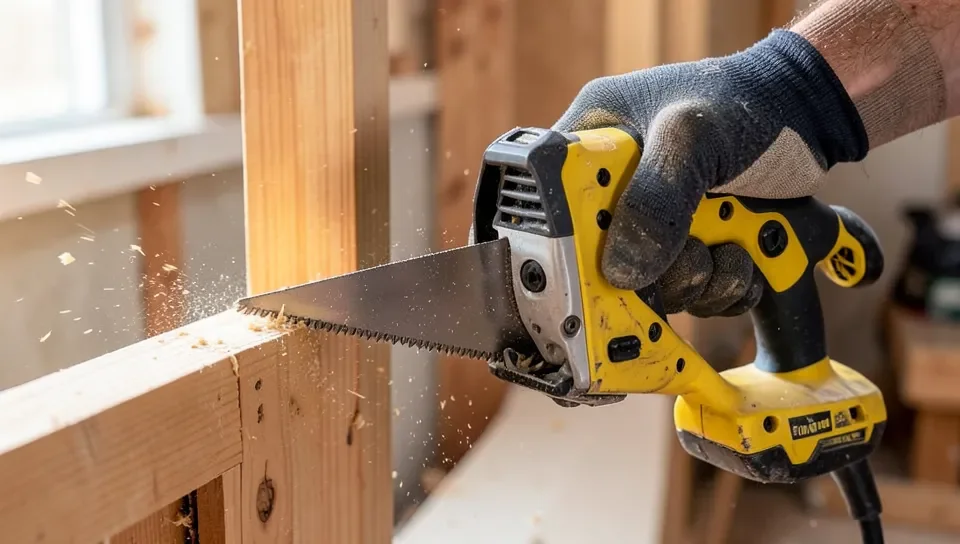
In wood, the saw clears standard 2×4 and 2×6 framing lumber in a single pass with a wood-cutting blade rated 6-10 TPI. In metal, dropping to a 14-18 TPI bi-metal blade and slowing the trigger down prevents the blade from grabbing and stalling on thin-wall conduit or pipe. Because the motor is brushless, it also runs noticeably cooler than older brushed DeWalt reciprocating saws during back-to-back cuts, which means less thermal cutout on long demolition stretches.
Blade Changes and Everyday Setup
Swapping blades takes about five seconds: pull the collar back, drop the blade in or out, and release. No hex key, no thumbscrew. That keyless clamp is also reversible, so the blade can be mounted teeth-up for flush cuts along a floor or ceiling. Picking the right blade matters more than the saw itself for cut quality — our DeWalt reciprocating saw blade guide covers TPI selection and which blade types to keep in the bag for wood, metal, and mixed-material demo work.
Battery and Charger Compatibility
Both DCS387 kits run on DeWalt’s 20V MAX platform, which means the battery from this saw works in any other 20V MAX tool you own, and vice versa, so a drill or impact driver battery you already have can power this saw in a pinch. It does not accept 12V MAX batteries or FLEXVOLT batteries used in a different voltage mode, and it isn’t cross-compatible with other brands’ battery systems. See our DeWalt 20V battery compatibility guide for the full breakdown of which DeWalt tools and batteries mix and match.
Kit vs Bare Tool: When Skipping the Battery Makes Sense
If you already have 20V MAX batteries and a charger from other DeWalt tools, buying the bare-tool DCS387B and skipping the kit saves real money, since you’re not paying for a battery and charger you don’t need. That only makes sense if your existing batteries are 4.0Ah or larger; running this saw on a small 1.5Ah pack meant for a drill will drain fast under sustained cutting. Our DeWalt 20V XR reciprocating saw review walks through bare-tool pricing across the DCS382, DCS367, and DCS368 models and how they compare on weight and price if you’re shopping bare-tool options instead of a kit. For a broader look at cordless reciprocating saws outside the DeWalt lineup, our cordless reciprocating saw reviews page covers Milwaukee, Makita, and other brands.
Safety Basics Before You Cut
Reciprocating saws kick harder than most cordless tools because the blade motion itself pushes the saw back toward you with every stroke. Keep the shoe flush against the material before pulling the trigger, wear eye protection since blade-embedded debris (old nails especially) can fly, and use hearing protection during extended cutting — the DCS387 runs loud enough at full speed to matter over a full day. Always confirm what’s on the other side of a wall or floor before a blind plunge cut; a reciprocating saw blade doesn’t stop at wiring or plumbing the way you’d want it to.
Storage and Basic Maintenance
The contractor bag that ships with either kit isn’t padded, so sawdust and metal shavings ride along with the saw between jobs. Wipe the shoe and blade clamp down after cutting metal specifically — fine metal dust that gets into the clamp mechanism is the most common reason a keyless clamp starts sticking. Store the battery separately from the saw if the kit will sit for more than a few weeks; leaving a pack seated in a tool in a hot truck or trailer shortens its usable life faster than normal charge cycles do. A quick wipe-down and a dry storage spot is really all the maintenance this saw needs — there’s no oiling or belt tension to manage like a corded saw.
Frequently Asked Questions
What’s the difference between the DCS387D1 and DCS387P1 kits?
The saw is identical in both. The DCS387D1 includes a smaller 2.0Ah battery and DeWalt’s standard DCB112 charger, while the DCS387P1 steps up to a 5.0Ah battery and the faster DCB101 charger. The P1 kit costs more but runs longer between charges and recharges faster.
Is the DCS387 or the DCS380 the better kit for demolition work?
The full-size DCS380 is the better choice for heavy demolition. It cuts slightly faster at roughly 3,000 strokes per minute, includes an electric brake for controlled plunge cuts, and its longer body gives more reach into joist bays and wall cavities. The compact DCS387 trades some of that reach for a shorter nose that fits into tighter spaces, which matters more for electrical, plumbing, and remodeling work than for framing demolition.
Can I use a battery from another DeWalt tool with this saw?
Yes. Any DeWalt 20V MAX battery works in the DCS387 or DCS380, regardless of which tool it originally came with. A larger 4.0Ah or 5.0Ah pack is recommended for sustained cutting; smaller 1.5Ah or 2.0Ah packs made for drills will drain quickly under heavy reciprocating saw use.
What comes in the box with a DeWalt reciprocating saw kit?
A standard DCS387 kit includes the saw, one battery, a charger, a soft contractor bag, and typically one or two bi-metal blades for general wood and metal cutting. It does not include a second battery, so plan on buying a spare if the saw will see daily use.
Sponsored / affiliate links. As an Amazon Associate I earn from qualifying purchases. I may earn additional commission from eligible campaigns.