12-Inch Sliding Compound Miter Saw: Real Crosscut Specs & Buying Guide
A 12-inch sliding compound miter saw crosscuts up to roughly 14 inches wide at 90° and bevels in one or both directions for angled trim and framing cuts — but only the sliding models add that front-to-back travel, which is what actually lets you cut wide baseboard or 2×12 stock in one pass. Buy the wrong configuration and you’ll either overpay for slide travel you never use or find yourself flipping boards mid-project. This guide covers real crosscut numbers, when 12 inches beats 10, and whether you need single or double bevel.
Quick Answer
Choose a 12-inch sliding compound miter saw if you regularly crosscut boards wider than about 6 inches (baseboard, wide casing, 2×10+ dimensional lumber) — the slide adds roughly 6–8 inches of extra crosscut width over a fixed 12-inch saw. If you mostly cut narrow trim and want to save weight and money, a non-sliding 12-inch compound saw or even a 10-inch slider covers most jobs.

What a 12-Inch Sliding Compound Miter Saw Actually Adds Over a Fixed Saw
Best 12-Inch Sliding Compound Miter Saw Pick
DEWALT DWS779 12-Inch Double Bevel Sliding Compound Miter Saw
Double-bevel slider with a 2×14 crosscut capacity at 90° and a 60-tooth carbide blade — a common reference point for what a full-size 12-inch slider should deliver.
- Best for: crown molding, wide baseboard, and framing crews doing repeat bevel cuts in both directions
- Why we picked it: double bevel plus a verified 2×14 crosscut spec means fewer board flips and wider single-pass cuts
- Main drawback: heavier and pricier than a fixed or single-bevel 12-inch saw — overkill if you rarely bevel
Compare more 12-inch sliding compound miter saw options
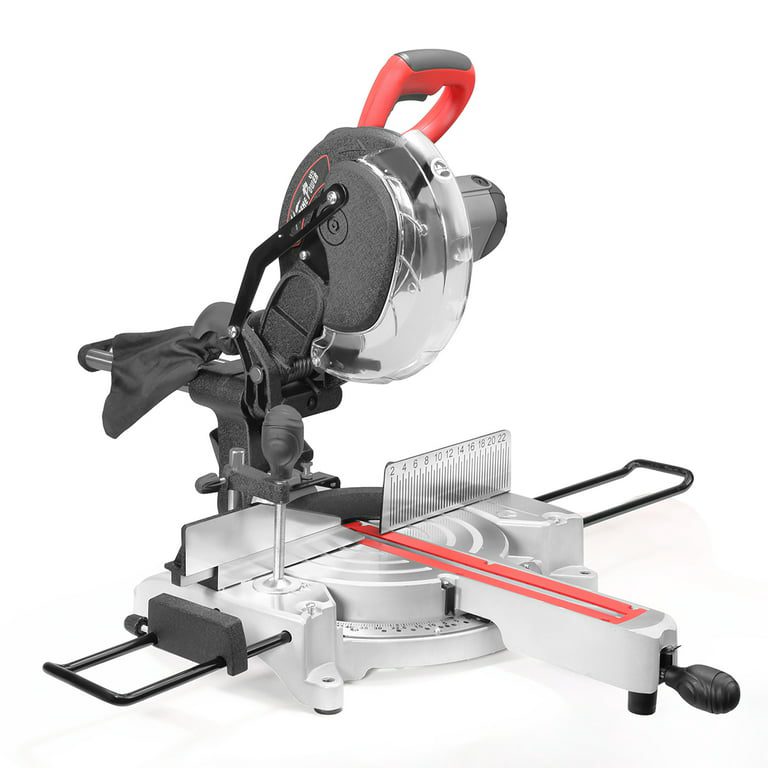
 Option 1 VEVOR 12-Inch Sliding Compound Miter Saw
|
 Option 2 Prostormer 12-Inch 15A 5000 RPM Miter Saw
|
 Option 3 DOVAMAN 12-Inch Dual-Bevel Sliding Miter Saw
|
As an Amazon Associate we earn from qualifying purchases.
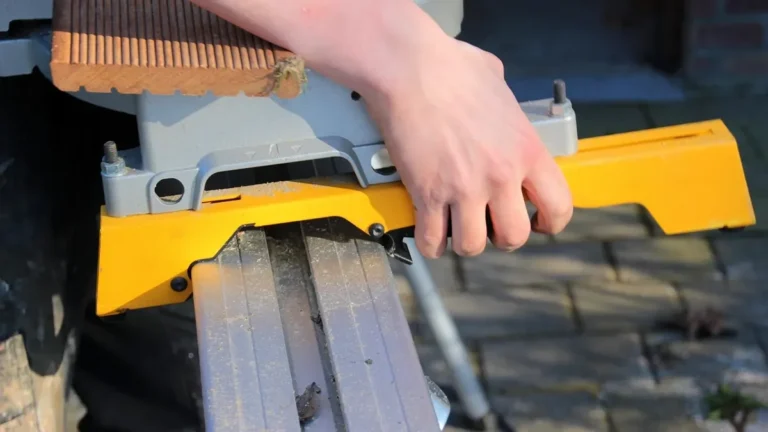
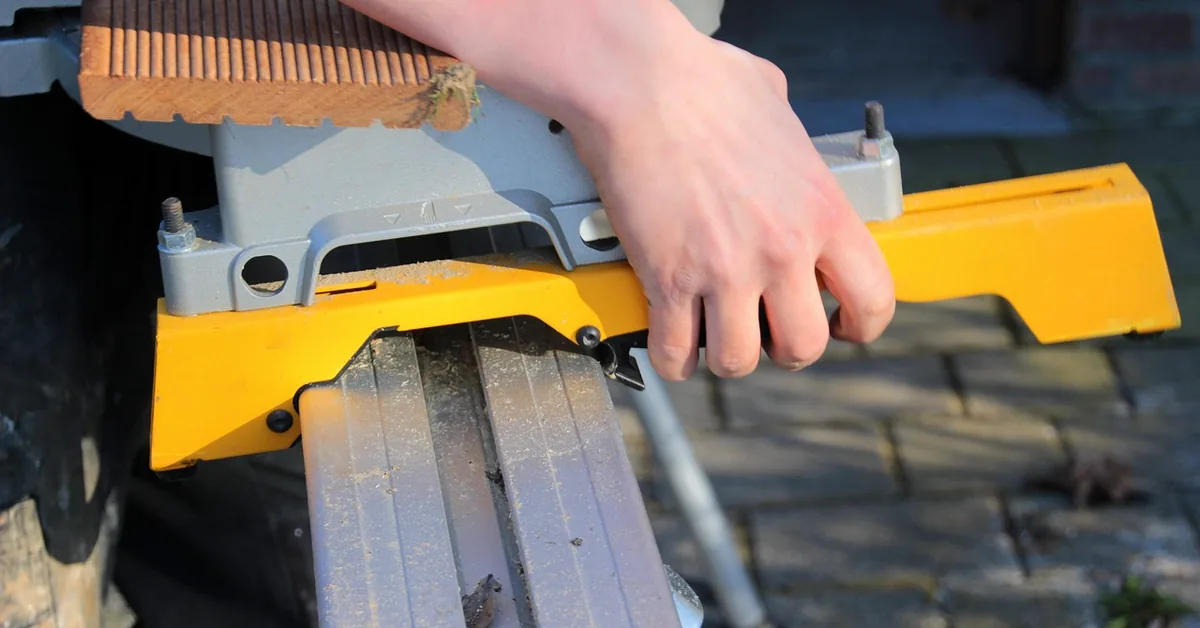
A compound miter saw tilts to cut a bevel angle while also pivoting to cut a miter angle — useful for crown molding and angled framing. “Sliding” is a separate feature: two rails let the saw head travel forward and back, which is the only thing that lets a 12-inch blade cut through material wider than the blade’s own diameter allows on a fixed pivot. Without the slide, a 12-inch fixed compound saw tops out around 6–6.5 inches of 90° crosscut width; add the slide and that jumps to the 13–14 inch range most full-size sliders advertise.
If you’re weighing this saw against the dedicated double-bevel sliding compound miter saw guide, that page goes deep on the double-bevel mechanism specifically. This guide is the broader starting point — specs, sliding vs. fixed, and 12- vs 10-inch — before you narrow down to a bevel type.
Key Specifications to Check Before You Buy
Spec sheets across brands use inconsistent terms for the same numbers, so here’s what each figure actually means for a full-size 12-inch slider, using DeWalt’s DWS779 as a real published reference point.
| Spec | Typical 12″ sliding compound saw | Why it matters |
|---|---|---|
| Blade | 12 in., 60-tooth carbide-tipped | More teeth = smoother trim cuts; fewer teeth cut faster through framing lumber |
| Motor | 15 amp, 3,800–5,000 RPM | Higher RPM reduces tear-out in hardwood; most corded 12″ saws cap near 3,800 RPM |
| Crosscut at 90° | ~2×14 in. | Determines the widest board you can cut in one pass without flipping it |
| Crosscut at 45° miter | ~2×10 in. | What actually matters for baseboard and casing corners, not the 90° number |
| Miter range | 45–60° each direction | Wider range covers odd-angle walls without a second setup |
| Bevel range | 0–48° (single or dual) | Dual bevel tilts both ways — see the section below |
| Arbor | 1 in. (5/8 in. adapter common) | Confirms which replacement blades will actually fit |
| Weight | 50–70 lb | A slider is significantly heavier than a compact 10″ saw — factor in whether it needs a stand |
Blade choice matters as much as the saw itself: a 12-inch general-purpose blade with fewer, larger teeth clears material fast but leaves a rougher edge, while a 60-80 tooth trim blade leaves a near-glue-ready edge on crown molding and casing.
12-Inch vs. 10-Inch: Do You Actually Need the Bigger Saw?
The blade diameter itself rarely limits a cut — the sliding rail travel does. A 10-inch slider with a long rail can out-crosscut a fixed 12-inch saw. Where the 12-inch blade wins is depth: it clears 4×4 posts and thick beam stock in a single vertical pass that a 10-inch blade can’t reach through, and it holds up better under sustained framing use where a smaller blade would need more frequent replacement.
- Pick 12-inch if: you cut 4×4+ posts, thick crown molding stock, or run the saw daily on a job site
- Pick 10-inch if: you mostly cut trim, casing, and shelving, and want a lighter saw that’s easier to move between rooms
For a deeper side-by-side, see our full 10-inch vs. 12-inch sliding miter saw comparison, and if you’re weighing sliding against fixed models generally, our saws buying guide covers where a miter saw fits against the rest of your tool lineup.
Single Bevel or Double Bevel?
A single-bevel saw tilts one direction only, so cutting opposing bevel angles — both sides of a crown molding corner, for example — means flipping the board and re-measuring. A double-bevel saw tilts both directions, so you cut both angles without moving the material, which is faster and more consistent on repeat crown or angled-frame work. Single bevel saws are lighter and typically $50–$100 cheaper for an otherwise comparable saw — worth it if you rarely bevel in both directions.
Getting Accurate Cuts
- Check blade alignment first. A blade that’s out of square to the fence will bevel every cut slightly even at a “0°” setting.
- Set miter and bevel angles together for compound cuts, and double-check both against a speed square before cutting your workpiece.
- Cut a test piece on scrap and measure it before committing to your actual material — especially on crown molding, where angles compound quickly.
- Support long stock on both sides of the blade so the workpiece doesn’t dip mid-cut and bind the blade.
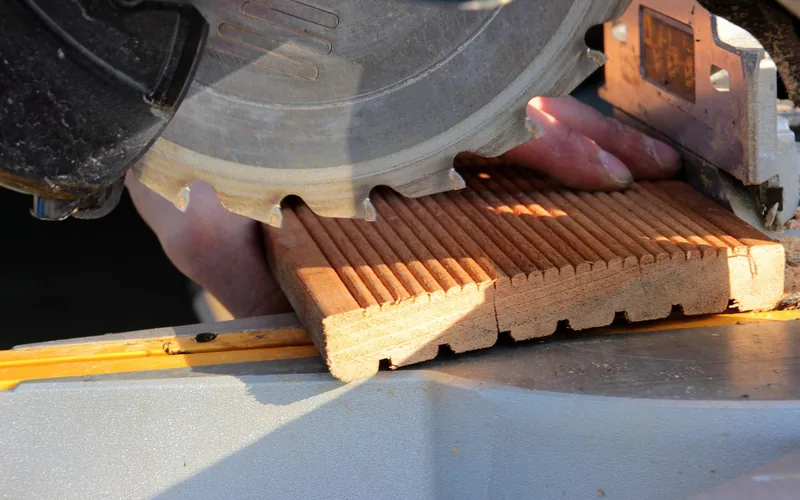
Practice these cuts on scrap wood before working on your actual project material — a five-minute test cut catches a misaligned fence before it ruins a $40 piece of crown molding.
Safety Measures
A 12-inch blade at 3,800+ RPM carries more kinetic energy than a smaller saw, so the basics matter more, not less.
- Safety glasses and hearing protection — non-negotiable at this blade speed and amperage
- Dust mask or connected dust collection — a 12-inch blade throws significantly more debris than a 7-1/4-inch saw
- Electric brake — check for this feature specifically; it stops the blade in seconds instead of the 10+ seconds a coasting 12-inch blade takes
- Blade guard and hold-down clamps — never bypass the spring-loaded guard, and clamp workpieces that are too short to hold safely by hand
Clean sawdust and resin off the blade after each session, inspect teeth for damage before cutting hardwood, and store the saw with the blade guard fully seated. A dull or resin-coated blade forces the motor to work harder and increases kickback risk.
Buying Guide: What Actually Matters
- Crosscut capacity at 45°, not just 90° — this is the number that determines whether you’ll flip boards on real trim work
- Single vs. double bevel based on how often you cut opposing angles
- Electric brake for faster, safer stops
- Weight and stand compatibility — a 60+ lb saw needs a stand or a dedicated bench if you’re moving it between job sites
- Dust collection port size — matters if you’re running a shop vac rather than the included bag
Buy from a retailer with a real return window (Amazon, Home Depot, or the manufacturer directly) rather than a marketplace reseller — miter saws are heavy enough that return shipping on a bad unit is expensive if the seller doesn’t cover it.
Frequently Asked Questions
What is a 12-inch sliding compound miter saw used for?
It’s used for angled and beveled cuts on wider material than a fixed miter saw can handle — crown molding, wide baseboard, framing lumber, and deck boards. The sliding rails add the extra crosscut width; the compound action adds simultaneous miter and bevel angles for corner joints.
Do I need the sliding feature, or is a compound saw enough?
If you cut material wider than about 6 inches at 90° — wide baseboard, stair treads, 2×10 or larger dimensional lumber — you need the slide. A fixed 12-inch compound saw without slide typically maxes out around 6–6.5 inches of crosscut width, which is too narrow for a lot of trim work.
How does a 12-inch miter saw differ from a 10-inch?
A 12-inch blade cuts deeper — enough to get through 4×4 posts and thick beam stock in one vertical pass — and holds up better under daily job-site use. A 10-inch saw is lighter, usually cheaper, and can match or beat a 12-inch fixed saw’s crosscut width if it has a long slide rail.
Single bevel or double bevel — which should I buy?
Double bevel if you regularly cut opposing angles, like both sides of a crown molding corner, without flipping the board. Single bevel if you mostly make one-directional cuts and want to save weight and roughly $50–$100 on the purchase.
Are sliding compound miter saws safe to use?
Yes, when used with proper PPE and the blade guard intact. Wear safety glasses and hearing protection, keep hands clear of the blade path, clamp short workpieces instead of holding them by hand, and never remove or wedge open the spring-loaded blade guard.
Choosing between a 12-inch sliding compound miter saw and its smaller alternatives comes down to what you actually cut: wide trim and thick framing stock justify the size and weight, while narrower trim work is often better served by a lighter 10-inch slider. Match the crosscut capacity and bevel type to your real projects rather than the biggest spec sheet number, and the saw will earn its space in the shop.
Sponsored / affiliate links. As an Amazon Associate I earn from qualifying purchases. I may earn additional commission from eligible campaigns.