How to Apply Stain to Cedar Without Blotching or Yellowing
Cedar carries natural tannins and extractive oils that most stain instructions don’t account for — that’s the real reason so many cedar fences, decks, and siding jobs come out blotchy, streaky, or yellowed within a year.
Cedar looks like it should be easy to stain. It’s soft, straight-grained, and takes a brush well. But those same tannins and resins that make cedar naturally rot- and insect-resistant also bleed through certain finishes, react with water-based stains, and cause uneven absorption if the wood isn’t prepped correctly first. Get the stain type and prep right, and cedar holds color longer than pine or fir. Get it wrong, and you’re re-staining in 18 months instead of four years.
Here’s the method that actually accounts for how cedar behaves, plus the specific mistakes that cause most of the blotching, streaking, and yellowing problems people run into.
Why Cedar Behaves Differently Than Other Woods When You Stain It
Cedar’s tannins and natural extractives sit close to the surface, which is part of why the wood resists rot on its own. Those same compounds are water-soluble, so a water-based stain applied over damp or freshly pressure-washed cedar can pull tannins to the surface and create dark blotches or streaks as the wood dries — a problem oil-based penetrating stains don’t have, since they don’t rely on water to carry pigment into the wood.
Solid-color stains have a different failure mode: because they form more of a film on top of the wood rather than soaking in, they can trap tannins underneath, and the tannins discolor the film from below months later — often showing up as a yellow or amber cast even on a stain that looked fine on day one. That’s specifically a solid-stain issue; it’s why a stain-blocking oil-based primer is the standard fix when you’re set on a solid color (our Flood solid stain on cedar guide covers that primer step in detail if that’s the finish you’re after).
BEST OIL-BASED STAIN FOR CEDAR
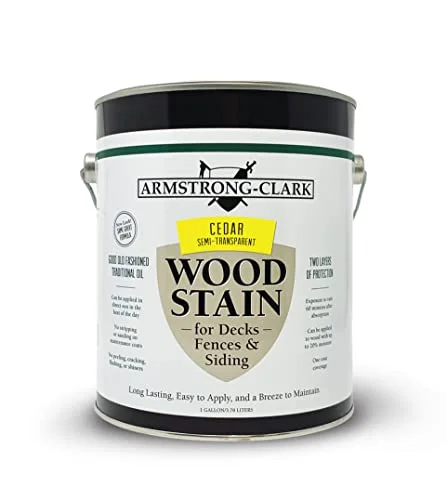 |
Armstrong-Clark Oil-Based Wood Stain, Cedar Semi-Transparent (1 Gal) – $84.95 A penetrating oil-based formula built for softwoods like cedar — the conditioning and drying oils soak into the grain instead of forming a surface film, which sidesteps the tannin bleed-through and blotching that water-based and solid stains are prone to on cedar.
|
Choosing the Right Stain Type for Cedar
Three stain categories show up on cedar projects, and they behave differently once the tannins get involved:
- Oil-based penetrating (semi-transparent or toner): Soaks into the wood fibers rather than sitting on top. Lowest risk of blotching or bleed-through, and the easiest to maintain since a worn coat just gets cleaned and recoated, not stripped.
- Water-based semi-transparent: Dries faster and cleans up easier, but is more likely to pull tannins to the surface on freshly cleaned or pressure-washed cedar, especially if the wood hasn’t fully dried first.
- Solid color (oil or acrylic): Hides the grain and gives the most color consistency, but needs an oil-based, stain-blocking primer first on cedar or the tannins will eventually discolor the film from underneath.
For most fences, siding, and deck boards, an oil-based semi-transparent stain is the safer default specifically because of how cedar’s tannins interact with water-based products. If you’re comparing specific products by brand and price, our comparison of seven exterior cedar stains breaks those down side by side.
Prepping Cedar Before You Stain It
Prep is different depending on whether the cedar is new or already weathered, and skipping the difference is one of the most common causes of an uneven finish.
New cedar usually has mill glaze — a slightly burnished surface from planing that resists stain absorption. A light sanding with 100–120 grit, with the grain, opens the surface enough for the stain to soak in evenly. New cedar generally doesn’t need a cleaner, just a wipe-down to remove sanding dust.
Weathered or previously finished cedar needs an actual cleaning step: a wood cleaner or oxygen-bleach deck cleaner (not chlorine bleach, which can gray the wood further) to strip out dirt, mildew, and graying, followed by a full rinse. This is also where the tannin issue matters most — let the wood dry a minimum of 48 hours before staining, longer in humid conditions. Staining over cedar that still has surface moisture from cleaning is one of the most common causes of blotchy, dark patches.
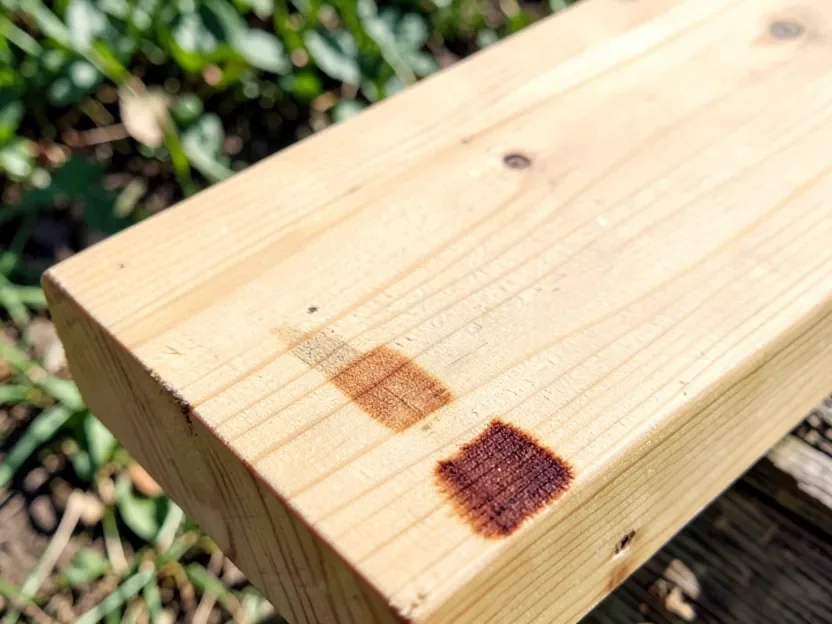
Before committing to the whole project, apply the stain to a small, hidden test spot (or a scrap offcut from the same batch of cedar) and let it dry fully. Cedar boards can vary noticeably in tannin content and grain tightness even within the same batch of lumber, so the test spot is the only reliable way to confirm the actual dried color and check for any blotching before it’s on the whole fence.
How to Apply Stain to Cedar, Step by Step
- Stir, don’t shake, the stain. Shaking introduces air bubbles and can leave the pigment unevenly suspended; stir it periodically while you work, since pigment settles.
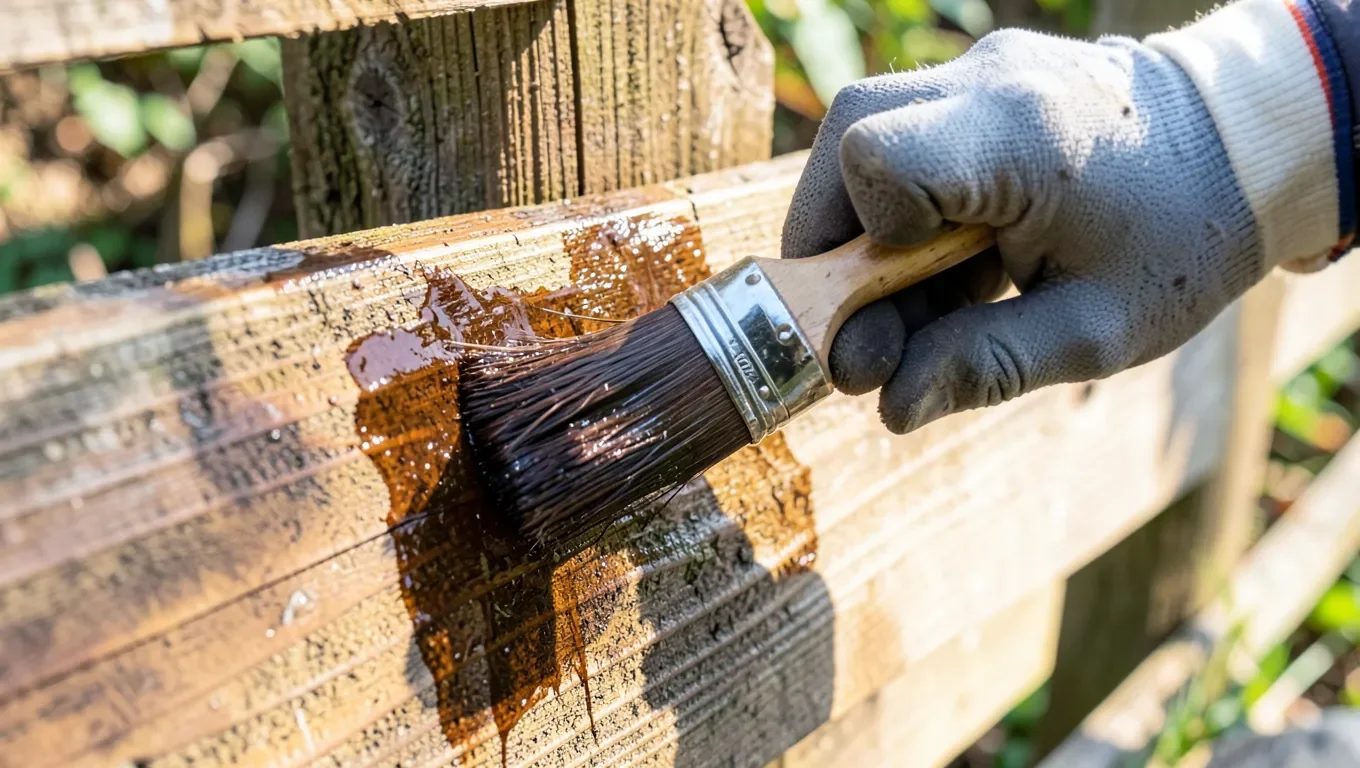
- Work in the shade, not direct sun. Direct sunlight makes the stain flash (start drying) too fast to blend the wet edge, which is a common cause of lap marks and streaking.
- Apply with the grain, one full board at a time. A natural-bristle brush gives the most control and pushes stain into the grain; a sprayer covers faster but should always be back-brushed immediately after to work the stain in evenly and avoid pooling in the wood’s texture.
- Work top to bottom. Start at the top of each board or section and work down, so any drips land on an area you haven’t finished yet rather than on cured or drying stain.
- Keep a wet edge. Don’t let one section dry before starting the next adjoining section — overlapping a dry edge with fresh stain is what creates visible lap marks.
- Wipe excess after 5–15 minutes. For penetrating stains, wipe off any stain that hasn’t absorbed with a clean rag; pooled, un-absorbed stain dries tacky, uneven, and blotchy.
Drying and Recoat Timing
Most oil-based cedar stains are formulated to apply between roughly 45–90°F, with rain or heavy dew held off for at least 12–24 hours after application — check the specific product’s label, since exact windows vary by brand. A second coat, if the finish calls for one, generally goes on within 2–4 hours of the first coat while it can still absorb it; wait longer than that and the surface starts to seal itself off, which causes the second coat to sit on top unevenly instead of penetrating. Keep foot traffic and furniture off stained deck or step surfaces for 24–48 hours while the finish cures.
Common Mistakes That Cause Blotching, Streaks, or Yellowing
- Skipping the test spot. Assuming the can’s swatch color will match how it dries on your specific boards is the single most common reason people end up unhappy with the result.
- Staining over damp wood. Whether from rain, morning dew, or a recent cleaning, residual moisture is what pulls tannins to the surface and causes dark blotches, especially with water-based stains.
- Staining in direct sun or high heat. The stain flashes before you can keep a wet edge, leaving visible lap marks where sections overlap.
- Letting stain pool in the grain. Not wiping back excess penetrating stain leaves a tacky, uneven, blotchy surface once it dries.
- Using a solid stain on cedar without an oil-based primer. This is the specific cause of the delayed yellowing that shows up months after a solid-color job looked fine — the tannins discolor the film from underneath.
How Long Cedar Stain Lasts, and Maintenance
A quality oil-based semi-transparent stain on cedar typically holds up 2–4 years on vertical surfaces like fences and siding, and 1–2 years on horizontal surfaces like deck boards that take direct sun and foot traffic. Maintenance recoats don’t need stripping in most cases — a wash to remove surface dirt and graying, a full dry-out period, and a fresh coat is usually enough, which is one of the practical advantages of staying with a penetrating oil-based stain rather than switching to a film-forming solid color partway through a cedar structure’s life.
Frequently Asked Questions
What is the best stain for cedar?
An oil-based, semi-transparent penetrating stain is generally the best fit for cedar, since it soaks into the wood instead of forming a surface film and is far less prone to the tannin bleed-through and blotching that water-based and solid stains can cause on cedar specifically.
How do I stop cedar stain from turning blotchy?
Make sure the wood is fully dry (at least 48 hours after any cleaning or rain), sand new cedar to break the mill glaze, always test on a hidden spot or offcut first, and wipe off any excess stain that hasn’t absorbed within 5-15 minutes rather than letting it pool and dry unevenly.
Should I use a brush or a sprayer to stain cedar?
A brush gives the most control and pushes stain deeper into the grain, which is preferable for fences and railings with a lot of detail. A sprayer covers large flat areas like siding or decking faster, but the stain should always be back-brushed immediately afterward to work it in evenly and prevent pooling.
How many coats of stain does cedar need?
Most semi-transparent oil-based stains on cedar only need one coat, since a heavier film-building second coat can actually seal the surface and prevent proper penetration. If a second coat is called for on the product label, apply it within 2-4 hours of the first while the wood can still absorb it.
How long does stain last on cedar?
A quality oil-based semi-transparent stain typically lasts 2-4 years on vertical cedar surfaces like fences and siding, and 1-2 years on horizontal surfaces like deck boards that see more direct sun and foot traffic.
Sponsored / affiliate links. As an Amazon Associate I earn from qualifying purchases. I may earn additional commission from eligible campaigns.