Can A Wood Stove Pipe Be Horizontal? Safety Rules Explained
Have you ever stood back and looked at your wood stove installation, perhaps thinking about the best way to connect it to your chimney? You might wonder if running the stove pipe horizontally for a bit is okay. It’s a common question, and for good reason.
Getting the venting right is super important for safety and for your stove to work well. We’ve all been there, trying to figure out the most practical setup in a tricky room. Let’s dive into whether a wood stove pipe can be horizontal and, more importantly, the strict rules that keep your home safe.
A wood stove pipe can have a short horizontal section, but it’s highly restricted by safety codes. The main rule is that horizontal runs must be as short as possible, generally no more than one-third of the total length of the vent pipe. They must also slope upwards toward the chimney. Excessive horizontal pipe can reduce draft, leading to smoke backup and fire hazards. Always follow manufacturer instructions and local building codes.
Understanding Wood Stove Pipe (Flue Pipe)
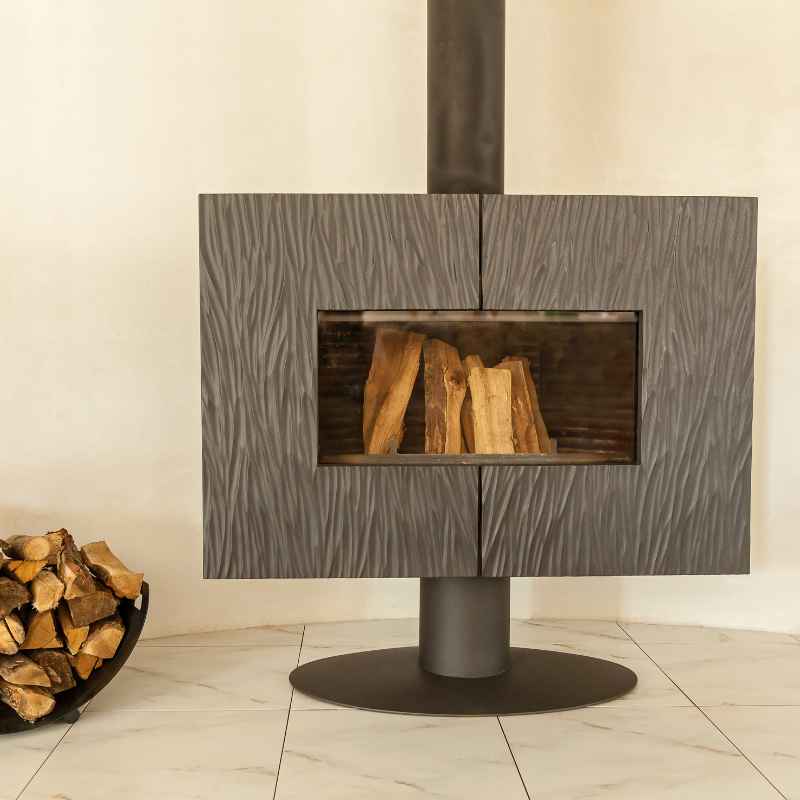
A wood stove pipe, often called flue pipe or single-wall stove pipe, is the metal tube that connects your wood stove to your chimney system. It’s the pathway for smoke and dangerous gases, like carbon monoxide, to escape your home. This pipe gets really hot when the stove is in use.
Because of this heat and the nature of the gases, how you install it matters a lot.
The pipe’s main job is to carry smoke and gases safely outside. It relies on something called “draft.” Draft is the natural upward movement of air and smoke. This happens because hot air and smoke rise.
A good draft pulls smoke away from the stove and out of your house. If the draft is weak, smoke can come back into your room. This is not good for your health or for the air quality inside.
There are different types of stove pipe. Single-wall stove pipe is the most common type used for the visible connection from the stove to the wall or ceiling. It’s usually made of black or galvanized steel.
Double-wall or insulated pipe is used for passing through ceilings or walls where clearances are tighter. The rules we’ll discuss mostly apply to the single-wall pipe connecting directly to the stove.
The Role of Draft in Wood Stove Operation
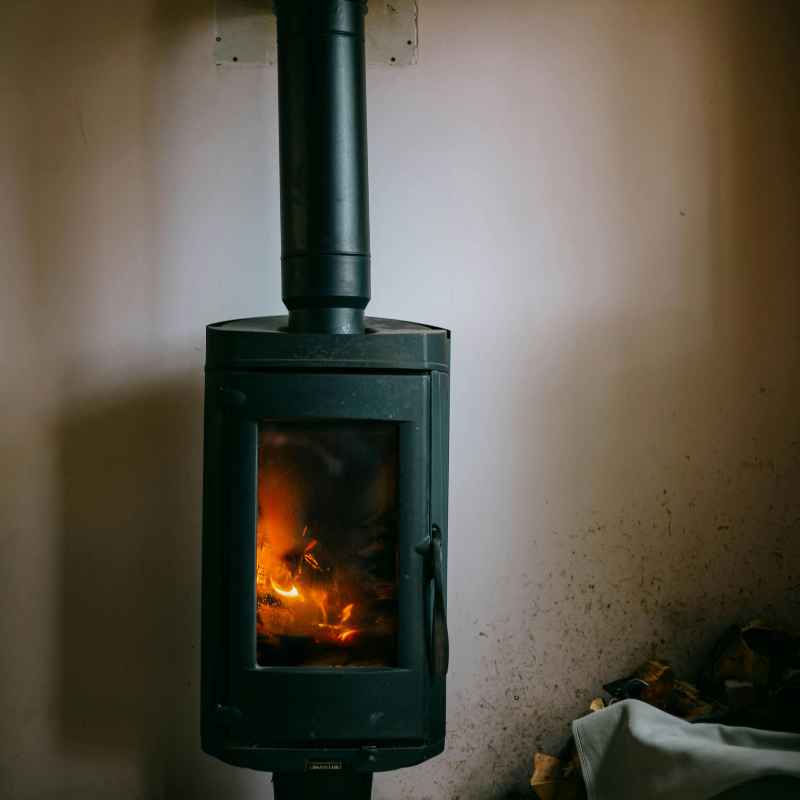
Draft is the secret sauce for a happy wood stove. Think of it like breathing for your stove. Without good airflow, it can’t burn efficiently.
It also can’t push the smoke where it needs to go: up and out.
Several things affect draft. The height of your chimney is a big one. Taller chimneys generally create better draft.
The shape of your flue pipe connection matters too. Sharp bends or long horizontal runs can fight against the upward flow of smoke. Outside weather plays a role as well.
Cold air outside can sometimes make the draft weaker when you first start a fire.
When a wood stove pipe is installed horizontally, it fights gravity. Smoke and gases naturally want to go up. A horizontal run forces them to travel sideways.
This slows them down. It makes it harder for the natural draft to do its job. This is why codes are so strict about how much horizontal pipe you can use.
Can a Wood Stove Pipe Be Horizontal? The Direct Answer
So, to answer directly: yes, a wood stove pipe can have a horizontal section. But it’s not a simple “yes.” It comes with very strict limits and rules. These rules are not suggestions; they are safety requirements designed to prevent fires and carbon monoxide poisoning.
The main goal is always to get the smoke up to the chimney as quickly and directly as possible. Any deviation from a straight vertical path needs careful consideration. Horizontal runs are seen as a necessary evil in some situations, not an ideal feature.
They introduce challenges that need to be overcome through careful installation.
The National Fire Protection Association (NFPA) and the International Residential Code (IRC) provide guidelines for wood stove installations. These codes are followed by most local building departments. They aim to ensure safety for everyone.
Ignoring these codes can lead to serious risks.
Why Horizontal Sections Are Discouraged
There are several key reasons why installers and fire safety experts try to minimize or avoid horizontal runs of wood stove pipe:
- Reduced Draft: As we touched on, horizontal pipes resist the upward flow of smoke. This reduces the stove’s draft. A weak draft means smoke can spill into the room. This is dangerous because of carbon monoxide.
- Creosote Buildup: Creosote is a flammable tar-like substance that forms as wood burns. It sticks to the inside of the flue pipe. Horizontal sections are more prone to creosote buildup because the smoke slows down. This buildup can ignite, causing a chimney fire.
- Heat Loss: The longer the pipe, the more heat the smoke loses before it reaches the chimney. This can further weaken the draft.
- Obstruction Risk: A horizontal pipe might be in a place where it’s more likely to be bumped or obstructed. This could be by furniture or stored items, which is also a fire hazard.
Imagine trying to push a lot of water through a pipe that’s mostly lying flat. It’s much harder than letting it flow downhill. Smoke is similar.
It needs a clear, upward path to move efficiently.
The Strict Rules for Horizontal Stove Pipe
If you absolutely must have a horizontal section, there are very specific rules you have to follow. These are designed to mitigate the risks we just discussed.
Maximum Horizontal Length
This is one of the most critical rules. Most codes state that the horizontal run of single-wall stove pipe cannot exceed one-third (1/3) of the total vertical height of the vent system from the stove to the top of the chimney. Some sources might say a specific number of feet (like 6 feet), but the ratio to the total vertical height is the more common and safer guideline.
For example, if your stove pipe goes up 3 feet to meet the chimney, you can only have 1 foot of horizontal run. If your chimney connection is 6 feet up, you could potentially have 2 feet of horizontal pipe. This ratio is crucial for maintaining adequate draft.
Upward Slope is Mandatory
Any horizontal section of wood stove pipe MUST slope upwards towards the chimney. The minimum recommended slope is 1/4 inch of rise for every 12 inches of horizontal run. So, for every foot the pipe travels horizontally, it must gain at least 1/4 inch in height.
This upward slope helps to assist the draft. It encourages any slow-moving smoke or condensation to flow towards the chimney rather than pooling in the pipe. This is a vital safety feature that many people overlook.
Think of it like a tiny, gentle ramp. It’s not steep enough to cause problems but just enough to help the smoke along its journey upwards. This is a key difference between a truly horizontal pipe and one that meets the code.
Clearances to Combustibles
This is perhaps the most critical safety rule for any wood stove pipe, but it’s especially important for horizontal sections. Wood stove pipe gets extremely hot. It can easily ignite nearby flammable materials like wood framing, drywall, insulation, or furniture.
The standard clearance for single-wall stove pipe to combustible materials is generally 18 inches. This is a significant distance. If you have a horizontal run near a wall or ceiling, you must maintain this 18-inch clearance.
There are ways to reduce this clearance, but they involve using specific types of heat shields or double-wall pipe.
- Double-wall Pipe: Using listed double-wall pipe reduces the clearance to combustibles. This type of pipe has an air space between two layers of metal. The outer surface stays much cooler. The required clearance with double-wall pipe is typically 6 inches, but always check the manufacturer’s instructions and local codes.
- Heat Shields: A heat shield can be installed between the stove pipe and a combustible surface. This shield needs to be installed with an air gap behind it. A common setup is a sheet of metal (like galvanized steel or tin) mounted at least 1 inch away from the combustible surface, with spacers. This air gap allows heat to dissipate. The required clearance with a proper heat shield can be reduced, often to around 12 inches, but again, verify with codes and manufacturer specs.
Never assume a clearance. Always measure carefully. If there’s any doubt, increase the clearance.
A few extra inches can prevent a catastrophic house fire.
Support and Stability
Horizontal sections of stove pipe must be properly supported. They should not sag. Sagging will negate the upward slope and create a dip where creosote can collect.
Use approved pipe hangers and brackets that are rated for the weight and heat of the pipe.
The pipe should also be securely connected to both the stove collar and the chimney adapter. Loose connections are a major fire hazard. They can leak hot sparks and gases.
Use high-temperature stove cement or stainless steel screws to secure joints, as recommended by the manufacturer.
Personal Experience: The “Almost” Horizontal Disaster
I remember helping a friend install a wood stove in their cabin. They had this really awkward corner where the stove needed to go. The chimney was on the opposite side of the room.
To make it “fit,” they wanted to run the pipe almost entirely horizontally along the ceiling for about 8 feet before it hit the wall where the chimney was. My stomach did a little flip.
They were so proud of their “clever” solution. “Look!” they said, “No need for all those messy angles!” I took a deep breath. I knew immediately this was a problem.
I started asking about clearances and draft. They hadn’t even thought about it. They had a nice, dark wooden ceiling above where the pipe would be.
I explained the 1/3 rule and the upward slope. They looked at me like I was speaking a foreign language. “But it looks so much cleaner this way!” they insisted.
I pulled out my phone and showed them some articles and diagrams from fire safety sites. I talked about creosote and smoke backing up.
That was the moment they started to understand. We spent the next few hours redesigning. We added more angled pieces.
We had to bring the stove out from the corner a bit. It wasn’t as “neat” as their original idea. But by the time we finished, the pipe had a gentle upward slope.
We ensured all clearances were met. The stove fired up beautifully. It burned clean, and no smoke came into the room.
It was a relief, a huge, huge relief. That experience hammered home just how important following these safety rules truly is.
Quick Scan: Horizontal Pipe Limits
Rule: Very Short Maximum Length.
Guideline: No more than 1/3 of the total vertical vent height.
Rule: Always Slopes Up.
Guideline: Minimum 1/4 inch rise per foot of horizontal run.
Rule: Strict Clearances.
Guideline: 18 inches to combustibles (can be reduced with double-wall pipe or heat shields).
Rule: Proper Support.
Guideline: Use approved hangers; prevent sagging.
Rule: Secure Connections.
Guideline: Use high-temp sealant and screws; no leaks.
What Happens If You Ignore the Rules?
Ignoring the rules for horizontal stove pipe installation can lead to very serious consequences. These aren’t just theoretical risks; they are real dangers that have caused harm.
Fire Hazard
The most immediate and dangerous risk is fire. The high heat from the stove pipe, especially if it’s too close to wood or other flammable materials, can easily start a fire. This is especially true if there’s a buildup of creosote in a horizontal section.
A small spark or a hot spot can quickly turn into a raging inferno. Chimney fires themselves are terrifying events.
Carbon Monoxide Poisoning
Carbon monoxide (CO) is an odorless, colorless gas produced by burning fuel. When your wood stove doesn’t draft properly, CO can spill back into your living space. Prolonged exposure to CO can cause headaches, dizziness, nausea, and in high concentrations, it can be fatal.
A poorly installed horizontal pipe is a prime suspect for weak draft.
Poor Stove Performance
Beyond safety, a poorly installed pipe will make your stove perform badly. You’ll have trouble getting it to light properly. It will smolder and smoke.
You’ll burn more wood trying to get the same heat. It’s a frustrating experience, and it’s often a sign that the venting isn’t right.
Myth vs. Reality: Horizontal Stove Pipe
Myth: “My stove pipe is black, so it doesn’t get that hot.”
Reality: Single-wall stove pipe can reach temperatures of 500-1000°F (260-540°C) or more. Black paint is for aesthetics and protection, not insulation.
Myth: “A little bit of horizontal pipe won’t hurt.”
Reality: Even a short horizontal section can significantly reduce draft and increase creosote risk if not installed perfectly according to code.
Myth: “I can use regular metal ducting if it looks the same.”
Reality: Specialized stove pipe is made with specific gauge metal and joins designed to handle extreme heat and expansion. Regular ducting is not safe.
When Is a Horizontal Section Necessary?
In most new installations, it’s best to design the layout to avoid horizontal pipe altogether. A straight vertical run from the stove to the chimney is always ideal. However, sometimes the existing room layout, structural elements, or placement of the chimney makes a completely vertical connection impossible.
Here are some scenarios where a short horizontal section might be considered:
- Stove Placement: If the only suitable spot for the stove is a few feet away from the wall where the chimney passes through.
- Obstructions: If a beam, load-bearing wall, or plumbing makes a direct vertical run impossible.
- Aesthetic Preferences: While safety should always come first, sometimes a very short horizontal piece might be needed to align with architectural features, but this must be done within code limits.
In these cases, the focus must be on adhering strictly to the rules: minimal length, upward slope, correct clearances, and proper support. It’s in these “difficult” situations that people are most tempted to cut corners, and that’s where the most danger lies.
What This Means for Your Home and Safety
Understanding the limitations of horizontal wood stove pipe is crucial for your home’s safety. It means that when planning a wood stove installation or inspecting an existing one, you need to look closely at how the pipe is run.
When It’s Normal
A very short, upward-sloping horizontal section (meeting the 1/3 rule) connecting the stove to the chimney is considered normal if installed correctly and with proper clearances. You might see this when the chimney is on an exterior wall and the stove is placed a few feet away from it.
When to Worry
You should worry if:
- A horizontal section of pipe looks very long, especially compared to the vertical run.
- The pipe appears to sag or have dips.
- There are any signs of scorching, discoloration, or damage on nearby walls, ceilings, or objects.
- You can smell smoke in the room when the stove is lit.
- The stove doesn’t seem to draft well.
- You see a lot of creosote buildup during inspections.
Simple Checks You Can Do
You don’t need to be a chimney sweep to do a basic check. Look at your stove pipe:
- Measure it: Estimate the length of the horizontal section. Estimate the total vertical height from the stove collar to the chimney entrance. Does the horizontal part look significantly longer than one-third of the vertical part?
- Look for the slope: Does the pipe appear to be gently sloping upwards towards the chimney? Or does it look flat or even dip down?
- Check clearances: Eyeball the distance between the stove pipe and any wood, insulation, or other flammable materials. Does it look like at least 18 inches, or is it much closer?
- Inspect for damage: Look for any signs of rust, holes, or leaks in the pipe itself.
If you have any concerns after these simple checks, it’s time to call a professional. A certified chimney sweep or a qualified wood stove installer can give you a definitive assessment.
Horizontal Pipe Checklist
- Is the horizontal run shorter than 1/3 of the total vertical run? Yes / No
- Does the horizontal pipe slope gently upwards towards the chimney? Yes / No
- Are there at least 18 inches of clearance to all combustible materials? Yes / No (Or is safe reduction method used?)
- Is the pipe well-supported and not sagging? Yes / No
- Are all pipe joints securely fastened? Yes / No
If you answered ‘No’ to any of these, consult a professional.
Quick Tips for Safe Stove Pipe Installation
Even if you’re not doing the full installation, understanding these tips helps when you’re assessing your setup:
- Always Use Listed Components: Ensure all stove pipe, elbows, and chimney connectors are specifically listed for solid fuel appliance use by a recognized testing laboratory (like UL or CSA).
- Follow Manufacturer Instructions: Your stove and chimney system manufacturer’s instructions are critical. They often have specific requirements.
- Consult Local Codes: Building codes vary by location. Always check with your local building department or fire marshal for specific requirements in your area.
- Professional Installation is Best: For safety and peace of mind, having a certified professional install your wood stove and venting system is highly recommended. They have the expertise and tools to do it right.
- Regular Inspections: Get your chimney and stove pipe inspected annually by a certified chimney sweep. They can spot potential problems before they become dangerous.
Key Takeaways: Safe Venting
Vertical is best: Aim for a straight shot up.
Short & Sloped: If horizontal is needed, keep it brief and angled up.
Clearance is King: Maintain safe distances from anything that can burn.
Support Matters: Prevent sagging and ensure stability.
Inspect Often: Regular checks catch problems early.
Frequently Asked Questions About Horizontal Wood Stove Pipe
What is the maximum length for a horizontal wood stove pipe run?
The most common rule is that a horizontal run of single-wall stove pipe cannot be longer than one-third (1/3) of the total vertical height of the vent system from the stove collar to the chimney termination. Always check your local building codes, as they may have specific measurements.
Does the horizontal pipe need to slope upwards?
Yes, absolutely. Any horizontal section must slope upwards towards the chimney at a minimum rate of 1/4 inch of rise for every 12 inches of horizontal length. This helps ensure smoke and gases flow correctly and prevents pooling.
What are the clearance requirements for horizontal stove pipe?
For standard single-wall stove pipe, the general clearance to combustible materials is 18 inches. This can often be reduced to 6 inches using listed double-wall stove pipe or by installing a properly constructed heat shield with an air gap.
Can I use flexible stove pipe horizontally?
Flexible stove pipe is generally not recommended for horizontal runs. It’s designed for short transitions and can be more prone to kinking, creosote buildup, and sagging. Always use solid, rigid, single-wall or double-wall pipe for any necessary horizontal sections, following all code requirements.
What happens if my stove pipe has a dip?
A dip or sag in your stove pipe creates an area where smoke, soot, and creosote can collect. This significantly increases the risk of a chimney fire and can also restrict draft, causing smoke to back up into your home. Dips are a major safety concern and must be avoided.
Is it okay to run stove pipe through a closet?
Running stove pipe through a closet is generally discouraged and often prohibited by code due to the fire risk. If it is absolutely necessary and permitted by local codes, it requires special clearances and often the use of insulated chimney pipe passing through the closet space, along with access panels for inspection and cleaning. Consult your local fire marshal or building inspector before considering this.
How do I know if my stove pipe is installed correctly?
A correct installation will have minimal horizontal runs, all sections will slope upwards towards the chimney, clearances to combustibles will be met (or safely reduced with approved methods), the pipe will be securely supported, and all joints will be sealed and fastened. The stove should also draft well, burning efficiently without smoke entering the room. Annual inspections by a certified professional are the best way to confirm correct installation and ongoing safety.
Conclusion: Prioritizing Safety Above All
The ability to run wood stove pipe horizontally is a nuanced topic. While a short, upward-sloping section might be permissible in certain situations, it’s always a compromise. The primary goal should remain a direct, vertical path to the chimney.
By understanding and strictly adhering to the rules regarding length, slope, clearances, and support, you can ensure your wood stove is not only efficient but, most importantly, safe for your home and family. Always prioritize safety; it’s worth the effort.