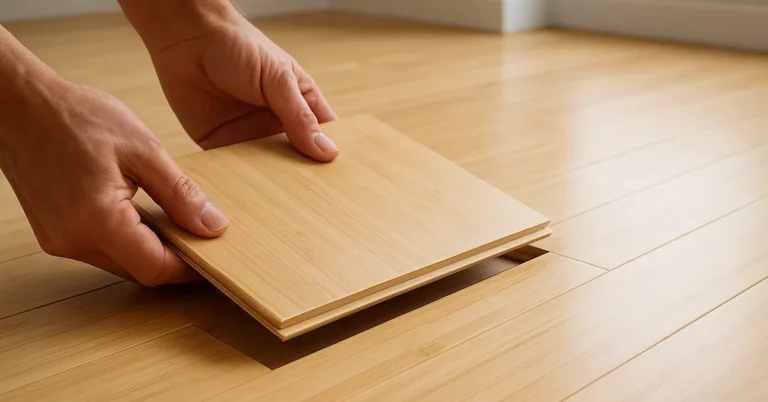
How to Clean Bamboo Floors the Right Way (2026 Guide)
Sweep or vacuum bamboo floors first to lift grit before it scratches the finish, then damp-mop with a pH-neutral cleaner made for bamboo or hardwood. Skip vinegar — it’s the most commonly recommended “natural” cleaner online, but most bamboo manufacturers explicitly exclude acidic cleaners from their care instructions, and using one can void the warranty.
That warning surprises a lot of people because vinegar-and-water shows up in almost every bamboo-cleaning guide on the internet, including an earlier version of this one. It’s not dangerous in the way bleach is, but vinegar is acidic, and repeated contact with an acidic solution slowly dulls the polyurethane or aluminum-oxide finish that actually protects the bamboo strands underneath — the same finish layer that takes the scratches, not the bamboo itself. Below is the routine that keeps that finish intact, the stain fixes that don’t rely on vinegar, and the myths worth dropping.
Understand Your Bamboo Floor Before You Clean It
Best pH-Neutral Bamboo Floor Cleaner
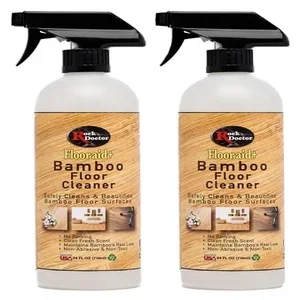 |
Rock Doctor Flooraid+ Bamboo Floor Cleaner (2-Pack) – $20.38 A spray-and-wipe, pH-neutral formula made specifically for bamboo, so it won’t strip or dull the finish the way an all-purpose or vinegar-based cleaner can.
|
Bamboo flooring is made from mature bamboo stalks that are sliced into strips and laminated together under heat and pressure — it’s a grass product engineered into a plank, not a single piece of solid wood. That construction is exactly why cleaning bamboo differs from cleaning oak or maple: bamboo absorbs and releases moisture faster than solid hardwood, and it’s the factory-applied finish, not the bamboo strands, that takes the scratches and stains you’re actually cleaning off. Flooring in general performs best between 35–50% relative humidity, and bamboo specifically is sensitive enough to that range that a whole-house humidifier or dehumidifier is often a better long-term investment than any cleaning product.
Types Of Bamboo Floors (Cleaning Rules Are the Same, Durability Isn’t)
The cleaning method below works the same across every construction type, but it’s worth knowing which one is underfoot before you get aggressive with stain removal:
| Type | Description |
|---|---|
| Vertical Bamboo | Narrow strips laminated vertically, giving a striped look. Softer than strand-woven, so avoid abrasive scrubbing on stains. |
| Horizontal Bamboo | Wider strips laminated horizontally, showing the natural bamboo “knuckle” nodes. Similar durability to vertical. |
| Strand-Woven Bamboo | Shredded bamboo fiber compressed under extreme pressure. Rates 3,000–5,000+ on the Janka hardness scale — harder than red oak — and tolerates a firmer scrub on stuck-on grime. |
| Engineered Bamboo | A bamboo wear layer over a plywood or HDF core. More stable in humidity swings, but the thinner wear layer means less room to sand out a deep scratch later. |
How To Clean Bamboo Floors, Step By Step
1. Sweep Or Vacuum First, Every Time
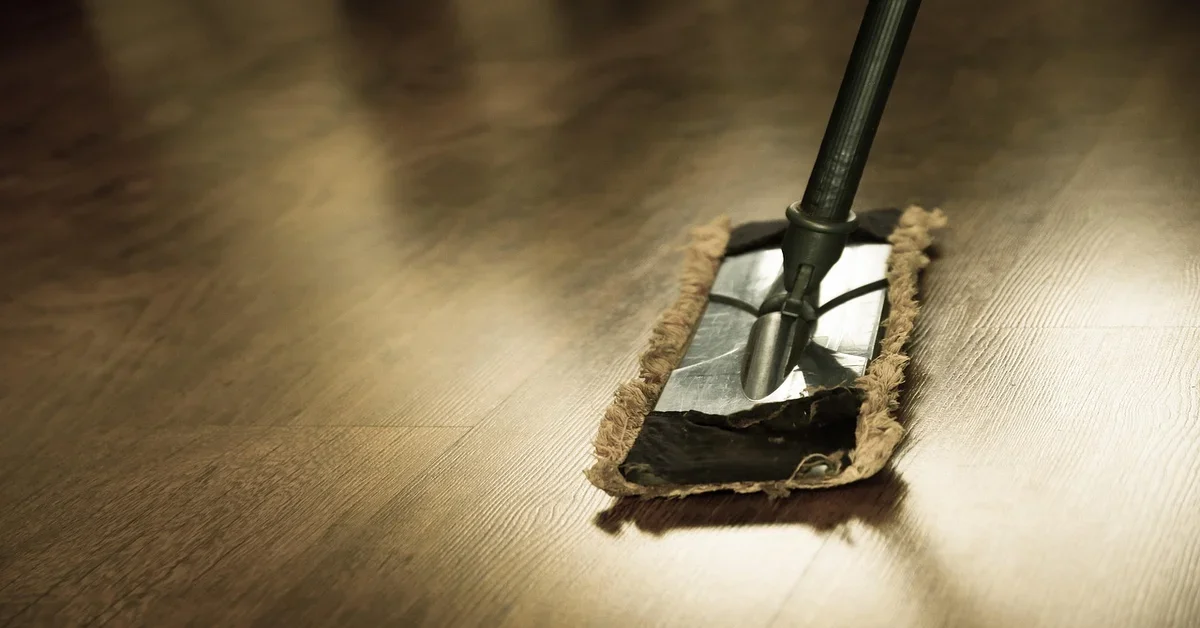
Grit and sand are what actually scratch a bamboo floor’s finish — not mopping, not foot traffic on its own. In high-traffic rooms, sweep or run a vacuum with a bare-floor/hard-floor attachment (not the beater-bar carpet head, which can scuff the finish) daily. A microfiber dust mop works just as well for lighter daily maintenance and picks up fine dust a broom pushes around.
2. Damp-Mop With A pH-Neutral Cleaner, Not A Soaked One
Wring the mop out until it’s damp, not wet — standing water that sits in the seams between planks is the single most common way people damage bamboo flooring, since the plank edges are where moisture gets in fastest. Use a pH-neutral cleaner labeled for bamboo or hardwood (see the pick above), mop in the direction of the planks in small sections, and go back over the floor with a dry microfiber cloth if you used more liquid than you meant to.
3. Treat Stains And Spills The Same Day
Blot spills with a dry or barely damp cloth immediately — don’t let liquid sit while you decide what to clean it with. For a dried spot, a barely damp cloth with a small amount of your pH-neutral cleaner and a gentle circular motion usually lifts it. If a stain persists after that, stop before reaching for anything abrasive; check the flooring manufacturer’s specific stain-removal guidance first, since strand-woven, engineered, and carbonized bamboo don’t all tolerate the same follow-up treatment.
4. Keep Humidity In Range Instead Of Over-Cleaning
A surprising amount of “why does my bamboo floor look dull” trouble isn’t a cleaning problem at all — it’s humidity swinging outside the 35–50% range flooring generally tolerates well. Bamboo that’s too dry can develop hairline gaps between planks; bamboo that’s too humid can cup at the seams. A basic hygrometer and, if needed, a humidifier or dehumidifier will do more for how the floor looks long-term than any extra mopping.
The Vinegar Myth (And What To Use Instead)
Vinegar-and-water is repeated so often as a “safe, natural” floor cleaner that it’s become the default DIY answer for almost every hard-floor surface — tile, laminate, hardwood, and bamboo alike. For bamboo specifically, that advice runs against most manufacturers’ own care documentation, which lists vinegar and other acidic cleaners as something to avoid because they can discolor or dull the finish over repeated use, and using an unapproved cleaner is also a common way homeowners unknowingly void a flooring warranty. A single accidental splash of vinegar won’t ruin a floor, but using it as a regular cleaning solution is the habit to break.
What Actually Works: Baking Soda For Stuck-On Grime
Baking soda is mildly abrasive without being acidic, which makes it a reasonable option for scuff marks and dried spots that a damp cloth alone won’t lift — particularly on strand-woven bamboo, which is dense enough to handle it. Mix three parts baking soda to one part water into a thick paste, apply it directly to the spot, work it in gently with a soft cloth, then rinse the area with a barely damp cloth and dry it immediately so no moisture sits in the seams.
Skip Oil-Based “Conditioners” On The Floor, Not Just Vinegar
Lemon juice and olive oil mixtures show up in the same natural-cleaning roundups as vinegar, usually framed as a way to both clean and “nourish” the floor. Treat that one with the same skepticism: oil-based products are formulated for furniture, not floors, and a film of oil on a floor is a slip hazard as much as it’s a dust magnet, since it stays tacky and attracts more dirt than it removes. If a bamboo floor’s finish genuinely looks dry or dull after months of proper cleaning, that’s a job for a manufacturer-approved recoat product on a bare-feet-only test patch first, not a kitchen-cabinet oil blend applied to the whole room.
Dos And Don’ts For Bamboo Floor Cleaning
A short reference for what actually protects a bamboo floor’s finish, and what quietly wears it down.
Do
- Sweep or vacuum with a hard-floor attachment regularly to keep grit from grinding into the finish underfoot.
- Damp-mop, never wet-mop — wring the mop until it stops dripping before it touches the floor.
- Use a pH-neutral cleaner made for bamboo or hardwood instead of an all-purpose or acidic cleaner.
- Wipe up spills immediately, especially near seams where moisture gets under the finish fastest.
- Use furniture pads and entrance mats to cut down on the grit and dragging that cause most day-to-day scratches.
Don’t
- Don’t clean with vinegar or other acidic solutions as a regular routine — most manufacturers exclude them from approved care instructions.
- Don’t use steam cleaners. The heat and moisture can swell the bamboo strands and delaminate the finish; this is one of the more common ways to void a bamboo flooring warranty outright.
- Don’t apply wax, polish, or oil-based “conditioners” to the floor. Bamboo’s factory finish isn’t designed to be waxed, and a wax or oil film only traps more dirt and can make a later recoat fail to bond properly.
- Don’t let standing water sit, even briefly, especially in the seams between planks.
- Don’t drag furniture. Lift it, or fit felt pads before rearranging a room.
Frequently Asked Questions
Does vinegar really damage bamboo floors?
Not with a single accidental splash, but using vinegar and water as a regular cleaning routine is what most bamboo manufacturers’ care guides warn against, since repeated exposure to an acidic solution can dull or discolor the finish over time. A pH-neutral cleaner made for bamboo or hardwood avoids that risk entirely.
Can you use a steam mop on bamboo floors?
No. Steam cleaners push heat and moisture into the seams between planks, which can swell the bamboo strands and separate the finish from the surface — and using one is a common way to void a bamboo flooring warranty.
How often should bamboo floors be cleaned?
Sweep or vacuum daily in high-traffic rooms, and damp-mop with a pH-neutral cleaner about once a week, or more often if the household has pets or kids tracking in dirt regularly. Spills and spot stains should be handled the same day, not saved for the next scheduled mopping.
Should you wax or polish a bamboo floor?
No. Bamboo’s factory-applied finish isn’t designed to be waxed the way some older hardwood floors were, and wax or polish products leave a film that attracts dust and can interfere with a proper recoat later on.
Conclusion
Cleaning bamboo floors well comes down to two habits: keep grit off the finish with regular sweeping or vacuuming, and mop it damp — never wet — with a pH-neutral cleaner made for bamboo or hardwood. The one habit worth dropping is reaching for vinegar or an oil-based “natural” mixture, since both run against what most bamboo manufacturers actually recommend for keeping a warranty valid and a finish intact.
Handle stains the same day, keep indoor humidity in the 35–50% range, and skip the wax entirely, and a bamboo floor’s factory finish should hold up for years without needing anything more aggressive than what’s covered above.
Sponsored / affiliate links. As an Amazon Associate I earn from qualifying purchases. I may earn additional commission from eligible campaigns.