Best Way to Dust Wood Furniture: Effortless Shine
The best way to dust wood furniture is to use a soft, lint-free cloth or a specialized microfiber duster, followed by a gentle wood polish applied sparingly. This approach effectively removes dust without scratching or damaging the wood’s finish, leaving it clean and beautifully shiny.
Hey there, woodworking enthusiasts and home caretakers! Ever feel like your beautiful wooden furniture just never seems to stay dust-free? You wipe it down, and a day later, a fine layer has reappeared, making your cherished pieces look dull. It’s a common frustration, especially with delicate finishes or intricate carvings. But don’t worry! Keeping your wood furniture looking its best doesn’t require a professional. With the right techniques and tools, you can achieve that effortless shine and keep dust at bay. We’ll walk through the simple, effective methods to make dusting a breeze, protecting your investment and enhancing its natural beauty. Get ready to see your furniture gleam!
Why Dusting Wood Furniture Matters
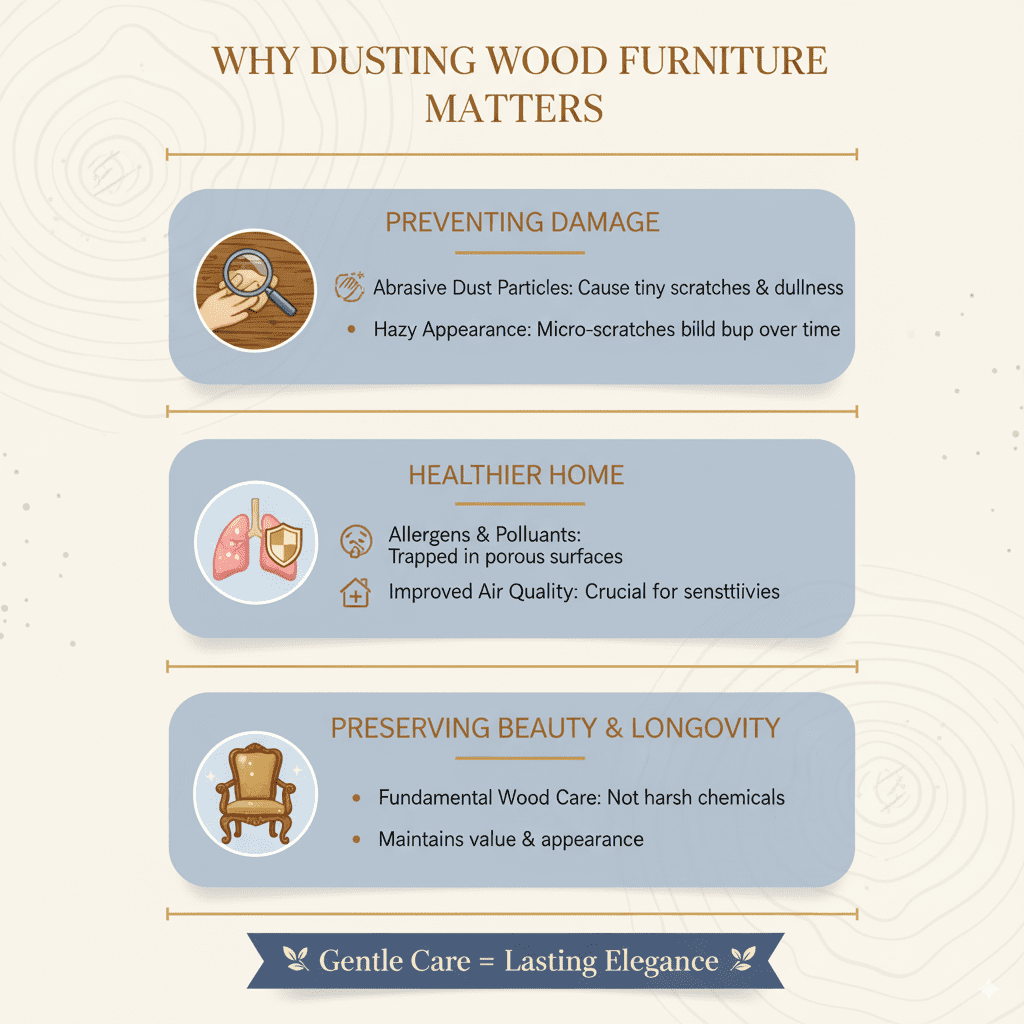
Dust might seem harmless, but it’s more than just an aesthetic nuisance. Over time, dust particles can become abrasive. When you try to wipe them away with a dry, rough cloth, you can actually create tiny scratches on the wood’s finish. These micro-scratches can dull the shine and, if left unaddressed, can eventually lead to a hazy appearance that’s hard to buff out.
Beyond just scratching, dust can contain allergens and pollutants. For those with sensitivities, regular dusting is crucial for maintaining a healthier home environment. Wooden furniture, with its often porous surfaces, can trap these particles, making it important to tackle them gently and effectively.
Finally, preserving the beauty and longevity of your wood furniture is key. Proper dusting is a fundamental part of wood care. It’s not about harsh chemicals or strenuous scrubbing; it’s about understanding the material and using the kindest methods. The result? Furniture that not only looks good but also lasts for generations.
Gathering Your Dusting Toolkit
Before you start, having the right tools makes all the difference. You don’t need a workshop full of specialized equipment; a few simple items will make your dusting duties a joy rather than a chore.
Here’s what I recommend:
Microfiber Cloths: These are your best friends for dusting. They are incredibly soft, lint-free, and designed to trap dust particles rather than just pushing them around. Having a few on hand is essential.
Lambswool Duster: A classic for a reason! Lambswool is naturally electrostatic, meaning it attracts and holds dust like a magnet. It’s perfect for reaching into nooks and crannies.
Soft Bristle Brush: A natural bristle brush with soft bristles is excellent for detailed areas, like carved legs or inlays, where cloths might not reach easily.
Clean, Dry Cotton Cloths: For a final buff or to dry off any moisture, a soft cotton cloth is useful. Ensure they are well-washed to be lint-free.
Wood Furniture Polish or Cleaner (Optional): For those times when dusting alone isn’t enough, a good quality wood polish can restore shine and provide a protective layer. Choose one appropriate for your furniture’s finish.
Vacuum Cleaner with a Soft Brush Attachment: For large surface areas or very dusty furniture, a vacuum with a gentle brush attachment can quickly remove loose dust before you start wiping.
Remember, the goal is to be gentle. Always opt for soft materials that won’t snag or scratch the wood’s surface. If you’re ever unsure about a product, test it on an inconspicuous area first.
The Best Way to Dust Wood Furniture: Step-by-Step
Now that you have your tools, let’s get to the main event! This method is designed for simplicity and effectiveness, ensuring your wood furniture stays beautiful without any fuss.
Step 1: Start from the Top
Always begin dusting from the highest point of the furniture and work your way down. Dust naturally settles downwards, so this prevents you from having to re-dust areas you’ve already cleaned.
For a table, this means starting with the top surface. For a dresser or cabinet, begin with the very top panel.
Step 2: Choose Your Duster Wisely
For general surfaces (tabletops, shelves, cabinet doors): Use a clean microfiber cloth. Gently wipe in one direction. Avoid circular motions, which can sometimes spread dust or create micro-scratches.
For intricate details and carvings: A lambswool duster or a soft bristle brush is ideal. Gently sweep away dust from crevices without applying pressure. The lambswool’s natural static will help it cling to the dust.
For large or very dusty areas: You can use a vacuum cleaner with a soft brush attachment on a low setting. This is a great first pass to remove heavy dust before your gentle wipe-down. Be sure the attachment is clean and soft.
Never use feather dusters; they tend to just move dust around rather than trapping it.
Step 3: Wipe with the Grain
Wood has a natural grain pattern. When dusting, always move your cloth or duster with the grain, not against it. Wiping with the grain helps to blend any minuscule disruptions and maintain the finish’s natural appearance.
Observing the direction of the wood planks will show you the grain. Follow that direction with your dusting motion.
Step 4: Address Stains and Smudges (Use Sparingly)
Sometimes, dusting alone isn’t enough. You might find stubborn smudges or marks. If this happens, it’s time for a gentle cleaning solution.
Slightly Damp Cloth: For minor smudges, a slightly damp (not wet!) microfiber cloth can often do the trick. Wipe the smudge and then immediately dry the area with a clean, dry cloth.
Wood Cleaner/Polish: If a damp cloth isn’t enough, use a wood furniture polish or cleaner. Apply a small amount to your cloth (never directly to the furniture). Gently wipe the affected area.
Important: Always use products designed for your specific furniture finish (e.g., high gloss, matte, oil-rubbed). If you’re unsure, a pH-neutral cleaner is usually safest. For guidance on identifying furniture finishes, the U.S. Department of Homeland Security offers helpful resources on material care after disasters, which can indirectly inform general best practices for wood preservation.
Buffing: After applying a cleaner or polish, lightly buff the area with a clean, dry microfiber cloth to restore shine.
Avoid silicone-based polishes if you plan to refinish your furniture later, as they can interfere with new finishes.
Step 5: Don’t Forget Legs and Undersides
Dust settles everywhere. Take a moment to dust table legs, chair rungs, and the undersides of shelves and tabletops. These areas are often overlooked but are just as important for the overall cleanliness and appearance of your furniture.
Step 6: The Final Buff (Optional but Recommended)
Once you’ve completed the dusting and any necessary spot cleaning, give the entire piece a final gentle buff with a clean, dry microfiber cloth. This removes any residual dust or polish streaks and brings out a lovely, uniform shine.
Understanding Different Wood Finishes and Dusting
Not all wood furniture finishes are created equal, and the best way to dust can sometimes depend on the type of finish your piece has. This isn’t about becoming a finish expert overnight, but a little awareness goes a long way.
Here’s a simple breakdown:
Varnish/Polyurethane: These are durable, protective clear coats. They are relatively easy to dust and clean. A damp cloth or mild wood cleaner works well. The finish is quite resilient to scratches.
Lacquer: Often found on higher-end furniture, lacquer provides a beautiful sheen but is softer and more susceptible to damage from harsh chemicals or abrasive dusting. Stick to soft microfiber cloths and gentle dusting techniques.
Shellac: Similar to lacquer in its sensitivity, shellac is a natural finish that can be dissolved by alcohol. Dusting should be very gentle, using only dry, soft cloths.
Oil Finish: These finishes penetrate the wood, offering a more natural look and feel. They require regular reapplication of oil to maintain their protective qualities. Dusting is straightforward with a soft cloth, but you’ll need to re-oil periodically to keep the wood protected and looking its best. Resources on wood finishing, like those available through university extension offices, often provide detailed information on maintaining various finishes.
Wax Finish: Pure wax finishes offer a beautiful, mellow sheen but are the least durable. They are easily damaged by heat and moisture and can become sticky when heated. Dusting should be done with a very soft, dry cloth, and a light reapplication of paste wax may be needed periodically.
A good rule of thumb: if you’re unsure of the finish, start with the most gentle method – a dry, soft microfiber cloth – and only escalate if absolutely necessary, always testing in an inconspicuous spot.
Tools for Different Dusting Tasks
Let’s look at how your tools can be best utilized for specific dusting scenarios.
| Tool | Best For | Why It Works | Caution |
|---|---|---|---|
| Microfiber Cloth | General surfaces, larger flat areas, polishing | Traps dust effectively, soft fibers, absorbs moisture without leaving lint | Can snag on sharp edges if not careful; use a clean one for each surface. |
| Lambswool Duster | Intricate carvings, delicate details, corners, reaching high | Natural static attracts and holds dust, very soft and gentle | Can leave fine fibers on very dark or glossy finishes if not shaken out well |
| Soft Bristle Brush | Deep crevices, tight corners, detailed molding | Gets into small spaces, gentle on wood | Avoid stiff bristles; ensure brush is clean and free of debris. |
| Vacuum (Soft Brush) | Initial heavy dust removal, large surfaces, quick clean | Efficiently lifts loose particles | Use lowest setting, ensure brush is soft and clean; avoid pressing down hard |
| Clean Cotton Cloth | Final buffing, drying after damp wiping | Absorbs excess moisture, provides a streak-free shine | Must be lint-free; avoid rougher cotton fabrics. |
As Md Meraj, I always preach about the right tool for the right job. Using these tools as intended will make your furniture care much easier and more effective.
Common Dusting Mistakes to Avoid
To ensure you’re truly protecting your wood furniture and not accidentally causing harm, here are a few common pitfalls to steer clear of:
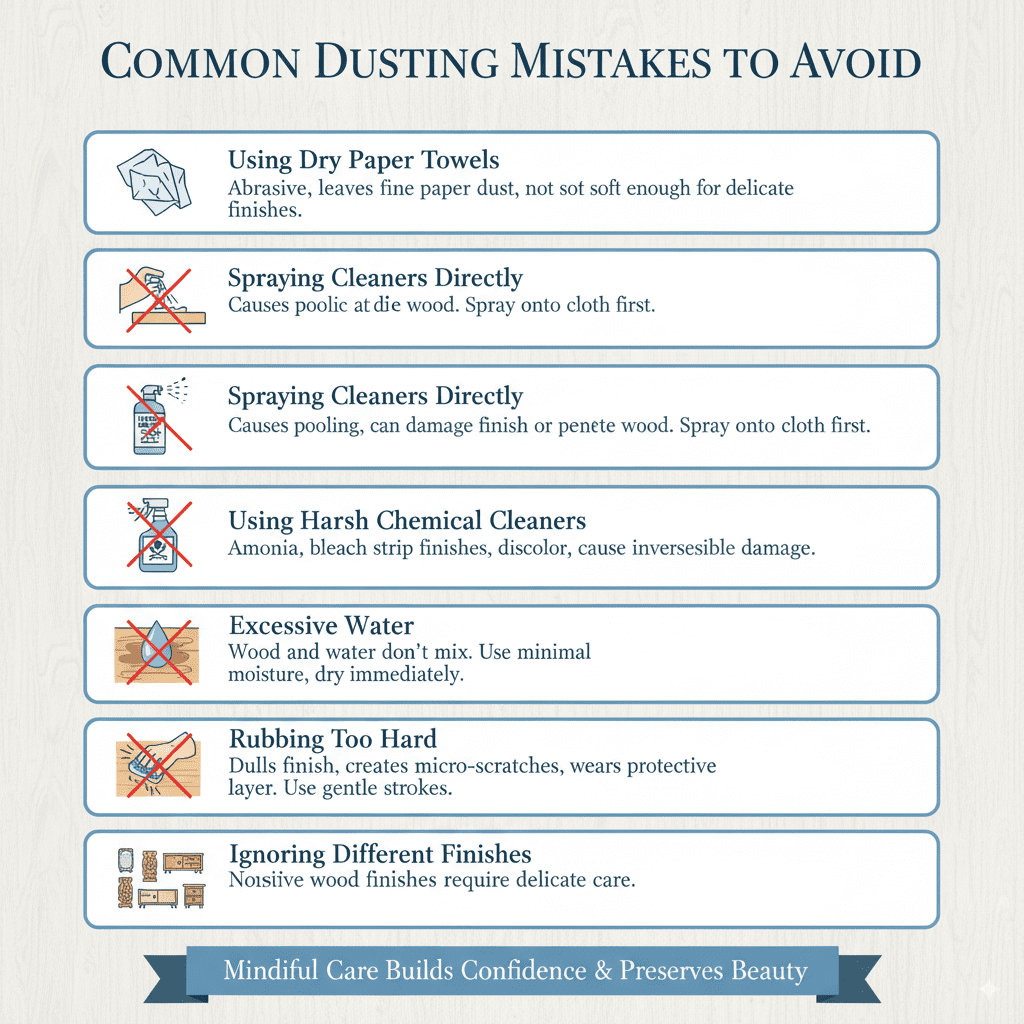
Using Dry Paper Towels: Paper towels can be surprisingly abrasive and leave behind fine paper dust. They are not soft enough for delicate wood finishes.
Spraying Cleaners Directly Onto Furniture: This can lead to liquid pooling, which can damage the finish or penetrate the wood. Always spray onto your cloth first.
Using Harsh Chemical Cleaners: Ammonia, bleach, or general household cleaners can strip finishes, discolor wood, and cause irreversible damage.
Excessive Water: Wood and water don’t mix well. Always use the minimal amount of moisture possible when cleaning, and dry immediately.
Rubbing Too Hard: Aggressive scrubbing can dull the finish, create micro-scratches, and even wear away the protective layer over time. Gentle strokes are key.
Ignoring Different Finishes: Assuming all wood furniture can be treated the same way is a mistake. Sensitive finishes require more delicate care.
By being mindful of these common errors, you’ll build confidence in caring for your wood pieces.
Frequently Asked Questions (FAQ)
Q1: How often should I dust my wood furniture?
A1: For most homes, dusting once a week is ideal. If you live in a dusty environment or have pets, you might need to dust more frequently.
Q2: Can I use a feather duster?
A2: While traditional, feather dusters are not the best choice for wood furniture. They tend to push dust around rather than trapping it, and the quills can be abrasive. A microfiber or lambswool duster is a much better alternative.
Q3: What if my furniture has a lot of detailed carvings?
A3: For intricate areas, a soft bristle brush or a lambswool duster is perfect. Gently sweep dust from crevices and raised areas. You can also use a vacuum with a soft brush attachment on a low setting for initial dust removal.
Q4: Is it okay to use furniture polish every time I dust?
A4: No, it’s not necessary. Furniture polish should be used sparingly, perhaps once every few weeks or months, depending on the product and your furniture’s needs. Over-polishing can lead to a buildup that dulls the finish. Dusting with a dry cloth is sufficient for daily or weekly cleaning.
Q5: What’s the difference between a wood cleaner and a wood polish?
A5: A wood cleaner is designed to remove grime, dirt, and smudges. A wood polish typically cleans, conditions, and adds a layer of protection or shine to the wood. For regular dusting, you usually just need a dry cloth. Use cleaners or polishes for deeper cleaning or when the wood looks dull.
Q6: My furniture feels sticky. What did I do wrong?
A6: This can happen if too much polish or cleaner was used, or if the air is very humid. Ensure you always use products sparingly and on a cloth first. Clean off excess product with a clean, damp cloth, and then dry thoroughly. For sticky wax finishes, gentle buffing with a dry cloth can sometimes resolve it.
Q7: How do I know if I should use a liquid cleaner or just a dry cloth?
A7: Start with a dry cloth. If that removes the dust and leaves the finish looking good, you’re done! If there are smudges, fingerprints, or a visible film, try a slightly damp cloth. If that doesn’t work, then a specialized wood cleaner or polish applied to your cloth might be needed. Always proceed from the gentlest method to the strongest.
Maintaining That Effortless Shine: Long-Term Wood Care
Dusting is a crucial part of wood furniture care, but maintaining that effortless shine involves a little more. Think of it as building good habits.
Regular dusting, as we’ve discussed, prevents abrasive particles from damaging your furniture. Beyond that, consider these tips:
Protect from Sunlight: Constant direct sunlight can fade and dry out wood finishes. Position furniture away from windows or use curtains and blinds to filter light.
Control Humidity: Wood expands and contracts with changes in humidity. Extreme fluctuations can cause cracking or warping. Aim for a stable environment, typically between 40-50% humidity. Humidifiers and dehumidifiers can help.
Use Coasters and Trivets: Always protect wood surfaces from heat, moisture rings, and scratches caused by mugs, hot dishes, and rough-bottomed decorative items.
Address Spills Immediately: Wipe up any spills with a soft, absorbent cloth as soon as they happen. Don’t let liquids sit on the surface.
* Periodic Conditioning: Depending on the finish, your wood might benefit from periodic conditioning. This could mean a light application of a quality wood polish every few months or re-oiling an oil finish as recommended. Check manufacturer guidelines or consult a woodworking resource. For example, The National Association of Home Builders has resources on building and maintaining homes that can touch upon environmental factors affecting wood.
By integrating these practices into your routine, you’re not just dusting; you’re actively preserving the beauty and structural integrity of your wood furniture for years to come. It’s all about gentle, consistent care.
Conclusion
Keeping your wood furniture pristine and gleaming doesn’t have to be a daunting task. By understanding the best techniques and using the right tools – primarily soft, lint-free cloths and specialist dusters – you can effortlessly remove dust without risking damage. Remember to always work with the grain, start from the top, and use cleaning products sparingly and only when truly necessary, always testing in an inconspicuous area first.
Your beautiful wood pieces are an investment, both in your home’s aesthetics and its history. With this simple, step-by-step approach, you’re well-equipped to maintain their shine, protect their finish, and ensure they remain cherished items for generations. So grab your microfiber cloth, give your furniture a gentle swipe, and enjoy that beautiful, dust-free glow. Happy woodworking and happy dusting!