How to Remove Formaldehyde Smell From Wood Furniture: What Actually Works
That sharp, chemical smell coming off a new dresser or bookshelf is not “new furniture smell” in the pleasant sense – it is usually formaldehyde off-gassing from the glue holding particleboard or MDF together. The good news is that it fades on its own over time, and a few specific actions speed that up a lot faster than just leaving the windows cracked and hoping.
Below is what actually reduces the smell fastest, the real regulatory limits your furniture is supposed to meet, and which popular “fixes” (looking at you, vinegar spray) don’t do much beyond masking the odor for an hour.
Why Wood Furniture Smells Like Formaldehyde in the First Place
Solid hardwood does not off-gas formaldehyde on its own. The smell comes from urea-formaldehyde resin, the glue binding wood fibers or particles together in MDF, particleboard, and some plywood cores. Cut open a cheap dresser drawer bottom and you are looking at (and smelling) thousands of tiny wood particles held together with that resin. While you wait for it to air out, here is one product worth having on hand for the air itself.
Best Charcoal Odor Absorber Pick
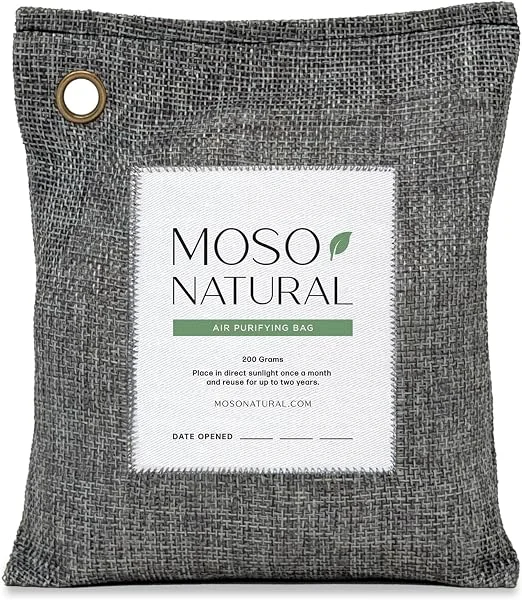 |
Moso Natural Air Purifying Bag, 200g – $12.95 A simple bamboo charcoal bag to set inside a drawer or next to new furniture while ventilation does the real work of clearing the air.
|
With that on order, here is the actual timeline and the methods worth your time.
How Long Formaldehyde Off-Gassing Actually Takes
Off-gassing is heaviest in the first few days to weeks after a piece is made or unboxed, then drops off sharply, and continues at a much lower level for months afterward. That is why a brand-new flat-pack dresser smells strong on day one but is nearly odor-free by week six even with no special treatment – the resin is releasing its trapped gas fastest when the exposed surface is freshest, and the rate slows the longer it sits.
Composite wood furniture sold in the US is required to meet formaldehyde emission limits under the EPA’s TSCA Title VI rule, which mirrors California’s CARB Phase 2 standard: hardwood plywood is capped at 0.05 parts per million (ppm), particleboard at 0.09 ppm, and MDF at 0.11 ppm (0.13 ppm for thin MDF under a quarter-inch). A compliant piece will still off-gas some formaldehyde – the standard limits the rate, it doesn’t eliminate it – which is why even furniture that meets code can smell noticeable for the first few weeks.
Ventilate First – It Does More Than Everything Else Combined
Increasing air exchange is the single most effective thing you can do, because formaldehyde off-gassing is a concentration-driven process: the more you replace stale, saturated air with fresh air, the faster the gradient keeps pulling more gas out of the wood. Open windows on opposite sides of the room if you can, so air actually moves through rather than just sitting. A box fan aimed out an open window for a few hours a day pulls stale air out far faster than an open window alone.
Pull drawers open and prop cabinet doors ajar during this period too. A closed drawer traps off-gassed formaldehyde against the same surface it came from, which is part of why furniture can smell fine in a showroom but sharper once you get it home and close everything up. Avoid draping new furniture in fabric covers or moving blankets while it airs out – fabric traps the VOCs against the surface instead of letting them dissipate, which slows the whole process down.
Seal Exposed MDF and Particleboard Edges
Most of the off-gassing happens at cut, unfinished edges – the flat faces of a panel are usually laminated or veneered, but the edges where it was cut to size are often raw exposed particleboard or MDF with nothing sealing them. Painting, laminating, or applying a couple of coats of polyurethane to any exposed cut edge physically reduces the surface area releasing gas into the room. This won’t help with a fully enclosed panel that’s already sealed on all sides, but it makes a real difference on drawer bottoms, the backs of bookshelves, and shelf edges that were left bare from the factory.
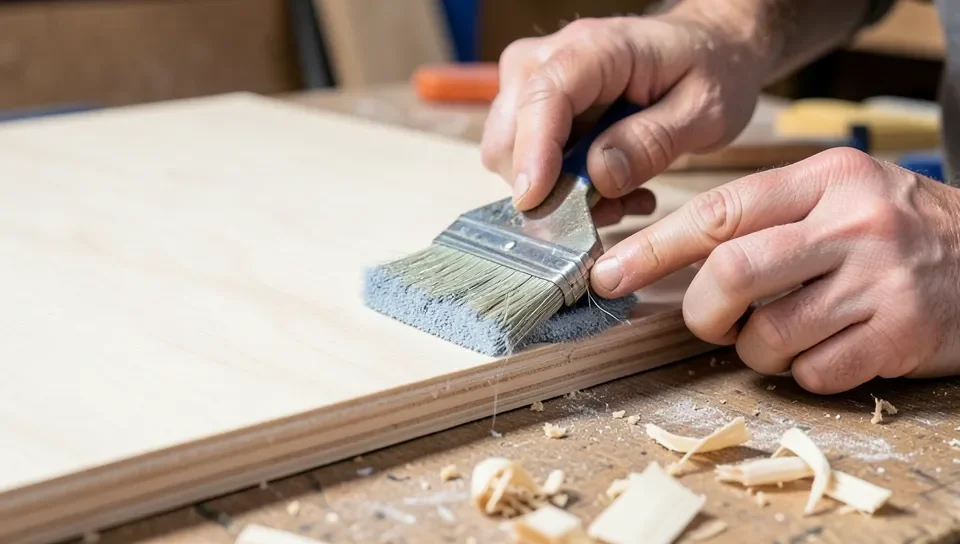
Our full guide to stopping MDF smell covers edge-sealing products and timelines in more depth if the odor is coming from raw MDF sheet stock rather than a finished piece. For a general sealant, a water-based low-VOC polyurethane is the easiest for a beginner to apply evenly and cleans up with soap and water; oil-based finishes cure harder but take longer to dry and carry their own smell while curing, so give it the full recommended drying time before judging whether the formaldehyde smell underneath is gone.
What Doesn’t Really Work
A few “hacks” show up constantly in furniture forums and are worth being honest about:
Vinegar spray does not chemically neutralize formaldehyde. Vinegar is mildly acidic and can help mask general odors, but it has no meaningful reaction with formaldehyde gas – wiping a piece down with a vinegar solution mostly just adds a vinegar smell on top of the formaldehyde smell for a little while. It is harmless to try, just don’t expect it to solve the underlying off-gassing.
Baking soda is a genuine general odor absorber, and sprinkling it on an open shelf surface and vacuuming it up after a day is fine as a supplement. But like activated charcoal, its effect on formaldehyde specifically is limited compared to actually replacing the air in the room – treat it as a minor assist, not a fix.
“Air-purifying” houseplants are popular advice from a widely cited 1989 NASA study, but that study tested sealed lab chambers, not an open room with normal air exchange – the number of plants needed to meaningfully change formaldehyde levels in an actual bedroom is far higher than a couple of pots on a windowsill. A plant is a nice addition to a room, not a formaldehyde mitigation strategy.
When the Smell Is Worth Taking Seriously
Formaldehyde is a recognized irritant at sustained higher exposure levels, and it’s classified as a human carcinogen with long-term heavy exposure – most commonly relevant to occupational settings, not a single new dresser. For a typical piece of furniture, a strong smell that clearly fades over the first several weeks with ventilation is the expected, normal pattern. Symptoms worth paying attention to in a newly furnished room include eye or throat irritation, headaches, or a smell that stays just as strong after a month of regular ventilation – that pattern is unusual and worth ventilating more aggressively or considering whether the piece was made to the emission standards described above.
People with asthma or chemical sensitivities are more likely to notice symptoms at lower concentrations than the general population, so it’s reasonable to be more cautious – more ventilation, more time before bringing sensitive household members into a newly furnished room – even when the furniture is within compliant emission limits.
Frequently Asked Questions
How do you get rid of formaldehyde smell from wood?
Ventilate the room with cross-airflow from open windows and a fan, leave drawers and cabinet doors open so trapped air can escape, and seal any raw cut MDF or particleboard edges with paint or polyurethane to reduce the exposed off-gassing surface. Activated charcoal bags and baking soda can help as a minor supplement, but ventilation is what actually clears the air fastest.
Does formaldehyde smell in furniture go away on its own?
Yes. Off-gassing is heaviest in the first few days to weeks and then drops sharply, continuing at a much lower level for months. Ventilation speeds this process up significantly rather than changing the underlying timeline.
Does vinegar neutralize formaldehyde?
No. Vinegar does not chemically react with or neutralize formaldehyde gas. It may temporarily mask the smell with its own odor, but it doesn’t reduce the actual off-gassing – ventilation and edge-sealing are what address the source.
What formaldehyde emission limit does furniture sold in the US have to meet?
Under the EPA’s TSCA Title VI rule, which matches California’s CARB Phase 2 standard, hardwood plywood is limited to 0.05 ppm, particleboard to 0.09 ppm, and MDF to 0.11 ppm (0.13 ppm for thin MDF under a quarter-inch). Compliant furniture can still off-gas noticeably for the first few weeks – the standard caps the rate, it doesn’t make the smell disappear immediately.
The Bottom Line
Ventilation does more work than every other method combined, and it’s free. Pair it with sealing any raw MDF or particleboard edges and, if it helps you wait it out, a charcoal bag inside closed drawers. Skip the vinegar spray as anything more than odor masking, and give it the full several weeks the off-gassing curve actually needs rather than judging the smell after day two.
Sponsored / affiliate links. As an Amazon Associate I earn from qualifying purchases. I may earn additional commission from eligible campaigns.