Black Fungus vs Wood Ear: Are They the Same Mushroom?
If you’ve stood in the Asian grocery aisle staring at a bag labeled “black fungus” right next to another labeled “wood ear mushroom” and wondered whether you’re paying for two different things, you’re not alone – it’s one of the most-searched mushroom mix-ups in home cooking. The short version: most of the time you’re looking at the same jelly fungus in two different states, but there’s a real species-level wrinkle underneath that oversimplified answer, and it matters if you ever plan to identify one growing in the wild instead of buying it dried.
Quick Answer: Are Black Fungus and Wood Ear the Same Mushroom?
In the kitchen, yes – “black fungus” is almost always just the dried, dark-colored form of wood ear mushroom, and recipes use the two names interchangeably. Biologically, it’s a little messier: “wood ear” and “black fungus” are common names applied to a handful of closely related but genetically distinct Auricularia species, not one single species with two names. For everyday cooking that distinction rarely matters. It starts to matter if you’re foraging, since not every gelatinous, ear-shaped fungus on a log is safe to eat.
Best Dried Black Fungus Pick
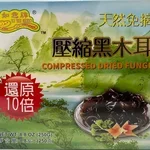 |
Yu Yee Compressed Dried Black Fungus (Wood Ear Mushroom), 8.8 oz – $23.95 This is the compressed dried wood ear sold as “black fungus” that this guide is about – it expands to roughly 10 times its dry volume once soaked.
|
The Species Behind the Names
Older cooking guides (including an earlier version of this one) tend to say wood ear and black fungus are simply “the same mushroom, fresh versus dried.” That’s close enough for a stir-fry, but it glosses over what mycologists actually found once they looked closely at DNA rather than just shape. What was long lumped together as one worldwide “wood ear” turned out to be several separate species that happen to look nearly identical: Auricularia auricula-judae (the jelly ear common in Europe), Auricularia heimuer (the main species grown commercially across China and sold as “black fungus” or “mu er”), and Auricularia cornea (often labeled “cloud ear” and common in Southeast Asian markets).
For a home cook, none of that changes how you shop or cook – all three are treated the same way and taste essentially the same. It matters more if you’re comparing scientific sources or a foraging guide from a different country, since “wood ear” in a British mushroom book and “wood ear” on a Chinese grocery label aren’t guaranteed to be the exact same species, even though both are edible and both are commonly called by the same name.
Fresh Wood Ear vs. Dried Black Fungus: What Actually Changes
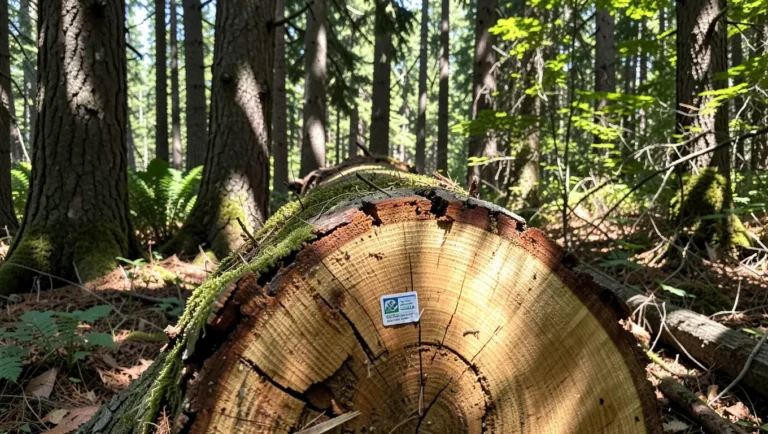
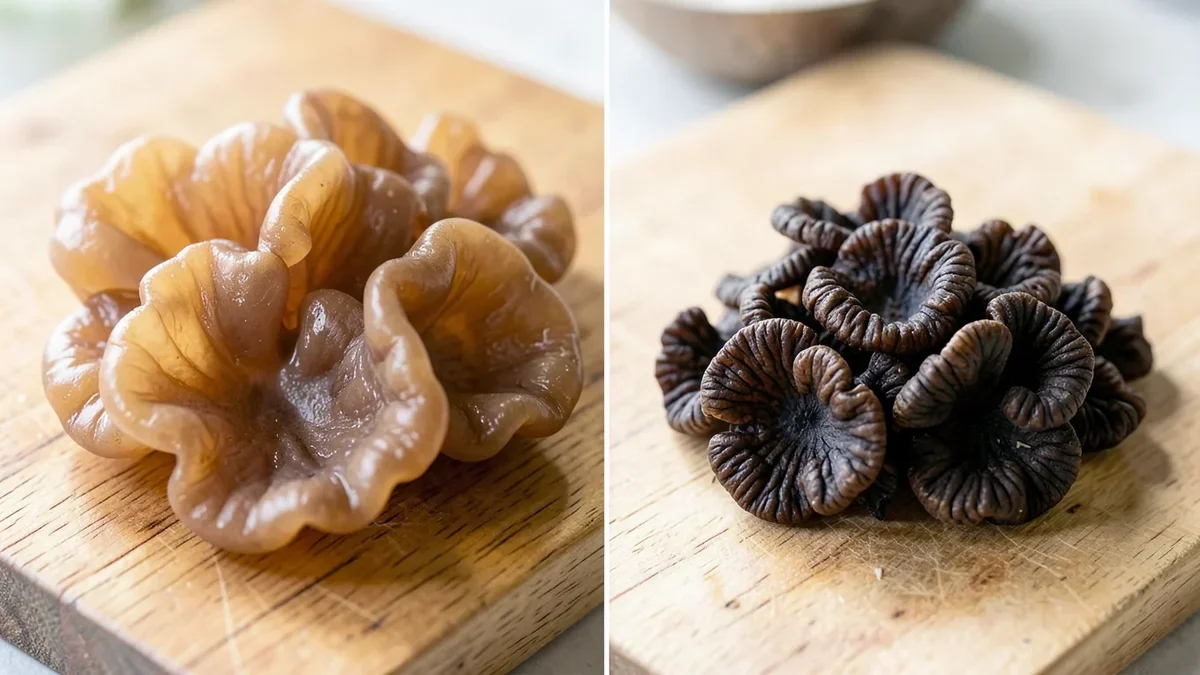
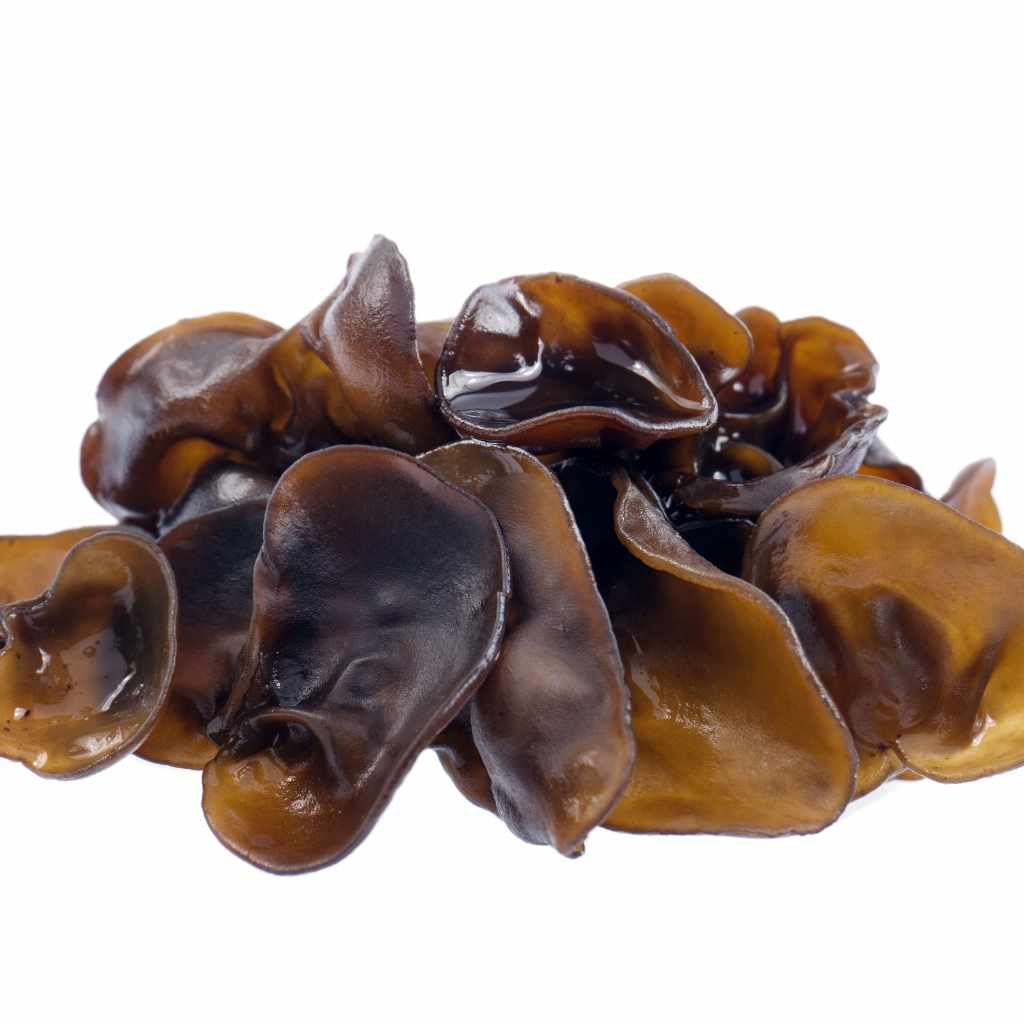
Fresh wood ear looks like a floppy, translucent brown ear or cup with ruffled edges, and it feels soft, slightly rubbery, and cool to the touch – almost like a firm gelatin. It grows on dead or dying hardwood, usually elder, oak, or beech, and shows up fastest after rain.
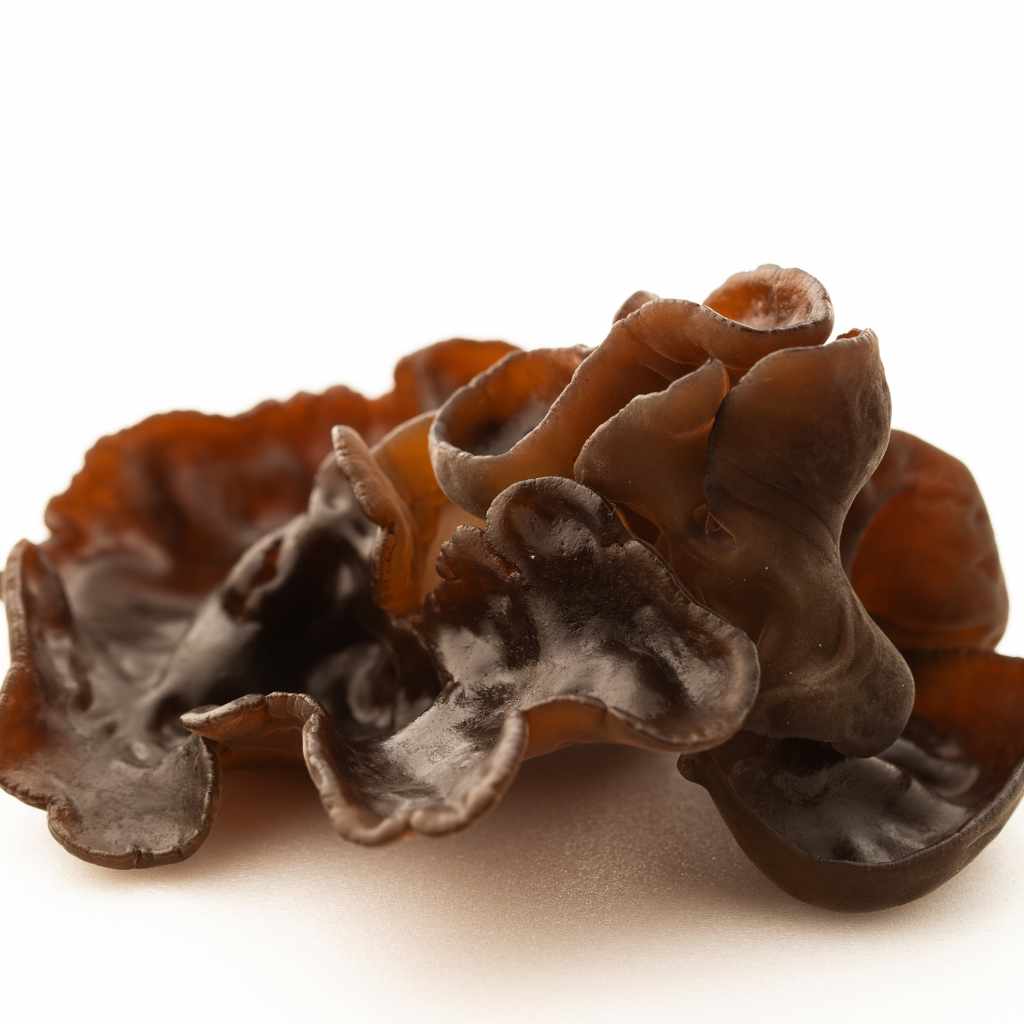
Once dried, the same mushroom shrinks down to a fraction of its size, turns dark brown to nearly black, and becomes stiff and brittle – that’s the product sold as “black fungus” in vacuum bags or compressed blocks. Soak it in warm water for 20 to 30 minutes and it rehydrates back to something close to its fresh texture, though usually a bit chewier, with a satisfying crunch that holds up well in hot dishes. A little goes a long way: dried wood ear typically expands to 8 to 10 times its dry weight once fully soaked, which is why an 8-ounce bag can go surprisingly far.
How to Cook With Wood Ear and Black Fungus
Neither form has much flavor on its own – the appeal is almost entirely texture. Wood ear soaks up whatever sauce or broth it’s cooked in, which is exactly why it shows up in dishes built around bold seasoning rather than subtle ones:
- Hot and sour soup: shredded wood ear is one of the defining textures in the dish, alongside tofu and bamboo shoots.
- Stir-fries: its crunch survives high heat well, so it’s often paired with pork, egg, or other vegetables in a quick stir-fry.
- Cold salads: blanched, shredded, and tossed with vinegar, garlic, chili oil, sesame oil, and cilantro for a popular cold appetizer.
- Hot pot and braises: whole or torn pieces hold their shape and absorb the broth over a longer cook time.
Whichever dish you’re making, always rehydrate dried black fungus first, trim away the tough, woody stem base where it attached to the log, and give it a rinse to remove any grit before it goes in the pot.
Nutrition and Traditional Uses
Wood ear mushroom is low in calories and carries a meaningful amount of dietary fiber for its weight, along with small amounts of iron and other minerals – it’s a common addition to vegetarian and vegan cooking partly for this reason, and partly because its texture stands in for meat in some dishes. In traditional Chinese medicine, it’s been used for generations in connection with blood circulation, and modern research has confirmed it does have measurable anticoagulant (blood-thinning) activity, which is worth knowing before you eat it in large quantities – more on that in the safety section below.
None of this makes wood ear a superfood or a substitute for medical treatment. Treat it the way you’d treat any high-fiber, low-calorie vegetable: a genuinely healthy addition to a meal, not a remedy.
Safety: Buying, Preparing, and the Wild-Foraging Line
If you’re buying wood ear or black fungus from a grocery store, Asian market, or an online retailer, it’s a well-established food product and genuinely safe to eat once properly rehydrated and cooked. A few practical rules still apply:
- Buy from a reputable source and check that dried packages are intact, free of visible mold, and not past any printed date.
- Always cook it. Wood ear, like most mushrooms, isn’t meant to be eaten raw – cooking makes it easier to digest.
- Watch quantity if you’re on blood thinners (warfarin or similar anticoagulant medications), or have a bleeding disorder or upcoming surgery – wood ear’s natural anticoagulant compounds can add to that effect. Ask your doctor if you eat it regularly and take blood-thinning medication.
- Introduce it slowly the first time if you’ve never eaten it before, the way you would any new food, in case of an individual sensitivity.
Wild foraging is a different situation, and this is where the species question above actually matters. Wood ear’s gelatinous, ear-shaped growth pattern isn’t unique – other jelly fungi grow the same way on dead wood, and while true toxic lookalikes are limited, they do exist, including some cup fungi in the Peziza genus that can cause digestive illness. Appearance alone is not a reliable way to confirm an edible wild mushroom, even one as distinctive-looking as wood ear. If you want to forage rather than buy, get a confirmed identification from an experienced local mycologist or your regional mycological society before eating anything you’ve picked, and when in doubt, don’t eat it. That standard applies to wood ear exactly as much as it applies to any other wild fungus.
Black Fungus vs Wood Ear at a Glance
Here’s the comparison in one place:
| Feature | Fresh Wood Ear | Dried Black Fungus (Rehydrated) |
|---|---|---|
| Appearance | Floppy, translucent brown, ear-shaped | Dark brown to black, glossy, ruffled edges |
| Texture | Soft, jelly-like, slightly rubbery | Chewy with a distinct crunch |
| Taste | Mild, earthy, absorbs other flavors | Same – mild and flavor-absorbing |
| Prep needed | Rinse and trim stem base | Soak 20-30 minutes, rinse, trim |
| Where sold | Specialty produce markets, seasonal | Asian grocery stores and online, year-round |
| Species | Usually Auricularia auricula-judae or a close relative | Most commonly Auricularia heimuer |
Frequently Asked Questions
Is black fungus the same thing as wood ear mushroom?
For cooking purposes, yes – “black fungus” is the dried, dark-colored form of wood ear mushroom, and the two names are used interchangeably in recipes and at the grocery store. Scientifically, “wood ear” covers several closely related Auricularia species rather than one single species, but they’re prepared and eaten the same way.
Why does dried wood ear turn black?
Fresh wood ear is a translucent brown. As it dries and loses moisture, the pigment concentrates and the mushroom darkens to a deep brown or near-black, which is where the name “black fungus” comes from.
Can you eat wood ear mushroom raw?
It’s not recommended. Like most mushrooms, wood ear should be cooked before eating – cooking makes it easier to digest and is standard practice in every cuisine that uses it.
Is wood ear mushroom safe if you’re on blood thinners?
Wood ear has natural anticoagulant properties, so if you take blood-thinning medication such as warfarin, have a bleeding disorder, or have surgery coming up, talk to your doctor before eating it regularly or in large amounts.
How do you tell real wood ear mushroom from a wild lookalike?
You shouldn’t rely on appearance alone. Other gelatinous fungi grow on dead wood the same way wood ear does, and while dangerous lookalikes are limited, they exist. If you’re foraging rather than buying from a store, get the specimen confirmed by an experienced local mycologist or mycological society before eating it.
Bottom Line
In your kitchen, black fungus and wood ear mushroom are the same ingredient in two different states – fresh versus dried – and you can use the names interchangeably without worrying about it. The one place the distinction earns its keep is if you ever move from buying dried packages to foraging fresh mushrooms yourself, where “it looks like wood ear” isn’t the same as “it’s confirmed safe to eat.” Buy from a reputable source, rehydrate and cook it properly, mind the blood-thinning effect if it applies to you, and you’ll get the crunchy, flavor-absorbing texture this mushroom is prized for in soups, stir-fries, and cold salads alike.
Sponsored / affiliate links. As an Amazon Associate I earn from qualifying purchases. I may earn additional commission from eligible campaigns.