Black Walnut Tree Vs Tree of Heaven: Essential Showdown
Black Walnut Tree vs. Tree of Heaven: Choosing the right wood often comes down to identifying rare gems versus invasive sprawl. Black Walnut is highly prized for its rich color and superior woodworking qualities, while the Tree of Heaven (Ailanthus altissima) is fast-growing, often invasive, and generally unsuitable for fine woodworking due to low density and poor stability. This showdown focuses on identification, wood quality, and practical uses for the home woodworker.
Welcome to the workshop! If you’re new to working with wood, you might have heard names thrown around a lot—like the beautiful Black Walnut and the notorious Tree of Heaven. Sometimes these trees grow close together, making identification tricky. Knowing the difference isn’t just academic; it directly impacts the quality, durability, and safety of your DIY projects. Choosing the wrong wood can lead to warping, weak joints, or even health concerns. Don’t worry! We are going to break down what makes each tree unique, focusing on what matters most to us: the wood itself. Let’s get these two giants side-by-side so you can confidently pick the right timber for your next rewarding build.
Understanding the Contenders: Why Identification Matters in Woodworking
As a woodworker, your first tool isn’t a chisel or a saw—it’s your knowledge. When you look at a tree, you need to know if you’ve found future heirloom furniture material or something you should aggressively pull out of your yard. The difference between a majestic Black Walnut (Juglans nigra) and the aggressive Tree of Heaven (Ailanthus altissima) is massive when it comes to stability, workability, and value.
Black Walnut is a respected hardwood, known globally for its dark, luxurious color that naturally deepens with age. It’s the gold standard for high-end cabinetry, gunstocks, and carving. Tree of Heaven, on the other hand, is often called “stink tree” because of its foul odor when the leaves or bark are crushed. While Black Walnut will reward your hard work with beauty, Tree of Heaven lumber often disappoints.
This guide will help you quickly distinguish between them based on leaves, bark, and, most importantly, the wood grain and properties.
The Star: Black Walnut (Juglans nigra) – A Woodworker’s Dream
Black Walnut is native to Eastern North America and is famous for being one of the most desirable domestic hardwoods available. Few woods offer the rich, deep chocolate brown coloration that Walnut does, often featuring attractive, swirling grain patterns.
Key Characteristics of Black Walnut Wood
If you’ve found a log or purchased lumber, here is what tells you that you have the real deal:
- Color: Heartwood is typically a rich, dark brown, sometimes with purple or reddish undertones. Sapwood is creamy white and should usually be cut away for fine furniture.
- Grain: Usually straight, but it can be wavy or curly, offering beautiful figure when quartersawn or flatsawn.
- Density and Hardness: It is a medium-density hardwood, ranking around 1010 on the Janka hardness scale. This makes it sturdy but easier to work than Oak or Maple.
- Durability: Resistant to rot and decay, making it excellent for indoor furniture and exterior uses where protected.
Pros of Working with Black Walnut
For the beginner woodworker, Walnut is very forgiving and enjoyable to process:
- Exceptional Finishing: It takes stains beautifully (though usually only needs a clear coat to bring out the color) and polishes to a fantastic luster.
- Superb Workability: It cuts, sands, shapes, and turns exceptionally well. It holds fine detail in carving and routing without chipping easily, unlike some denser woods.
- High Value: Lumber retains its value well, meaning your projects hold their worth.
- Minimal Shrinkage: When properly dried (kiln-dried is best), it is dimensionally stable, meaning fewer surprises as your projects age.
Identifying the Black Walnut Tree in Your Yard
You can often confirm the wood by checking the source tree. Look for these signatures:
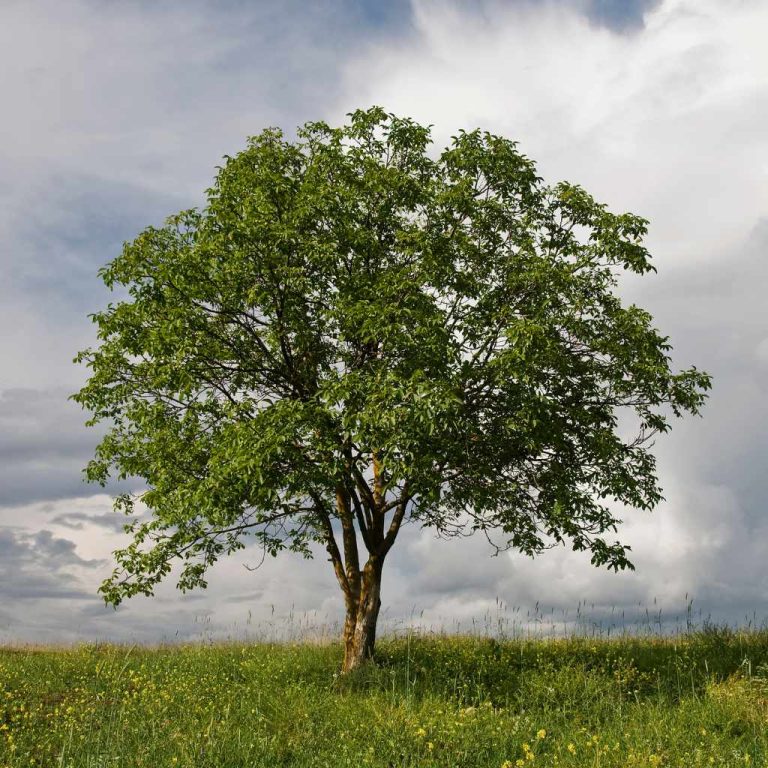
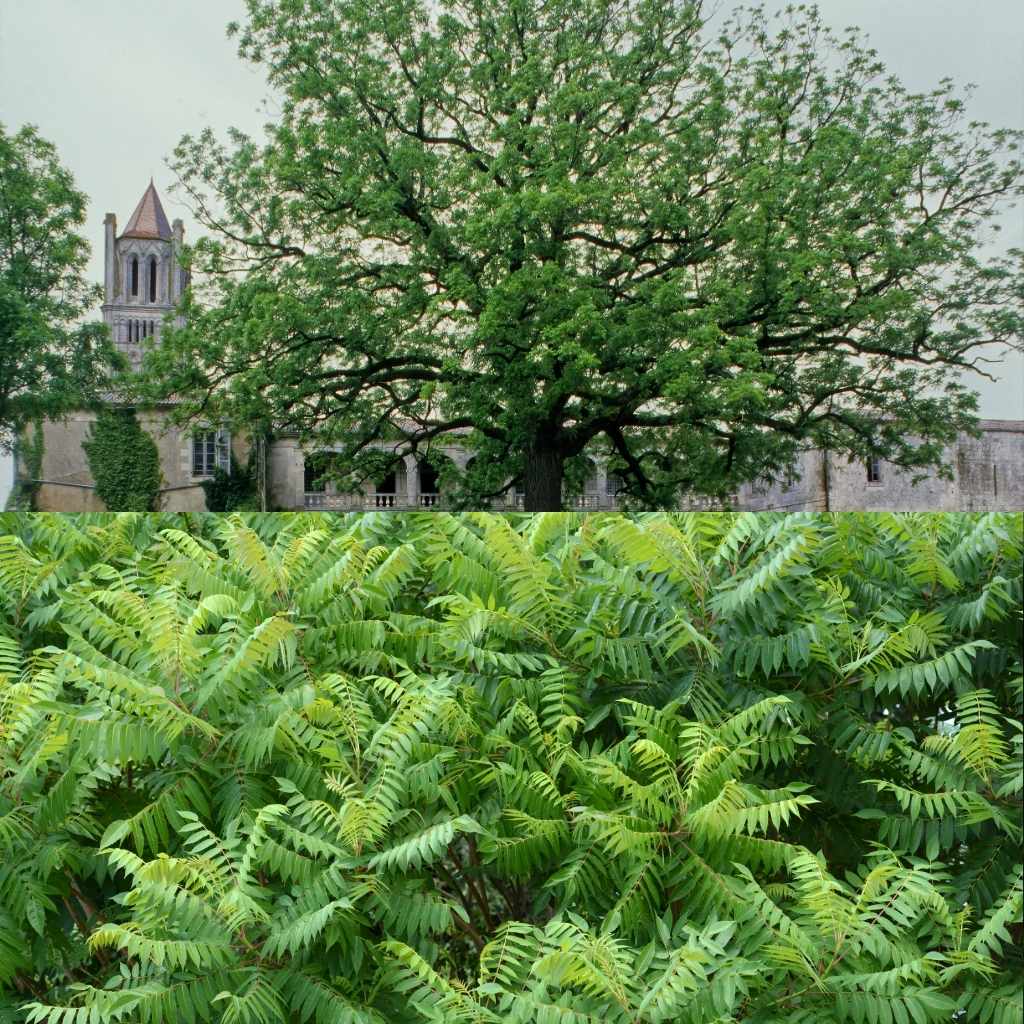
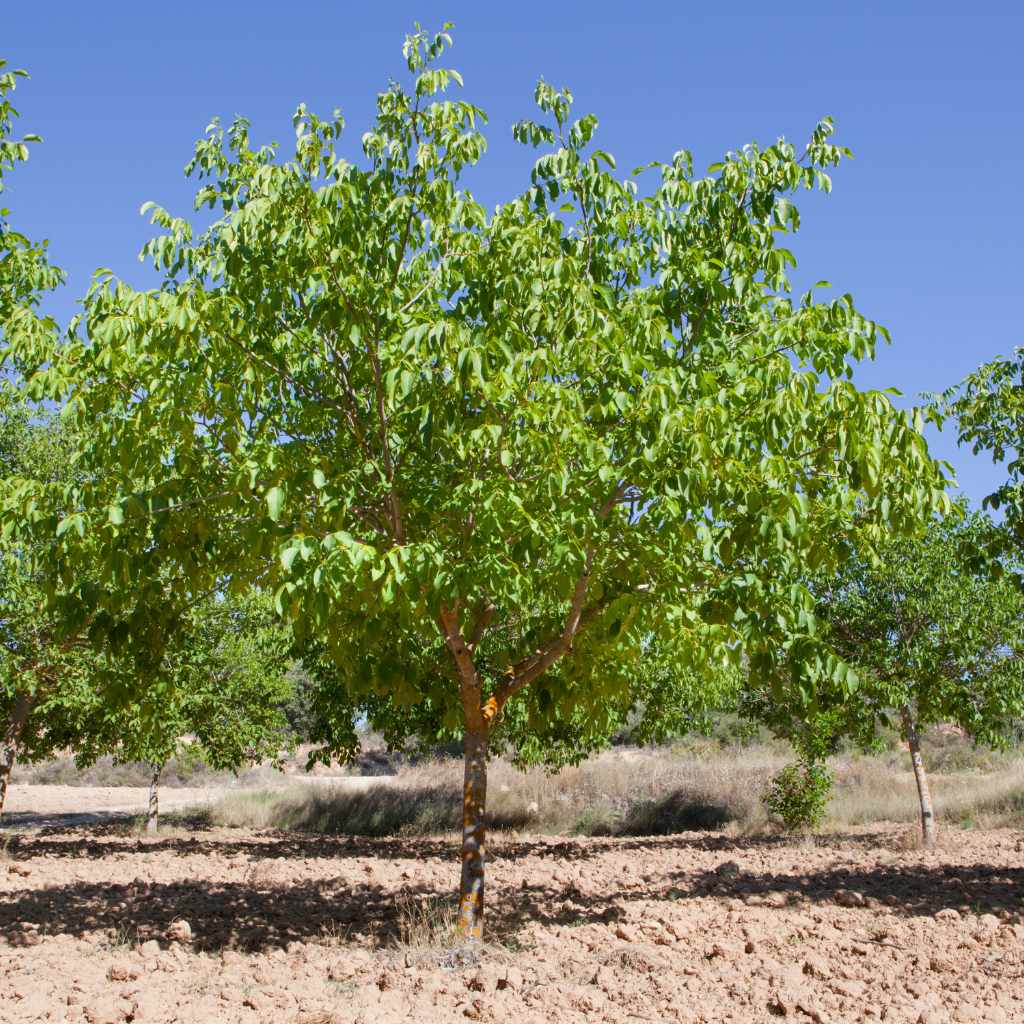
- Leaves: They are compound, meaning multiple leaflets grow off a single stem, usually 15 to 23 leaflets per leaf.
- Bark: On mature trees, the bark is dark gray to black and deeply furrowed into rugged, interlacing ridges.
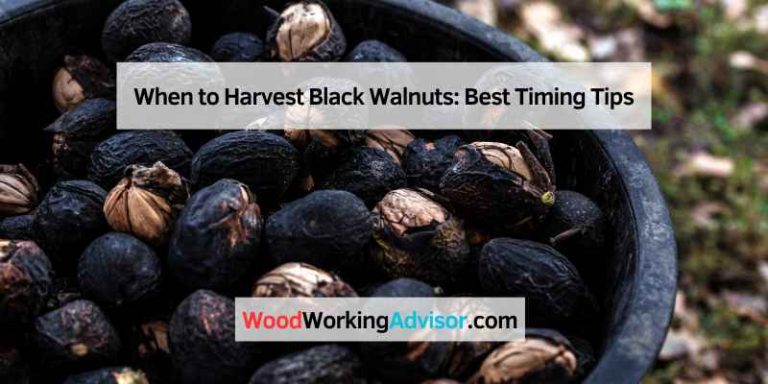
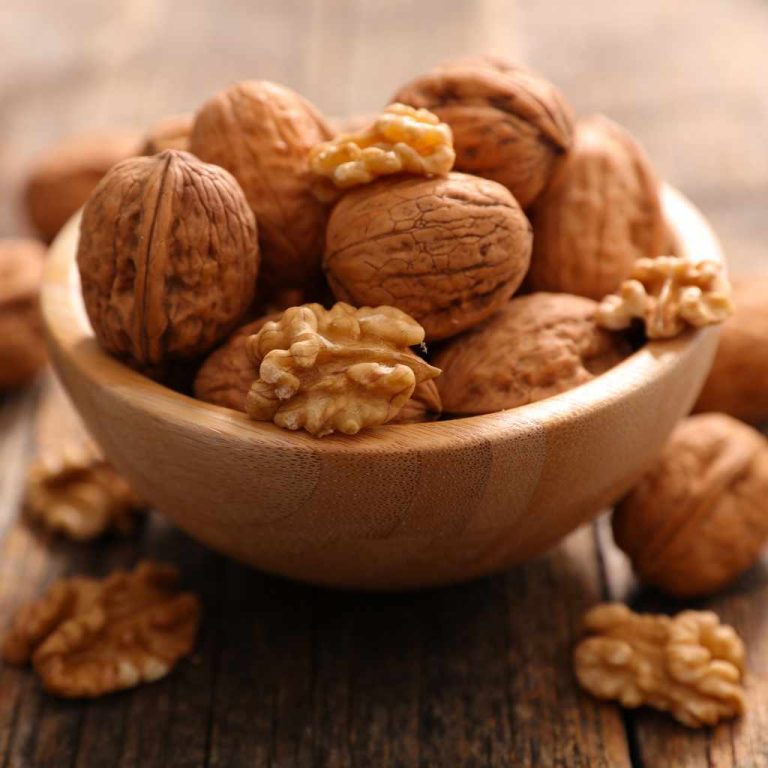
- Nuts: Look for large, round, green husks in the fall covering a hard, wrinkly shell—the source of edible walnuts.
- Odor: Absolutely no strong, unpleasant odor when leaves or twigs are crushed.
The Invader: Tree of Heaven (Ailanthus altissima) – The Imposter
Tree of Heaven (ToH) is a species native to China but often introduced to North America as an ornamental tree, only to become one of the most aggressive invasive species found today. It spreads rapidly via suckers and seed and can often be found growing out of cracks in sidewalks or alongside roadsides. While it grows fast, its wood usually doesn’t live up to the standard of true cabinet woods.
Key Characteristics of Tree of Heaven Wood
If you’ve managed to mill this wood, understanding its limitations is key:
- Color: Very light, pale, almost creamy white or yellowish. It lacks the rich depth of Walnut.
- Grain: Generally straight but coarse. It feels soft compared to most hardwoods.
- Density and Hardness: Very low density. It ranks low on the Janka scale (often lower than Basswood!), making it soft and easily dented.
- Durability: Poor rot resistance. Indoor use is generally fine, but it won’t hold up outside.
Cons of Working with Tree of Heaven
For DIY projects, especially anything meant to last or look high-end, ToH presents several challenges:
- Poor Glue-Up and Finishing: It can be spongy, leading to poor adhesion with glue and difficult sanding that results in fuzziness rather than a smooth finish.
- Low Strength: Due to its low density, it’s not suitable for structural components, demanding joints, or anything that will see heavy use.
- The Stench: The wood itself often retains a lingering, unpleasant, peanut-butter-like or rancid odor, especially when freshly cut or wet. This is a huge deterrent for indoor projects.
- Fast Weight Loss When Drying: It dries quickly but can also crack and check easily during the process if not managed perfectly.
Identifying the Tree of Heaven Plant
Identification is critical here because you might want to remove this plant rather than use its lumber. Many sources, including university extension offices, stress the importance of identifying ToH to manage its spread. For example, the USDA Forest Service offers helpful ID guides.
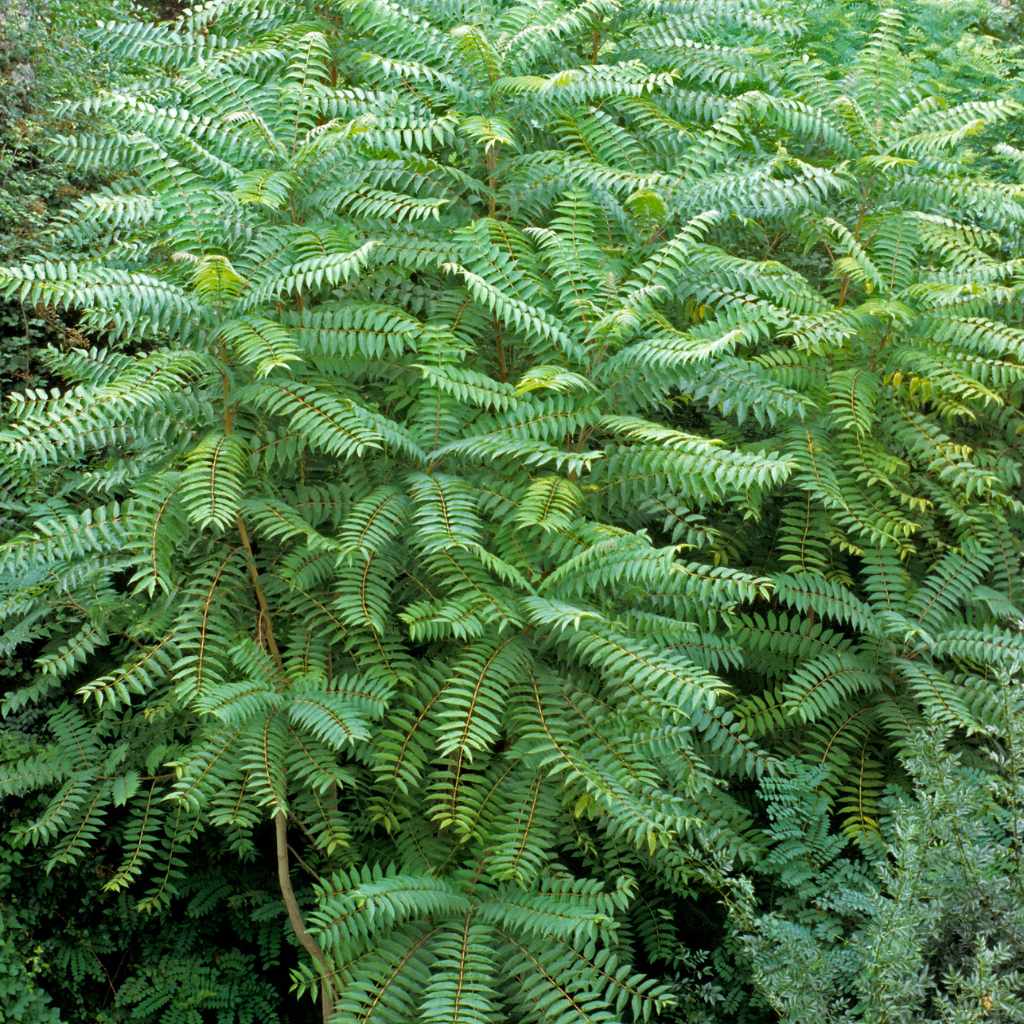
- Leaves: Simple, long, alternate leaves. The key identifying feature is the presence of one or two small, tooth-like bumps (glands) at the base of the leaf blade where it attaches to the petiole (leaf stalk).
- Bark: Smooth and grayish-green when young, becoming slightly furrowed with age, but never developing the deep ridges of Walnut.
- Odor: When crushing the leaf or stem, it releases a very distinct, strong, foul smell that some compare to rancid peanut butter. This is the smell no one forgets!
- Seeds: They grow in large clusters of winged seeds, often looking like samaras floating down in the autumn.
Side-by-Side Comparison: Walnut vs. Tree of Heaven
To give you a quick reference for spotting the differences, let’s put their key properties into a simple table format. This is your go-to chart for quick field identification.
| Feature | Black Walnut (Juglans nigra) | Tree of Heaven (Ailanthus altissima) |
|---|---|---|
| Wood Value | Very High (Premium Hardwood) | Very Low (Often considered scrap) |
| Janka Hardness | ~1010 lbf (Medium-Hard) | ~600-800 lbf (Soft) |
| Heartwood Color | Deep Chocolate Brown | Pale White or Yellowish |
| Odor (Crushed Leaf) | Slight earthy/nutty, distinct but not offensive | Strong, foul, rancid/peanut butter smell |
| Leaf Structure | Compound (Many leaflets) | Simple (Single blade per stalk), distinct basal glands |
| Workability | Excellent stability and finish quality | Prone to tearing and poor finish absorption |
| Growth & Spread | Slow growing, native | Extremely fast growing, aggressive invasive |
Beginner Woodworking Application: Which Wood Should You Choose?
For beginners, the choice is usually self-evident once you understand the end goal of your project. If you are aiming for a piece of furniture that you want to pass down, Walnut wins every time. If you sourced a piece of wood and aren’t sure what it is, always err on the side of caution and do a small test cut and sniff before committing your entire shop time to it.
When to Use Genuine Black Walnut
If you have access to Black Walnut (either purchased from a reputable supplier like a local sawmill or safely fallen on your property), use it for projects where the beauty of the wood is the main feature:
- Cutting boards and serving trays (after curing, it’s food-safe).
- Small jewelry boxes or keepsake boxes.
- Decorative turning projects (bowls, pens).
- High-quality cabinet doors or drawer fronts.
Safety Note: When working with any exotic or fine domestic wood, always wear a respirator, as fine wood dust for any species can irritate the lungs. For Walnut, in particular, ensure good dust collection.
When Tree of Heaven Might (Rarely) Be Considered
Because Tree of Heaven is so soft and smells bad, it’s rarely recommended for fine woodworking. However, if you have a large quantity of it that needs removing, you can utilize it for things where durability and aesthetics are secondary:
- Shop Supports or Temporary Cradles: Use it for shop jigs or temporary supports that never see the light of day.
- Firewood: It burns reasonably well once dried.
- Practice Pieces for Basic Carving: Its softness makes it easy to cut, which can be useful for practicing a new tool technique without ruining expensive lumber.
If you are buying lumber and see a price tag that seems too good to be true for a dark hardwood, ask for scientific verification or check density. A good lumber supplier will always know what they are selling.
Milling and Preparation: Handling Your Find
Whether you score a load of Black Walnut or are finally clearing that invasive Tree of Heaven from your yard, milling rough-sawn lumber requires specific steps. Getting the moisture content right is the single most important thing you can do to ensure your project doesn’t fail later.
Moisture Content Rules for Wood Stability
Wood used indoors for projects like furniture must have dried to an equilibrium moisture content (EMC) that matches your home environment, typically between 6% and 8% for most of North America, according to wood science guidelines (see resources from organizations like the Wood Database for comparative EMC data). Too wet, and it will shrink and warp after assembly.
Steps for Drying Your Lumber (Kiln Drying Preferred)
If you get fresh-cut logs, skip directly to air drying, but be patient:
- End Sealing (Crucial Step): Immediately seal the ends of the log or thick boards with thick latex paint or a specialized end sealer. This slows down drying at the ends, preventing rapid moisture loss which causes “checking” (cracks).
- Stacking for Air Drying: Stack your lumber stickered (separated by small strips of wood, called stickers) in a dry, covered area with good airflow. Keep it off the ground.
- Wait Time: Depending on thickness, air drying can take one to two years per inch of thickness. For high-quality Walnut, especially for cabinetry, kiln drying is often recommended after air drying to ensure uniform moisture content.
- Testing: Use a reliable moisture meter. Aim for less than 10% EMC for general projects, and less than 8% for fine indoor furniture.
Working with Walnut Veneer vs. Solid Wood
For beginners working with beautiful but expensive wood like Walnut, veneer is a fantastic, affordable starting point. Veneer is thin slices of Walnut glued onto a stable substrate (like plywood or MDF).
- Pros of Veneer: Significantly cheaper, uses less precious resource, and is less prone to warping or cracking because the substrate handles movement.
- Cons of Veneer: Cannot be thickness-planed after gluing, and edges must be carefully finished.
If you decide to use solid Black Walnut, remember that its richness means you should focus on simple joinery (like butt joints reinforced with biscuits or dowels) to let the grain do the talking.
Dealing with Invasive Species: Managing Tree of Heaven
If you have confirmed you have Tree of Heaven, the focus shifts from woodworking potential to landscape management. This tree is so aggressive that preventing its spread is often better than trying to mill it.
Why Tree of Heaven is Considered Dangerous to Native Ecosystems
Invasive species displace local trees, which hurts local wildlife that depends on native food sources. Tree of Heaven also releases a chemical (often called allelopathy) into the soil that inhibits the growth of other native plants around it.
Recommended Removal Methods (Check Local Regulations!)
Always check with your local agricultural extension office or municipality regarding the best way to remove invasive species like ToH, as methods vary by region. Generally, simple cutting is not enough:
- Cut and Treat: Cut the tree down close to the ground, and immediately apply an appropriate, government-approved herbicide labeled for invasive woody plants onto the fresh stump surface. This prevents the roots from resprouting, which they do vigorously.
- Basal Bark Treatment: For smaller trees, applying an oil-based herbicide directly to the lower 12–18 inches of the trunk bark ring through the cambium layer is highly effective without broad soil contamination.
- Repeated Pulling (For Seedlings): Younger saplings, before they develop deep taproots, can sometimes be pulled out entirely, ensuring all the root structure comes with them.
Managing ToH is a long-term task, but removing it allows native trees, which produce much better lumber, to thrive in its place.
FAQ: Getting Started with Walnut Identification and Use
Here are some common questions beginner woodworkers ask when they start dealing with different wood species:
Is Black Walnut safe to cut and sand in a typical home garage workshop?
Yes, Black Walnut is generally safe to work with, but like all wood dust, it is a respiratory irritant. Always wear a quality dust mask or, ideally, a respirator when sanding or routing. Ensure you have dust collection hooked up to your major tools.
How can I tell if dried Tree of Heaven lumber will smell terrible when I finish it?
If the wood has a lingering, sharp, slightly sour scent when you plane or sand it, it will likely smell bad even when sealed. If you are unsure, seal a small scrap piece completely with several coats of sealant and let it cure for a week. If the odor persists through the finish, the wood is not suitable for interior decor.