Black Walnut Tree Vs Walnut Tree: Essential Guide
Black walnut tree vs walnut tree: The biggest difference lies in the species—Black Walnut (Juglans nigra) is the highly prized, American native species known for its dark, rich furniture-grade lumber, while “walnut tree” often refers generally to the European or English Walnut (Fuglans regia), which yields slightly different wood characteristics and culinary nuts.
Welcome to the workshop! Are you staring at a beautiful piece of lumber, wondering if it’s the highly sought-after Black Walnut or just a regular walnut? It’s a common question, especially when you’re just starting out in woodworking. Getting the identification right matters a lot for staining, finishing, and project value. Don’t worry, learning the key differences is surprisingly straightforward once you know what to look for.
I’m here to tell you that with a few simple checks—looking at the nuts, the leaves, and the bark—you can confidently tell these two beautiful trees apart. We’re going to break down the black walnut tree versus walnut tree comparison in a way that makes perfect sense, even if you’ve never identified a tree before. Let’s grab our magnifying glass and simplify this exciting topic so you can get back to your next rewarding project!
Black Walnut Tree Vs Walnut Tree: An Essential Identification Guide for Woodworkers
As woodworkers, we treasure walnut. It’s famous for its deep chocolate color, stunning grain patterns, and how beautifully it takes a finish. But there are several types of walnut trees out there. When someone says “walnut,” they usually mean one of two main players: the native North American Black Walnut (Juglans nigra) or the widely cultivated English/Common Walnut (Juglans regia).
Knowing which one you are dealing with is crucial. The Black Walnut is generally preferred in the US for high-end furniture due to its superior hardness and darker color, leading to a higher market price. This guide will show you the simple field markers to distinguish them.
The Botanical Breakdown: Understanding the Family
Both trees belong to the Juglans genus, which makes them relatives. However, their biological differences lead to distinct characteristics in their wood, nuts, and growth habits. Think of them like cousins; they look similar but have unique personalities.
- Black Walnut (Juglans nigra): Native to Eastern North America. This is the superstar for furniture makers.
- English/Common Walnut (Juglans regia): Native to a region stretching from the Balkans to the Himalayas. This tree is cultivated globally, often for its lighter, more easily shelled nuts.
Spotting the Difference: Field Identification Markers
To truly identify your tree, you need to look at four key areas: the nut, the leaves, the bark, and the wood itself. We’ll start outside the workshop!
1. The Nut: Nature’s Calling Card
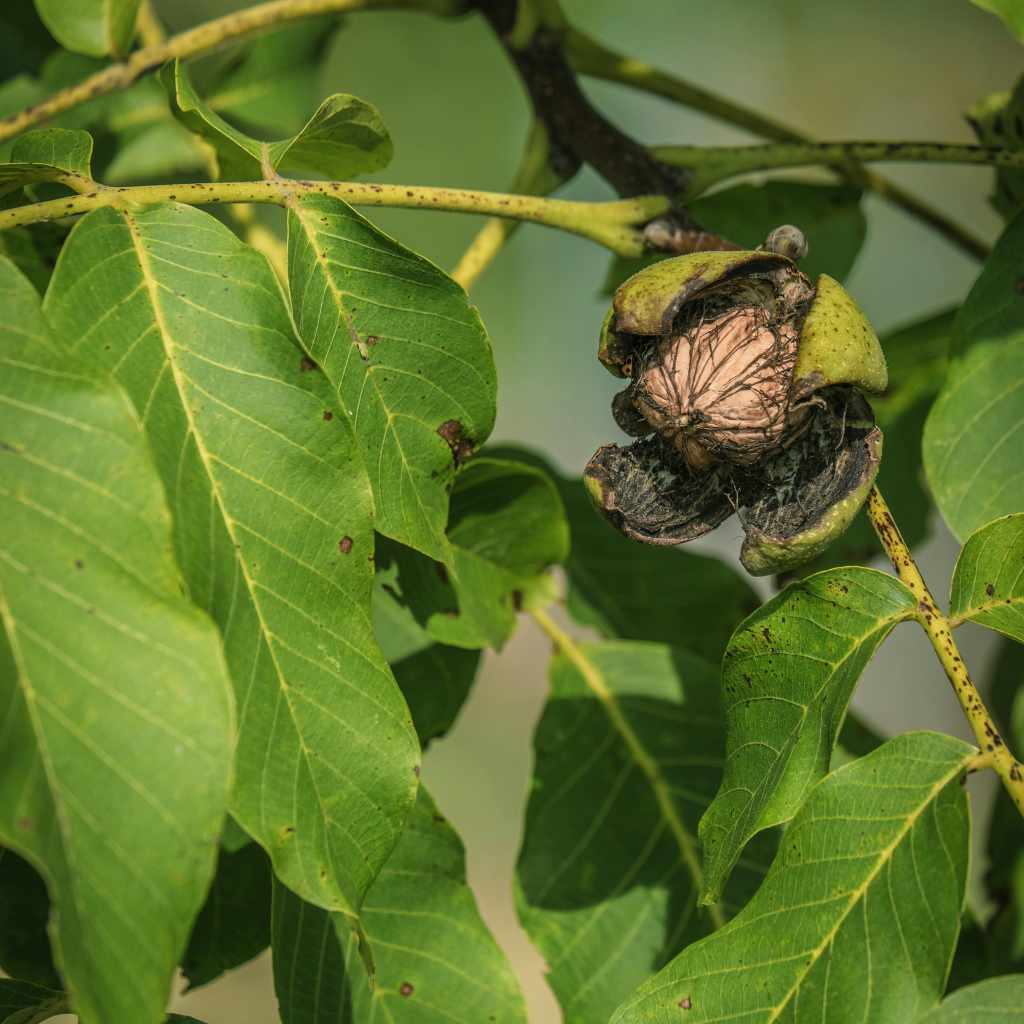
The fruit—or nut—is often the easiest way to make a preliminary identification, assuming the tree is producing fruit. Both produce a hull (the green husk), but what’s inside is different.
Black Walnut (Juglans nigra)
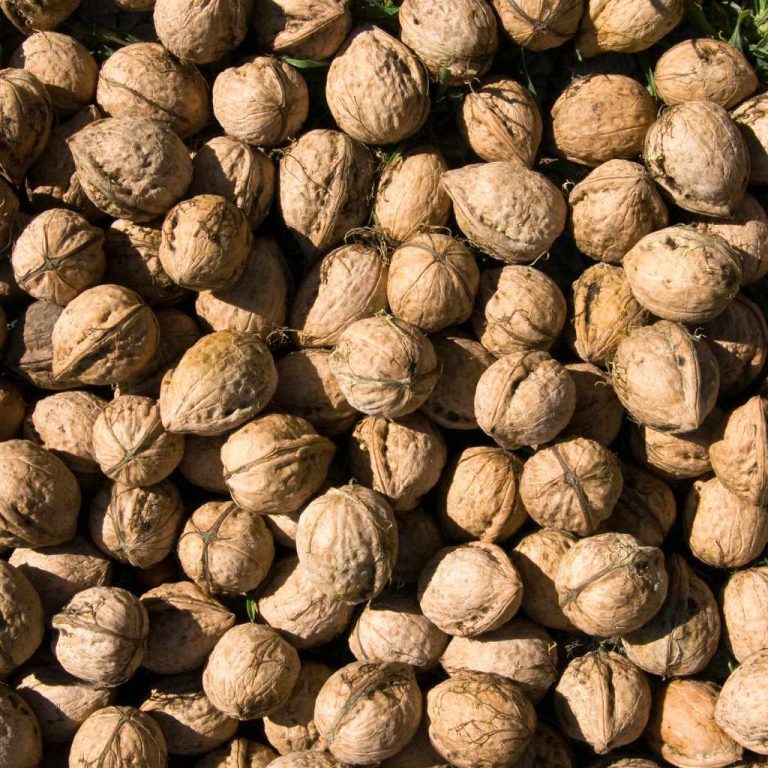
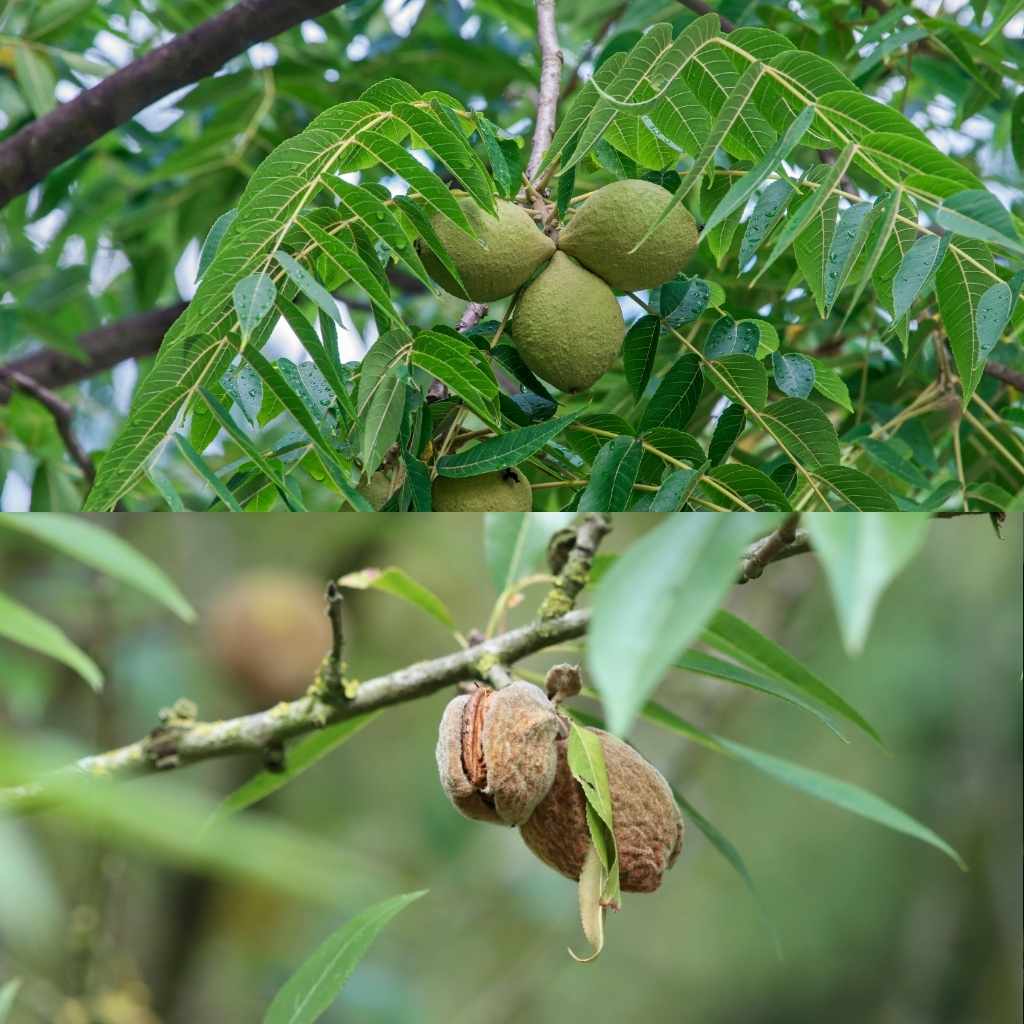
The nuts are nearly spherical and very hard. The husk is thick, deeply ridged, and turns black (hence the name!) as it ripens and falls off the tree. It stains everything it touches a dark brown or black—use gloves when handling them!
English (Common) Walnut (Juglans regia)
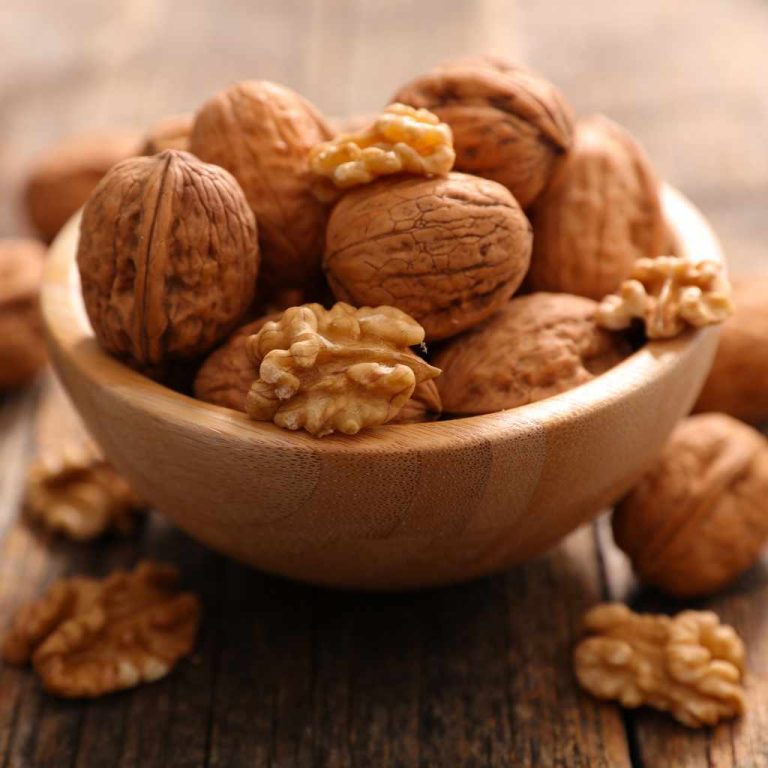
These nuts are typically more oval or elongated. The husk is smoother, thinner, and tends to turn yellow or brownish-green before splitting open. While they still stain, they are generally less messy and easier to hull than their black counterpart.
2. Leaf Structure: Counting the Leaflets
Both trees have compound leaves, meaning one leaf stem holds many smaller leaflets. However, the number of leaflets is a reliable differentiator for an expert eye.
- Black Walnut: Has odd-pinnately compound leaves. These leaves usually have between 15 to 23 leaflets. Count them up—if you see a large, uneven number, you’re likely looking at Black Walnut.
- English Walnut: Tends to have fewer leaflets, often between 5 to 9 leaflets per leaf.
Pro Tip for Beginners: Leaf structure is best checked when the leaves are mature mid-summer. Young budding leaves can sometimes be confusing!
3. Bark Characteristics: Age Matters
The bark changes as the tree ages, but young trees and mature trunks offer good clues.
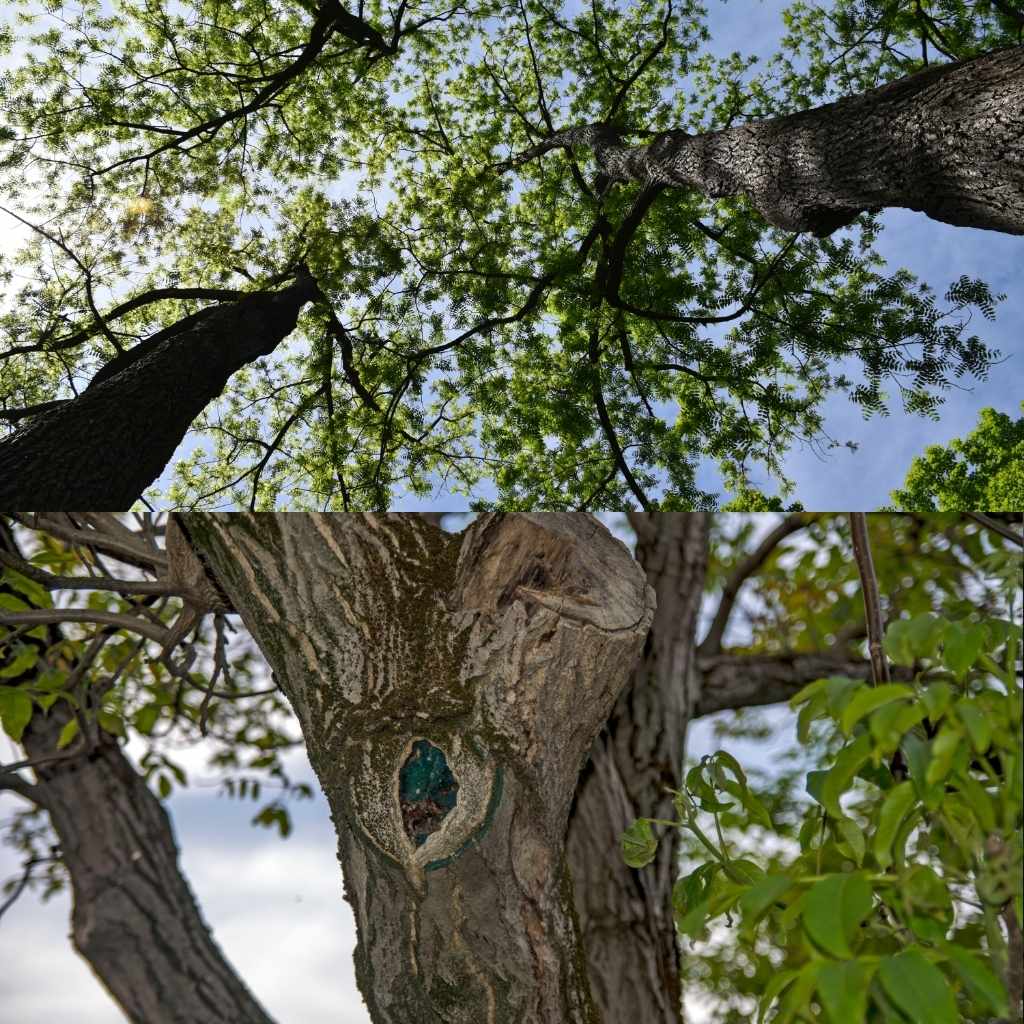
- Black Walnut Bark: On very mature trees, the bark is deeply furrowed into dark, diamond-shaped ridges. It looks rugged, thick, and very dark gray to black.
- English Walnut Bark: The bark is often smoother when young. As it ages, it becomes lighter gray, with shallow, interlacing ridges that are less dramatic and deeply furrowed than Black Walnut.
4. Bud and Twig Examination
Look closely at where the new growth starts. This takes a bit of focused observation, but it’s very reliable.
- Terminal Bud (Tip Bud): Black Walnut trees have a large, fuzzy terminal bud that is slightly woolly.
- Twig Color: Black Walnut twigs are often a slightly paler tan or gray-brown compared to the darker, sometimes pinkish-brown twigs of the English Walnut.
Wood Identification: The Sawdust Tells the Tale
For woodworkers, the real test happens when the tree is felled and milled. This is where the visual and physical properties of the wood confirm the ID.
Color and Grain
This is arguably the most exciting difference for anyone planning to build cabinets or tables.
Black Walnut (Juglans nigra):
- Heartwood: Famous for its rich, dark chocolate brown, often exhibiting purplish or reddish undertones. This deep color is what commands high prices in lumber yards.
- Sapwood: Tends to be a distinct, creamy white or pale yellow, creating a stark contrast with the heartwood.
- Grain: Generally straight, but often features wavy or interlocked grain patterns that are fantastic for figured panels.
English Walnut (Juglans regia):
- Heartwood: Significantly lighter than Black Walnut. It ranges from a light tan or grayish-brown to a tawny brown. While beautiful, it lacks the deep saturation of J. nigra.
- Sapwood: Often blended more gradually with the heartwood, or may be less dramatically white than Black Walnut sapwood.
- Grain: Often exhibits beautiful swirling patterns, sometimes making it popular for veneers and gunstocks, though it can be harder to mill cleanly due to mineral deposits often found in the wood.
Wood Density and Hardness
Hardness is critical for durability, especially for flooring or tabletops that will see heavy use. We measure this using the Janka Hardness Scale. Remember, scale numbers are relative; higher means harder.
| Wood Species | Average Janka Hardness (lbf) | General Use Notes |
|---|---|---|
| Black Walnut (J. nigra) | 1010 lbf | Excellent for fine furniture, carving, and high-end veneers. Great shock resistance. |
| English Walnut (J. regia) | 1000 – 1125 lbf (varies widely) | Often used for decorative veneers, instrument making, and historically, gunstocks. |
As you can see from the data, their raw hardness is quite similar, showcasing why both are premium choices. However, the Black Walnut is renowned for its slightly more predictable and intensely dark coloring when kiln-dried.
Shrinkage and Stability
When working with solid wood, stability matters for preventing warping or cracking in your finished piece. Both species dry fairly well, but Black Walnut typically has better dimensional stability once properly acclimated and dried, which is a major plus for building cabinets or large panels.
For more technical details on wood properties and standards, you can often find excellent technical data sheets through university extension programs, like those managed by the Iowa State University Extension and Outreach, which often classify wood properties clearly.
Why Knowing the Difference Matters for Your Workshop
It’s not just an academic exercise! Telling Black Walnut from English Walnut impacts your wallet, your finishing process, and the longevity of your project.
1. Lumber Cost and Value
In regions where Black Walnut is native (the US Midwest and East), J. nigra commands premium prices. If you accidentally buy lighter-colored “walnut” lumber that turns out to be English Walnut, you might have paid top dollar for something that doesn’t match the aesthetic you were aiming for.
2. Finishing and Staining
If you want that classic, dark chocolate look, you must start with true Black Walnut heartwood. If you try to stain lighter English Walnut to match deep Black Walnut, you might end up with a muddy, inconsistent color, or you might have to use very dark stains that essentially obscure the natural grain.
3. Odor and Allergies
Both woods have a distinctive, pleasant aroma. However, like many woods, handling them involves dust. Always wear appropriate dust masks and safety gear. If you are working with large quantities, you should familiarize yourself with safe wood handling practices, as dust from any exotic or dark wood can be an irritant. Always check resources on wood dust safety from organizations like the National Institute for Occupational Safety and Health (NIOSH).
Comparison Table Summary: Side-by-Side Look
Here is a quick reference table summarizing the key identifiers for your next lumber yard trip:
| Feature | Black Walnut (Juglans nigra) | English Walnut (Juglans regia) |
|---|---|---|
| Native Region | Eastern North America | Europe Asia Minor |
| Heartwood Color | Deep chocolate brown, dark purple undertones | Tan, grayish-brown, lighter tawny color |
| Nut Shape/Husk | Round nut, thick, deeply ridged husk that turns black | Oval nut, thinner, smoother husk that turns yellow/brown |
| Leaflets (Typical) | 15 to 23 | 5 to 9 |
| Bark (Mature) | Very dark, deeply furrowed, diamond patterns | Lighter gray, shallow, interlacing ridges |
Practical Projects Best Suited for Each Wood Type
Once you know what you have, you know how to best use it. Here’s where each type of walnut truly shines in a home project.
Black Walnut: The Heirloom Maker
Because of its superior color retention and rich density, Black Walnut is the go-to for projects where the wood itself is the star.
- Fine Furniture: Dining tables, dressers, and high-end office desks where the dark grain can be showcased naturally.
- Decorative Items: Small boxes, cutting boards (though be aware of potential mineral staining), and charcuterie boards.
- Carving Projects: Its stability and carving quality make it a favorite medium for detailed sculpting.
English Walnut: The Versatile Veneer
English Walnut might be lighter, but its grain patterns can be stunning, especially when sliced thin for veneers.
- Veneer Work: Excellent for covering large panels where the distinctive swirls and lighter tones are desired, often seen in period furniture restoration or modern cabinetry.
- Instrument Making: Sometimes preferred for musical instrument backs and sides due to its specific acoustic properties and lighter weight compared to some domestic hardwoods.
- Lower-Key Projects: Perfect for shelving or workshop jigs where having the densest, darkest wood isn’t strictly necessary.
Tips for the Beginner Woodworker Handling Walnut
Handling any beautiful hardwood can be intimidating, but walnut mills and finishes wonderfully. Here are a few essential tips to keep your project looking professional.
- Tool Sharpness is Key: Walnut is hard on edges. Keep your plane blades, router bits, and saw blades razor-sharp. Dull tooling leads to burnout, tear-out, and frustration.
- Beware of Steaming: If using sapwood next to heartwood, the sapwood might “steam” or turn grayish when exposed to certain adhesives or finishes. Test your finish on scrap pieces first!
- Sanding Progression: Start rough and work your way up smoothly. Walnut loves a fine sanding job (up to 320 grit) before oiling to really bring out that deep, lustrous chatoyance (that shifting appearance of the grain).
- Acclimatization: Always let your lumber (whether purchased or salvaged) acclimate slowly to the humidity of your shop before cutting and building. This prevents surprise warping later.
Frequently Asked Questions (FAQ)
Q1: Can I tell the difference between Black Walnut and English Walnut lumber just by smell?
A: Yes, often you can! Both have a distinct, somewhat sweet, nutty aroma when freshly cut. However, Black Walnut typically has a richer, deeper, sometimes slightly spicy scent that many woodworkers associate with luxury lumber, whereas English Walnut’s scent is usually milder.
Q2: Is English Walnut good for outdoor projects?
A: Not particularly. While both walnuts are moderately durable, neither species is considered highly resistant to rot and decay like Cedar or Redwood. If you use walnut outdoors, you must completely seal every surface with high-quality marine-grade protective finish, which is a lot of extra work for a beginner.
Q3: How long does it take for Black Walnut sapwood to darken?
A: Black Walnut sapwood (the pale outer wood) will naturally darken over time when exposed to UV light and air, often turning a light tan or light brown. However, it rarely achieves the deep chocolate color of true heartwood without the help of specialized dyes or stains.
Q4: If I find a walnut stump, is it worth digging up the roots for lumber?
A: Absolutely! The burl and root sections of the Black Walnut tree often contain the most highly figured, wavy, and complex grain patterns. These crotch and root sections are prized for their beauty and often sell for the highest price per board foot.
Q5: Which walnut is safer to eat?
A: The nuts from the cultivated English Walnut (Juglans regia) are the standard culinary walnut you buy in stores. While Black Walnuts (J. nigra) are edible, their shells are incredibly hard, and the meat often has a much stronger, sometimes bitter flavor profile compared to the mild English variety.
Q6: Do I need special bits for routing walnut?
A: No special bits are required, but because walnut is dense, you must use carbide-tipped router bits, especially for long passes. High-quality, sharp tooling reduces friction burn and gives you the cleanest edge possible. Always take shallower passes rather than trying to remove too much material at once.
Conclusion: Confidently Choosing Your Walnut
Learning the difference between the mighty Black Walnut and its cousin, the English Walnut, empowers you as a woodworker. It moves you from guessing to knowing precisely what material you are handling, ensuring you meet your aesthetic goals and use the wood to its best potential.
Remember the simple checks: look for the deep, dark chocolate heartwood, the large number of leaflets (15+), and the heavily ridged bark for the prized Black Walnut. If the wood is lighter tan, and the nut is more oval, you likely have English Walnut. Either way, you have a beautiful, strong hardwood in your hands that is a joy to shape and finish. Keep practicing those identification skills, stay safe with your tools, and enjoy the rewarding journey of turning raw wood into something truly lasting!