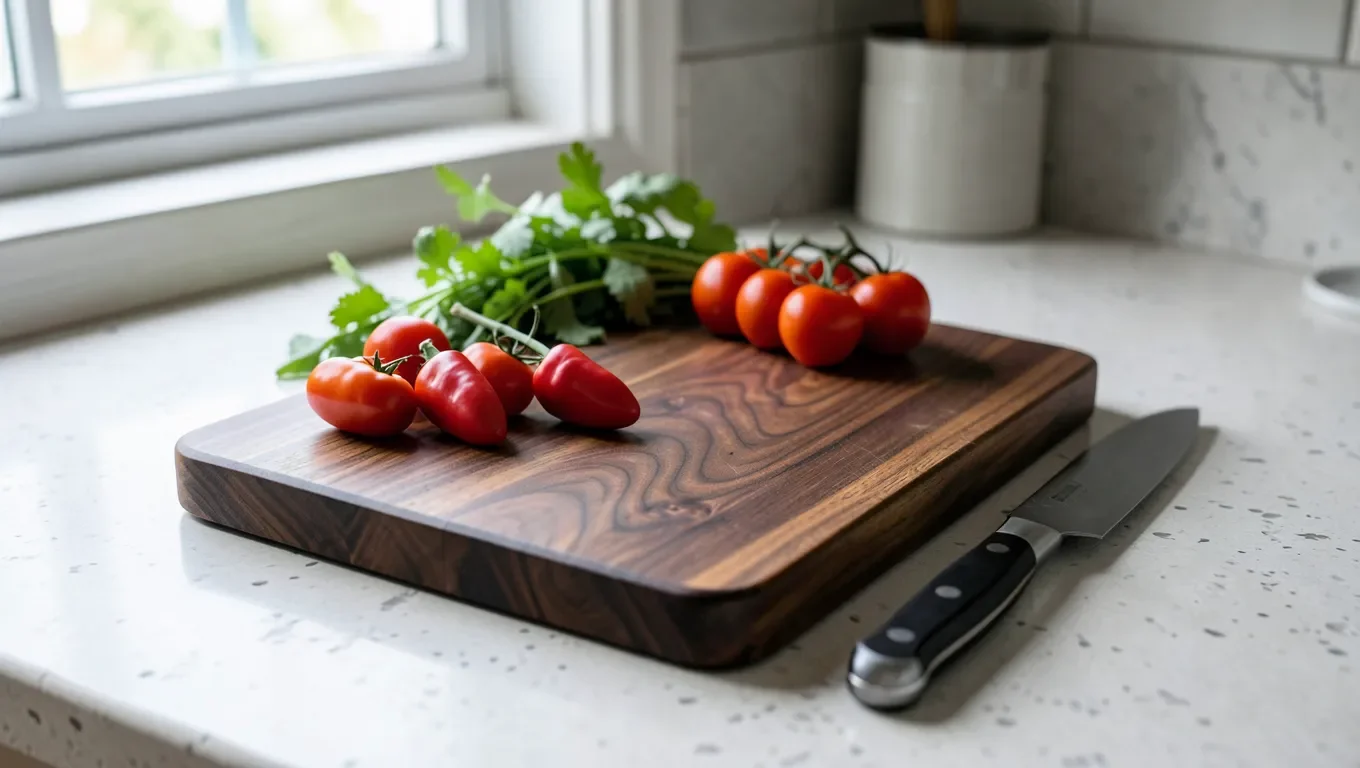
Is Walnut Wood Food Safe? Yes, With One Important Exception
Walnut wood is food-safe once it’s cured into lumber and finished properly – the compound people worry about, juglone, stays concentrated in the roots, husks, and leaves of the living tree, not in the dried heartwood a cutting board is milled from. The one real exception isn’t the wood itself: it’s the finish. If anyone in your home has a tree-nut allergy, an unrefined walnut oil finish is worth avoiding, even though touching or eating off the bare wood is considered low risk by allergists.
Quick Answer: Is Walnut Wood Food Safe?
Yes. Cured, finished walnut heartwood is widely used for cutting boards, bowls, and utensils, and no food-safety or regulatory body flags it as a food-contact hazard. Walnut’s tight, closed grain also resists moisture better than many open-grained woods, which is part of why it’s held up as a kitchen material for decades. The two things worth actually paying attention to are covered below: how you finish the wood, and whether anyone using it has a diagnosed walnut allergy.
BEST FOOD-SAFE BOARD CONDITIONER
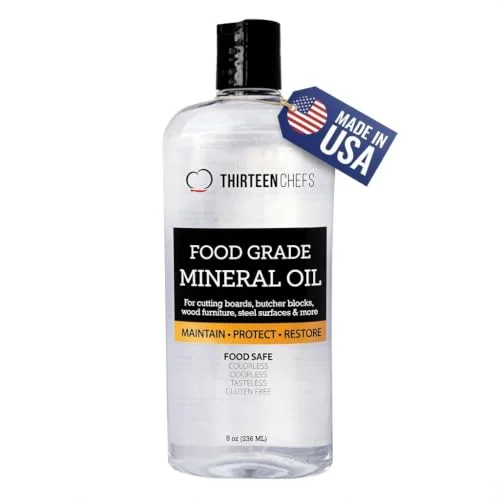 |
Thirteen Chefs Food Grade Mineral Oil, 8 oz – $9.99 The safe default for conditioning a walnut cutting board – NSF-certified food grade, and unlike walnut oil it carries no nut protein at all.
|
What Is Juglone, and Why Does It Worry People?
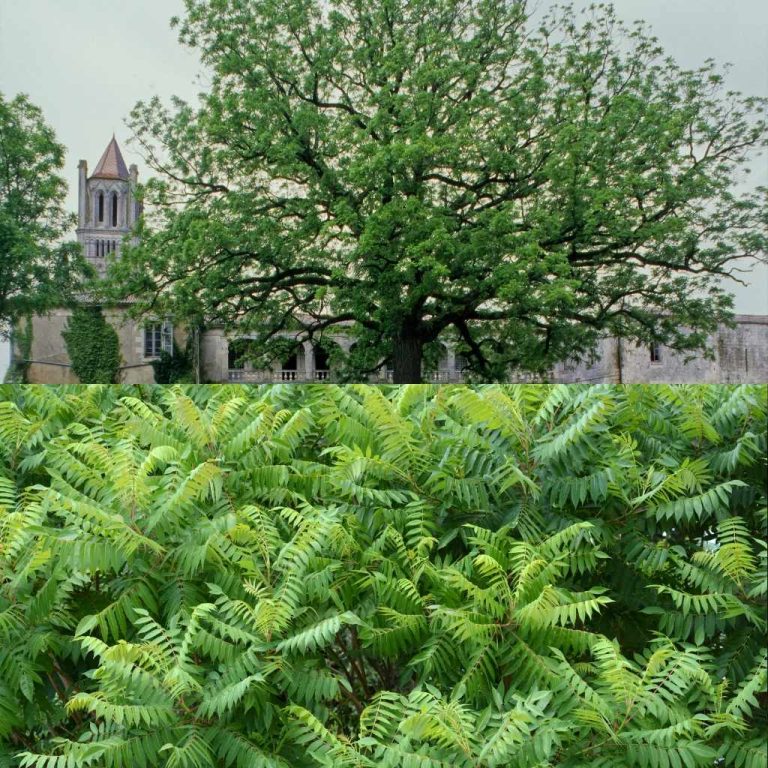
Juglone is a naturally occurring compound in black walnut trees, best known for its allelopathic effect – it suppresses the growth of certain plants growing near a walnut tree’s root system, which is why gardeners are warned about planting tomatoes or apple trees close to one. That reputation is where most of the “is walnut toxic” worry comes from, and it’s a legitimate concern for gardening and landscaping. It’s just not the same question as whether a walnut cutting board is safe to chop vegetables on.
If you want the full picture on juglone and living walnut trees – soil toxicity, which plants to avoid, and how far the effect actually reaches – that’s covered in more depth in our walnut tree toxicity guide. This article focuses specifically on the milled, finished wood used in kitchenware.
Where Juglone Actually Concentrates (Not the Cured Heartwood)
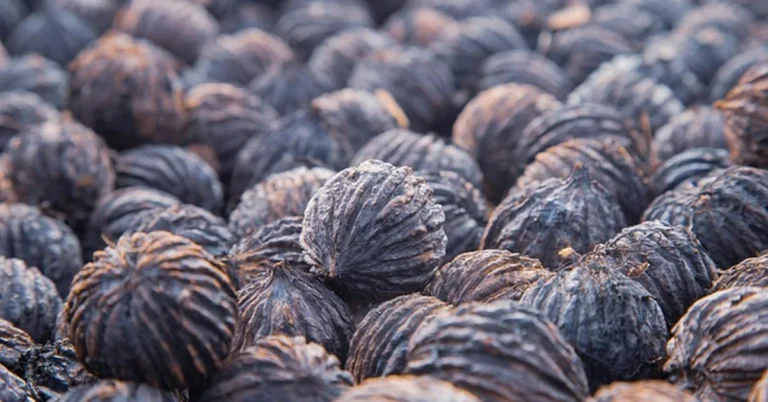
Juglone concentrates in the roots, husks, and leaves of a walnut tree – the parts a landscaper or orchard grower actually deals with. The heartwood that gets kiln-dried and milled into lumber carries only trace amounts by comparison, and juglone itself is not water-soluble, which means it doesn’t leach into whatever you’re cutting or serving on the board. That’s the core reason food-safety guidance and woodworking references both treat finished walnut heartwood as safe for food contact, while still treating the green hulls and roots as something to handle with gloves.
Black walnut also happens to be a genuinely good cutting-board material on its own merits – a Janka hardness rating of about 1,010 lbf puts it in a comfortable middle ground: hard enough to resist deep knife gouges, but not so hard that it dulls your blades the way harder woods can. If you’re comparing walnut against other board options for durability and maintenance rather than the food-safety question specifically, our walnut cutting board guide breaks down the hardness and grain numbers side by side, and our walnut vs. maple comparison covers how it stacks up against the other most common cutting-board wood.
Tree-Nut Allergy vs. Juglone Toxicity: Two Different Concerns
These two worries get lumped together constantly, but they’re unrelated mechanisms. Juglone toxicity is a plant-chemistry issue – it affects other plants, not human digestion, and it isn’t present in meaningful amounts in cured heartwood anyway. A walnut tree-nut allergy is a completely different thing: an immune reaction to specific proteins found in the edible walnut kernel itself.
Because the allergenic proteins live in the nut, not in the wood grain, allergist guidance from groups including Food Allergy Canada and the Asthma and Allergy Foundation of America treats plain, finished walnut wood kitchen items as an extremely low risk for someone with a diagnosed tree-nut allergy. Touching a walnut cutting board, or eating food that was cut on one, is not the same exposure as eating a walnut. That said, “extremely low risk” isn’t “zero risk,” which is exactly why the finish matters – see the next section.
The One Real Exception: Walnut Oil Finish
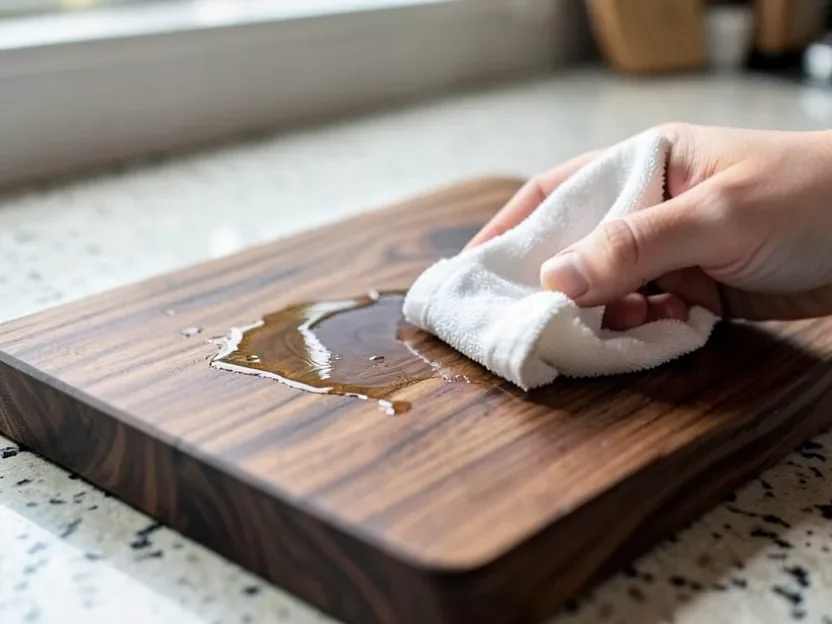
Here’s the detail most walnut-safety articles skip entirely: some walnut-oil wood finishes are cold-pressed and unrefined, which means trace amounts of the same nut protein that triggers tree-nut allergies can still be present in the dried finish. Heavily refined walnut oil generally has that protein stripped out during processing, but there’s no reliable way to check a bottle’s refinement level just by looking at the label on a woodworking product.
The practical fix is simple: if anyone in your household has a walnut or tree-nut allergy, finish and re-oil the board with food-grade mineral oil, beeswax, or a butcher-block conditioner blend instead of walnut oil. None of those carry any nut protein, they all condition the wood just as well, and they sidestep the one part of this whole topic where there’s genuine, if small, risk.
What About Sawdust? A Different Kind of Reaction
There’s a third, separate issue worth knowing about if you’re the one building the cutting board rather than just using it: walnut sawdust. Woodworkers who regularly sand or cut black walnut without a dust mask can develop a runny nose, asthma-like symptoms, or skin irritation from repeated sawdust exposure. That’s a wood-dust sensitivity that shows up with several hardwoods, not a tree-nut allergy reaction, and sensitivity to it can build gradually with repeated exposure over time in a shop setting.
It’s a real reason to wear a dust mask and run a shop vac or dust collector when machining walnut – but it has nothing to do with whether a finished, sanded, and oiled walnut cutting board is safe to keep in your kitchen. Once the board is built and sealed, the sawdust concern is gone.
How to Keep a Walnut Cutting Board Food-Safe
Good daily care matters more for food safety than the species of wood does. Hand wash walnut kitchenware with warm, soapy water right after use – never let it soak, and never run it through a dishwasher, since prolonged water exposure and heat both cause cracking and warping over time. Dry it immediately with a towel rather than air-drying flat, which lets water sit against the grain.
Re-oil the board every few weeks with a food-grade mineral oil (or monthly with a beeswax-and-oil conditioner blend) to keep the wood from drying out and to maintain the moisture barrier that helps resist bacteria in the first place. A board that’s dried out and starting to show hairline cracks is a bigger food-safety concern than juglone or an oil-finish allergen ever will be, since deep cracks give bacteria somewhere to hide that soap and water can’t reach.
Walnut vs. Other Food-Safe Woods
| Wood | Food-Safe? | Allergy Consideration | Best Finish |
|---|---|---|---|
| Black Walnut | Yes, cured heartwood | Avoid walnut-oil finish if tree-nut allergic | Mineral oil or beeswax |
| Hard Maple | Yes | None known | Mineral oil |
| Cherry | Yes | None known | Mineral oil |
| Teak | Yes | None known; natural oils resist water on their own | Mineral oil (light use) |
| Bamboo | Yes (technically a grass) | None known | Mineral oil |
Frequently Asked Questions
Is walnut wood safe for cutting boards?
Yes. Cured black walnut heartwood is a long-standing choice for cutting boards, bowls, and utensils, and no food-safety authority flags it as a hazard. Keep it hand-washed, dried promptly, and re-oiled periodically, the same as any wooden cutting board.
Does walnut wood contain juglone that’s dangerous to eat off of?
Juglone concentrates in the roots, husks, and leaves of the living walnut tree, not in the cured heartwood used for kitchenware, and it isn’t water-soluble, so it doesn’t transfer into food. It’s a real consideration for gardening near a walnut tree, not for a finished cutting board.
Can someone with a walnut allergy use a walnut wood cutting board?
Allergist guidance treats this as extremely low risk, since the allergenic proteins are in the edible nut, not the wood grain. The one exception is an unrefined walnut-oil finish, which can carry trace nut protein – use mineral oil or beeswax instead if anyone in the household has a diagnosed tree-nut allergy.
What’s the best oil to use on a walnut cutting board?
A food-grade mineral oil is the safest default for every household, including ones without any nut allergy, since it’s colorless, odorless, and won’t ever carry trace nut protein the way an unrefined walnut oil finish could. Beeswax-based conditioner blends work well too and add a bit more water resistance between oilings.
Conclusion
Walnut wood is food-safe in its normal kitchen form: cured heartwood, properly finished, and kept clean and oiled. Juglone is a real compound but it stays in the parts of the tree you’re not eating off of, and a tree-nut allergy responds to the nut’s protein, not the lumber. The only genuine exception worth remembering is the finish – skip walnut oil in favor of mineral oil or beeswax if anyone in your home has a walnut allergy, and the rest of the food-safety picture takes care of itself with normal care.
Sponsored / affiliate links. As an Amazon Associate I earn from qualifying purchases. I may earn additional commission from eligible campaigns.