Bow Saw vs Pruning Saw: Which One Should You Buy?
If you have got a fallen branch, an overgrown hedge, or a fruit tree that needs shaping, the tool you reach for matters more than most people realize. Bow saws and pruning saws both cut wood by hand, but they are built for different jobs, and using the wrong one usually means more effort, a rougher cut, or real damage to the plant you are trying to help.
The short version: a bow saw is the better choice for thick, dead branches and firewood-sized logs, while a pruning saw is the better choice for live branches, fruit trees, and anywhere you need a clean, controlled cut. Below, we break down exactly how each saw is built, how they cut differently, and which one earns a permanent spot in your shed.
Bow Saw vs Pruning Saw: Quick Comparison
Before getting into the details, here is how the two tools stack up side by side on the specs that actually affect how they perform in the yard.
| Feature | Bow Saw | Pruning Saw |
|---|---|---|
| Blade length | 21-30 inches | 6-15 inches |
| Cutting stroke | Push and pull (cuts both directions) | Pull stroke only |
| Best use case | Dead branches, logs, firewood | Live branches, fruit trees, tight spaces |
| Cutting speed on thick wood | Faster | Slower |
| Precision / clean cuts on live wood | Lower, can tear bark | Higher |
| Portability | Bulky, does not fold | Compact, usually folds into the handle |
| Typical price | $20-$50 | $15-$40 |
Best All-Around Pruning Saw Pick
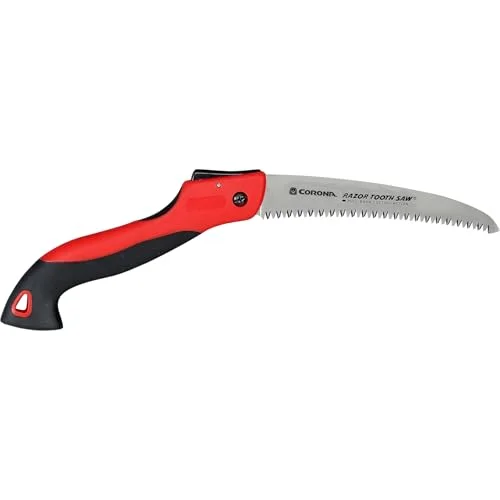 |
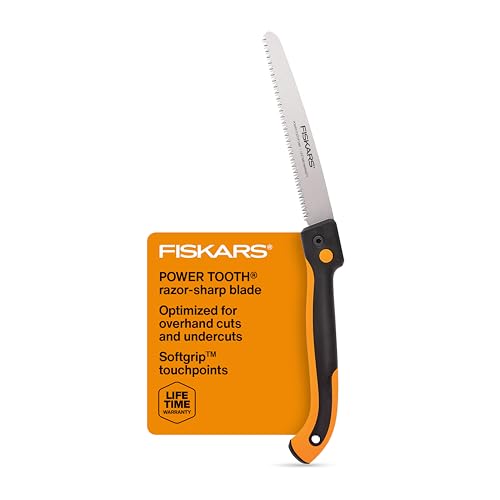
Corona RS 7245 RazorTOOTH Folding Pruning Saw – $32.41 This is the folding pruning saw we would reach for first on live branches and fruit trees, exactly the job a pruning saw beats a bow saw at.
|
How a Bow Saw Cuts
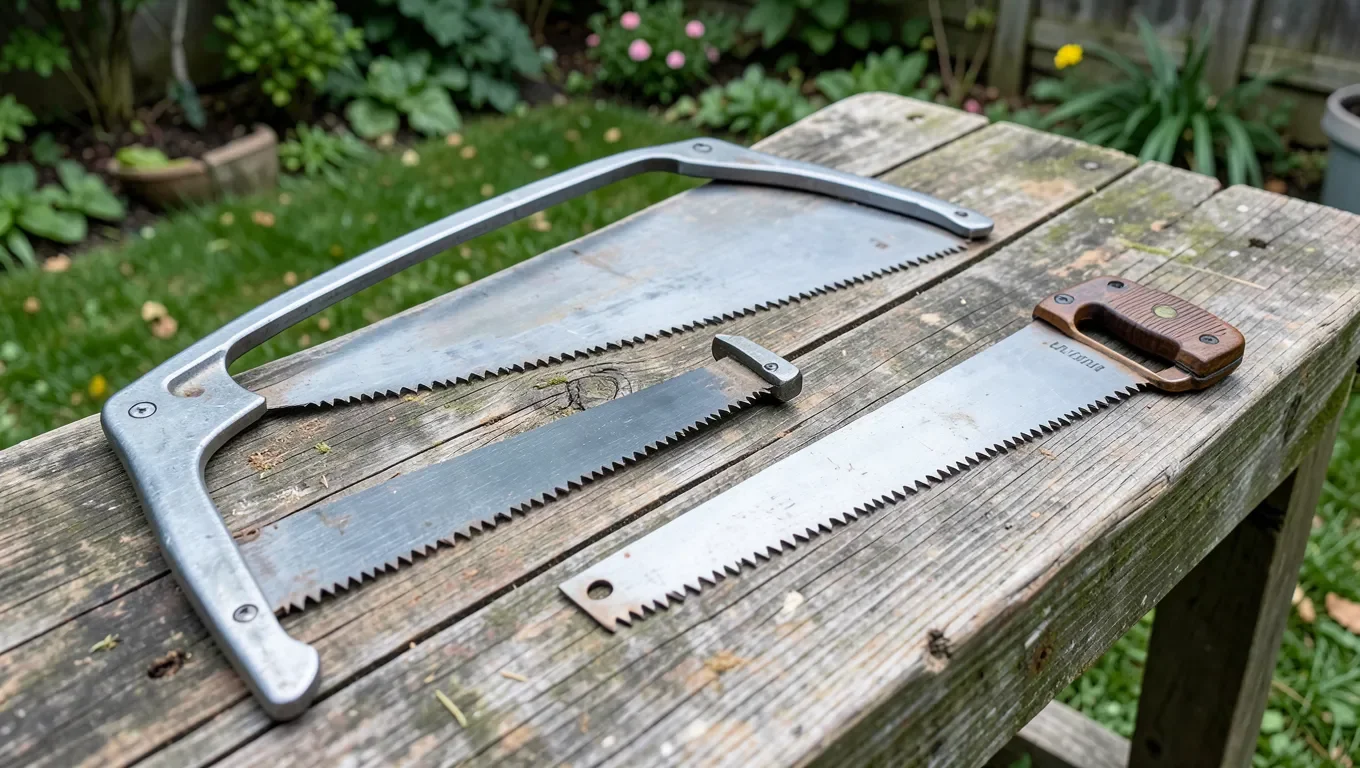
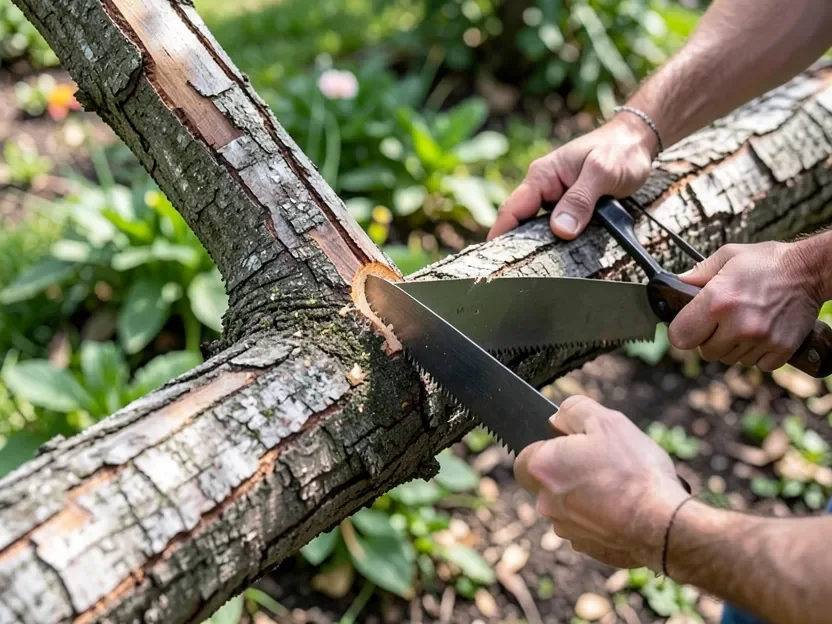
A bow saw gets its name from its bow-shaped metal frame, which holds a long, narrow blade under tension between two end points. That tension is what makes the blade cut straight instead of buckling or wandering as you push it through wood. Blades typically run 21 to 30 inches, and most are replaceable, so a worn or broken blade does not mean replacing the whole tool.
The key mechanical advantage is the stroke: a bow saw’s coarse, aggressive teeth are ground to cut on both the push and the pull. Every motion removes wood, which is why a bow saw plows through a thick, dry log noticeably faster than a smaller saw with the same amount of arm effort.
How a Pruning Saw Cuts
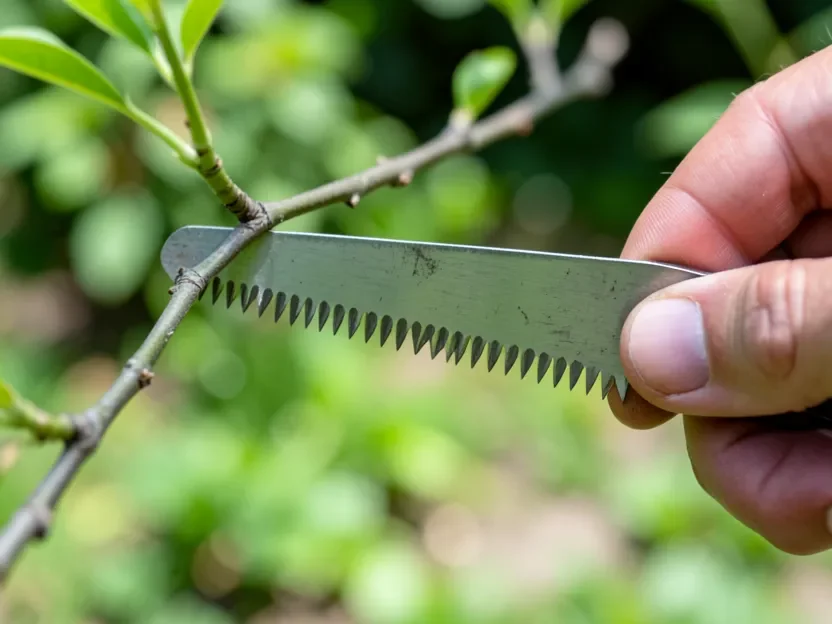
A pruning saw is smaller and almost always handheld, with a curved blade that is 6 to 15 inches long. Instead of a tensioned frame, the blade is fixed rigidly to a handle, and on folding models it closes back into that handle for safe storage. The teeth are impulse-hardened for a longer-lasting edge, and on a quality saw they are also precision-ground in three facets rather than a simple triangle, which is what lets a thin blade slice cleanly instead of tearing.
Unlike a bow saw, a pruning saw is built to cut on the pull stroke only. That single-direction design is not a limitation, it is the point, and it changes how the saw behaves on the kind of wood you actually prune.
Push-Pull vs Pull-Only: Why the Stroke Direction Actually Matters
This is the detail most comparisons skip, and it is the real reason you should not just grab whichever saw is closest to the door. A bow saw’s coarse teeth cutting in both directions is great for dry, dead wood, but on live, sap-heavy branches those same wide-set teeth pack full of sticky resin on every stroke, in both directions, so the blade bogs down and needs constant cleaning mid-job.
A pruning saw’s finer, more closely spaced teeth shed sap far better, and because they only cut on the draw, there is no push stroke dragging debris back into the kerf. That also means less tear-out at the edges of the cut. On a living branch, a rough, torn cut heals slower and is more likely to let in disease, while the clean, angled cut a pruning saw leaves closes up faster. If most of what you are cutting is alive, green, and still attached to something you want to keep healthy, that difference is worth more than raw cutting speed.
Cutting Power and Wood Thickness
A bow saw’s long, wide blade is built for volume. It handles logs and branches several inches thick, which is exactly why it is the standard choice for cutting firewood-length rounds and clearing storm-downed limbs. A typical pruning saw, by contrast, is rated for branches up to roughly 3 inches in diameter. Push it past that and you will be sawing for a long time with a tool that was never meant for the job.
If you are also weighing a bow saw against a different hand tool entirely, we have compared a bow saw against a hacksaw in detail as well, since that is another common mix-up at the hardware store.
Portability and Storage
A bow saw’s frame does not fold, so it needs a blade guard or a dedicated spot on the wall or in the truck bed. It is not a tool you casually carry around a property all day. A pruning saw, especially a folding model, closes down to the length of its handle and fits in a tool belt, a backpack side pocket, or a garden caddy, which is a real advantage if you are working your way around several trees rather than staying in one spot.
Price and Long-Term Value
Both tools are inexpensive as far as hand tools go. A decent bow saw runs about $20 to $50, and since the blade is a separate, replaceable part, you can keep the same frame for years and just swap in a new blade when the old one dulls. Most pruning saws fall in the $15 to $40 range, but there is a trade-off worth knowing: many pruning saw blades, including impulse-hardened ones, are too hard to resharpen. Once the edge goes, you replace the whole saw rather than the blade, so factor that into which one actually costs less over a few seasons of use.
Which Should You Buy?
For most homeowners, a pruning saw is the better all-around pick. General yard work is mostly live wood: shaping shrubs, thinning a fruit tree, trimming branches that are still attached and still growing. That is the exact situation where a pruning saw’s clean, pull-only cut and sap-shedding teeth outperform a bow saw, and its compact size means it is actually easy to grab and carry rather than sitting unused in the garage.
A bow saw earns its keep for a narrower job: dead branches, storm cleanup, and cutting logs down to firewood length. If that is most of what you do, buy the bow saw first. If you are only buying one saw for general yard maintenance, the pruning saw above is the one we would put in your hand.
Frequently Asked Questions
What Is the Main Difference Between a Bow Saw and a Pruning Saw?
A bow saw has a large, C-shaped metal frame that holds a long blade under tension and cuts on both the push and the pull stroke. A pruning saw is a smaller, usually folding handheld saw with a curved blade that cuts only on the pull stroke, designed for precise cuts on live branches rather than raw cutting power.
Which Saw Is Best for Cutting Thick Branches?
A bow saw is best for thick branches and logs. Its long, wide blade and bidirectional stroke remove more wood per stroke, so it clears dead branches, logs, and firewood-sized wood faster than a pruning saw can.
Can a Pruning Saw Be Used on Live, Green Wood?
Yes, and it is actually the better tool for it. A pruning saw’s fine, widely spaced teeth shed sap better than a bow saw’s coarse blade, and its pull-only stroke leaves a cleaner cut that helps a living branch heal instead of tearing the bark.
Does a Bow Saw Work Well for Firewood?
Yes. A bow saw is one of the best hand tools for prepping firewood because its long blade and push-pull cutting action quickly cut through dead, dry logs and branches that would take much longer with a smaller pruning saw.
Conclusion
A bow saw and a pruning saw solve different problems, not the same problem at two price points. Reach for the bow saw when the wood is thick, dry, and dead. Reach for the pruning saw when the wood is thin, alive, and still attached to something you care about. Most yard work leans toward the second case, which is why a folding pruning saw like the one above is the tool worth buying first, with a bow saw as the backup for the bigger cleanup jobs.
Sponsored / affiliate links. As an Amazon Associate I earn from qualifying purchases. I may earn additional commission from eligible campaigns.