Masonry Blade for Circular Saw: Diamond vs Abrasive (25x Longer)
A masonry blade for a circular saw needs diamond segments to cut brick, block, or concrete cleanly — an abrasive (non-diamond) wheel will cut the same materials, but wears out 25 to 50 times faster. This guide covers how to pick between diamond and abrasive, match a blade’s RPM rating to your saw, and know when a blade needs to be wet-rated versus dry-rated.
Diamond vs Abrasive Masonry Blades
Best Diamond Masonry Blade Pick
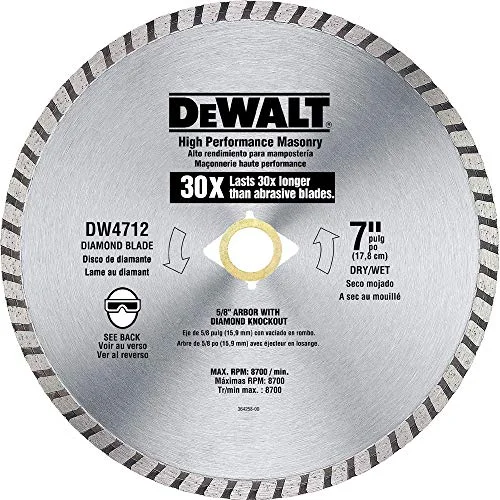 |
DEWALT DW4712B High Performance Diamond Masonry Blade, 7-Inch – $11.99 A segmented-rim diamond blade sized for a standard 7-inch circular saw — exactly the RPM-rated, dry-cutting design this guide recommends over an abrasive wheel.
|
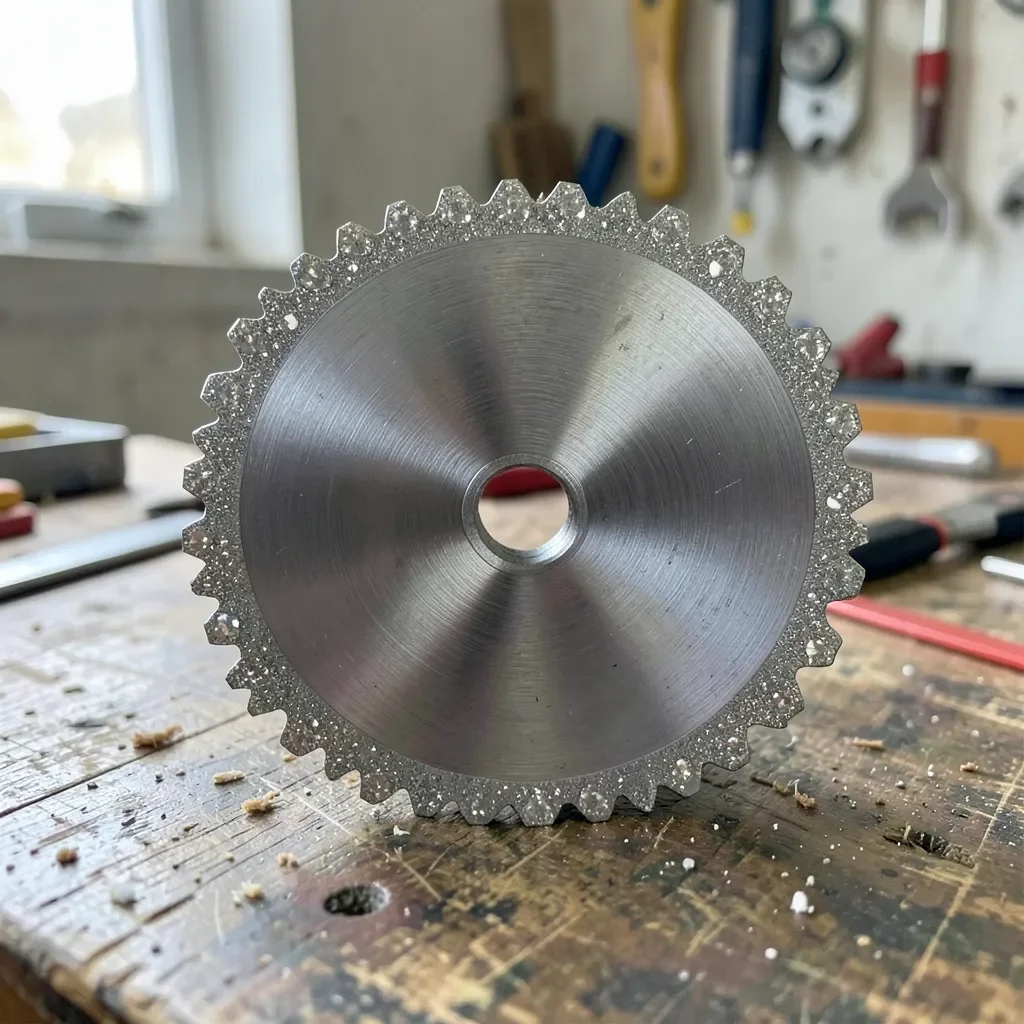
An abrasive masonry blade is a solid disc of bonded grit that cuts by wearing away, gradually consuming its own material as it grinds through brick or concrete. A diamond masonry blade has industrial diamond particles fused into a steel core, cutting by abrasive grinding at the diamond edge instead of sacrificing the whole disc. That difference is why diamond blades last 25 to 50 times longer than abrasive wheels in the same material, and some tests show diamond blades outlasting abrasive wheels by as much as 350 to 1.
Abrasive wheels are cheaper up front and fine for a single small job, but they wear out fast, throw a much larger dust cloud, and cut slower than diamond. For anything beyond a handful of cuts, a diamond blade pays for itself in blade replacements alone.
Matching Blade RPM to Your Circular Saw
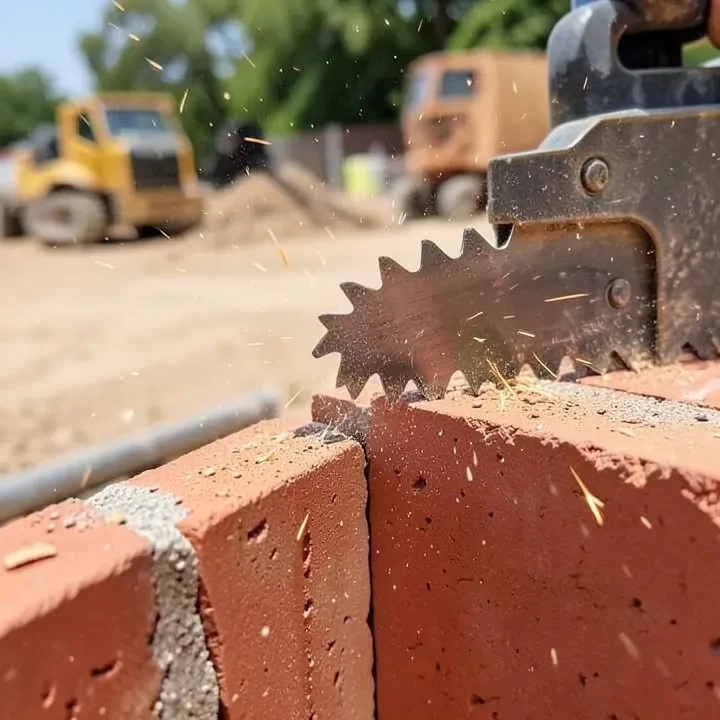
Every masonry blade is stamped with a maximum RPM rating, and running it faster than that strains the steel core and can cause the segments to crack or fly off. Most 7-inch diamond masonry blades top out around 8,730 RPM, which comfortably covers standard corded and cordless circular saws (typically 5,000–6,000 RPM no-load). Check your saw’s no-load RPM against the blade’s stamped max before the first cut — never assume they match just because the blade physically fits the arbor.
Wet Cutting vs Dry Cutting: Don’t Mix Them Up
Masonry blades are rated for wet cutting, dry cutting, or both — and running a dry-only blade wet (or a wet-only blade dry) shortens its life fast. Wet-rated blades use water to cool the segments and suppress dust, which lets them run longer without overheating but requires a saw and setup built for water. Dry-rated blades trade some longevity for portability — no water lines or mess, but they need short cutting bursts with cooling pauses to avoid overheating the segments.
Segmented rim blades (the kind with gaps, or gullets, between diamond segments) are built for dry cutting — those gaps improve airflow and debris clearance, which helps dissipate heat without water. Continuous rim blades (a smooth, unbroken diamond edge) are the wet-cutting standard, giving a cleaner cut edge on tile and stone but needing water to manage heat.
📊 Diamond masonry blades last roughly 25-50x longer than abrasive wheels, with some tests showing up to 350x — Source: Defusco Industrial Supply, Masonry Diamond Blades Guide
Safety: A Wood-Rated Circular Saw Wasn’t Built for This
Cutting masonry with a standard circular saw carries real kickback risk that wood cutting doesn’t — the blade can bind in dense material and throw the saw back toward you. Always use a blade guard rated for the blade diameter, keep both hands on the saw, wear safety glasses rated for impact (not just standard glasses) plus hearing protection, and never force the cut faster than the blade wants to go. If you’re cutting more than the occasional brick or block, a dedicated masonry saw or angle grinder with a guard is safer than pushing a circular saw past what it’s built for.

Frequently Asked Questions
What Is a Masonry Skill Saw Blade?
A masonry blade for a circular saw is a diamond or abrasive disc designed to cut brick, concrete block, and stone. Diamond blades use fused diamond particles on a steel core; abrasive blades are solid bonded-grit discs that wear away as they cut.
How Do I Choose a Masonry Blade?
Match three things: the blade diameter to your saw, the blade’s maximum RPM to your saw’s no-load RPM, and the wet/dry rating to how you’ll actually cut. For anything beyond a single small job, a diamond blade beats an abrasive wheel on cost per cut despite the higher upfront price.
Can I Use a Masonry Blade on Wood?
No. Masonry blades have no teeth designed to shear wood fiber, so they’ll burn, bind, or shatter the material instead of cutting cleanly, and the mismatch is a real kickback risk. Always match the blade to the material, not just the saw.
How Long Does a Masonry Blade Last?
A quality diamond blade can last through dozens to hundreds of cuts depending on material hardness and whether it’s run wet or dry, versus a handful of cuts for an abrasive wheel. Running a blade past its RPM rating or using a dry blade wet (or vice versa) shortens that lifespan significantly.
Can I Run a Dry-Cutting Blade With Water?
Not reliably. Dry-only blades aren’t built to handle the thermal shock of water cooling and can crack or delaminate. Check the blade’s stamped rating and only add water if it’s explicitly rated wet or wet/dry combo.
Conclusion
For anything beyond one or two cuts, a diamond masonry blade rated for your saw’s RPM and matched to wet or dry cutting will outlast an abrasive wheel by a wide margin. Confirm the RPM and wet/dry rating before the first cut, and use real eye and hearing protection every time.
Sponsored / affiliate links. As an Amazon Associate I earn from qualifying purchases. I may earn additional commission from eligible campaigns.