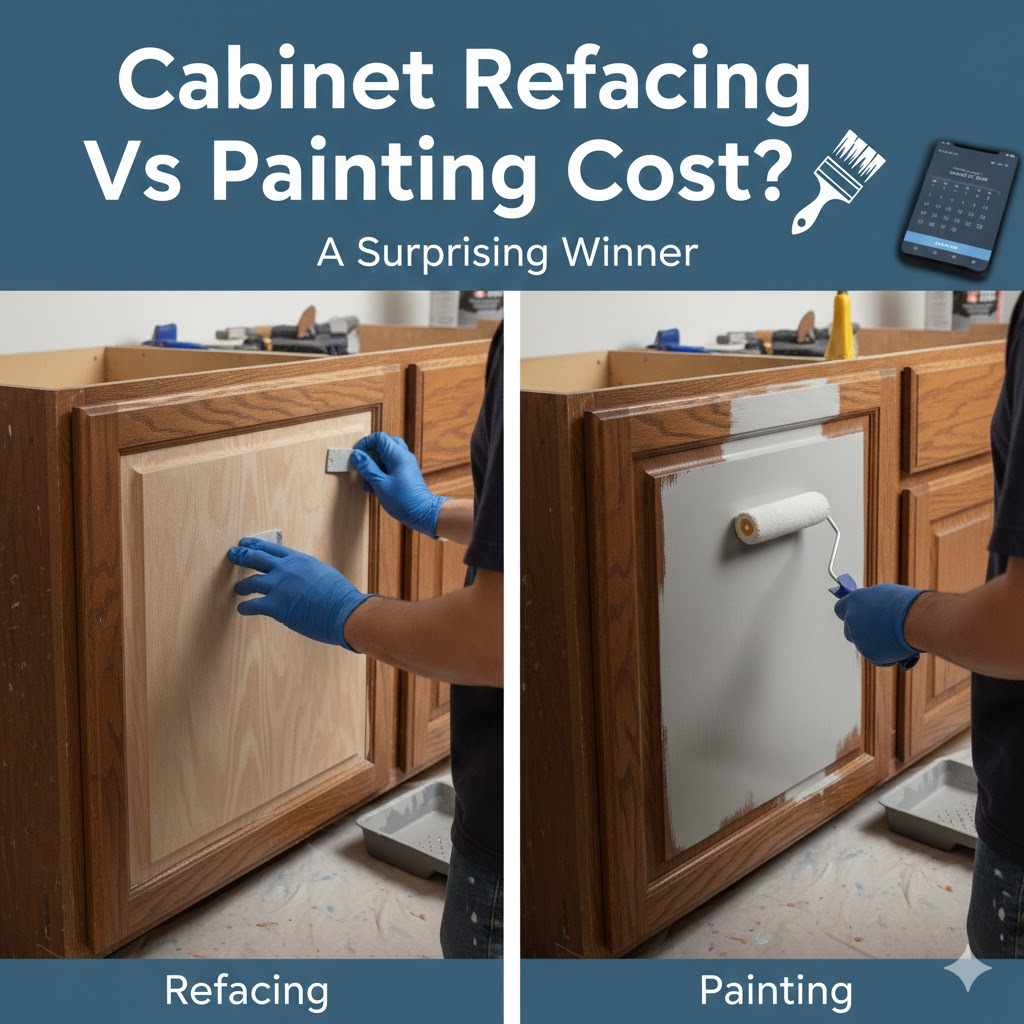
Cabinet Refacing Vs Painting Cost: A Surprising Winner
When comparing cabinet refacing vs painting costs, painting is the clear budget-friendly winner, typically costing 50-75% less than professional refacing. However, refacing delivers a more dramatic transformation with new doors and styles, providing the value of a brand-new look for about half the cost of a full cabinet replacement.
Hello there, fellow home enthusiast! It’s Md Meraj, your friendly guide in the world of woodworking and DIY. I know how it feels to stand in your kitchen, look at your cabinets, and wish for a fresh new look. A full remodel can seem overwhelming and expensive. But I’m here to tell you that you have fantastic options that don’t involve tearing everything out.
Two of the most popular choices are cabinet painting and cabinet refacing. You’ve probably heard of both, but you might be wondering: what’s the real difference? And more importantly, which one is right for your wallet? It’s a question I get all the time. Don’t worry, we’re going to break it all down together. We’ll look at the costs, the pros, and the cons, so you can make a choice that feels right for you and your home.
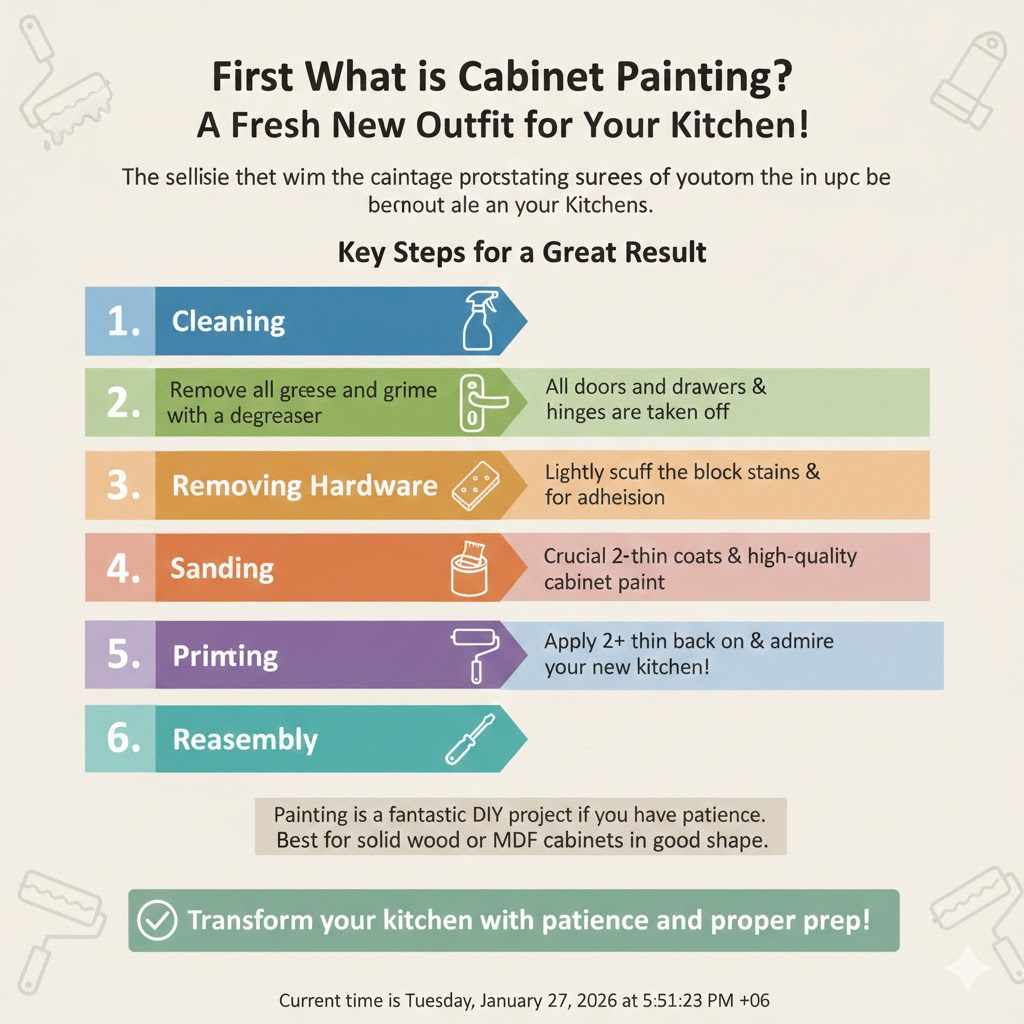
First, What is Cabinet Painting?
Think of cabinet painting as giving your kitchen a beautiful new outfit. You keep the cabinets you already have, but you completely change their color and finish. It’s an amazing way to brighten up a space or switch to a more modern color palette.
The process sounds simple, but the secret to a great result is in the preparation. You can’t just grab a brush and start painting! A good paint job involves a few key steps:
- Cleaning: First, you must thoroughly clean every surface. Kitchen cabinets collect grease and grime over the years, and paint won’t stick to a dirty surface. A good degreasing cleaner is your best friend here.
- Removing Hardware: All doors, drawers, hinges, and handles are removed. This ensures you get a clean, professional finish without painting over any hardware.
- Sanding: A light sanding is crucial. This step scuffs up the old finish, which helps the new primer and paint grip the surface. It doesn’t mean you have to sand it down to bare wood, just enough to remove the glossy top coat.
- Priming: Primer is a special type of paint that creates a perfect base. It blocks stains, helps the paint adhere better, and ensures the final color looks even and true. This step is non-negotiable for a lasting finish!
- Painting: Finally, the fun part! You’ll apply two or more thin coats of high-quality cabinet paint. Using thin coats helps you avoid drips and brush marks, giving you a smoother result.
- Reassembly: Once everything is completely dry, you can put your doors, drawers, and new hardware back on.
Painting is a fantastic DIY project if you have patience and an eye for detail. It’s also something you can hire a professional to do. The best candidates for painting are solid wood or MDF cabinets that are in good structural shape.
Next, What is Cabinet Refacing?
If painting is a new outfit, then cabinet refacing is a complete makeover. With refacing, you keep your existing cabinet boxes—the structures mounted to the wall—but you get all-new cabinet doors and drawer fronts. It’s a hybrid approach that gives you the look and feel of a brand-new kitchen without the cost and mess of a full tear-out.
How Cabinet Refacing Works
The process for refacing is a bit more involved than painting:
- Removal: Just like with painting, all the old doors, drawer fronts, and hardware are removed.
- Veneering: The front surfaces of your cabinet boxes (called the face frames) are covered with a thin layer of new material. This can be real wood veneer, laminate, or a durable plastic called thermofoil. This makes the old boxes perfectly match your new doors.
- Installation: Brand-new, custom-made doors and drawer fronts are installed. This is where the magic happens! You can choose a completely different style—for example, you can go from old-fashioned raised panels to sleek, modern Shaker-style doors.
- New Hardware: Finally, new hinges, handles, and pulls are installed to complete the transformation. Many homeowners also add new features like soft-close hinges during this step.
Cabinet refacing is usually done by professionals because it requires precision measurements and specialized tools. While a very ambitious DIYer could try it, it’s considered an advanced project. Refacing is a great option when your cabinet boxes are still sturdy, but the doors are dated, damaged, or a style you just don’t like.
The Main Event: Cost Breakdown of Refacing vs. Painting
Alright, let’s talk numbers. This is where you’ll see the biggest difference between these two projects. To keep things simple, we’ll base these estimates on a standard 10-foot by 12-foot kitchen, which is a common size in many homes.
Remember, these are average costs. Prices can change based on where you live, the materials you choose, and the complexity of your kitchen.
Cabinet Painting Costs
Painting is, without a doubt, the more affordable option. You can choose to do it yourself to save the most money, or hire a pro for a flawless finish.
- DIY Painting Cost: If you’re willing to put in the time and effort, you can save a ton. Your costs will primarily be for materials.
- Degreaser, sandpaper, and tape: $50 – $75
- High-quality primer: $40 – $60 per gallon
- High-quality cabinet paint: $60 – $100 per gallon
- Brushes, rollers, and a paint sprayer (optional rental): $75 – $150
For a typical kitchen, you can expect the total DIY painting cost to be between $400 and $1,000.
- Professional Painting Cost: Hiring a professional painter saves you a lot of time and ensures a smooth, durable finish. Pros have the right equipment (like HVLP sprayers) to get a factory-like look. They usually charge by the door, drawer, or linear foot.For a standard kitchen, the total professional painting cost typically ranges from $2,000 to $6,000.
Cabinet Refacing Costs
Refacing is a more significant investment because you are paying for brand-new, custom-made materials and professional labor.
- Professional Refacing Cost: The cost depends heavily on the materials you choose.
- Laminate/Thermofoil: These are the most affordable options. They are durable, easy to clean, and come in a huge variety of colors and styles.
- Real Wood Veneer: This is the premium option. You can choose from woods like oak, maple, or cherry for a truly high-end look.
On average, the total professional refacing cost for a standard kitchen ranges from $7,000 to $15,000. This is about 40-60% of the cost of a full cabinet replacement, which can easily exceed $20,000.
Cost Comparison Table: At a Glance
Here’s a simple table to help you visualize the cost difference.
| Project Type | Average Cost Range (Standard Kitchen) | Best For |
|---|---|---|
| DIY Cabinet Painting | $400 – $1,000 | Smallest budgets; homeowners who enjoy hands-on projects. |
| Professional Cabinet Painting | $2,000 – $6,000 | Homeowners wanting a quick, affordable color update with a pro finish. |
| Professional Cabinet Refacing | $7,000 – $15,000 | Those wanting a new style and high durability without a full remodel. |
Pros and Cons: A Head-to-Head Showdown
Cost is a huge factor, but it isn’t the only one. Let’s look at the advantages and disadvantages of each method to see which one might be the true winner for you.
Cabinet Painting
Pros of Painting
- Most Affordable: It’s the undisputed champion for saving money.
- Fast Transformation: You can completely change the feel of your kitchen in a weekend or two.
- Great for DIY: With patience and the right prep work, it’s a very achievable project for a beginner.
- Unlimited Color Choices: Your color options are virtually endless!
Cons of Painting
- Prep Work is Intensive: The quality of the final job is 90% in the preparation. Skipping steps will lead to chipping and peeling paint.
- Doesn’t Change Style: Painting won’t change your old, dated cabinet door style.
- Durability Concerns: Even with the best paint, the finish may not be as tough as a factory-applied finish. It can chip or wear down over time, especially in high-traffic areas.
- Not for All Cabinets: It doesn’t work well on cabinets made of laminate or thermofoil, or on wood that is badly damaged.
Cabinet Refacing
Pros of Refacing
- A Brand-New Look: You get a completely new cabinet style, transforming your kitchen’s entire aesthetic.
- Highly Durable: The new materials are factory-finished and very resistant to wear and tear.
- Increases Home Value: A refaced kitchen offers a greater return on investment than a painted one because it looks like a full remodel to potential buyers.
- Fixes Damaged Doors: It’s the perfect solution if your current doors are warped, chipped, or broken but the boxes are still good.
Cons of Refacing
- More Expensive: It costs significantly more than painting.
- Interior Stays the Same: You get a new exterior, but the inside of your cabinets remains unchanged. (Though you can always paint the interiors yourself!)
- Not a Simple DIY Project: It requires precise skills and is best left to the professionals.
So, Which One is the Winner for You?
As you can see, there isn’t a single “winner” for everyone. The surprising truth is that the best choice depends entirely on your specific situation. Let’s figure out which path is right for you.
Choose Cabinet Painting If…
- Your budget is your top priority. Painting will give you the most bang for your buck.
- You like your current cabinet style. If the layout and door style are fine, a new color may be all you need.
- Your cabinets are in great shape. Painting works best on solid wood or MDF cabinets with no major damage.
- You love a good DIY challenge. If you’re willing to put in the prep work, the results can be incredibly rewarding.
Choose Cabinet Refacing If…
- You want a dramatic change in style. This is your chance to get those Shaker or modern flat-panel doors you’ve been dreaming of.
- Your cabinet doors are damaged or dated. Refacing solves the problem of worn-out or ugly doors while saving your sturdy cabinet boxes.
- Durability and longevity are important to you. The factory finishes on new doors and veneers will stand up to daily life better than paint.
- You have a mid-range budget. It’s a happy medium between painting and a full, gut-renovation project. As you plan your project, you might find valuable tips from home improvement experts like those at This Old House, who offer great insights into the process.
A Quick Note on Safety and Doing It Right
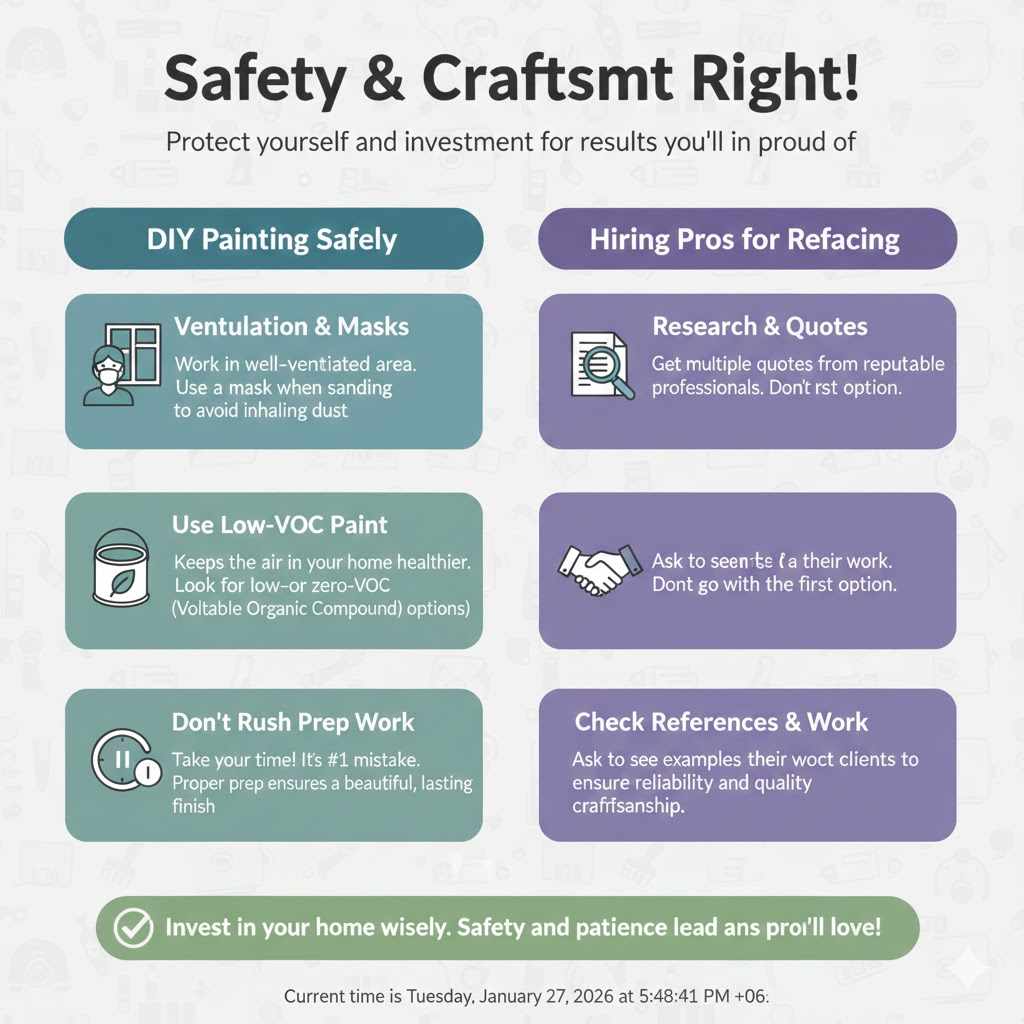
No matter which project you choose, safety and craftsmanship are key. My goal is always to help you get a result you can be proud of, and to do it safely.
If you decide to paint your cabinets yourself, please work in a well-ventilated area. Use a mask when sanding to avoid inhaling dust, and consider using low- or zero-VOC (Volatile Organic Compound) paint to keep the air in your home healthier. Take your time with each step. Rushing the prep work is the number one mistake people make!
If you opt for refacing, my best advice is to get multiple quotes from reputable professionals. Ask to see examples of their work and check their references. This is a big investment in your home, and you want to work with someone you can trust to do a beautiful job.
Frequently Asked Questions (FAQ)
1. How long does cabinet painting last?
A professionally painted or carefully DIY-painted cabinet finish can last 5-10 years. Its lifespan depends heavily on the quality of the prep work, the type of paint used, and how much daily wear and tear the cabinets receive.
2. Can I reface my own cabinets?
While it is possible, refacing is considered an advanced DIY project. It requires precise measurements, specialty tools to cut and apply veneer, and woodworking skills to hang doors perfectly. For most homeowners, hiring a professional is the recommended route for the best results.
3. Does cabinet refacing add more value to a home than painting?
Yes, generally cabinet refacing adds more value. Because it involves new doors and hardware, it looks more like a full renovation to potential home buyers and can provide a better return on investment than a simple paint job.
4. What kind of paint is best for cabinets?
The best paint for cabinets is a high-quality acrylic latex enamel, often labeled as “cabinet and trim” paint. These paints are self-leveling (which helps hide brush strokes) and dry to a hard, durable finish that is easy to clean. Look for brands like Sherwin-Williams Emerald Urethane Trim Enamel or Benjamin Moore ADVANCE.
5. Can you paint laminate or thermofoil cabinets?
Yes, you can, but it requires special preparation. You must use a high-adhesion primer specifically designed to stick to glossy, non-porous surfaces. Even with proper prep, the paint may not be as durable on these surfaces as it would be on wood.
6. How long does each project typically take?
DIY painting can take anywhere from 3 to 7 days, allowing for cleaning, sanding, priming, painting, and drying time between coats. Professional refacing is often much quicker for the homeowner, typically completed in just 2 to 4 days, since the new doors and drawers are made off-site.
7. Is there a big mess with either project?
Both projects create some disruption. Painting involves dust from sanding and paint fumes, so sealing off the kitchen is important. Refacing is generally less messy than a full remodel, as the cabinet boxes stay in place, but there will be some noise and dust from the installation process.
Conclusion: The Right Choice is in Your Hands
So, who is the surprising winner in the battle of cabinet refacing vs. painting costs? On paper, painting wins the race for the lowest upfront cost, hands down. It’s a fantastic, budget-friendly way to bring new life to a tired kitchen.
But the real winner is the option that best fits your goals. If your dream is a totally new style and long-lasting durability, then refacing is a clear winner in terms of value and transformation. It gives you the impact of a major renovation for a fraction of the price.
I hope this guide has helped clear things up for you. Take a good look at your cabinets, your budget, and your dreams for your kitchen. Whether you pick up a paintbrush or call a professional for a consultation, you are taking a wonderful step toward creating a home you love. You can do this!