Can Denatured Alcohol Remove Paint? The Best, Proven Method
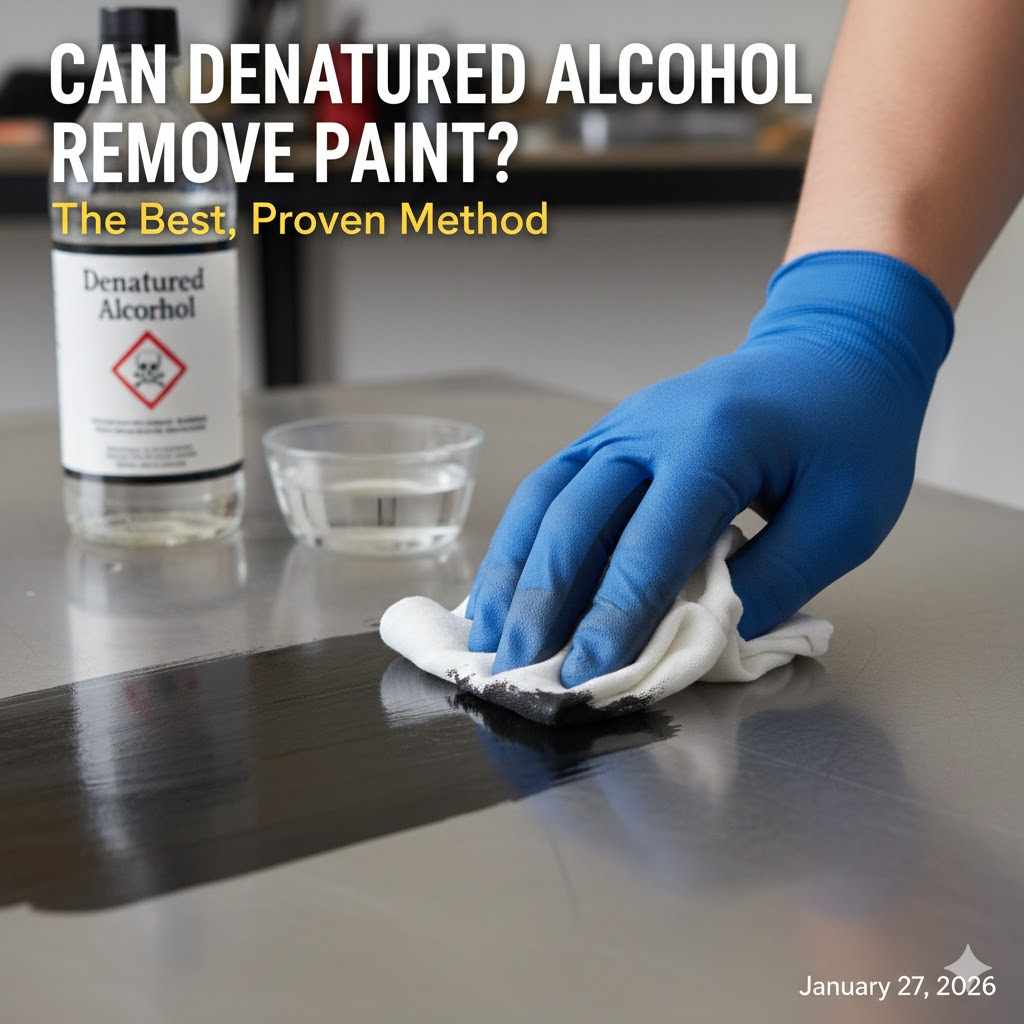
Yes, denatured alcohol can effectively remove paint, but it works best on specific types like fresh latex paint splatters, shellac, and some water-based finishes. It acts as a solvent, softening the paint for easy scraping. However, it is not a heavy-duty stripper and will not work on cured oil-based paints, enamels, or polyurethanes.
Hello, fellow makers and homeowners! It’s Md Meraj, back in the workshop with you. Today, we’re tackling a question that comes up all the time: what’s the best way to handle unwanted paint? Maybe you have a small drip on a beautiful piece of wood trim, or perhaps you’ve found a treasure at a flea market that’s covered in an old, flaky finish.
It can feel frustrating, and the thought of using harsh, chemical strippers is enough to make anyone pause. But what if I told you a simple solution might already be on your workshop shelf? We’re going to talk about denatured alcohol. It’s a handy solvent with a lot of uses, and paint removal is one of them—if you know how and when to use it.
Don’t worry, this is easier than you think. I’m going to walk you through a proven, step-by-step method that is safe, effective, and perfect for beginners. Let’s get that unwanted paint gone and bring back the beautiful surface underneath!
What is Denatured Alcohol and How Does It Work?
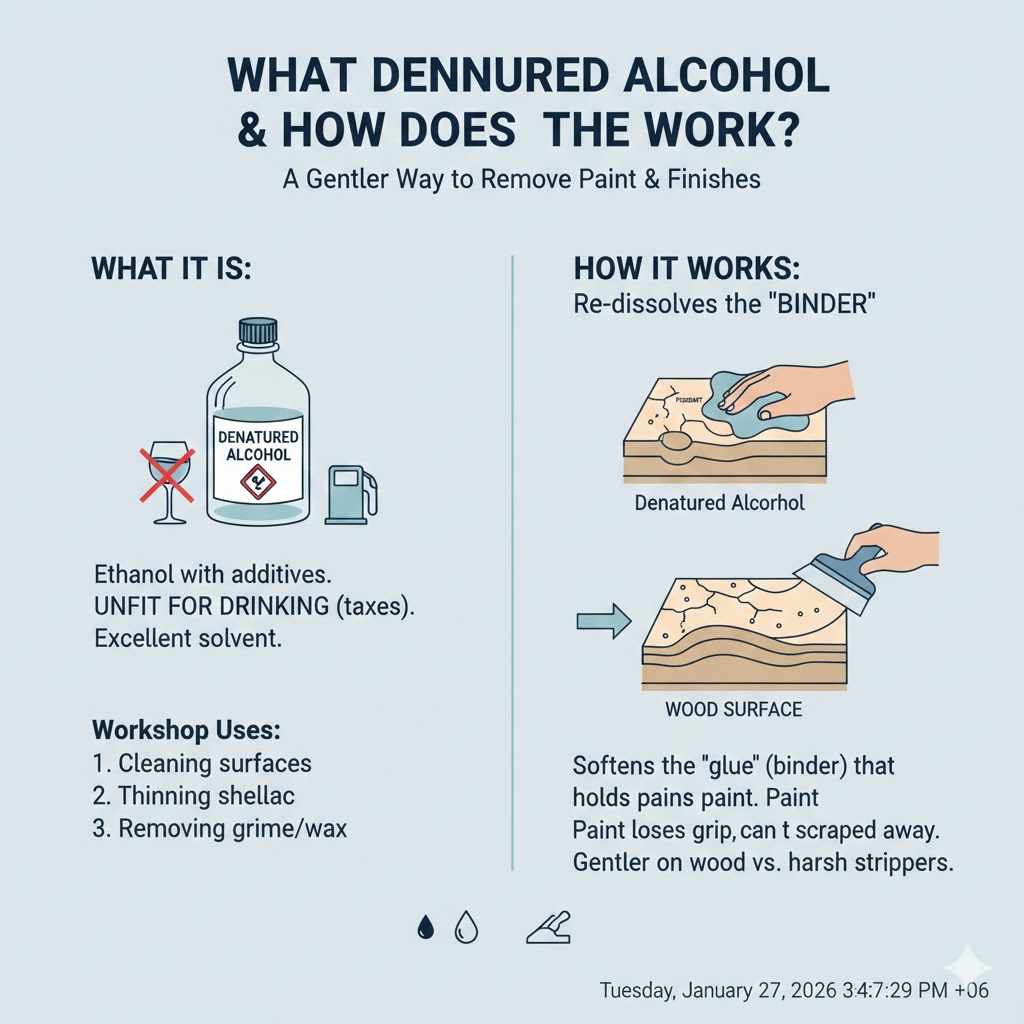
Before we start scrubbing, let’s quickly understand what we’re working with. Think of denatured alcohol as a close cousin to the ethanol found in alcoholic beverages, but with a twist. Additives have been mixed in to make it unfit for drinking and to avoid alcohol taxes. These additives also make it an excellent solvent for various workshop tasks.
In woodworking, we often use it for:
- Cleaning surfaces before finishing
- Thinning shellac flakes to create a custom finish
- Removing grime and wax from old furniture
So, how does it remove paint? Denatured alcohol works by re-dissolving the “binder” in certain types of paint and finishes. The binder is the glue that holds the pigment together and makes it stick to the surface. When the binder softens, the paint loses its grip and can be easily wiped or scraped away. It doesn’t aggressively melt the paint like a heavy-duty chemical stripper; it simply loosens its hold, making it much gentler on the wood underneath.
The Big Question: What Types of Paint Will It Actually Remove?
This is the most important part! Denatured alcohol is a fantastic tool, but it’s not a magic wand that works on every paint. Using it on the wrong type of paint will only lead to frustration. Your success depends entirely on matching the solvent to the finish.
Here’s a simple breakdown to help you identify if it’s the right choice for your project.
Best For: The Success Stories
- Shellac: This is denatured alcohol’s number one job. Shellac is a natural finish made from lac bug secretions dissolved in alcohol. Because of this, alcohol is the perfect solvent to remove it. If you suspect an old piece of furniture has a shellac finish, denatured alcohol is your go-to solution.
- Fresh Latex Paint: Did you just splash some water-based latex paint on your hardwood floor or trim? If you catch it while it’s still fresh or only recently dried, denatured alcohol can often wipe it right up without a trace. It’s perfect for small cleanup jobs.
- Some Water-Based Finishes: Many modern water-based wood stains and clear coats can be softened and removed with denatured alcohol, especially if they haven’t fully cured for weeks or months.
Not For: Save Your Time and Effort
- Cured Oil-Based and Alkyd Paints: Once oil-based paint has fully cured (a process that can take weeks or months), its chemical structure changes. Denatured alcohol simply isn’t strong enough to break down these tough, durable finishes. You’ll need a more powerful chemical stripper for this.
- Polyurethane and Varnish: These finishes are designed for durability and resistance to chemicals and abrasion. Denatured alcohol will do very little to a cured polyurethane finish besides cleaning the surface.
- Epoxy or Two-Part Paints: These are high-performance coatings that create an incredibly hard, chemically resistant shell. Denatured alcohol won’t even scratch the surface.
Here is a handy table to keep in your workshop for quick reference:
| Paint or Finish Type | Can Denatured Alcohol Remove It? | Md Meraj’s Notes |
|---|---|---|
| Shellac | Excellent | This is the best and most traditional method for removing shellac. It dissolves it quickly. |
| Latex Paint (Fresh Drips/Splatter) | Very Good | Works best on recent messes. Older, cured latex might need more effort. |
| Water-Based Finishes | Good (Sometimes) | It depends on the specific formula. Always test in a hidden spot first. |
| Lacquer | Fair (Sometimes) | You’re better off using a dedicated lacquer thinner, but alcohol can soften some types. |
| Cured Oil-Based Paint | Poor / No | Save your time. You will need a stronger, specialized paint stripper. |
| Polyurethane / Varnish | Poor / No | These are tough finishes designed to resist solvents like alcohol. |
| Epoxy and Two-Part Paints | No | Absolutely not. These require very strong, specific chemical strippers. |
Safety First: Your Most Important Tool in the Workshop
Before you open that can, let’s talk about safety. Denatured alcohol is much safer than many harsh chemical strippers, but it’s not harmless. We need to treat it with respect. Following these simple rules will keep you safe and your project on track.
Essential Safety Gear
- Nitrile Gloves: Denatured alcohol will dry out your skin very quickly. A good pair of chemical-resistant nitrile gloves is a must to protect your hands.
- Safety Glasses or Goggles: Splashes can happen in an instant. Always protect your eyes from accidental contact.
- Proper Ventilation: The fumes from denatured alcohol can be strong and are highly flammable. Work outdoors if you can. If you’re indoors, open windows and doors, and use a fan to create cross-ventilation. For more information on safe workshop airflow, check out these guidelines on ventilation from the Occupational Safety and Health Administration (OSHA).
- Respirator (Optional but Recommended): If you are working in an enclosed space or for a long period, wearing a respirator with organic vapor cartridges is a smart idea to avoid inhaling fumes.
Fire Hazard Warning
This is crucial: Denatured alcohol is extremely flammable. Its vapor can travel and be ignited by a distant flame. Never use it near open flames, pilot lights (like on a water heater or furnace), electrical sparks, or anything that could create a spark. Always make sure your workspace is clear of ignition sources.
The Proven Method: Step-by-Step Guide to Removing Paint
Alright, with our safety gear on and our workspace prepared, we’re ready to get to work. This process is all about patience. Let the alcohol do the work for you—no need for aggressive force!
Step 1: Gather Your Supplies
Having everything you need within arm’s reach makes the job go smoothly. You won’t need much:
- Denatured Alcohol
- Clean, lint-free cotton rags
- A plastic paint scraper or old credit card
- A metal or glass container (a small jar or bowl works great)
- Fine-grade steel wool (#0000) for stubborn spots
- Your full set of safety gear (gloves, glasses, etc.)
Step 2: Prepare Your Work Area and Your Project
First, lay down a drop cloth or some old cardboard to protect your floors from any drips. Ensure you have the great ventilation we talked about. Next, clean the surface of your project with a damp rag to remove any dust or dirt. This helps the alcohol work directly on the paint.
Step 3: The All-Important Test Spot
I can’t stress this enough: always test first! Find a small, hidden spot on your project, like the back of a table leg or the underside of a shelf.
Dampen a small corner of your rag with denatured alcohol and gently rub it on the test spot. Wait for 5 to 10 minutes. If the paint starts to feel gummy, soft, or wrinkly, then you’re in business! If nothing happens, denatured alcohol is likely not the right tool for this particular job.
Step 4: Application and Removal
Once your test is successful, you’re ready to start on the main surface. Follow these steps carefully:
- Apply the Alcohol: Pour a small amount of denatured alcohol into your glass or metal container. Soak a clean rag in the alcohol—you want it saturated but not dripping everywhere.
- Let it Dwell: Liberally wipe the alcohol onto a small section of the paint you want to remove. Don’t try to tackle the whole piece at once; denatured alcohol evaporates quickly. Work in manageable squares, about 6×6 inches at a time. Let the alcohol sit on the surface for a few minutes. You should see the paint begin to bubble, wrinkle, or soften.
- Scrape Gently: Once the paint has softened, use your plastic scraper to gently lift it away. Hold the scraper at a low angle to avoid scratching the wood. The paint should come off in a gummy sludge. Wipe the sludge off your scraper and onto a disposable rag.
- Wipe and Repeat: After scraping, use a clean section of your alcohol-dampened rag to wipe away any remaining residue. If you have some stubborn spots, gently scrub them with your #0000 steel wool dampened with alcohol. Always scrub in the direction of the wood grain.
- Move to the Next Section: Continue this process—apply, wait, scrape, wipe—section by section until all the unwanted paint is removed.
Step 5: Final Cleanup
Once you’ve removed all the paint, give the entire surface one final wipe-down with a clean rag and a small amount of denatured alcohol. This will remove any last traces of paint sludge and residue.
Let the piece dry completely, which should only take about 30 minutes to an hour in a well-ventilated area. After it’s dry, you may want to lightly sand the surface with fine-grit sandpaper (like 220-grit) to prepare it for a new coat of paint or finish.
Troubleshooting Common Issues
Sometimes things don’t go exactly as planned. Don’t worry! Here are some common problems and how to solve them like a pro.
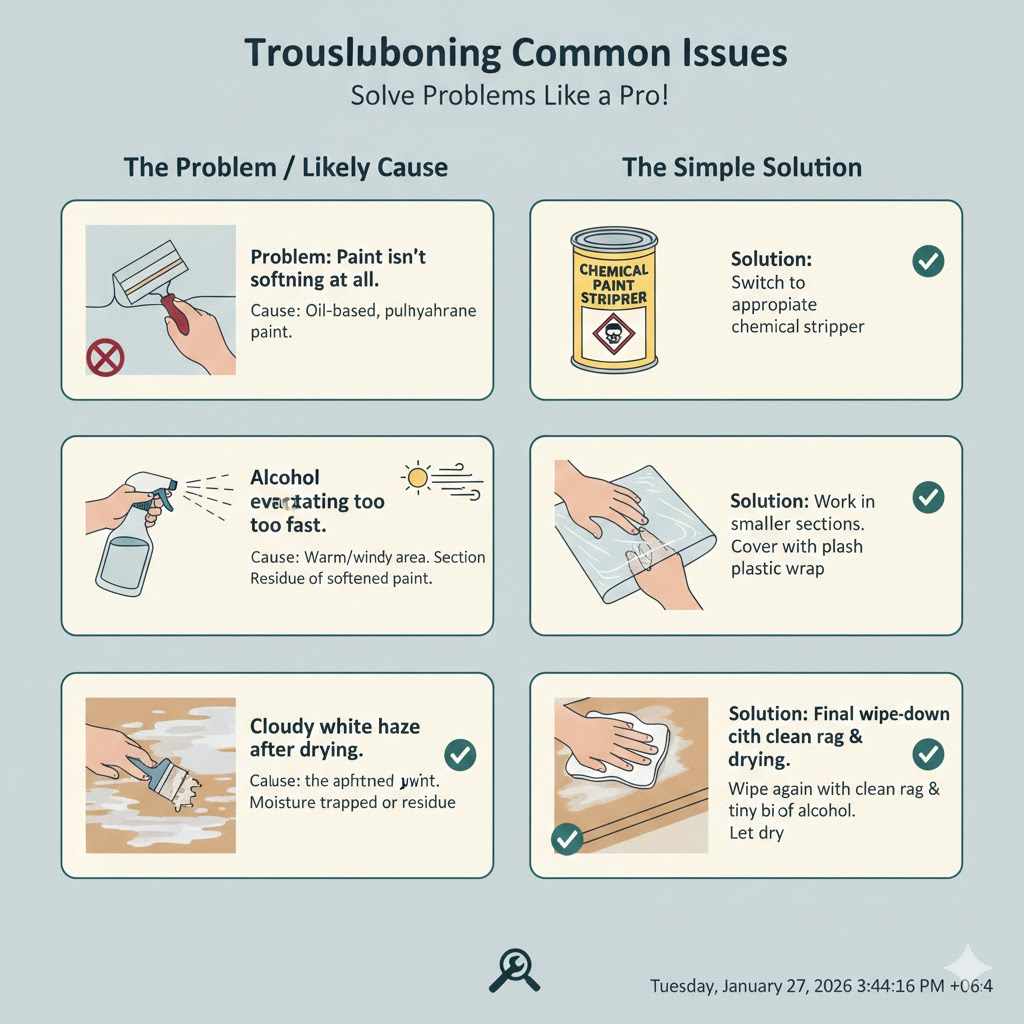
| The Problem | The Likely Cause | The Solution |
|---|---|---|
| The paint isn’t softening at all. | The paint is likely oil-based, polyurethane, or another type resistant to alcohol. | Stop and switch to a more appropriate chemical paint stripper designed for that type of paint. |
| The alcohol seems to be evaporating too fast. | Working in a very warm or windy area. The section is too large. | Work in smaller sections. You can also try covering the wet area with a small piece of plastic wrap to slow evaporation. |
| The surface feels sticky or gummy after scraping. | This is normal. It’s the residue of the softened paint and binder. | This is where the final wipe-down comes in. Use a clean rag with fresh denatured alcohol to remove this sticky layer. |
| There’s a cloudy white haze on the wood after it dries. | This can be moisture trapped under the surface or residue. | Wipe the area again with a clean rag and a tiny bit of denatured alcohol, then let it dry fully. Often, this is enough to clear it up. |
Frequently Asked Questions (FAQ)
1. Is denatured alcohol the same thing as rubbing alcohol (isopropyl alcohol)?
No, they are different chemicals. Denatured alcohol is ethanol-based, while rubbing alcohol is isopropyl-based. While rubbing alcohol can sometimes soften very fresh latex paint, denatured alcohol is a much more effective solvent for removing finishes like shellac and is the standard choice in woodworking.
2. Will denatured alcohol damage the wood underneath the paint?
When used correctly, denatured alcohol is generally very safe for wood. It is less harsh than powerful chemical strippers and evaporates quickly, which minimizes its contact time with the wood fibers. However, it can dry out the wood, so it’s always best to apply a new finish or wood conditioner after stripping.
3. How should I dispose of the used rags and leftover alcohol?
This is a great safety question! Rags soaked with denatured alcohol are a fire hazard. Never bunch them up and throw them in the trash. Lay them flat on a concrete surface outdoors, away from buildings, to dry completely. Once they are fully dry and stiff, you can dispose of them in your regular trash. For leftover liquid alcohol, consult your local regulations. For guidance, visit the Environmental Protection Agency (EPA) page on household hazardous waste.
4. Can I use this method on surfaces other than wood?
You can sometimes use it on metal to remove latex paint. However, you should avoid using it on plastic or composite materials, as the alcohol can damage or melt them. Always perform a spot test on any non-wood surface first.
5. Why do I need to work in small sections?
Denatured alcohol evaporates very quickly. If you apply it over a large area, most of it will have evaporated before you get a chance to scrape it. Working in small, manageable sections ensures the alcohol has enough time to soften the paint before it disappears.
6. The paint is coming off, but it’s taking a lot of effort. What can I do?
Patience is key! If it feels like you’re fighting it, you probably just need to give the alcohol more time to work. Apply another coat and wait a little longer before you start scraping. You can also try covering the wet section with plastic wrap to slow the evaporation, giving it more time to dissolve the finish.
Conclusion: Your New Secret Weapon for Paint Removal
So, can denatured alcohol remove paint? Absolutely—when it’s the right kind of paint. It’s the perfect, gentle solution for taking off old shellac finishes, cleaning up fresh latex paint spills, and tackling some water-based coatings without the harsh fumes and aggressive action of heavy-duty strippers.
By understanding what it can (and can’t) do, practicing good safety habits, and following the simple steps we’ve walked through, you have a powerful and effective technique in your DIY toolkit. Restoring an old piece of furniture or fixing a small mistake no longer needs to be an intimidating task.
You’ve got this! Now you can approach these projects with confidence, knowing you have a smart, safe, and proven method to get the job done right. Keep learning, stay safe, and happy building!