Can I Use 10W40 for Chainsaw Bar Oil? Why Tackifiers Are the Real Answer
No – 10W40 motor oil will run in a chainsaw’s oiler in an emergency, but it isn’t a real substitute for bar and chain oil. Motor oil is engineered to flow and drain cleanly through an engine; bar oil is engineered to do the opposite – cling to a chain moving at 40-60+ mph around the bar. That difference comes down to one additive class motor oil doesn’t have.
Why Tackifiers Are the Real Difference
Best All-Season Bar & Chain Oil
 |
Husqvarna X-Guard Premium All-Season Bar & Chain Oil, 1 Gallon – $24.95 The real tackifier-based oil that does what 10W40 can’t – stays strung on the chain instead of flinging off.
|
Bar and chain oil contains tackifiers, usually long-chain polymers like polyisobutylene (PIB), added specifically to make the oil stringy and adhesive. Without a tackifier, centrifugal force at the chain’s operating speed flings oil off the instant it leaves the oiler port – most of it lands on the ground, your boots, and the sawdust pile instead of on the chain. With a tackifier, the oil stays strung along the drive links long enough to get carried around the bar tip and back, which is the entire point of a total-loss lubrication system that’s constantly slinging oil off anyway.
10W40’s numbers describe viscosity, not tackiness – the “10W” is its cold-flow rating and the “40” is its thickness at operating temperature. A motor oil can be exactly the right thickness for a chainsaw’s climate and still fling off the chain immediately, because thickness and stickiness aren’t the same property. That’s the mistake worth correcting: a thicker oil isn’t automatically a “stickier” oil.
What Actually Happens If You Run It
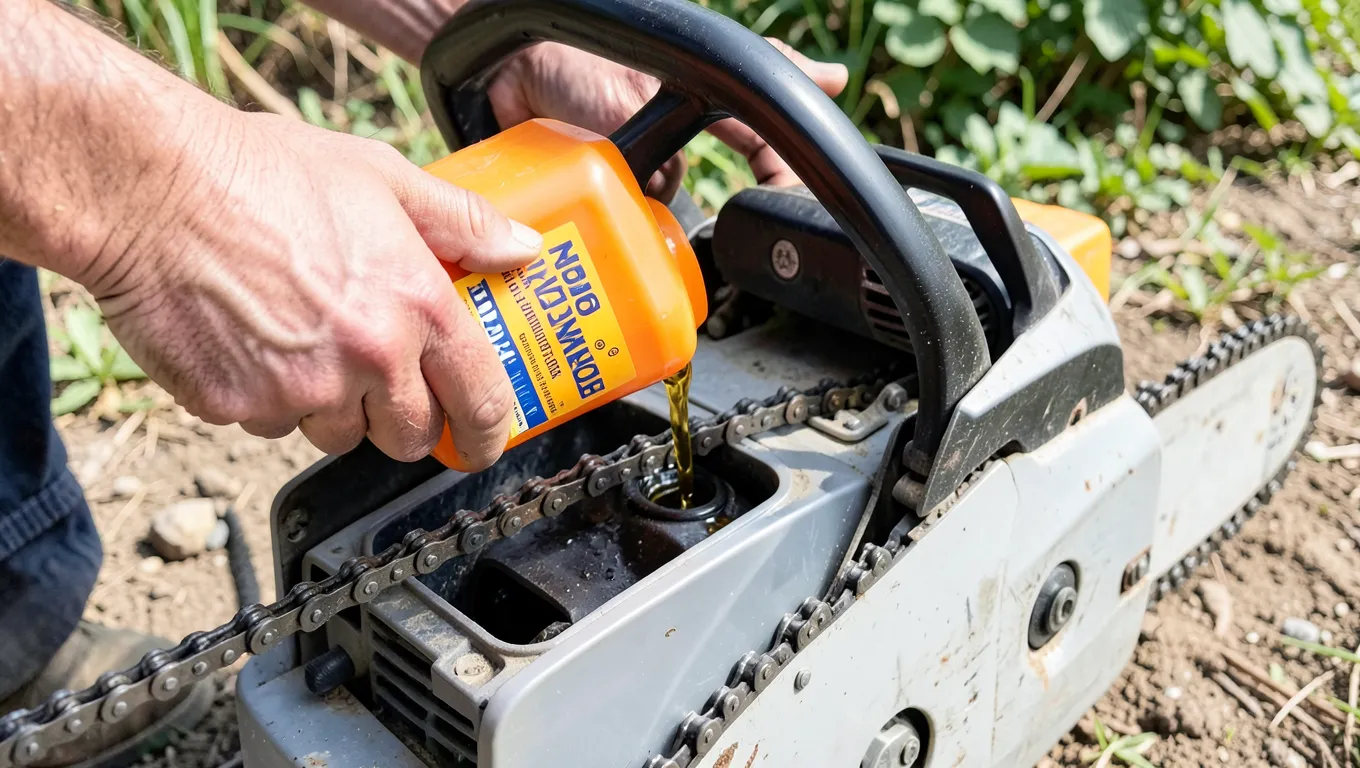
Run 10W40 in the oiler and the practical result is under-lubrication, not immediate failure. The bar rails and the drive link tangs that ride in the bar groove get less oil film than they need, so friction and heat both climb. You’ll typically notice it as a hotter-running bar after a few cuts, visibly faster bar-groove wear, and a chain that dulls quicker than normal because the cutting edge is spending more time rubbing dry against wood fibers instead of sliding on a lubricated chain. None of that happens instantly on a single cut, which is exactly why the substitution feels “fine” the first time someone tries it and only shows up as a real repair bill weeks later.
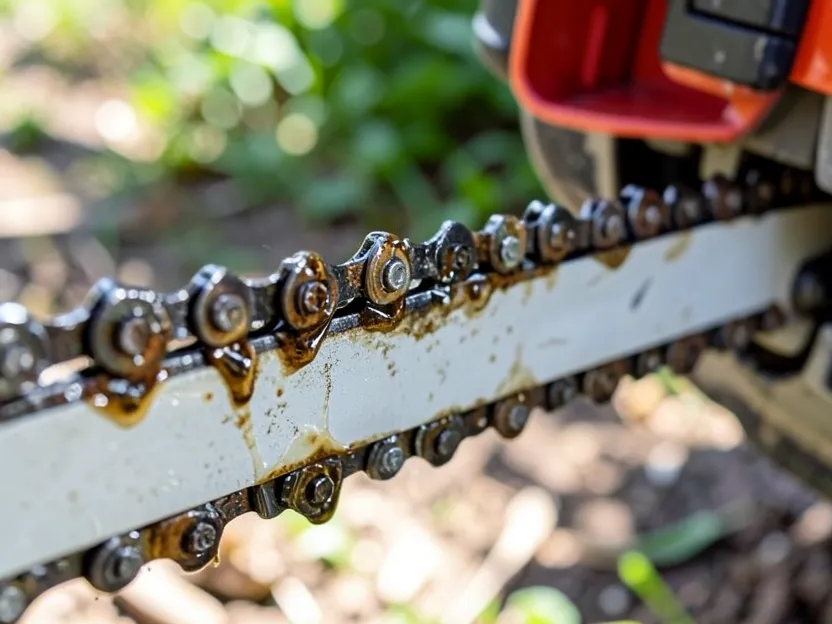
Never Use Used Motor Oil
This is the one substitution that goes from “not ideal” to genuinely bad. Used motor oil carries fine metal particles worn off engine bearings and cylinder walls, suspended in the oil rather than settled out. Pump that through a chainsaw’s oiler and you’re feeding an abrasive slurry directly into the bar groove and onto the drive sprocket – a fast way to grind out a bar groove and chew up a sprocket that would otherwise last for several chains. Used oil can also carry combustion acids and contaminants that used oil recyclers exist specifically to handle; it doesn’t belong sprayed onto sawdust and soil either, since bar oil is a total-loss lubricant that ends up in the environment by design.
What to Actually Run in an Emergency
If you’re out of bar oil mid-job, a few substitutes are genuinely better stopgaps than fresh 10W40, and none of them are a long-term plan:
- Vegetable or canola oil has some natural tackiness and is fully biodegradable, which is why it shows up as a legitimate low-impact bar oil for occasional or light-duty use, even though it breaks down faster under heat than a purpose-made oil.
- Fresh straight-30 or heavier motor oil is a better emergency fallback than 10W40 specifically because its higher, single-grade viscosity clings a little longer, though it still lacks tackifiers and will fling off faster than real bar oil.
- Old motor oil, hydraulic fluid, or transmission fluid are not acceptable substitutes under any circumstance – see the point above on metal contamination, and both hydraulic and transmission fluids are formulated for sealed, filtered systems, not an open total-loss oiler.
Treat any of these as a way to finish the cut you’re on, then switch back to real bar and chain oil before the next tank of gas.
Choosing Bar Oil by Season
Bar oil comes in seasonal viscosities for the same reason motor oil does: cold oil that’s too thick won’t flow through the oiler’s small passages, and hot oil that’s too thin flings off faster than it should. Most manufacturers sell a summer-weight oil, a winter-weight oil that stays pourable well below freezing, and an all-season blend rated for a wider range – matching the oil to your actual working temperature matters more with bar oil than most people expect, since an oiler that’s starved because the oil gummed up in cold weather causes the exact same dry-bar wear as skipping the oil altogether.
Frequently Asked Questions
Can I use new motor oil for chainsaw bar oil?
You can run it briefly in an emergency, but it lacks the tackifiers that keep real bar oil on a fast-moving chain, so expect faster bar and chain wear the longer you use it. Switch back to dedicated bar and chain oil as soon as you can.
Can I use old or used motor oil in a chainsaw?
No. Used motor oil carries suspended metal particles from engine wear that will grind the bar groove and damage the drive sprocket, on top of still lacking tackifiers. It’s one of the few chainsaw shortcuts that causes real, fast damage.
What’s a good substitute for chainsaw bar oil in a pinch?
Vegetable or canola oil is a genuinely usable, biodegradable stopgap for light use. Fresh straight-30 motor oil also works better than a multi-grade oil like 10W40 in an emergency, since its heavier single-grade viscosity clings a bit longer, though neither replaces real bar oil long-term.
Will 10W40 damage my chainsaw right away?
Not on a single cut. The damage from under-lubrication builds gradually as a hotter-running bar, faster bar-groove wear, and a chain that dulls sooner – it’s a cumulative problem, not an instant failure, which is exactly why the substitution feels harmless until the repair bill shows up.
Bottom Line
10W40 lacks the tackifiers that keep oil on a moving chain, so it under-lubricates the bar and chain even though it will technically flow through the oiler. Use it only to finish a cut in a genuine emergency, never use old motor oil under any circumstance, and switch back to a real bar and chain oil matched to your season before the next tank of gas.
Sponsored / affiliate links. As an Amazon Associate I earn from qualifying purchases. I may earn additional commission from eligible campaigns.