Are Chainsaws 2-Stroke? Mostly Yes, Plus the 4-MIX Exception
Most gas-powered chainsaws are 2-stroke, and they run on gasoline mixed with 2-stroke oil, usually at 50:1. The exceptions are electric and battery saws, which have no engine at all, and a few newer engine designs from Stihl and Husqvarna that bend the old 2-stroke versus 4-stroke split.
That last group is where the common answer goes wrong. “Chainsaws are 2-stroke” is a good rule of thumb, but it hides a fact that matters the day you fill the tank: a Stihl 4-MIX engine is a true 4-stroke that still burns mixed fuel, so the engine type on the label does not always tell you what goes in the can. This guide covers which saws are which, how the engine works, and exactly how much oil belongs in the gas.
Are Chainsaws 2-Stroke or 4-Stroke?
Best 2-Stroke Chainsaw Oil Pick
 |
STIHL HP Ultra 2-Cycle Engine Oil, 2.6 oz x 6: $24.99 If your saw is 2-stroke, it needs mixed fuel, and each 2.6 oz bottle is pre-measured for one gallon of gas at 50:1.
|
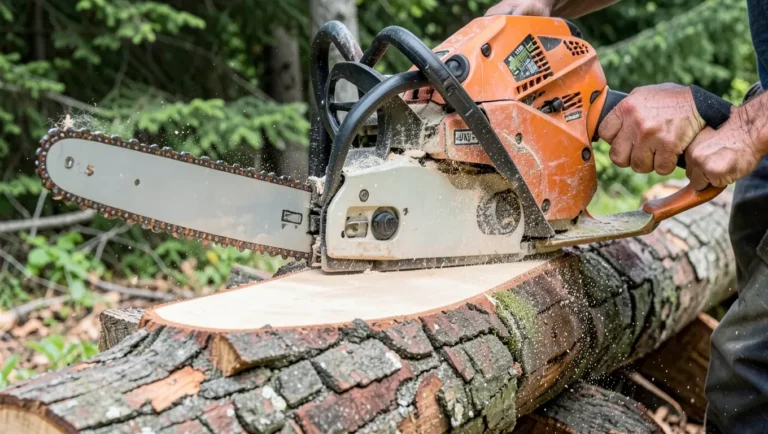
Gas chainsaws are overwhelmingly 2-stroke. A chainsaw has to run at any angle, including tilted over in a cut and held at arm’s length, so it cannot carry a separate oil sump the way a lawn mower does. Mixing the oil into the fuel solves that problem, and a 2-stroke engine is the simplest engine that runs on mixed fuel: it fires on every turn of the crankshaft, needs no valve train, and has very few moving parts for its output.
Here is how the saw types you will actually meet break down:
| Chainsaw type | Engine | What goes in the tank |
|---|---|---|
| Most gas saws (Stihl, Husqvarna and others) | 2-stroke | Gasoline plus 2-stroke oil, commonly 50:1 (some brands such as Poulan specify 40:1) |
| Husqvarna X-Torq models such as the 435 | 2-stroke | Same mixed fuel, 50:1 |
| Stihl 4-MIX engines | 4-stroke | Still 50:1 mixed fuel, no separate oil sump |
| Corded electric | Electric motor | Nothing (bar oil only) |
| Battery / cordless | Electric motor | Nothing (bar oil only) |
The Husqvarna 435 detail comes from its own product page, which lists a 2-stroke engine with oil “at 50:1,” and the Stihl detail comes from Stihl’s engine-technology page. Both are linked in the sources at the end of the article.
How a 2-Stroke Chainsaw Engine Works
A 4-stroke engine needs two full crankshaft turns to complete one power cycle: intake, compression, power, exhaust. A 2-stroke squeezes that into one turn. As the piston rises it compresses the mixture above it while drawing fresh mixture into the crankcase below, and as it drops after ignition it uncovers ports in the cylinder wall that let the exhaust out and the next charge in. The result is one power stroke per revolution, which is why a small 2-stroke can feel so much stronger than a 4-stroke of the same displacement.
The catch is lubrication. Because the crankcase is part of the fuel path, there is no room for a pool of engine oil down there, so the oil rides in with the fuel and coats the piston, rings and bearings as it passes through. That is the whole reason 2-stroke gas has to be mixed, and it is also why the wrong ratio is a serious problem: Stihl warns that unsuitable fuel or a wrong mix ratio can cause piston seizure and excessive wear. Chain and bar lubrication is a separate system with its own reservoir; see our guide to how to oil a chainsaw for that side.
The Exceptions: Stihl 4-MIX and Husqvarna X-Torq
Two engine designs complicate the simple split, and both matter if you are shopping for a newer saw or a related tool from the same brand.
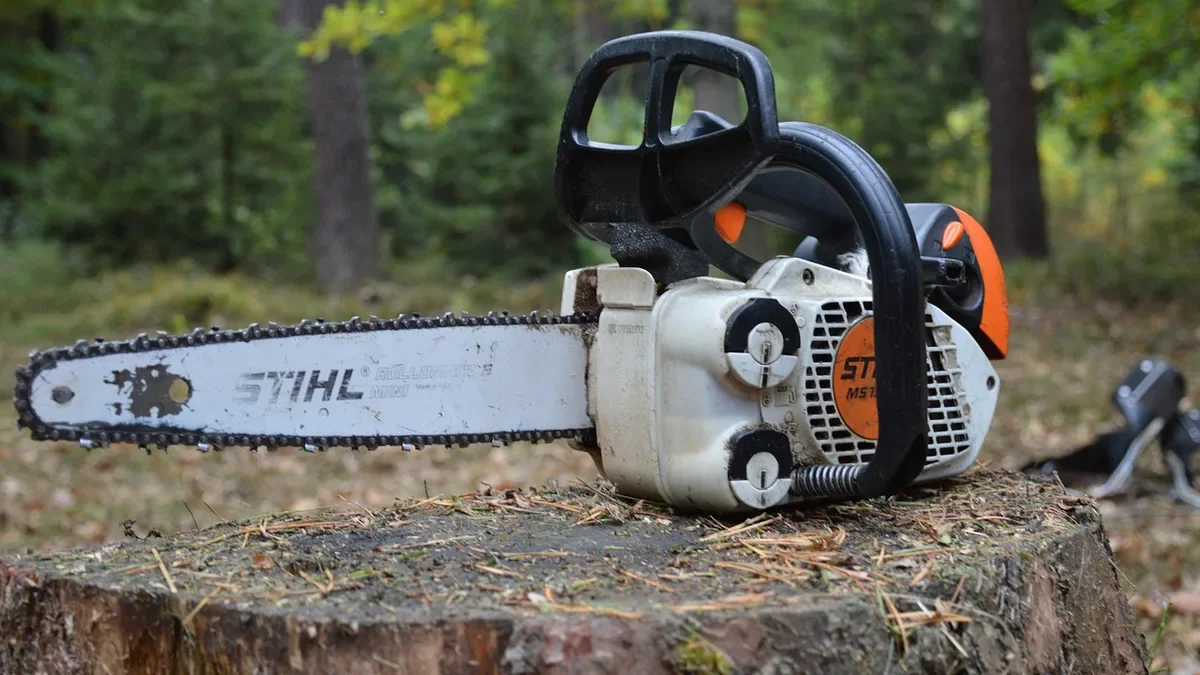
Stihl 4-MIX. Stihl describes it as a 4-stroke engine (intake, compression, combustion, exhaust) with a bypass channel that carries fuel mixture through the valve train and crankcase. Because the mixture does the lubricating, the engine needs no oil changes and works in any orientation, yet it runs on the same 50:1 petrol and oil mix as a 2-stroke. Stihl lists it in tools such as the FS 131 brushcutter and the KM 131 R KombiEngine. It is a 4-stroke that does not use 4-stroke fuel, which is the detail that catches people out, and pouring plain gas into it is the mistake to avoid.
Husqvarna X-Torq. This is still a 2-stroke and still takes 50:1 mixed fuel, but Husqvarna says the X-Torq design cuts emissions and fuel consumption compared with a conventional 2-stroke. The company does not publish percentages on the product pages we checked, so treat the claim as directional rather than measured. It does show why the old reputation of 2-strokes as smoky, thirsty engines is fading on newer saws.
The Fuel Mix a 2-Stroke Chainsaw Needs
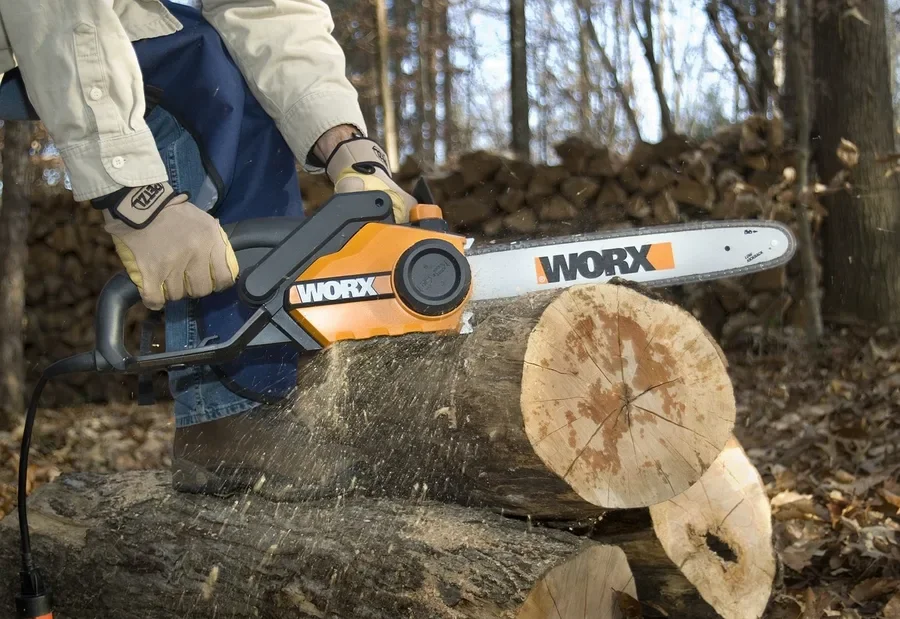
For the mainstream brands, the answer is 50:1, meaning 50 parts gasoline to 1 part oil, or 2% oil. Both Stihl and Husqvarna publish this ratio for their chainsaws, while our Poulan fuel ratio page lists 40:1 for Poulan saws. Here is what that looks like in the measuring cup:
| Ratio | Oil per 1 liter of gas | Oil per 1 US gallon of gas | Basis |
|---|---|---|---|
| 50:1 (Stihl, Husqvarna chainsaws) | 20 ml | about 76 ml (2.6 fl oz) | Stihl and Husqvarna guides |
| 40:1 (only if your manual says so) | 25 ml | about 95 ml (3.2 fl oz) | Arithmetic from the ratio |
Always follow the ratio printed in your own saw’s manual, because an older or off-brand saw may specify a richer mix. The 50:1 row is the published figure for the brands above, and the 40:1 row is simply the same math for a saw that calls for it. The 2.6 fl oz per gallon figure is also why the oil in the product box above comes in 2.6 oz bottles: one bottle equals one gallon at 50:1.
Fuel details worth knowing
Stihl’s guidance for its Canadian market gives a minimum of 90 RON octane and says E10 petrol (up to 10% ethanol) is acceptable in its tools. Check your manual for the octane figure that applies where you live. Self-mixed fuel should not sit for long: Stihl advises against storing it beyond 30 days and Husqvarna suggests mixing only about a month’s supply, while Stihl says its factory pre-mixed MotoMix keeps for up to 5 years. Use oil rated for 2-stroke engines, and shake the can before each refuel so the oil has not settled.
Three shortcuts look tempting and are all bad ideas: straight gas with no oil, automotive motor oil in place of 2-stroke oil (we explain the damage in can you use motor oil in a chainsaw), and bar-and-chain oil in the fuel tank. For brand-specific numbers, see our pages on the Poulan chainsaw fuel ratio and the Stihl pole saw gas and oil mix.
2-Stroke vs 4-Stroke vs Electric: What Changes for You
| Feature | 2-stroke gas saw | 4-MIX (Stihl) | Electric / battery |
|---|---|---|---|
| Fuel | Mixed gas and oil | Mixed gas and oil | None |
| Power stroke | Every revolution | Every second revolution | Not applicable |
| Separate engine oil to change | No | No | No |
| Works at any angle | Yes | Yes | Yes |
| Best for | Felling, firewood, long jobs away from power | Related Stihl tools such as brushcutters | Trimming, light cutting, quiet neighborhoods |
The right choice depends on the job, not on which engine sounds better on paper. A 2-stroke gas saw suits felling and heavy firewood work where you are far from an outlet, an electric saw suits light pruning and occasional cuts, and battery models sit in between. We compare those trade-offs directly in battery vs gas chainsaw, gas vs cordless chainsaw and are battery chainsaws any good.
Frequently Asked Questions
Are all chainsaws 2-stroke?
No. Most gas chainsaws are 2-stroke, but electric and battery chainsaws have no engine at all, and Stihl’s 4-MIX engine is a 4-stroke that appears in some of its tools.
Can I run a 2-stroke chainsaw on straight gas?
No. The oil in the fuel is what lubricates the piston and bearings, and Stihl warns that a wrong mix ratio can cause piston seizure and excessive wear. Mix gasoline and 2-stroke oil at the ratio in your manual, usually 50:1.
Is a Stihl 4-MIX engine a 2-stroke?
No, it is a 4-stroke, but it uses the same 50:1 petrol and oil mix as a 2-stroke rather than a separate oil sump.
What is the difference between 2-stroke oil and bar oil?
2-stroke oil is mixed into the fuel to lubricate the engine, while bar and chain oil goes in a separate reservoir to lubricate the chain. They are not interchangeable.
Conclusion
Yes, most chainsaws are 2-stroke, and the practical consequence is mixed fuel at the right ratio every time you refill. Check your manual first, and if you own a Stihl 4-MIX tool or a Husqvarna X-Torq saw, remember that the newer engine design does not change the fuel: it is still 50:1. Electric saws avoid the question completely, at the cost of runtime or a cord.
Sources: Stihl 4-MIX engine page, Stihl chainsaw fuel mix guide, Husqvarna two-stroke fuel mixing guide, Husqvarna 435 page.
Sponsored / affiliate links. As an Amazon Associate I earn from qualifying purchases. I may earn additional commission from eligible campaigns.
 52CC Gas Chainsaw, 20 Inch Gasoline Chainsaw, 2 Stroke Engine Gas Powered Chain Saw, for Wood Cutting, Light Felling, and LimbingTop Handle Gas Chainsaws, 20 Inch Bar Power Chain Saws, Cycle Gas Powered Chainsaw, Chainsaw 2 Stroke Handed Petrol Gasoline Chain with Tool Bag, Gas Chain Saw for Cutting Wood Pruning Branches(52cc)