Can Stain Go Bad? The Proven Dangerous Signs
Yes, wood stain can definitely go bad. Unopened stain can last for years, but once opened, its shelf life shortens to 1-3 years. Signs of bad stain include a thick or lumpy texture, a foul smell, or pigment that won’t mix. Using bad stain will ruin your project’s finish and waste your time.
You’re standing in your workshop, ready to start a new project. You find an old can of stain tucked away on a shelf. It looks like the perfect color! But before you dip your brush in, a question pops into your head: can this stuff even go bad? It’s a common moment for every DIYer, and the answer is important.
Worrying about old materials is normal. The good news is that it’s easy to tell if your stain is still good to go. I’m here to walk you through the clear, simple signs that your stain has expired. Together, we’ll make sure your project gets the beautiful, lasting finish it deserves. Let’s look at what you need to know.
Why Wood Stain Goes Bad in the First Place
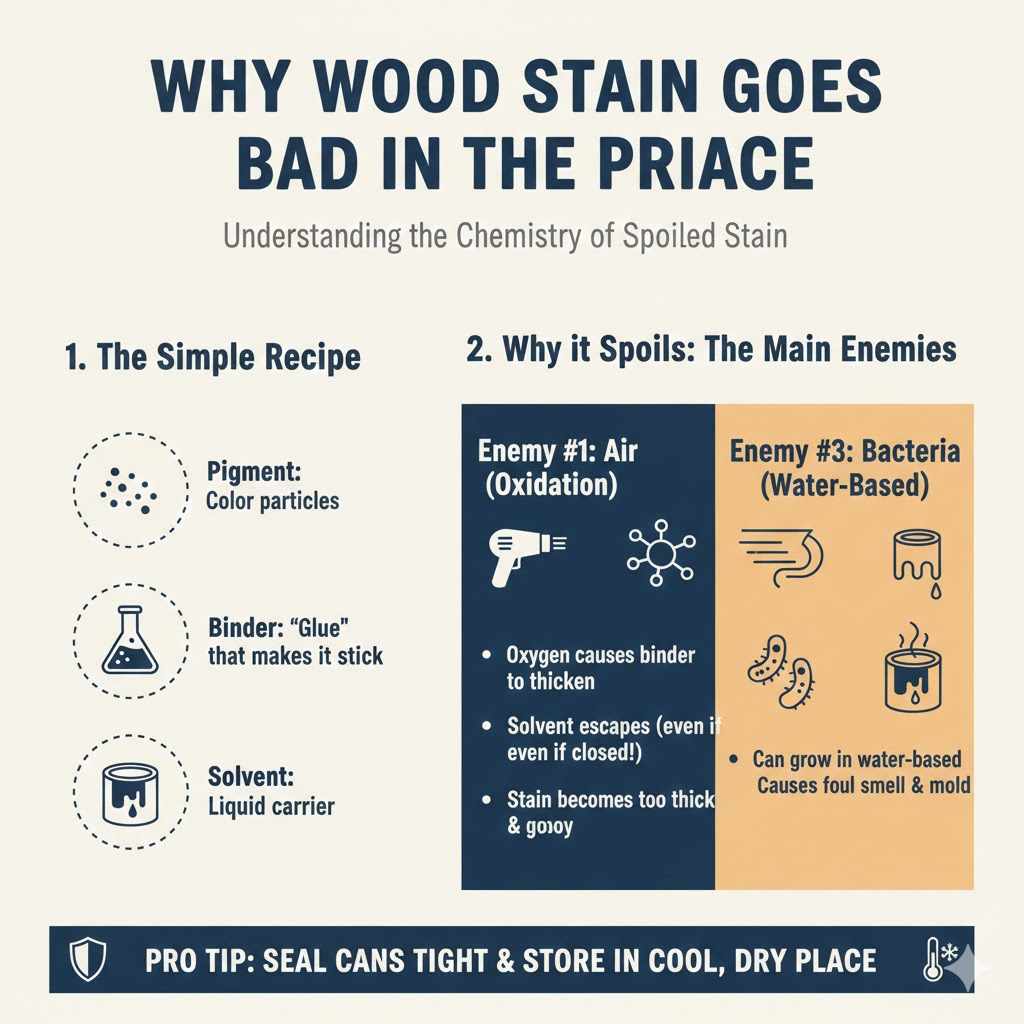
Before we dive into the warning signs, it helps to know a little about what’s happening inside that can. Think of wood stain as a simple recipe with three main ingredients: pigment, binder, and solvent. Each one plays a part in how stain works and, eventually, how it fails.
- Pigment: These are the tiny, solid particles that give the stain its beautiful color. They are heavier than the other parts, which is why they settle at the bottom of the can over time. This is normal!
- Binder: This is the “glue” that helps the pigment stick to the wood fibers once the stain dries. In oil-based stains, this is often a type of oil like linseed or tung oil.
- Solvent: This is the liquid that keeps everything mixed together, making the stain easy to apply. In oil-based stains, the solvent is usually mineral spirits. In water-based stains, it’s—you guessed it—water.
When stain goes bad, it’s because one or more of these ingredients have broken down or changed. The most common culprit is air. Once you open a can, oxygen gets in and starts a chemical reaction called oxidation. This can cause the binder to harden and the solvent to evaporate. Time and temperature changes also play a big role, leading to the problems we’re about to uncover.
The 5 Proven Signs Your Wood Stain Has Gone Bad
You don’t need to be a chemist to spot bad stain. Your senses—sight, smell, and even touch (with a stir stick!)—are all you need. Here are the five clearest signs that you should head to the store for a fresh can.
1. A Thick, Gummy, or Rubbery Texture
Fresh stain should have a smooth, thin consistency, similar to paint or milk. When you open the can and find that the stain has turned into a thick, syrupy goo or a rubbery gel, that’s a major red flag. This happens when the solvent has evaporated over time, leaving behind a concentrated, overly thick binder and pigment mix.
If you try to stir it and it feels like you’re mixing pudding or thick honey, it’s no good. This gummy texture prevents the stain from penetrating the wood grain properly. Instead of soaking in to create a rich, even color, it will sit on the surface, resulting in a sticky, blotchy mess that may never fully dry.
2. Pigment That Won’t Mix Back In
It’s completely normal for the pigments in stain to settle at the bottom of the can. A good, vigorous stir for a minute or two should bring it all back together into a smooth, uniformly colored liquid. However, if you’ve been stirring for several minutes and still feel a hard, gritty layer at the bottom that just won’t budge, your stain has expired.
This hardened cake of pigment is a sign that the binders have permanently fused the particles together. No amount of stirring will break them up. If you were to use this stain, you’d get a weakly colored finish with very little of the intended hue, as most of the color is stuck at the bottom of the can.
3. A Foul, Rancid Odor
Your nose is one of your best tools here. While fresh oil-based stain has a distinct chemical smell, it shouldn’t smell rotten. If you open a can and are hit with a sour, rancid, or musty odor—similar to old cooking oil or spoiled paint—it’s a clear sign of trouble.
This foul smell is often caused by bacteria breaking down the organic oils in the binder. This is especially common in older oil-based stains. Using a stain that smells like this is risky; not only will the unpleasant odor linger on your project, but the chemical breakdown means the binder can no longer do its job effectively.
4. Visible Mold, Mildew, or Slimy Growth
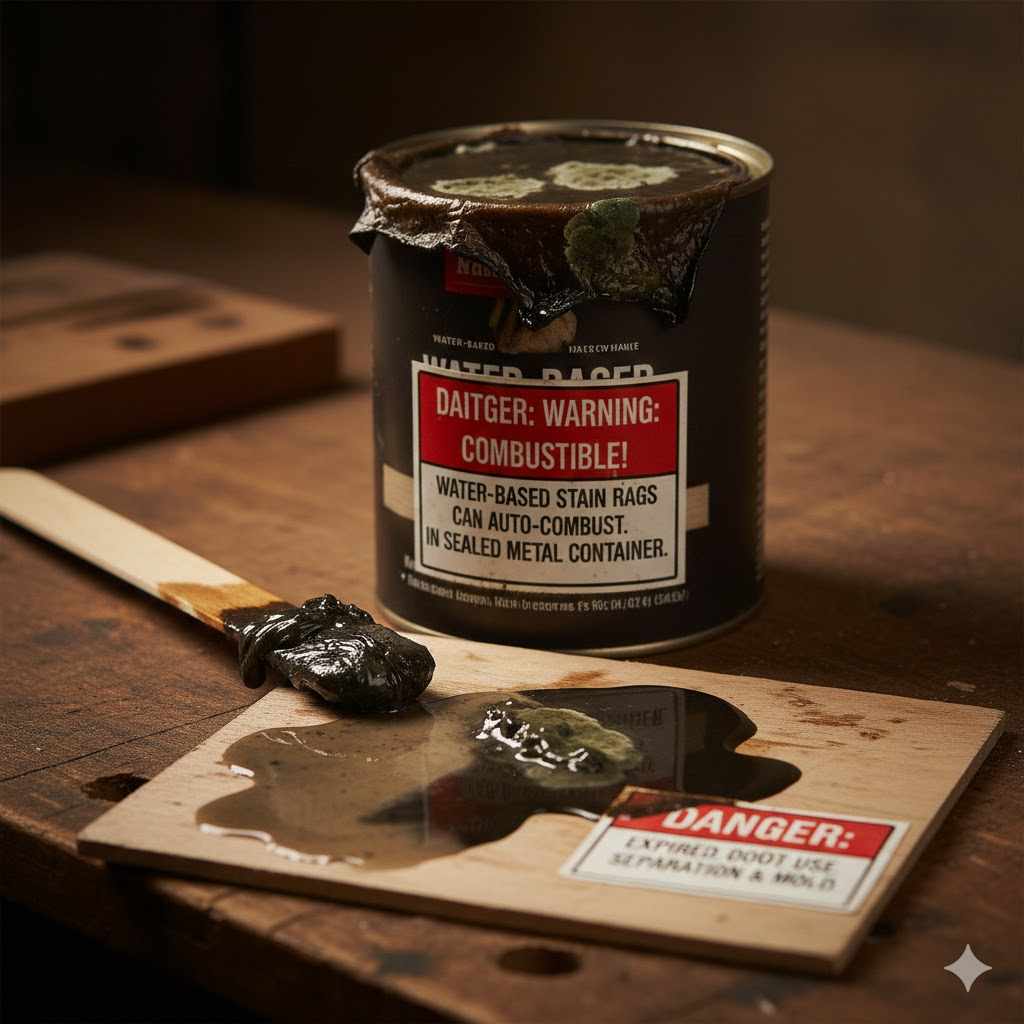
This is the most dangerous sign, and it’s most common in water-based stains. If you open the can and see fuzzy spots, slimy strands, or any type of visible growth on the surface or along the inside of the lid, the stain is contaminated. Close the can immediately and prepare to dispose of it safely.
Mold and mildew thrive in the water present in water-based formulas. According to the U.S. Environmental Protection Agency (EPA), mold can cause a range of health issues. Applying a mold-infested stain to your furniture or floors can introduce these spores into your home. The finish will also be compromised, likely failing and peeling over time. Never take a chance with moldy stain.
5. A Hard, Permanent “Skin” on Top
When you open an older can of oil-based stain, you might find a thin, leathery “skin” on the surface. This is caused by oxidation—the stain reacting with the air in the can. If you can easily remove the skin in one or two pieces and the liquid underneath stirs up smoothly, the stain might still be usable.
However, if the skin is thick, hard, and breaks into little rubbery chunks when you try to stir it, the stain is too far gone. These solid bits will get mixed into the stain and end up in your finish, creating a gritty, uneven texture. It’s impossible to strain all of them out, and trying to do so isn’t worth the frustrating results you’ll get on your wood.
Quick Reference: Bad Stain Warning Signs
Sometimes you just need a quick cheat sheet. Use this table to check your old can of stain at a glance.
| Warning Sign | What It Looks/Smells Like | What It Means for Your Project |
|---|---|---|
| Thick & Gummy | Like honey, pudding, or jelly. It’s hard to stir. | Stain won’t penetrate the wood. Creates a sticky, blotchy, uneven finish that won’t dry. |
| Hard Pigment | A gritty, hard layer at the bottom that can’t be stirred back in. | The color is trapped. The finish will be weak, translucent, and not the right hue. |
| Foul Smell | Rancid, sour, or musty odor (like spoiled oil). | The binder has broken down. The finish may not dry properly and will smell bad. |
| Mold or Mildew | Fuzzy spots, slimy texture, or visible growth. | Health hazard. Introduces mold spores to your project and home. The finish will fail. |
| Hard, Crumbly Skin | A thick skin on top that shatters into small bits when stirred. | Solid chunks will get in the finish, creating a gritty, rough surface. |
How to Store Wood Stain to Make It Last Longer
The best way to avoid dealing with bad stain is to store it properly in the first place. A few simple steps can add years to the life of your stain, saving you money and frustration. Here’s how you can give your stain the best chance of survival:
- Clean the Rim: Before you close the can, use a clean cloth to wipe all the stain out of the groove on the rim. Any stain left in the channel will dry and prevent the lid from forming a perfect, airtight seal.
- Seal It Tightly: Place the lid back on the can. To seal it without damaging the lid, put a small block of scrap wood on top and tap it gently with a hammer, moving around the edge until the lid is fully seated. Don’t use the hammer directly on the lid, as it will dent it and ruin the seal.
- Store It Upside Down (A Smart Trick for Oil-Based Stains): For oil-based stains, briefly turn the sealed can upside down. The thick stain will flow towards the lid, creating an airtight seal from the inside and preventing a skin from forming on the surface. Flip it back over before long-term storage. Do not do this with water-based stains, as they can sometimes leak.
- Find a Cool, Dry Place: Store your stain in a location that is protected from extreme temperatures. A garage or basement shelf is often ideal, but avoid any place that freezes in the winter or gets incredibly hot in the summer. Constant temperature fluctuations will speed up the aging process.
- Downsize to a Smaller Container: Air is the enemy of stain. If you’ve used about half of the stain in a can, consider pouring the rest into a smaller, clean glass jar with a tight-fitting metal lid. This reduces the amount of air trapped inside, significantly slowing down oxidation. Be sure to label the new container clearly!
Can You Revive Old Stain? And More Importantly, Should You?
So you have a can of stain that’s a little thick but not quite a solid brick. You might be tempted to “revive” it. For oil-based stains, people sometimes add a small amount of mineral spirits or paint thinner to thin it out. For water-based stains, a little water can be added.
While this can sometimes make the stain spreadable again, I almost never recommend it. You’re not fixing the underlying problem; you’re just diluting it. The binder may have already started to break down, and thinning the stain weakens both its color and its ability to protect the wood. You are performing a science experiment with your beautiful project as the test subject.
Is it worth the risk? Let’s break it down.
| Attempting to Revive Old Stain | The Pros & Cons |
|---|---|
| Pros |
|
| Cons |
|
When you consider all the time and effort you’ve put into preparing your wood—sanding it smooth and getting it ready—is it really worth gambling on a questionable can of stain? A new can is a small investment that guarantees a predictable, beautiful, and durable result. In my workshop, the answer is always no. Start fresh and give your project the quality finish it deserves.
The Dangers of Using Bad Wood Stain on Your Project
Using expired stain isn’t just a small mistake; it can lead to a chain reaction of frustrating problems that ruin your hard work.
- A Terrible Finish: This is the most immediate problem. Bad stain leads to blotches, streaks, and an inconsistent color. Instead of enhancing the wood grain, it will obscure it with an ugly, unprofessional-looking coat.
- Endless Drying Times: When the binders in stain break down, the stain loses its ability to cure properly. You might be left with a sticky or tacky surface for days, or even weeks. This sticky surface attracts dust, pet hair, and debris, ruining the finish further.
- Wasted Time and Money: Think about the hours you spent selecting your wood, cutting your pieces, and sanding everything perfectly. Applying bad stain means you’ll have to spend even more time stripping it all off to start over. The cost of a new can of stain is tiny compared to the value of your time.
- Damage to the Wood: In a worst-case scenario, a gummy, non-drying stain can be incredibly difficult to remove. You may have to sand so aggressively that you damage the wood itself, forcing you to recut the piece or live with a flawed surface.
How to Safely Dispose of Old or Expired Stain
Once you’ve identified a can of stain as bad, you can’t just toss it in the household trash. Both oil-based and water-based stains are considered household hazardous waste (HHW) because their chemicals can harm the environment if they end up in a landfill.
Here’s the right way to handle it:
- Do Not Pour it Down the Drain: Never pour stain down a sink or into a storm drain. It can contaminate groundwater and local waterways.
- Find a Local HHW Collection Site: The best and safest option is to take it to a designated hazardous waste facility. Most communities have collection sites or special collection days for residents. To find yours, a great place to start is your local government’s website or by searching on sites like Earth911 or the EPA’s HHW page.
- Dry It Out (for Latex/Water-Based ONLY in Some Areas): Some municipalities allow you to dispose of water-based (latex) products in the regular trash only if they are completely dried out and solid. To do this, open the can in a well-ventilated area away from children and pets. Add cat litter or a commercial paint hardener to speed up the process. Once it’s a solid block, you may be able to dispose of it with the lid off. Always check your local regulations first, as this is not permitted everywhere.
Oil-based stains are flammable and must almost always be taken to an HHW facility. Safety first! It protects you, your family, and your community.
Frequently Asked Questions About Wood Stain
How long does unopened wood stain last?
An unopened can of wood stain can last a long time if stored correctly. Unopened oil-based stains can last for 3 to 5 years, while unopened water-based stains have a slightly shorter shelf life of 2 to 3 years. Keeping it in a stable, room-temperature environment is key.
Can I use a stain that has a little skin on top?
If it’s a very thin, flexible skin on an oil-based stain, you can often carefully remove it in one piece with a stir stick. If the liquid underneath stirs up smoothly and has a normal consistency, it’s probably okay to use. However, if the skin is thick or breaks into little bits, it’s best to discard the can.
What’s the difference between expired oil-based and water-based stain?
Expired oil-based stain often becomes thick and gelatinous, develops a hard skin, or smells rancid. Expired water-based stain is more prone to separating completely, smelling foul from bacterial growth, or developing mold and mildew due to the water content.
Does stain color change when it goes bad?
Yes, it can. When the pigments and binders break down, the color can appear weaker or duller than intended. Since bad stain doesn’t penetrate the wood correctly, the final color on your project will look washed out, blotchy, and not at all like the sample on the can.
Why does my old stain feel gritty?
A gritty texture is usually caused by two things. Either the pigments have permanently hardened at the bottom of the can and won’t mix back in, or a skin on the top has broken up into tiny solid particles. In either case, this grit will end up on your project, creating a rough, sandpaper-like finish.
Is it safe to smell old stain to check it?
You can briefly and carefully smell the stain to check for a rancid or foul odor. Don’t take a big, deep sniff directly from the can. Instead, just waft some of the air from the opening toward your nose. If you detect a strong chemical smell, that’s normal; if it smells sour, rotten, or musty, that’s a bad sign.
Can freezing ruin wood stain?
Yes, freezing is especially bad for water-based stains. The water in the formula can freeze and separate from the binders and pigments, permanently ruining the stain’s consistency. While oil-based stains handle cold better, repeated freeze-thaw cycles can still damage them. It’s best to store all stains in a climate-controlled space.
Your Project Deserves a Fresh Start
There you have it. Checking an old can of stain is a quick, easy step that can save you from a world of frustration. It may be tempting to try and save a few bucks by using what you have, but a beautiful, long-lasting finish is the grand finale of all your hard work. It’s the part everyone sees and admires.
When you’re in doubt, always trust your senses. If it looks wrong, smells bad, or feels lumpy, it’s not worth the risk. A fresh can of stain is an investment in your project’s success and your own peace of mind. Now you can move forward with confidence, knowing your project will get the stunning finish it was meant to have. Happy woodworking!