Can You Spray Paint Inside Safely?
Many folks wonder, Can You Spray Paint Inside Safely? It’s a common question, especially for DIYers or anyone wanting to paint a small item indoors. The worry comes from the fumes and mess. Beginners often feel unsure about how to protect themselves and their space.
This guide will make it simple. We’ll walk through easy steps so you can paint indoors with confidence. Get ready to learn how to do it right.
Is Spray Painting Indoors Possible
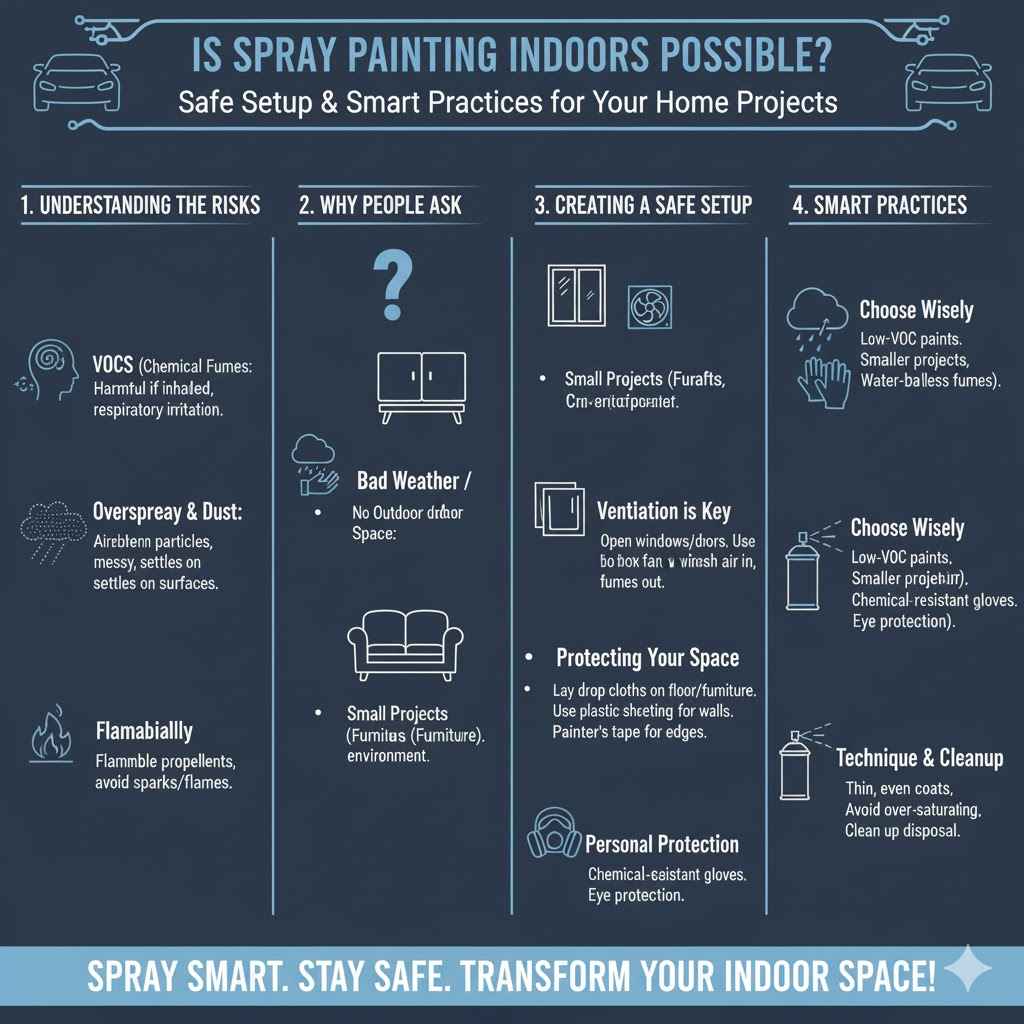
Spray painting indoors might seem tricky, but it’s definitely doable with the right approach. The main concerns are airborne paint particles, harmful fumes, and protecting surfaces from overspray. Without proper precautions, you can end up with a messy room and lingering chemical smells.
This section breaks down why it’s a common query and sets the stage for safe painting.
Understanding the Risks
Spray paint releases volatile organic compounds, or VOCs. These are chemicals that can be harmful if inhaled in large amounts. They can cause headaches, dizziness, and respiratory irritation.
Long-term exposure to high levels of VOCs can lead to more serious health issues. This is why ventilation is key.
Another risk is overspray. Paint can get everywhere if you’re not careful. This means dust and paint particles can settle on furniture, floors, and walls that you don’t intend to paint.
Cleaning this up can be a big chore.
Flammability is also a concern. Many spray paints contain flammable propellants. This means you need to be cautious around open flames or sparks.
It’s important to know these risks so you can prepare adequately.
Why People Ask Can You Spray Paint Inside Safely
People ask Can You Spray Paint Inside Safely? because they want the convenience of not having to go outside. Sometimes the weather is bad, or there’s no suitable outdoor space. They might be working on a small project, like a piece of furniture or craft item, and prefer to do it in a controlled environment.
The desire to paint indoors stems from wanting to complete projects quickly or when outdoor conditions aren’t ideal. It’s about adapting to limitations and finding practical solutions for creative endeavors. However, the potential health and mess concerns are very real for anyone considering it.
Setting Expectations for Indoor Painting
It’s important to understand that “safely” means minimizing risks, not eliminating them entirely. You can spray paint indoors safely if you take the right steps. This includes choosing the right paint, ventilating well, and protecting your surroundings.
It requires a bit of preparation, but the results are worth it.
The goal is to make the process as clean and healthy as possible. This guide will focus on practical ways to achieve this. We will cover everything from choosing your workspace to cleaning up afterward.
You’ll feel confident in tackling your indoor spray painting projects.
Preparing Your Indoor Space For Spray Painting
Getting your space ready is the most crucial step to spray painting inside safely. A well-prepared area prevents paint from going where you don’t want it and helps manage fumes. This section covers how to choose the right spot, protect surfaces, and set up for a smooth painting session.
Choosing the Right Location
For indoor spray painting, pick a well-ventilated area. A garage with an open door is often ideal. If you must paint in a room, open windows and doors to create cross-ventilation.
Avoid painting in small, enclosed spaces where fumes can build up quickly.
Consider the floor. It’s best to paint in an area that’s easy to clean, like a concrete floor in a garage or a room with linoleum. If you’re painting in a room with carpet or wood floors, you’ll need to protect them very well.
Think about your project. If it’s a small item, you might be able to paint it on a table. For larger items, you’ll need more floor space.
Ensure there’s enough room to move around the item comfortably while you paint.
Protecting Surfaces From Overspray
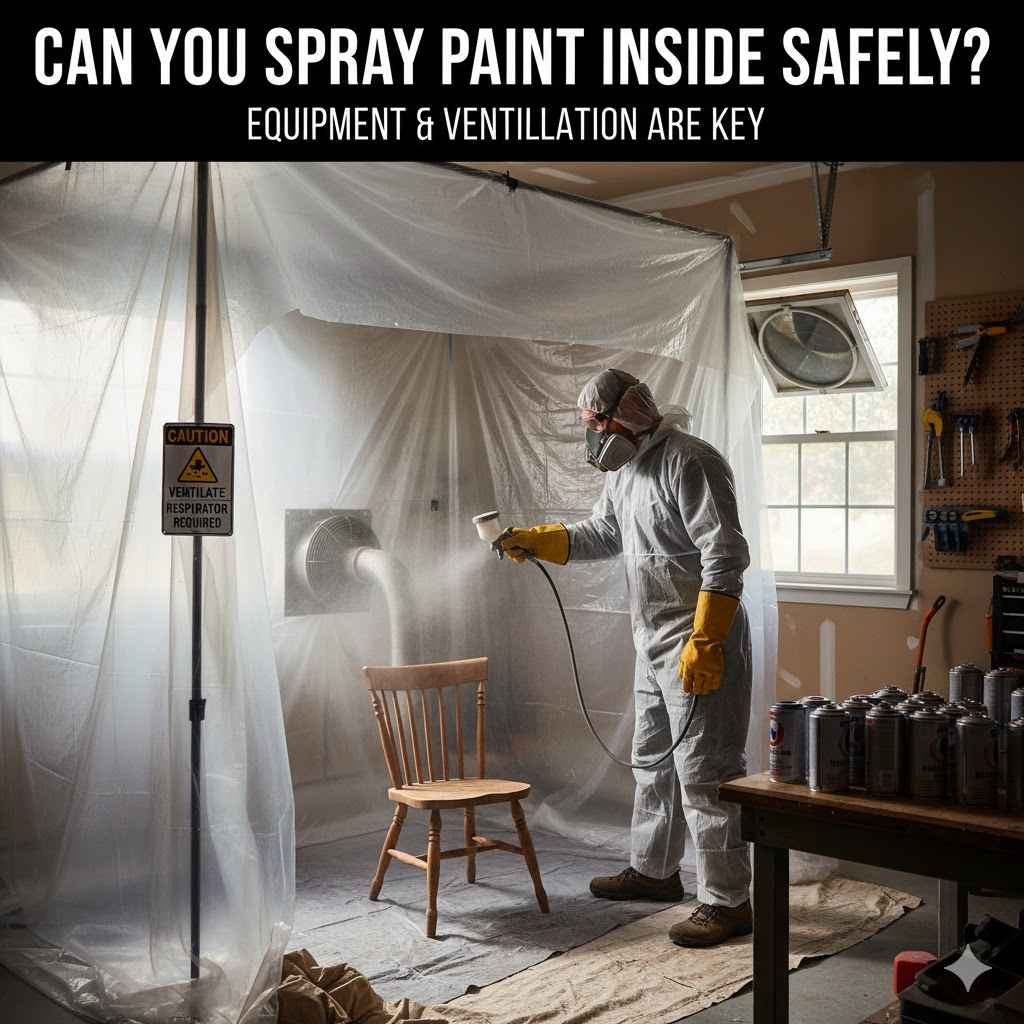
Overspray is the fine mist of paint that hangs in the air and settles on surfaces. To prevent this, you need to cover everything you don’t want painted. Use drop cloths made of canvas or thick plastic for floors and furniture.
For walls and larger areas, consider using painter’s plastic sheeting. You can tape it to the edges of windows, doors, and baseboards. Make sure the plastic is secured well so it doesn’t shift.
Smaller items you want to protect can be covered with old newspapers or brown paper. Tape the paper securely around the edges. The goal is to create a barrier that the paint mist cannot penetrate.
Setting Up Ventilation
Good ventilation is key to breathing easier and reducing the buildup of paint fumes. Open windows on opposite sides of the room to create airflow. If you have fans, use them to push the air out of the windows.
Box fans are great for this.
You can also use an exhaust fan to pull fumes directly out of the room. Place the fan in a window, facing outward. This helps remove the paint-laden air from your workspace.
If you’re painting in a garage, open the main door. If it’s a smaller garage, consider opening a side door or window as well. Even with ventilation, it’s still important to wear a respirator.
Workspace Setup Best Practices
Arrange your workspace so you can easily move around the item you’re painting. Ensure there’s enough light to see what you’re doing clearly. A well-lit space helps you apply paint evenly.
Hang items to paint if possible. This allows you to spray all sides without touching a wet surface. You can use string or wire to hang smaller objects from the ceiling or a sturdy support.
Keep your spray paint can at the recommended distance, usually 10-12 inches from the surface. Practice your spray motion on cardboard before painting your actual item. This helps you get a feel for the can’s spray pattern.
Safety Gear for Spray Painting Indoors
When you spray paint indoors, your personal safety is paramount. The fumes and particles can affect your health. Using the right safety gear ensures you can breathe easy and protect yourself from potential irritation.
This section details the essential protective equipment you should always use.
Respiratory Protection
Wearing a respirator is non-negotiable for spray painting indoors. A simple dust mask won’t do. You need a respirator designed to filter out organic vapors and paint particles.
Look for one with an N95 rating or higher, and one that specifies protection against organic vapors.
A good respirator will fit snugly against your face. Make sure there are no gaps around the edges, as this is where harmful fumes can enter. You can test the fit by breathing in; if you feel air leaking, adjust the straps or try a different mask.
The type of filter you need depends on the type of paint. For solvent-based paints, you’ll need cartridges specifically for organic vapors. Water-based paints still produce aerosols and some VOCs, so a respirator is still necessary.
Eye Protection
Paint can easily get into your eyes, causing irritation or injury. Always wear safety glasses or goggles. Goggles offer a tighter seal around the eyes, which is better for protecting against fine mist and airborne particles.
Choose glasses that are impact-resistant. This protects your eyes not only from paint but also from any accidental bumps or debris in your workspace. Make sure they fit comfortably and don’t fog up easily.
Some people prefer to use a full face shield in addition to safety glasses for maximum protection. This provides an extra layer of defense against stray paint splatters.
Gloves and Protective Clothing
Your skin can also be affected by spray paint. Wear disposable nitrile gloves to protect your hands. Nitrile gloves are resistant to most solvents and paints, and they prevent paint from getting under your fingernails.
Wear old clothes that you don’t mind getting paint on. Overalls or a dedicated painting suit are even better. These cover more of your body and prevent paint from soaking through to your regular clothes.
Consider covering your hair with a hat or a bandana. This keeps paint out of your hair, which can be difficult to wash out. A painter’s cap that covers your whole head is a good option.
Importance of a Respirator Fit Test
Even with the best respirator, it’s useless if it doesn’t fit correctly. A proper fit test ensures that no harmful fumes or particles can bypass the mask. Many safety equipment suppliers offer fit testing services.
You can do a simple seal check yourself. After putting on the respirator and tightening the straps, cover the respirator with your hands and try to inhale. If you feel air being drawn in around the edges, it’s not sealed properly.
Adjust the straps and try again.
A good seal is crucial for effective protection. If you experience any eye irritation or smell paint fumes while wearing your respirator, it’s likely not sealed correctly, or the filters may be old and need replacing.
Choosing the Right Spray Paint and Products
The type of spray paint you choose can make a difference in how safely you can paint indoors. Some paints are formulated to have lower VOCs or less odor. This section explores paint options and other helpful products that can enhance your indoor spray painting experience.
Low-VOC and Water-Based Paints
When painting indoors, opt for spray paints labeled “low-VOC” or “water-based.” Low-VOC paints release fewer harmful fumes into the air, making them a safer choice. Water-based paints are generally easier to clean up and have less of a strong chemical odor.
While water-based paints are better for indoor use, they may not always offer the same durability or finish as solvent-based paints. Check the product description to ensure it meets your project’s needs. For many DIY projects, they are perfectly suitable.
Even with these options, proper ventilation and safety gear are still essential. “Low-VOC” doesn’t mean “no-VOC,” and all spray paints produce aerosols.
Spray Paint Brands and Types
There are many brands of spray paint available, each with different formulations. Some brands specifically market their paints for indoor use with reduced odor. Researching reviews for different brands can help you find a product that works well for your needs.
Consider the finish you want. Spray paints come in a wide range of finishes, from matte to high gloss. Some specialty paints, like metallic or textured finishes, might have different ventilation requirements.
Always read the instructions and safety warnings on the spray paint can before you buy and use it. This will give you specific information about the product’s safety precautions.
Spray Paint Alternatives
If you’re very concerned about fumes, consider alternatives to traditional spray cans. Paint sprayers, like HVLP (High Volume Low Pressure) sprayers, can be used indoors. These use a different application method and can sometimes offer better control and less overspray, though they still require ventilation and safety gear.
Another option is using paint rollers or brushes. For many projects, these traditional methods can achieve excellent results and eliminate the concerns associated with spray paint fumes altogether. However, they don’t offer the same speed or even coverage for intricate items.
For very small craft projects, some people use airbrush kits. These use compressed air to spray paint and offer precise control, but they still require proper ventilation and protective gear.
Ventilation Aids and Odor Control
Some products are designed to help with indoor air quality during painting. You can buy activated charcoal filters that can be placed in the room to absorb odors and VOCs. Air purifiers with carbon filters can also help clean the air.
Deodorizers or odor absorbers can mask some of the smell, but they don’t remove the harmful VOCs. It’s important to remember that masking the smell is not the same as making the air safe to breathe.
Ventilation fans, as mentioned earlier, are key. Using a fan to push air out of a window is one of the most effective ways to clear out fumes. Combining fans with open windows creates excellent airflow.
Techniques for Safe and Effective Indoor Spraying
Mastering spray painting techniques is essential for achieving a good finish and minimizing mess. When painting indoors, these techniques become even more important for your safety and the cleanliness of your home. This section offers tips on how to spray paint effectively while keeping safety in mind.
Proper Spraying Motion
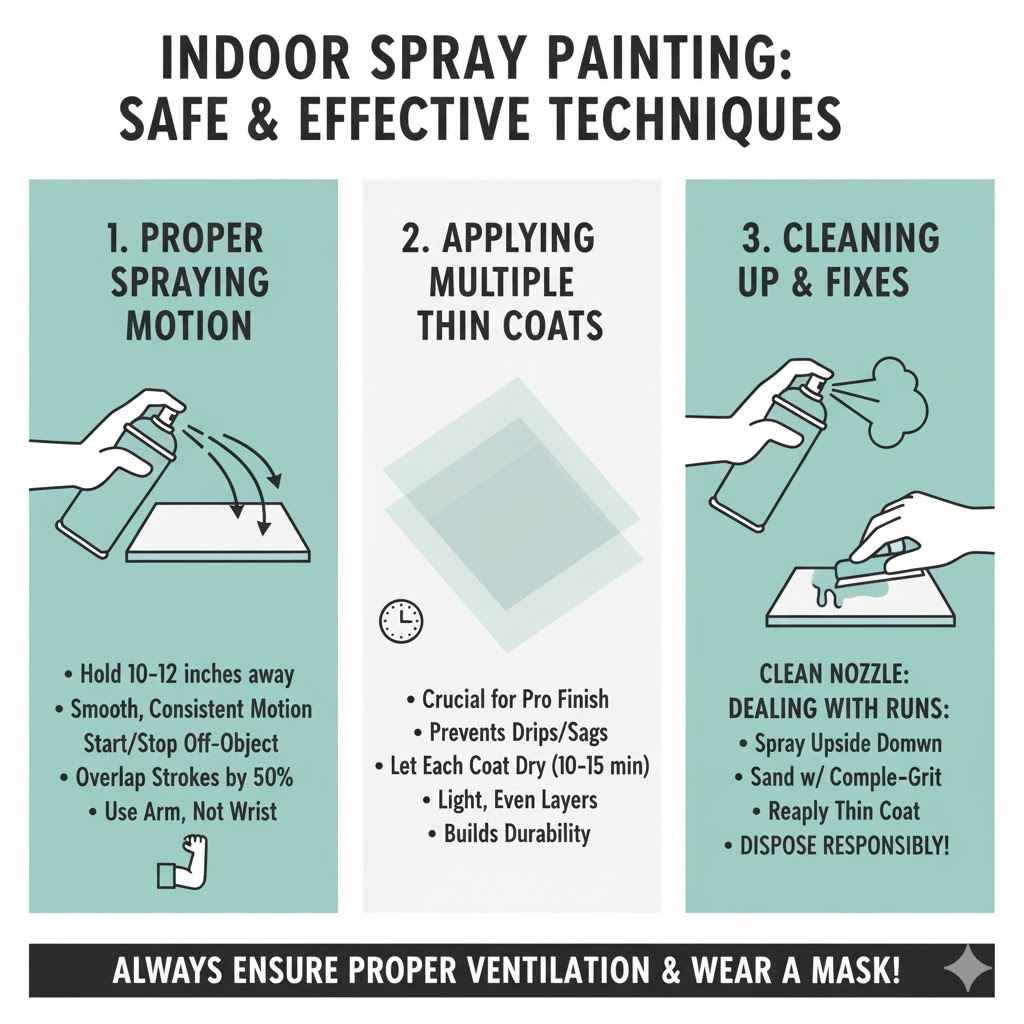
To get an even coat without drips or splotches, use a smooth, consistent motion. Hold the can about 10-12 inches away from the surface. Start spraying before you reach the object and continue spraying past it.
This prevents thick build-up at the beginning and end of your stroke.
Move your arm, not just your wrist, in a steady, sweeping motion. Overlap each stroke by about 50 percent. This ensures full coverage and a uniform finish.
Apply thin coats rather than one thick coat. Several thin coats build up a better finish and reduce the chance of runs.
Maintain the same distance and speed for each pass. Inconsistent application is a common mistake that leads to uneven coverage. Practice on scrap material to get the feel of it before painting your project.
Applying Multiple Thin Coats
This is one of the most important techniques for a professional-looking finish. Instead of trying to cover the entire surface in one go, apply several light coats. This allows each coat to dry partially, creating a smooth and durable finish without drips.
Let each coat dry for the time recommended on the can, which is usually 10-15 minutes. For best results, wait longer between coats, especially if the humidity is high. This helps prevent runs and ensures good adhesion between layers.
Each coat should be light and even. You might still see the original surface through the first few coats, and that’s okay. The paint will build up with subsequent applications.
This method is much better than applying one heavy coat that can sag or drip.
Dealing with Runs and Sags
If you notice a run or sag in the paint, don’t try to wipe it off immediately while the paint is wet. This will likely make a mess. Instead, let the paint dry completely.
Once dry, you can gently sand down the run with fine-grit sandpaper (220 grit or higher). Be careful not to sand too deeply into the surrounding paint. After sanding, wipe away the dust and apply another thin coat of paint to the area.
Runs often happen when the paint is applied too thickly, the can is held too close, or the spray motion is too slow. Practicing your technique helps avoid these issues.
Cleaning Up After Spray Painting
Cleaning up properly is just as important as preparing your space. Once you’re finished painting, clean your spray nozzle immediately. Turn the can upside down and spray until only clear propellant comes out.
This prevents the nozzle from clogging.
If paint has gotten on surfaces you didn’t intend, clean it up while it’s still wet with the appropriate cleaner. For latex-based paints, soap and water usually work. For oil-based paints, you might need mineral spirits or a specialized paint thinner.
Dispose of used drop cloths, tape, and empty cans responsibly. Many spray paint cans contain hazardous materials and should not be thrown in regular trash. Check with your local waste disposal services for proper disposal methods.
Frequently Asked Questions
Question: Can I spray paint a small item like a picture frame indoors
Answer: Yes, you can spray paint small items like picture frames indoors. Make sure to protect the surrounding area with drop cloths and ensure good ventilation by opening windows or using a fan. Always wear a respirator and eye protection.
Question: How long should I ventilate a room after spray painting
Answer: You should ventilate the room for at least 24-48 hours after spray painting, or until the odor is completely gone. The longer the ventilation, the better it is for air quality and removing residual fumes.
Question: Is it safe to spray paint in a bathroom
Answer: Painting in a bathroom can be risky due to the typically small size and limited ventilation. If you must, open windows and doors, use fans to create airflow, and wear full protective gear. It’s not ideal for minimizing fume exposure.
Question: What is the best type of respirator for spray painting
Answer: The best respirator for spray painting is one designed for organic vapors and particulates, often rated N95 or higher. It should fit snugly against your face to create a proper seal, preventing fumes from entering.
Question: Can I spray paint furniture inside my living room
Answer: Spray painting furniture inside a living room requires careful preparation. Cover everything with drop cloths and plastic sheeting. Ensure strong ventilation, ideally by opening windows and using fans to create cross-breeze.
Always wear a respirator, goggles, and old clothes.
Conclusion
Yes, you can spray paint inside safely by taking smart precautions. Proper ventilation, protective gear like a respirator and goggles, and covering your workspace are key. Choosing low-VOC or water-based paints can also help.
Following these steps ensures a better experience and results for your indoor painting projects.