Will a Pressure Washer Remove Paint From Concrete? (PSI Guide)
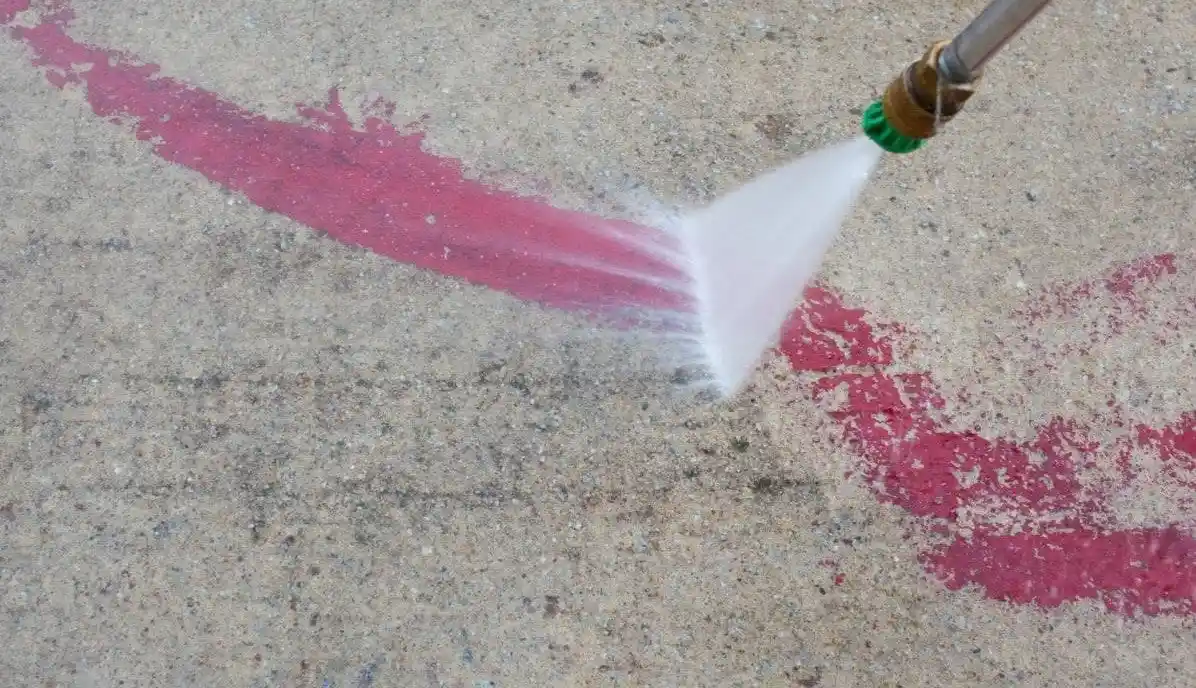
A pressure washer removes paint from concrete only when you use at least 3,000 PSI and 4 GPM — anything weaker just rinses the surface and leaves the paint intact. Go too high, though, and you can pit or crack the slab instead of stripping it clean. This guide covers the exact PSI and nozzle to use, when a pressure washer alone won’t cut it, and safer alternatives for oil-based or decades-old paint.
Quick Answer
Yes, a pressure washer removes paint from concrete, but only reliably on loose or peeling latex. Use a unit rated 3,000+ PSI and 4+ GPM with a 15-degree (or turbo) nozzle held 12–18 inches from the surface. Cured oil-based paint or paint soaked into older, porous concrete usually needs a chemical stripper first.
What PSI Do You Need to Strip Paint From Concrete?
Best Paint-Stripping Nozzle Pick
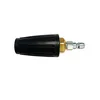
Simpson 4500 PSI Quick-Connect Turbo Nozzle
A rotating 0-degree jet inside a protective housing — it clears bonded and multi-layer paint faster than a fixed 15-degree tip.
- Best for: cured or multi-layer paint that a fixed nozzle won’t move
- Why we picked it: handles up to 4,500 PSI, well above the 3,000 PSI minimum this guide recommends
- Main drawback: the tighter jet needs a steadier hand to avoid etching softer concrete
Compare more turbo nozzle options
 Option 1 Erie Tools 3000 PSI Rotating Turbo Nozzle
|
 Option 2 YAMATIC 3000 PSI / 4.0 GPM Turbo Nozzle
|
 Option 3 FIDISP 4000 PSI / 4.0 GPM Turbo Nozzle
|
As an Amazon Associate we earn from qualifying purchases.
A minimum of 3,000 PSI paired with at least 4 GPM (gallons per minute) of flow is what actually strips paint from concrete — a common myth is that 2,000 PSI is enough, but at that pressure most washers only clean the surface and leave the paint bonded underneath. PSI measures force; GPM measures how much water carries that force away. A high-PSI unit with weak flow will stall on anything but the thinnest, already-peeling coat. This falls under the same paint and coatings questions we cover across the site.
Electric pressure washers are lighter and easier to store, but most top out around 1,900–2,300 PSI with limited GPM — fine for dirt and grime, underpowered for bonded paint. Gas pressure washers routinely hit 3,000–4,000 PSI with 2.5–4 GPM, which is why most concrete paint-removal jobs call for a gas unit rather than an electric one.
Best Nozzle for Removing Paint From Concrete
A 15-degree yellow nozzle is the standard choice for stripping paint — it concentrates the spray enough to break the paint’s bond without the extreme narrowness of a 0-degree tip, which can gouge concrete. For heavily bonded or multi-layer paint, a turbo nozzle (a rotating 0-degree jet inside a housing) clears coatings faster than a fixed nozzle and is the better pick if the 15-degree tip is only lightening the paint instead of removing it. Reserve the wider 25-degree green nozzle for general concrete cleaning — it’s too gentle to strip bonded paint.
- Test a small area first: run the nozzle over a 1-square-foot patch at low pressure to confirm the slab can take it before working the whole surface.
- Hold the wand 12–18 inches from the concrete: closer than that concentrates enough force to pit or etch the surface.
- Angle the spray and sweep in one direction: a steady, overlapping sweep clears paint chips instead of driving them back into the surface.
- Increase pressure gradually if needed: start at the lowest setting that shows progress rather than maxing out the unit immediately.
Does the Type of Paint Change How Easily It Comes Off?
Paint type is the biggest variable in whether a pressure washer alone will finish the job. Latex paint that’s already flaking or peeling comes off fast at 3,000+ PSI — the bond is already failing, so the water jet just finishes the separation. Fully cured latex that’s still well-bonded takes more passes and a tighter nozzle angle. Oil-based paint is the hardest case: it forms a harder, more flexible film that resists water pressure and often needs a chemical stripper pass before or after pressure washing.
Concrete age and porosity matter too. New, dense concrete sheds surface paint more easily. Older, porous concrete has micro-cracks and pores that let paint soak in below the surface, so pressure washing strips the top layer but leaves shadowing or residue in the pores — that residue is a different problem than surface paint, and no amount of added pressure fixes it without risking the slab.
Pressure Washer vs. Other Paint Removal Methods
A pressure washer isn’t always the fastest or safest option. Here’s how it compares to the other common methods for stripping paint off concrete.
| Method | Best For | Drawback |
|---|---|---|
| Pressure washer (3,000+ PSI) | Peeling or already-loose latex | Slow on cured or oil-based paint; can pit soft concrete |
| Chemical paint stripper | Cured latex and oil-based paint | Needs up to 24 hours of dwell time; ventilation required |
| Concrete grinder | Thick, stubborn multi-layer coatings | Labor-intensive, heavy dust, can leave grind marks |
| Sandblasting | Large open areas with heavy paint buildup | Abrasive — can etch or roughen decorative concrete |
In practice, the fastest results usually come from combining methods: pressure wash first to clear loose material, then spot-treat whatever remains with a chemical stripper rather than cranking the PSI higher and risking the slab. If you’re weighing whether to strip and repaint versus starting fresh, see our guide on painting concrete for what the surface needs before a new coat goes on. If the work deflects concrete particles onto nearby painted siding or trim, removing concrete splatter from painted surfaces needs a different approach — plastic scrapers, not more pressure.
Safety and Environmental Precautions
- Wear protective gear: gloves, safety glasses, closed-toe boots, and a dust mask to keep paint chips and spray out of your eyes and lungs.
- Contain the runoff: lay tarps to catch paint chips and use biodegradable soap if any cleaner is needed — paint chips and chemical runoff shouldn’t go down a storm drain.
- Keep the spray away from plants and pets: high-pressure water and any paint residue can damage landscaping and is unsafe for animals nearby.
- Use cold water, not hot: hot water can soften and re-set some paints instead of helping remove them.
Common Mistakes to Avoid
- Starting at maximum pressure: jumping straight to full PSI is how concrete gets pitted or chipped — always test a small area first.
- Holding the nozzle too close: under 12 inches, even a moderate-PSI stream can etch the surface.
- Skipping the pre-clean: dirt and debris on the surface can clog the nozzle and reduce cutting power.
- Assuming more pressure always works better: cured oil-based paint often needs a chemical stripper, not just higher PSI.
In practice, the difference shows up fast: loose, peeling latex usually lifts within the first pass or two at 3,000 PSI, while fully cured paint barely lightens even after several passes at the same setting. That’s the point to switch to a chemical stripper rather than keep increasing pressure — more PSI on paint that isn’t moving just increases the odds of surface damage instead of finishing the job.
Frequently Asked Questions
Can I use a pressure washer to remove paint from concrete?
Yes. Use a gas pressure washer rated at least 3,000 PSI with 4 GPM of flow and a 15-degree or turbo nozzle. Test a small area first, keep the wand 12–18 inches from the surface, and expect cured or oil-based paint to need a chemical stripper as a follow-up.
What nozzle removes paint from concrete?
A 15-degree yellow nozzle is the standard choice for stripping paint without gouging the slab. For bonded or multi-layer paint that a fixed nozzle can’t move, switch to a turbo nozzle, which combines a narrow 0-degree jet with a rotating housing for more cutting power.
How much PSI is needed to remove paint from concrete?
Plan on 3,000 to 4,000 PSI paired with at least 4 GPM of flow. Below 3,000 PSI, most pressure washers clean the surface but leave bonded paint in place. Above 4,000 PSI on older or softer concrete raises the risk of pitting or surface damage.
Does pressure washing damage concrete?
It can, if the pressure is too high or the nozzle is held too close. Holding the wand under 12 inches away or using a 0-degree tip at full power on soft or aged concrete can pit, etch, or crack the surface. Testing a small area and starting at the lowest effective pressure avoids this.
What is the easiest way to remove paint from concrete without a pressure washer?
A chemical paint stripper made for concrete is the easiest no-pressure-washer option. Apply it evenly, let it sit as directed (often up to 24 hours for stubborn paint), then scrape or scrub with a stiff brush and rinse. It works well on cured and oil-based paint that resists pressure washing alone.
Conclusion
A pressure washer removes paint from concrete reliably when the paint is already loose or peeling and you use at least 3,000 PSI with 4 GPM of flow and the right nozzle. Cured or oil-based paint, or paint soaked into older porous concrete, usually needs a chemical stripper alongside the pressure washer rather than more force. Test a small area first, keep the nozzle moving, and switch methods if the paint isn’t lifting within a couple of passes — that’s the safer call for the slab. Once the surface is clean, give it time to fully dry before deciding whether to reseal — see how long to wait after pressure washing before you paint concrete for the specifics.
Sponsored / affiliate links. As an Amazon Associate I earn from qualifying purchases. I may earn additional commission from eligible campaigns.