Can You Take Wood on a Plane? TSA & Customs Rules Explained
TSA doesn’t restrict wood as a material — it restricts by shape and function. A wooden cross, a chunk of driftwood, or a finished souvenir is fine in carry-on or checked luggage. A wood carving knife is restricted the same way any blade is (checked bag only). Wood glue falls under the liquids rule in carry-on. The real question isn’t “is it wood,” it’s “what does this specific item do.”
What TSA Actually Checks: Shape and Function, Not Material
OUR PICK FOR CHECKED-BAG PACKING
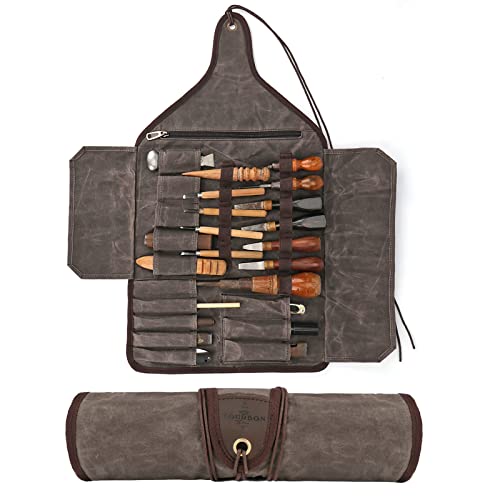 |
TOURBON Waxed Canvas Tool Roll (25 slots) – $37.99 Since carving knives and chisels must fly checked, roll them individually so blades cannot shift, cut through the bag, or damage other contents in transit.
|
TSA’s screening rules are built around what an object can do, not what it’s made of. A solid wood carving of a bear passes through security the same as a plastic one would. But a wood carving knife, a chisel, or a whittling tool with an exposed blade is treated exactly like a kitchen knife — it goes in checked baggage, not your carry-on, regardless of the fact that the handle happens to be wood (see our guide to flying with a cordless drill for how the same shape-based logic applies to power tools). Blunt wooden items — a rolling pin, a wooden spoon, a carved figurine, unfinished lumber blanks — don’t trigger this rule at all.
Common Wood Items: Carry-On vs. Checked, at a Glance
| Item | Carry-On | Checked | Why |
|---|---|---|---|
| Wooden souvenirs/decor (no blade) | Yes | Yes | No restricted shape or liquid content |
| Wood carving knives/chisels | No | Yes | Treated as a bladed tool, same as any knife |
| Wooden cutlery (butter knife style, no edge) | Usually yes | Yes | No cutting edge — screener’s call at the gate |
| Wood glue (small bottle) | Yes, under 3.4 oz | Yes, any size (non-flammable types) | Standard PVA glue is a liquid, not hazmat, under the 3-1-1 rule |
| Solvent-based wood glue/contact cement | No | Limited quantity, check airline | Classified as a flammable liquid |
| Raw/dimension lumber | No (oversize) | As oversize/special baggage | No TSA prohibition, but exceeds standard bag size — ships as freight or oversize checked item |
| Driftwood, bark-on wood, raw logs (international) | Declare at customs | Declare at customs | Agricultural/pest inspection risk, not a TSA security issue |
Crossing Borders: Where the Real Risk Is
TSA security screening and customs/agriculture inspection are two separate systems, and wood is far more likely to cause a problem with the second one. Raw, bark-on, or untreated wood — driftwood picked up on a beach, a green log, an unfinished branch — is exactly what agricultural inspectors at CBP or a foreign customs office are trained to flag, because bark and untreated wood can carry insect larvae and fungal spores that a country’s agriculture agency doesn’t want introduced. Finished, kiln-dried, sealed, or painted wood items are low-risk by comparison and rarely get a second look. If a species is a protected hardwood (rosewood, certain mahoganies, ebony), it may also fall under CITES trade restrictions regardless of finish — check the CITES species database before traveling internationally with anything made from an exotic hardwood, especially musical instruments and carved items.
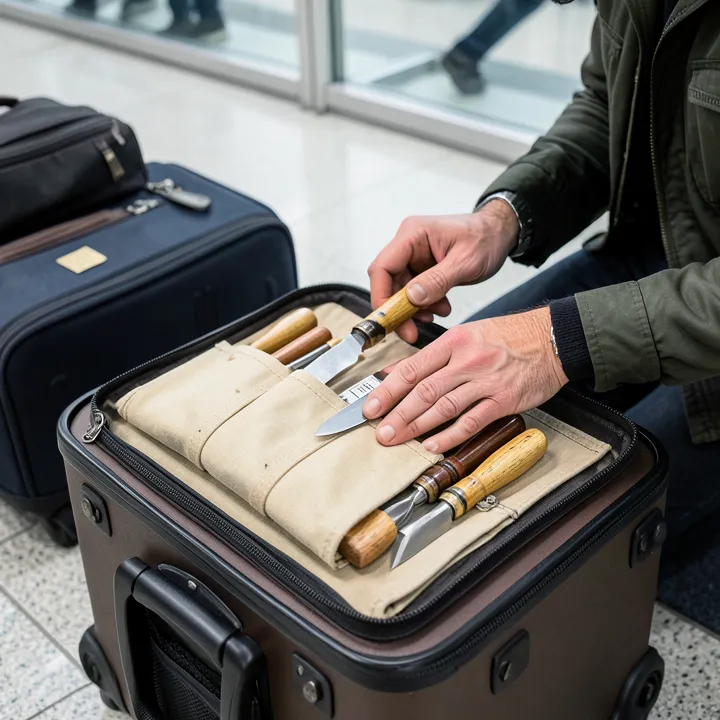
Packing Wood Carving Tools and Blanks for Checked Luggage
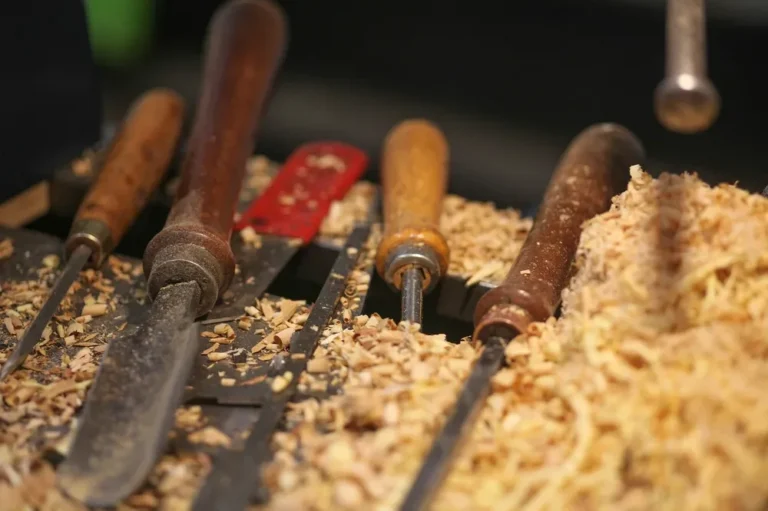
Since carving knives, gouges, and chisels have to travel checked, protect both the edges and everything else in the bag from them. Loose blades shift during handling and can cut through a duffel bag or damage other contents. Roll each tool individually with the edge covered, keep the roll in the center of the suitcase away from the shell, and skip cardboard sheaths — they crush and expose the edge. If you’re bringing wood blanks or unfinished carving stock, wrap each piece separately so edges and corners don’t chip against each other in transit.
Frequently Asked Questions
Can you bring wood carving tools on an airplane?
Only in checked luggage. Carving knives, gouges, and chisels have an exposed cutting edge and are treated the same as any bladed tool — not allowed in carry-on, allowed in checked bags.
Can you take wooden cutlery on an airplane?
Yes, in either carry-on or checked luggage, as long as it doesn’t have a sharpened cutting edge — a wooden butter knife or fork is treated as a utensil, not a weapon. A wooden item deliberately shaped or sharpened as a knife is judged on its edge, not its material.
Can you take wood glue on the plane?
Standard water-based wood glue (PVA-type, like Titebond) is treated as a regular liquid: 3.4 oz (100 ml) or under in carry-on, unrestricted quantity in checked baggage. Solvent-based glues and contact cements are flammable liquids and face stricter limits — check your airline’s hazmat policy before packing those in checked bags.
Can you take a wooden cross in checked luggage?
Yes, without restriction from TSA. Pad it well if it’s decorative or fragile, since checked baggage is handled roughly, but there’s no security rule against wooden religious items or decor of any kind.
Can you take driftwood from Canada back on a plane?
This is a customs and agriculture question, not a TSA one. Raw, bark-on wood collected outdoors is the type of item agricultural inspectors specifically screen for pests and disease when crossing into the US. Declare it at customs; expect it may be inspected or, in some cases, refused entry depending on species and condition.
Sponsored / affiliate links. As an Amazon Associate I earn from qualifying purchases. I may earn additional commission from eligible campaigns.