Caulk for Wood Floors: Where It Works (and Where It Fails)
Caulk belongs at the baseboard-to-wall joint and other stationary trim seams, not on the wood floor or between floorboards, where seasonal movement cracks a rigid caulk bead and can even contribute to buckling. Flooring pros use shoe molding for larger floor-level gaps and wood filler inside the boards, because both accommodate movement caulk can’t. This guide covers exactly where caulk works, where it fails, and how to apply it at the joints where it belongs.
Where Caulk Belongs (and Where It Doesn’t)
Best Paintable Caulk Pick
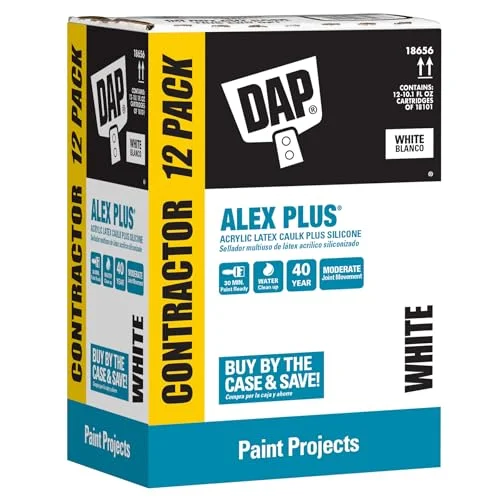 |
DAP Alex Plus Acrylic Latex Caulk (12-Pack) – $32.08 The siliconized acrylic latex formula this guide recommends for the baseboard-to-wall seam — stays flexible, accepts paint, and is not meant for direct floor contact.
|
Caulk is a permanent, rigid seal — it only works where the two surfaces on either side of it stay still relative to each other. A baseboard is fastened to the wall and doesn’t move with the seasons, so caulking the baseboard-to-wall seam is correct and standard practice. The floor itself is a different story: solid and engineered wood expand and contract across the width of the boards as humidity changes through the year, and that movement is exactly what the floor’s expansion gap (hidden under the baseboard) exists to absorb.
Caulking directly onto the floor, along the floor-to-baseboard line, or between individual floorboards bridges two surfaces that are supposed to move independently. The caulk bead can’t stretch enough to keep up, so it cracks, peels, or pulls away within a season or two — and in a worst case, a rigid seal at the expansion gap can restrict the floor’s movement enough to contribute to buckling.
Choosing the Right Caulk for the Baseboard Joint
For the baseboard-to-wall seam — the one place caulk genuinely belongs in this job — a paintable, siliconized acrylic latex caulk is the standard choice among flooring and trim installers. It stays flexible enough for minor trim movement, accepts paint to disappear against the wall color, and doesn’t require the specialized tools or odor of a pure silicone.
| Caulk Type | Paintable? | Best Use | Avoid For |
|---|---|---|---|
| Siliconized acrylic latex | Yes | Baseboard-to-wall seam, trim joints | Direct floor contact, high-flex joints |
| Pure silicone | No | Bath and kitchen wet areas on tile/stone | Anywhere it needs to be painted to match |
| Polyurethane sealant | Limited | Exterior joints, high-movement gaps | Interior baseboard trim (overkill, hard to tool) |
How to Apply It Correctly
- Clean the joint: vacuum dust and wipe the baseboard and wall with a damp cloth, then let it dry fully.
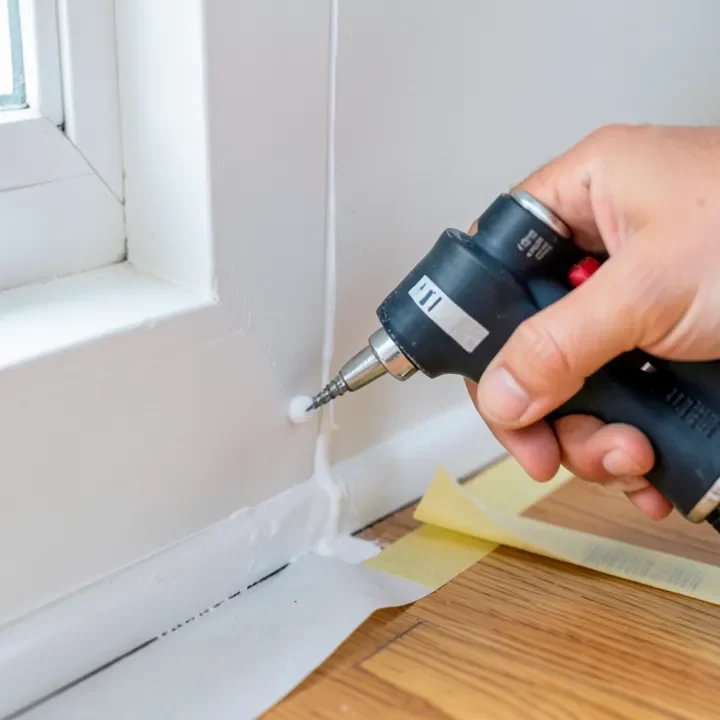
- Tape both sides: run painter’s tape along the top of the baseboard and the wall just above it, protecting the floor itself from any caulk that drips.
- Cut the tip small: a 45-degree cut with a small opening gives you control over the bead width.
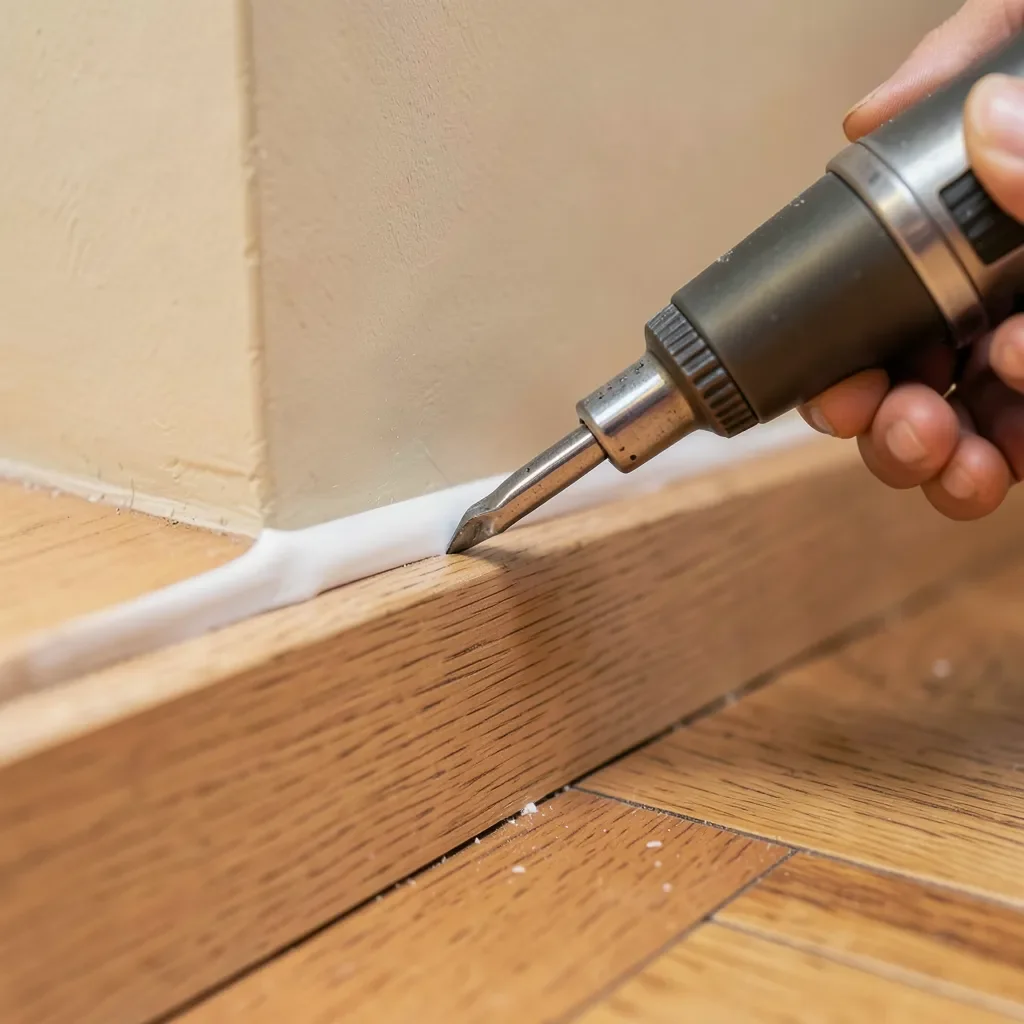
- Run a steady bead: hold the gun at roughly 45 degrees and move at a constant pace along the wall-to-baseboard line only — never down onto the floor.
- Tool it immediately: smooth the bead with a wet finger or caulk tool before it skins over.
- Pull the tape while wet: remove painter’s tape right after tooling for the cleanest edge.
What to Use Instead at the Floor Level
Shoe molding, not caulk, is the standard fix for a visible gap between the baseboard and the floor. It’s a thin, flexible strip of trim that sits over the expansion gap and moves independently with seasonal changes, which is exactly what a rigid caulk bead can’t do. For gaps inside the floorboards themselves — between two boards, not at the baseboard — a color-matched wood filler or putty designed for flooring is the right material; it’s applied narrower and thinner than a caulk bead would be and is meant to be sanded flush, not left as a flexible seal.
If the gaps between your boards are wide, recurring every season, or growing over time, that’s a wood movement or subfloor issue caulk and filler alike will only mask temporarily — see Hardwood Flooring Gaps and Gaps Between Hardwood Floor Boards for the full diagnostic and repair options, including when a gap is normal seasonal movement versus a sign of a humidity or subfloor problem. If you’re mid-installation and want the cost picture before you commit to materials, How Much to Install Wood Flooring covers pricing by flooring type.
Maintaining a Caulked Baseboard Joint
- Sweep or vacuum regularly so grit doesn’t work into the caulk line and wear it down.
- Wipe spills promptly — standing water at the baseboard is the exact failure mode the seal is meant to prevent.
- Re-caulk if the bead cracks or pulls away; a failed seal at the wall is a quick fix, unlike a failed seal on the floor itself.
Frequently Asked Questions
Can you use caulk on wood floors?
Only at the baseboard-to-wall seam, not on the floor surface itself or at the floor’s expansion gap. Wood floors expand and contract seasonally, and a rigid caulk bead applied directly to the floor will crack, peel, and can restrict the movement the expansion gap is designed to allow.
What is the best caulk for the baseboard-to-wall joint?
A paintable, siliconized acrylic latex caulk, such as DAP Alex Plus. It stays flexible, accepts paint to match the wall color, and is the standard choice trim and flooring installers use for this joint.
What can I use to fill gaps in hardwood floors?
Use a color-matched wood filler or flooring putty, not caulk. Filler is applied narrow and sanded flush, which suits small, stable gaps between boards. Caulk is too flexible and too visible for this use, and it isn’t designed to be sanded.
Should I caulk between individual floorboards?
No. Individual floorboards move independently as humidity changes, and a caulk bead between them will crack out within a season. Use wood filler for small, stable gaps, or have a flooring pro evaluate the boards if gaps are wide or growing — that’s usually a humidity or subfloor issue, not something a sealant fixes.
Conclusion
Caulk does one job well on a wood floor: sealing the baseboard-to-wall seam with a paintable, siliconized acrylic latex. Everywhere the floor itself needs to move — between boards, at the expansion gap — shoe molding and wood filler are the materials built for it. Use caulk in the wrong spot and you’re re-doing the job within a year.
Sponsored / affiliate links. As an Amazon Associate I earn from qualifying purchases. I may earn additional commission from eligible campaigns.