Best Water Ring Remover for Wood Furniture
For white water rings on finished wood, start with low heat through a cloth barrier or a petroleum-jelly test. If the spot is sticky or dark brown, stop and refinish, because chemical removers can damage lacquer, shellac, or veneer. A bad match can spread the stain, strip the topcoat, or leave permanent halos. This guide compares the safest remover choices by finish type and tells you when DIY, a commercial remover, or refinishing is the right call.
Best picks for water rings
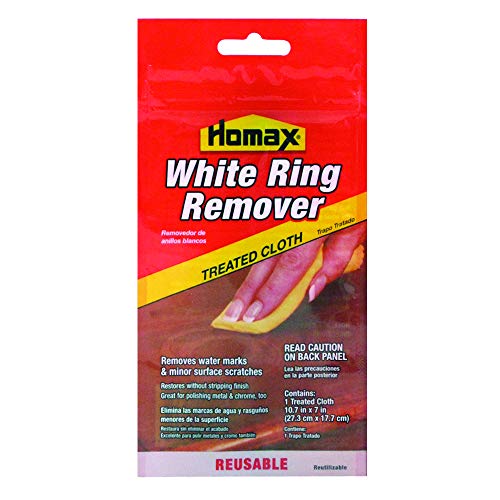


The best first choice for most white haze on sealed wood is low heat with a cloth barrier. It targets finish-level moisture first and avoids stripping the protective coat. Use a commercial water ring remover only when the ring remains after gentle heat, or when the finish type makes oil-based DIY steps risky.
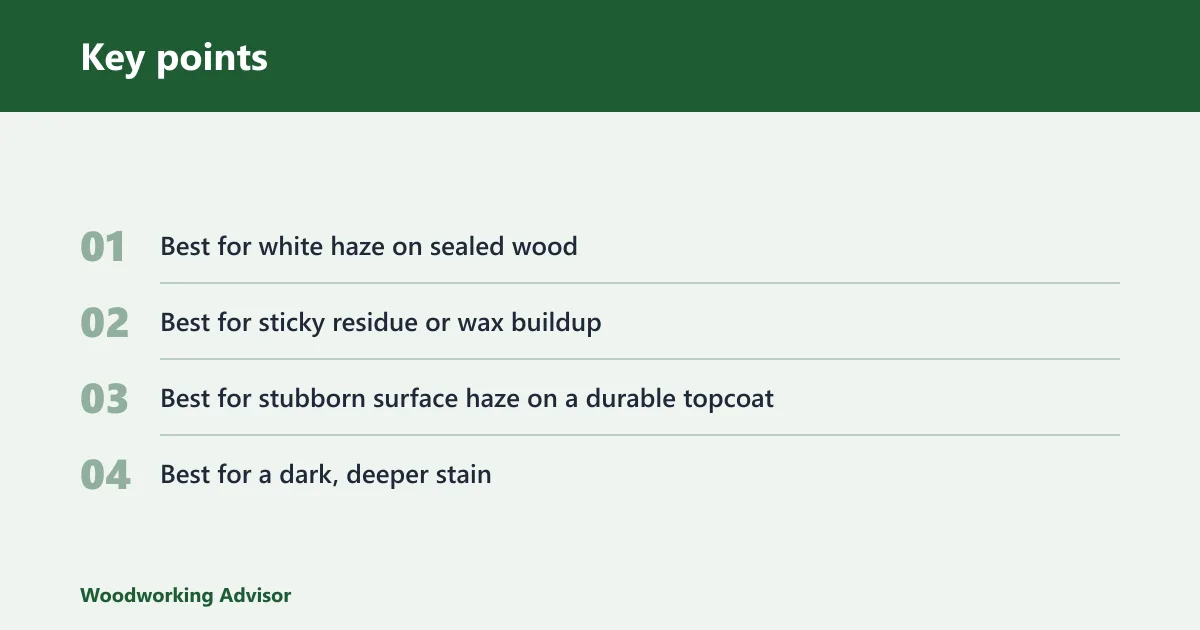
- Best for white haze on sealed wood: low heat with a cloth barrier. It is the least aggressive first move for a white ring on finished wood furniture.
- Best for sticky residue or wax buildup: wax-safe cleaning or mineral spirits first, before any ring remover. Sticky film often is not a water ring at all.
- Best for stubborn surface haze on a durable topcoat: non-gel white toothpaste, used lightly with a soft cloth.
- Best for a dark, deeper stain: stop spot treatment and consider drying time, oxalic acid, sanding, or a refinish.
If a white ring is on a polyurethane coffee table and the surface feels normal, not tacky, heat is often the first thing to try. Heat is the first move. If the same mark on a shellac side table feels soft or sticky, skip heat and strong removers until you know whether the finish itself is failing.
Which fix fits your ring?
The fastest way to avoid damage is to match the symptom first. White haze usually means moisture is trapped in the finish, while dark brown or black marks usually mean the water reached deeper into the wood fibers. Sticky residue points to wax buildup, old polish, or a failing topcoat rather than simple moisture alone.
White haze versus dark stain
A white water ring is usually easier to remove because the moisture is in the finish layer, not below it. A dark water stain is harder because water has penetrated the wood fibers. That difference changes the whole plan: white haze gets finish-safe methods first, while dark stains often need drying, oxalic acid, sanding, or refinishing.
Sticky finish versus wax buildup
If the ring feels gummy, oily, or patchy, treat wax buildup as a serious possibility. Wax can mimic cloudy patches and can also make a water ring look worse than it is. In that case, a wax-safe cleaner or mineral spirits is often the better first step, because heat or toothpaste can smear residue around.
When low heat is the first move
Low heat is the first move when the mark is pale, the finish is intact, and the surface does not feel soft, swollen, or sticky. Tips Bulletin recommends a clothes iron on the lowest setting with no steam, and also suggests a hairdryer for about ten minutes. Use short passes and keep a cloth barrier between the heat source and the finish.
Water ring remover comparison table
| Finish type | Ring color | Surface feel | Best first move | What to avoid | When to stop and refinish |
|---|---|---|---|---|---|
| Shellac | White haze | Hard, smooth | Very brief low heat with cloth barrier | Strong solvent removers, hard rubbing, long heat passes | If the finish blushes, softens, or turns uneven after a test spot |
| Lacquer | White haze | Hard, smooth | Short heat test on a hidden area first | Aggressive chemical cleaners and repeated heat on the same spot | If haze turns into a dull or wrinkled patch |
| Varnish | White haze | Usually firm | Low heat, then toothpaste if haze remains | Scrubbing pads and over-wetting the surface | If the ring stays after several gentle passes or the coating looks cracked |
| Polyurethane | White haze | Firm, sealed | Heat, then a commercial water ring remover for sealed surfaces | Heavy sanding of the topcoat before diagnosis | If the stain is dark, deep, or the finish is damaged beyond haze |
| Any finish | Dark brown or black | May feel normal or dry | Stop spot treatment and assess for deeper stain | Treating it like a simple white ring | Usually needs drying, oxalic acid, sanding, or a full refinish |
| Fix | DIY effort | Failure risk | Best use case |
|---|---|---|---|
| Low heat with cloth barrier | 2/5 | 2/5 | White haze on intact finished wood |
| White toothpaste | 3/5 | 3/5 | Stubborn surface haze that survives gentle heat |
| Mayonnaise or petroleum jelly | 2/5 | 3/5 | Short test on a dry white ring |
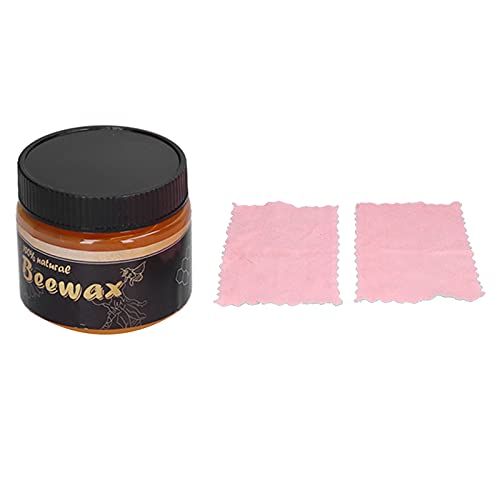
| Commercial water ring remover | 2/5 | 3/5 | Sealed or varnished surfaces when gentle methods fail |
| Oxalic acid / refinish | 4/5 | 4/5 | Deep dark stains or finish failure |
How each fix works
Choose the least aggressive method that matches the mark. Water ring removers for wood work on sealed and varnished surfaces, and one common line of guidance says to spot-test on a small, hidden area first. That matters because these products act on finish-level moisture, not on deep wood stains.
Low heat with a cloth barrier
Heat helps drive out trapped moisture in a white ring. Use low heat, keep the tool moving, and pause often. A cloth barrier lowers direct heat exposure, which matters on shellac and lacquer, where finish damage can happen faster than on harder topcoats.
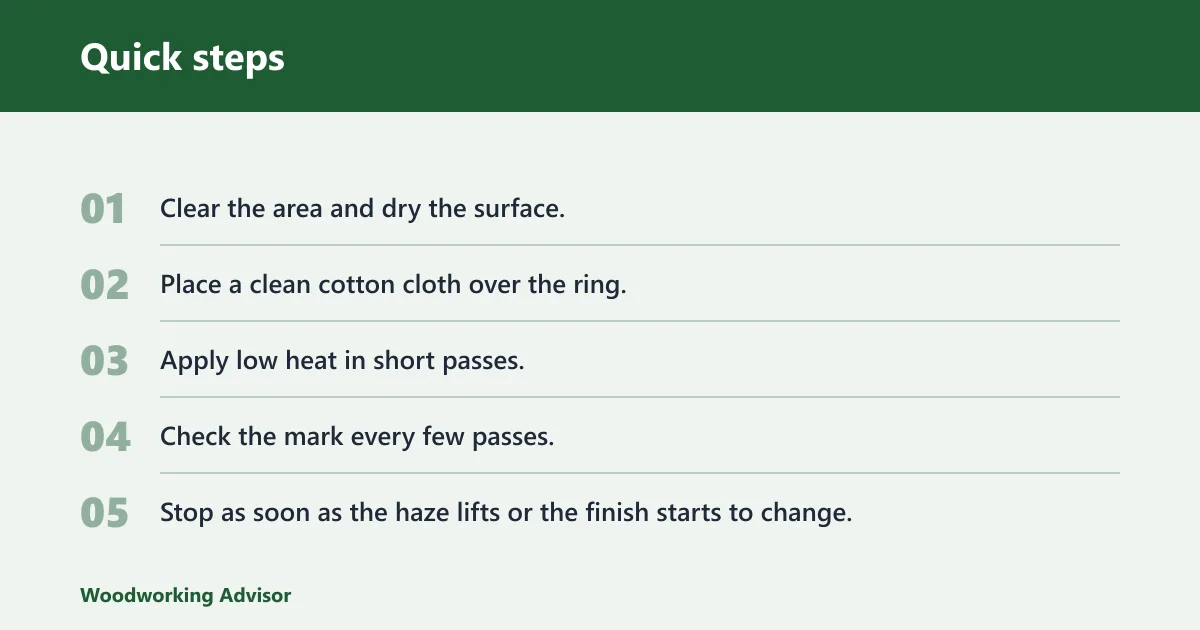
- Clear the area and dry the surface.
- Place a clean cotton cloth over the ring.
- Apply low heat in short passes.
- Check the mark every few passes.
- Stop as soon as the haze lifts or the finish starts to change.
White toothpaste for stubborn surface haze
Non-gel white toothpaste is a mild abrasive option for a ring that survives heat but still looks like surface haze. Use a soft cloth, a small amount, and light pressure. If the mark sits on shellac or lacquer, test in a hidden spot first and stop if the sheen changes.
Mayonnaise or petroleum jelly for short dwell fixes
Mayonnaise or petroleum jelly is an oil-based DIY move for white rings. It can help when the finish looks dry and the mark seems shallow. Leave it on briefly, wipe clean, and do not let residue linger. Overuse can leave a greasy film that makes diagnosis harder.
When a commercial remover is worth buying
A commercial remover is worth buying when the piece has a sealed or varnished surface and the white ring has not responded to heat. It is also a practical buy when you need a finish-safe product rather than a pantry fix. Even then, test first. The wrong formula can cloud lacquer or dull shellac.
How to choose the right remover
Match the method to the finish type, then match it again to the ring color and surface feel. White haze on polyurethane often justifies a heat-first approach or a finish-safe commercial remover. Sticky, brown, or black marks need a different path. Do not keep repeating the same mild fix if the ring is getting darker.
Match the method to finish type
Shellac and lacquer are often more sensitive than many varnish and polyurethane coatings. That makes spot testing non-negotiable. If a remover lifts sheen, softens the topcoat, or leaves a halo, stop. The issue is no longer a simple water ring.
Match the method to ring color and surface feel
White haze with a hard surface points to moisture in the finish, which is the best case for heat. White haze with tackiness often points to wax buildup or old polish. Dark marks, especially brown or black, point to a deeper problem and should not be treated like a cosmetic haze.
When to stop and refinish
If the ring stays after gentle heat, and especially if the finish is cracked, soft, or uneven, stop. Sanding is not the first move for a simple white ring, but it may be unavoidable for deep damage. That is also the point where a full refinish becomes more sensible than repeated spot treatment.
A common first-timer mistake is to scrub harder after the first method fails. That can turn a small white ring into a larger dull patch. Another mistake is to use a remover meant for sealed surfaces on a finish that is already failing. The product cannot fix a broken topcoat.
What causes white rings on wood furniture?
White rings usually come from moisture trapped in the finish. One guide puts it plainly: a white ring means moisture is trapped in the finish. The Lasting Home says the same thing. Dark brown or black stains are different; they usually mean water penetrated the wood fibers below the finish.
Moisture trapped in the finish
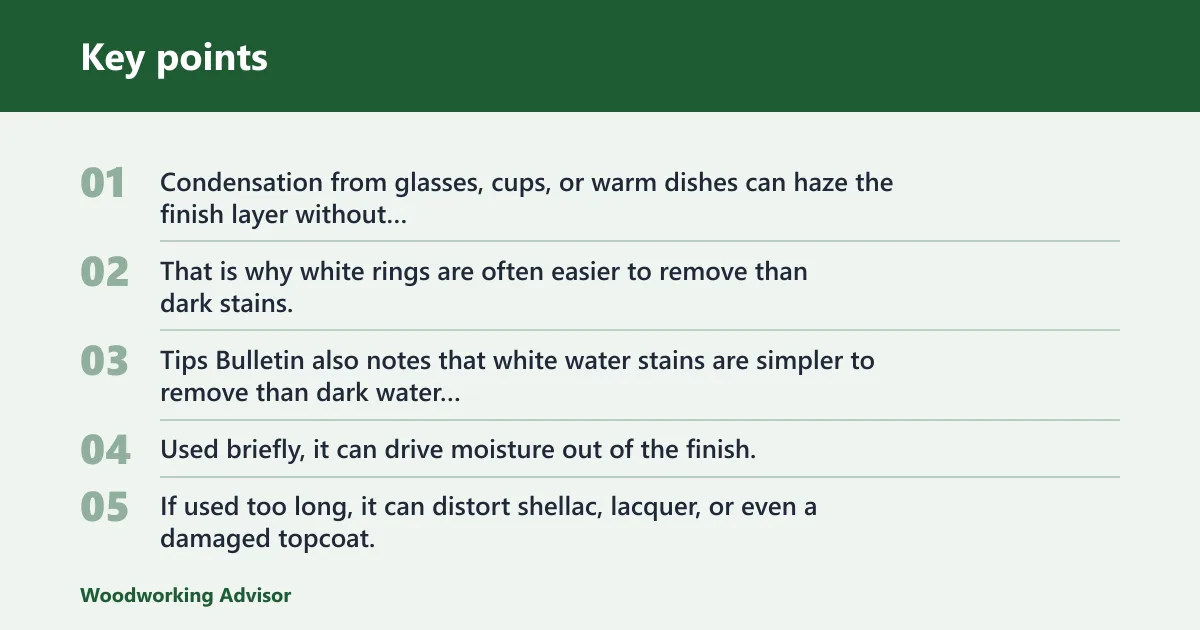
Condensation from glasses, cups, or warm dishes can haze the finish layer without reaching the wood itself. That is why white rings are often easier to remove than dark stains. Tips Bulletin also notes that white water stains are simpler to remove than dark water stains.
Heat and finish failure
Heat can either help or hurt. Used briefly, it can drive moisture out of the finish. If used too long, it can distort shellac, lacquer, or even a damaged topcoat. That is why low heat is preferred over sanding when the mark is still a true white haze.
Wax buildup that mimics damage
Wax buildup can look like a cloudy patch or feel sticky around the ring. It may come from furniture polish, waxed cleaners, or residue that has been layered over time. If that is the issue, clean the residue first. A ring remover is the wrong tool for a wax problem.
When should you stop and refinish?
Stop and refinish when the mark is dark, deep, or tied to finish failure instead of surface haze. Oxalic acid can help with deeper dark stains, but it is not for simple white haze. If the finish is soft, cracked, or lifting, spot treatment is no longer the safest path.
Deep dark stains and oxalic acid limits
Dark stains often need a different process because the water reached the wood fibers. Drying time, oxalic acid, sanding, or a full refinish may be needed. Do not expect a white-ring remover to correct a brown or black stain. It is the wrong tool for that job.
Scratches, soft spots, or cracked finish
If the ring sits beside scratches, checking, soft spots, or peeling edges, the coating has likely failed. In that case, sanding the damaged area and rebuilding the finish is more realistic than chasing the ring. You are repairing finish failure, not just removing a spot.
Repair cost versus replacement value
Refinishing makes more sense on a valuable dining table than on a low-cost decorative piece. On inexpensive furniture, a careful DIY touch-up may not be worth the time. On heirloom or veneered pieces, avoid guesswork. A bad remover choice can cost more than a proper repair.
Frequently asked questions
How do I tell if a ring is a white haze or a dark stain?
White haze looks milky or cloudy and usually sits in the finish layer. Dark stains are brown or black and often mean water reached the wood fibers. A white mark is usually easier to remove. A dark one often needs drying, oxalic acid, sanding, or refinishing.
What should I do if the finish feels sticky around the ring?
Treat sticky areas as a possible wax buildup or finish failure, not as a simple water ring. Try wax-safe cleaning or mineral spirits first if the surface is otherwise intact. Avoid aggressive heat or abrasive rubbing until you know whether the tacky feel comes from residue or a failing topcoat.
Can mayonnaise or toothpaste remove water rings from wood?
Yes, sometimes, but only in the right case. Toothpaste can help with stubborn surface haze, and mayonnaise or petroleum jelly can help a shallow white ring by briefly conditioning the finish area. Neither is a universal fix. Both can leave residue if overused, so keep the application short.
When should I use heat instead of sanding for a water ring?
Use heat first when the mark is white, the finish feels hard, and the coating still looks intact. Sanding is for deeper damage, dark stains, or finish failure. If the ring is only trapped moisture in the finish, sanding is too aggressive and can create a larger repair than necessary.
When does a water ring need refinishing instead of a remover?
Refinishing is the better choice when the ring is dark, the finish is cracked or soft, or gentle methods fail after a proper spot test. If the topcoat is already damaged, a remover may worsen the problem. At that point, repairing the finish is safer than trying another surface treatment.
Sponsored / affiliate links. As an Amazon Associate I earn from qualifying purchases. I may earn additional commission from eligible campaigns.