Cedar Mulch vs Hardwood Mulch: Which One Should You Pick?
Choosing between Cedar Mulch vs Hardwood Mulch: Which Is Better? can feel tricky when you’re starting out. There are so many options! Figuring out the best mulch for your garden might seem hard, but don’t worry. This guide will make it easy to understand the differences. We’ll explore the pros and cons of each type, helping you make the right choice for your plants and garden. Let’s get started and see which mulch comes out on top.
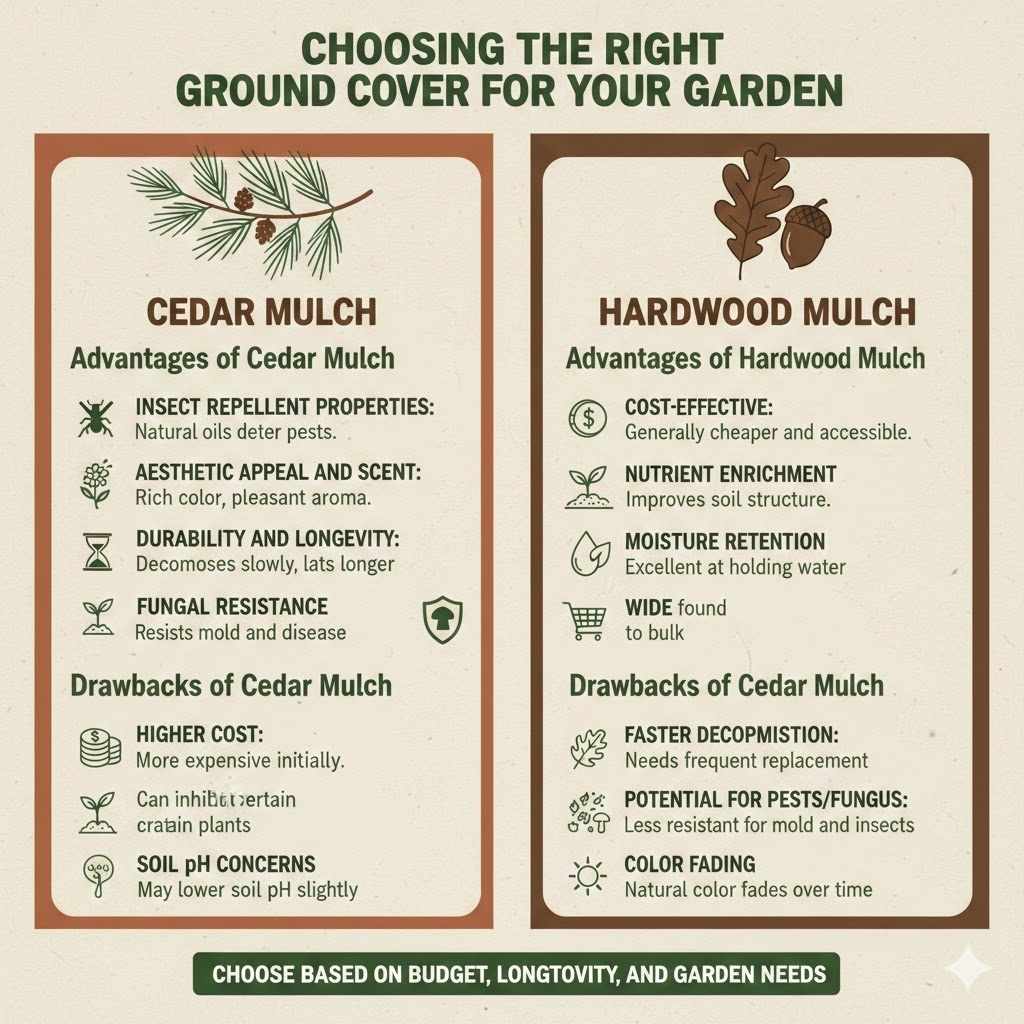
Choosing the Right Ground Cover for Your Garden
Selecting the correct ground cover for your garden is a decision with a big impact on plant health and aesthetics. The right mulch can regulate soil temperature, preserve moisture, and help stop weed growth. It also helps to prevent erosion and improve the soil’s structure as it decomposes. However, the wrong choice can lead to problems. Choosing between cedar and hardwood mulch often hinges on several factors, including budget, desired lifespan, and personal preference. The goal is to provide a protective layer that benefits your plants while complementing the overall look of your landscape. We’ll look at the differences to assist you in making the best decision.
Advantages of Cedar Mulch
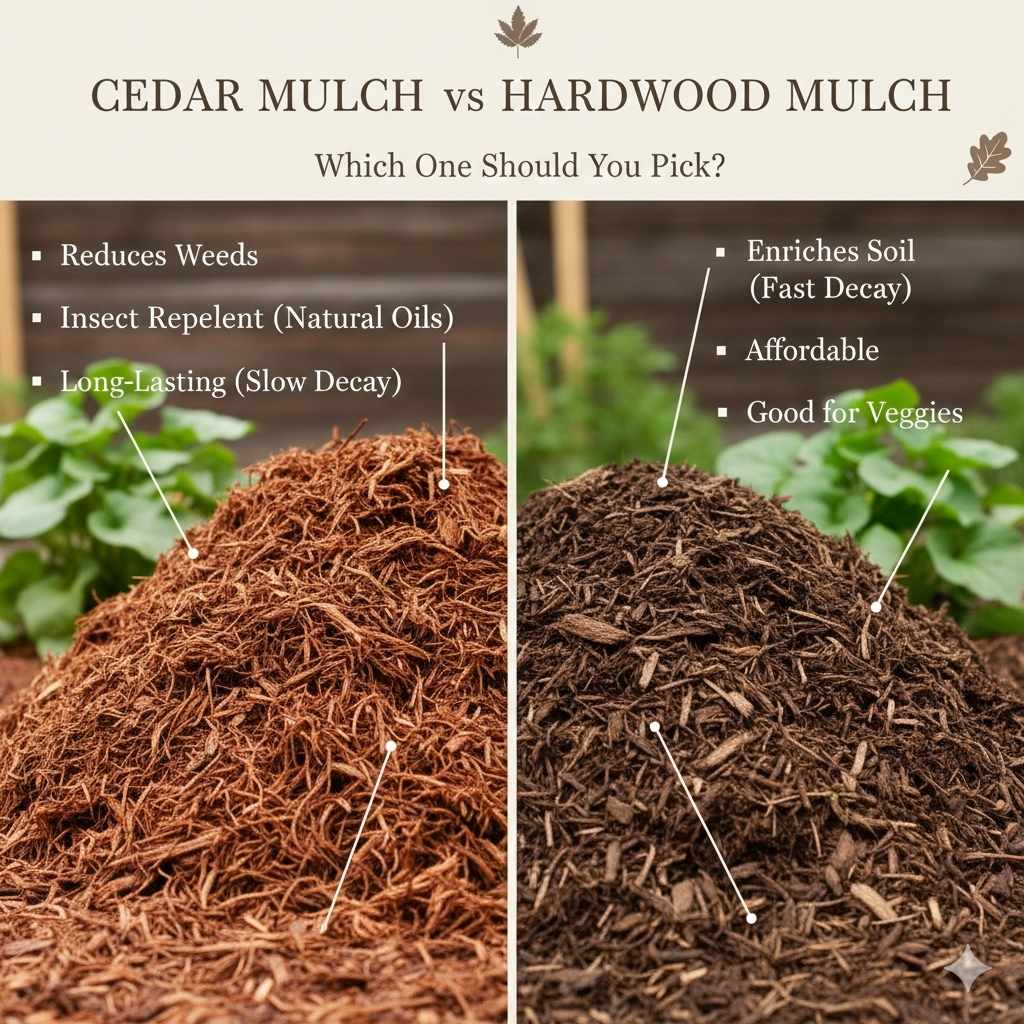
Cedar mulch, crafted from the wood of cedar trees, has unique properties. It’s known for its natural insect-repelling qualities and a pleasant scent. This type of mulch is often selected for its aesthetic appeal, as it provides a neat and finished look to garden beds. While it might cost more initially, its durability and slow decomposition rate can make it a smart choice. Moreover, cedar mulch is generally resistant to fungal growth. This is great news for your garden! Cedar mulch is available in various forms, including shredded, chipped, and even dyed options, so gardeners can match it with different landscaping designs.
- Insect Repellent Properties: Cedar contains natural oils (cedar oils) that insects, such as termites and ants, dislike. This helps protect plants from pests without using chemicals.
The natural oils found in cedar wood act as a repellent, making it less appealing to many common garden pests. Think of it like a natural shield against unwanted visitors. These oils evaporate slowly, providing long-lasting protection, unlike some chemical treatments.
- Aesthetic Appeal and Scent: Cedar mulch offers a visually appealing look to garden beds. The rich color and pleasant aroma of cedar can enhance the overall beauty of a garden.
The fresh, clean scent of cedar is a bonus for anyone spending time in the garden. Its reddish-brown color provides a nice contrast to green foliage and blooms. Different cuts provide varying textures as well, allowing for various design preferences.
- Durability and Longevity: Cedar mulch tends to decompose more slowly than many other mulch types, meaning it needs less frequent replacement.
Because it breaks down slowly, cedar mulch requires less maintenance. This means less work and expense over time. The slow decomposition rate also means it retains its protective qualities for longer periods, providing consistent soil benefits.
- Fungal Resistance: Cedar is resistant to fungal growth, which makes it less likely to transmit diseases to plants.
Since cedar resists fungal growth, it helps keep your plants healthy. This can reduce the chance of common diseases that spread through mulch, creating a healthier environment for plant roots.
Drawbacks of Cedar Mulch
While cedar mulch has many advantages, it also has a few drawbacks. The price is often higher compared to hardwood mulch, and its natural oils can sometimes hinder the growth of certain plants. While not common, some people are allergic to cedar, so it’s a factor to consider for anyone who spends a lot of time in the garden. Also, it’s worth noting that the long-term impact on soil pH needs consideration, although generally, cedar is not extremely acidic. A little prep will avoid a big problem.
- Higher Cost: Cedar mulch is typically more expensive than other mulch types. This can influence the size of the area you can cover.
The higher cost can be an issue for larger gardens or areas needing a lot of mulch. While the benefits might justify the cost in the long run, the initial investment may cause budget constraints. Explore cost comparisons before making a decision.
- Potential for Allelopathic Effects: Cedar contains allelochemicals that can sometimes inhibit the growth of certain plants, especially if used in excess.
Allelopathic effects mean cedar can release chemicals that impact other plants’ growth. It is critical to monitor your plants to determine if they are sensitive to cedar mulch. Careful application can usually prevent problems, but it is important to know about this issue.
- Soil pH Concerns: While cedar is generally not highly acidic, there is a risk of lowering the soil pH slightly over time, which may not be ideal for all plants.
Regular soil testing can help you monitor and adjust pH levels. Soil pH plays a vital role in nutrient absorption, so maintain the proper balance for plant health. This is essential for some plants, so it is necessary to check your plant’s pH requirements.
Exploring Hardwood Mulch
Hardwood mulch is made from various types of hardwood trees, such as oak, maple, and birch. It is a more budget-friendly option compared to cedar, making it a popular choice for large landscaping projects. Hardwood mulch provides good moisture retention and weed control, and it eventually breaks down, adding organic matter to the soil. Its decomposition rate is quicker than cedar, requiring more frequent replenishment. It comes in different forms, including shredded, chipped, and dyed versions, allowing gardeners flexibility in design choices. The lifespan of hardwood mulch is shorter than cedar, but it provides significant benefits to garden health and aesthetics.
Benefits of Using Hardwood Mulch
Hardwood mulch brings many benefits to your garden. First, it is much more affordable than cedar, making it suitable for gardeners on a tight budget. Second, it decomposes relatively quickly, providing a regular supply of organic matter to the soil. This helps improve soil structure and fertility over time. Also, hardwood mulch provides excellent weed control by blocking sunlight. This helps to retain moisture in the soil, reducing the need for frequent watering. With proper care, hardwood mulch is an excellent, cost-effective choice for various landscaping needs.
- Affordability: Hardwood mulch generally costs less than cedar mulch, making it a budget-friendly option for gardeners.
The lower price point makes hardwood mulch ideal for large areas. Gardeners on a tight budget will find hardwood an accessible choice. It lets you cover more ground without significant expense.
- Soil Enrichment: As hardwood mulch decomposes, it adds valuable organic matter to the soil, improving fertility and structure.
The slow release of nutrients as hardwood breaks down benefits plants. The improved soil structure also helps with drainage and aeration. This creates a healthier environment for roots.
- Effective Weed Control: Hardwood mulch blocks sunlight, inhibiting weed growth and reducing the need for herbicides.
This provides an easier and safer way to manage weeds. By limiting sunlight, hardwood mulch prevents weed seeds from germinating. This saves time and effort.
- Moisture Retention: Hardwood mulch helps the soil retain moisture, reducing the need for frequent watering, and this helps the environment.
This is especially useful during hot, dry periods. The mulch acts as a barrier, slowing down water evaporation. This helps maintain consistent soil moisture levels.
Disadvantages of Hardwood Mulch
There are some downsides to consider when using hardwood mulch. Hardwood mulch breaks down quicker than cedar mulch, meaning you will need to replace it more frequently. This requires more maintenance and costs over time. Also, some hardwood mulches may contain weed seeds. This can lead to unwanted weed growth. While hardwood mulch is generally safe, ensure that it is sourced from a reputable supplier to avoid potential problems. You will also want to monitor the soil pH over time and consider that the darker colors of some dyed hardwood mulches can cause the mulch to warm faster, potentially impacting sensitive plants.
- Faster Decomposition Rate: Hardwood mulch decomposes more rapidly than cedar mulch, requiring more frequent replacement.
More frequent replenishment leads to more work and added expense over time. While the upfront cost is lower, the ongoing maintenance can be a trade-off. It is also important to consider the environmental impact of needing to replace it more often.
- Potential for Weed Seeds: Some hardwood mulches may contain weed seeds, which can lead to unwanted growth in your garden.
Quality control is important when selecting hardwood mulch. Sourcing from a reliable supplier minimizes the risk of weed seeds. Check the mulch before applying it to prevent the spread of unwanted plants.
- May Not Repel Insects: Unlike cedar mulch, hardwood mulch does not have natural insect-repelling properties.
If insect control is a primary concern, you may need to use other pest management methods. Hardwood mulch does not offer the same protection as cedar. Take this into consideration when selecting the right mulch.
- Potential for Color Fading: Dyed hardwood mulch can lose its color over time, requiring periodic reapplication to maintain its aesthetic appeal.
Consider the colorfastness of the dye if aesthetic appeal is vital. Direct sunlight can cause some dyes to fade. This impacts the overall look of your landscape design. Proper care helps preserve the mulch’s appearance.
Making the Right Choice: Cedar Mulch or Hardwood Mulch
When selecting between Cedar Mulch vs Hardwood Mulch: Which Is Better?, the ideal choice hinges on your specific needs and priorities. For those prioritizing insect resistance, a pleasing aroma, and a longer lifespan, cedar mulch is a good choice, especially if you have room in your budget. If you are on a budget, hardwood mulch offers good value. The best option hinges on what you want from your mulch and your long-term goals. Consider the needs of your plants, the size of your garden, and your budget. With a thoughtful approach, you can create a beautiful and healthy landscape.
Comparing Properties Side by Side
A side-by-side comparison reveals the key differences between cedar and hardwood mulch. Consider the important aspects like cost, durability, and effectiveness. This helps to visualize the advantages and disadvantages of each type. This also ensures you have all the facts before making a decision. By understanding these factors, gardeners can pick the type of mulch that fits their requirements.
| Feature | Cedar Mulch | Hardwood Mulch |
|---|---|---|
| Cost | Higher | Lower |
| Durability | Longer Lifespan | Shorter Lifespan |
| Insect Repellent | Yes (Natural Oils) | No |
| Aesthetic Appeal | High, with a pleasant aroma | Can be attractive, various colors |
| Soil Enrichment | Slower decomposition, less immediate | Faster decomposition, greater immediate benefits |
| Weed Control | Good | Good |
Example: A homeowner wants to cover a large area. Hardwood mulch would be more appropriate due to its lower cost, even though it requires more frequent
Factors to Consider Before You Decide
Making a decision between Cedar Mulch vs Hardwood Mulch: Which Is Better? involves examining your goals and the particular demands of your garden. Consider your budget, the plants you’re growing, and the aesthetic you desire. Think about the amount of effort you’re willing to put in for maintenance. Knowing your needs will help you make a good choice. Also, remember that you are creating a garden ecosystem. Making a well-considered choice is more important than simply following the latest trend. Choosing the right mulch is a fundamental element of successful landscaping.
- Budget: Assess your budget to determine how much you are willing to spend on mulch.
Hardwood mulch is generally a more budget-friendly choice. Cedar mulch has a higher initial cost. Evaluate how much you can spend per square foot.
- Plant Types: Research the specific needs of the plants in your garden. Some plants may benefit more from cedar mulch, while others may do well with hardwood.
Consider plant sensitivity and pH preferences. Ensure the mulch won’t negatively affect your plants. Cedar is more acidic, while hardwood is less so.
- Aesthetics: Think about the look you want to achieve in your garden. Cedar has a rich color and texture, whereas hardwood mulch comes in various colors.
Decide whether you like the look of natural wood or dyed options. Consider the overall design. Select a mulch that complements your landscape.
- Maintenance Preferences: Decide how often you want to replace the mulch. Cedar mulch lasts longer. Hardwood mulch breaks down quicker.
If you prefer less maintenance, cedar is the better choice. If you are fine with more frequent replacement, hardwood mulch is a good option.
Practical Scenarios for Mulch Selection
- Scenario 1: New Home Landscaping: A homeowner with a large, newly landscaped yard needs to cover extensive garden beds, pathways, and around trees. They are conscious of cost but still want good quality.
In this case, hardwood mulch would be suitable due to its affordability and good coverage. The homeowner can buy a larger quantity without straining their budget.
- Scenario 2: Small Rose Garden: A gardening enthusiast is growing a small rose garden and wants to keep it looking beautiful and pest-free.
Cedar mulch would be a good choice for this small garden. It has natural insect-repelling qualities and a pleasing scent. It enhances the visual appeal of the garden.
- Scenario 3: Community Garden Project: A community garden project is on a limited budget but needs to provide mulch for many raised garden beds.
Hardwood mulch is a practical and cost-effective choice for a community garden. It provides essential benefits without a major financial investment. The community gardeners can focus their efforts on their plants.
Frequently Asked Questions
Question: Is cedar mulch good for all plants?
Answer: No, cedar mulch is not suitable for all plants. While it offers benefits like insect repellency, its acidity may not be ideal for all plant types. Certain plants thrive in acidic soil, while others prefer neutral or alkaline conditions.
Question: How often should I replace hardwood mulch?
Answer: Hardwood mulch typically needs to be replaced every 1 to 2 years, depending on the climate and rate of decomposition. Regular monitoring can help you determine when replacement is necessary.
Question: Does cedar mulch attract termites?
Answer: No, cedar mulch is known to repel termites. Cedar contains natural oils that act as a deterrent to many insects. This makes cedar a good choice if pest control is important.
Question: Can I mix cedar and hardwood mulch?
Answer: Yes, you can mix cedar and hardwood mulch. This allows you to combine the benefits of both types. This can also allow you to adjust the benefits to match the needs of your garden.
Question: Is it safe to use dyed mulch in my garden?
Answer: Yes, dyed mulch is generally safe if it comes from a reputable source. The dyes used in quality mulch are often environmentally friendly and pose no harm to plants or humans. However, consider how long the colors will last.
Final Thoughts
Choosing between Cedar Mulch vs Hardwood Mulch: Which Is Better? isn’t about finding a perfect solution; it’s about making the right decision for your specific garden. Cedar mulch is a good choice if you’re willing to invest a little more for its insect-repelling features, pleasant scent, and longer lifespan. Hardwood mulch is an excellent, cost-effective choice if you want to improve soil health and get reliable weed control without spending a lot. Keep your plants’ needs in mind, think about your budget, and consider the style you want. By taking these things into account, you can select the best mulch to make your garden thrive. Get out there, choose the right mulch, and enjoy the beauty of a well-tended garden.