Cedar vs Pressure-Treated Deck: Which Should You Choose? (2026)
Cedar and pressure-treated lumber are the two most common deck framing and decking choices for homeowners on a normal budget, and the honest answer is that neither one is universally “better.” Cedar costs more but can be left unfinished to weather naturally. Pressure-treated lumber costs less and resists rot through chemical treatment, but it needs to dry out before you stain it – a step most comparison guides skip entirely. Below is the real cost, durability, and maintenance breakdown, plus the two practical timing issues that actually decide which wood is right for your project.
Cedar vs Pressure-Treated Deck: Quick Answer
Best Tool For Checking Deck Lumber Before Staining
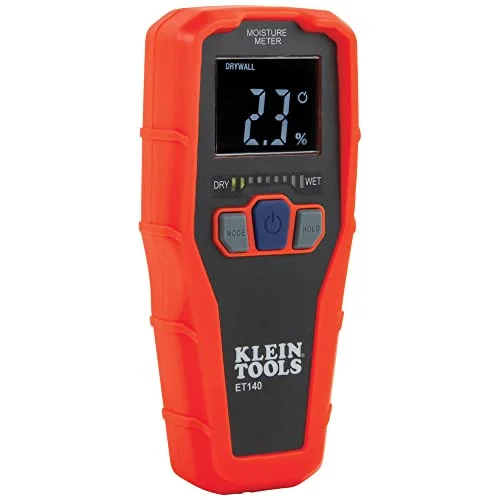 |
Klein Tools ET140 Pinless Moisture Meter – $49.97 Whichever wood you pick, this pinless meter tells you when pressure-treated lumber has actually dried out enough to stain without trapping moisture underneath the finish.
|
If you want a natural look you can eventually leave unfinished, pick cedar. If you’re working with a tighter budget, need ground contact, or want maximum rot resistance without annual sealing, pressure-treated lumber is the more practical choice. Either way, if you plan to stain or seal the wood, check its moisture content first – staining lumber that’s still wet is one of the most common reasons a deck finish fails within the first year.
Cedar Decking: Natural Advantages
Cedar decking, typically Western Red Cedar or a similar decking-grade cedar species, is naturally resistant to rot and insects without any chemical treatment. That resistance comes from natural oils and tannins in the wood itself – the same compounds that give cedar its reddish-brown color and distinctive aroma, and that protected the living tree from insects and fungi before it was ever milled into a board.
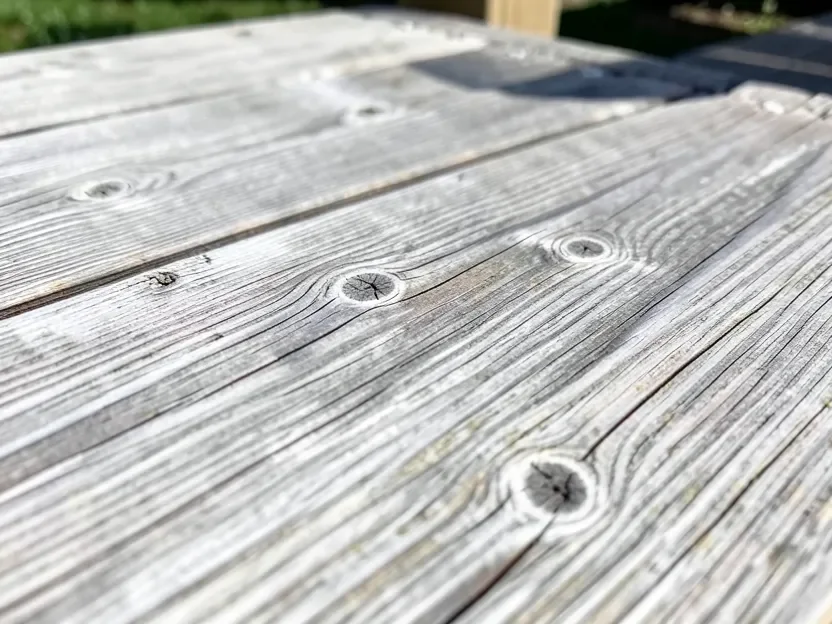
Cedar is also noticeably lighter than pressure-treated lumber, which makes it easier to cut, carry, and fasten by hand – a real practical benefit if you’re building the deck yourself rather than hiring a crew. The tradeoff is cost: cedar typically runs 30 to 50 percent more than pressure-treated lumber for the same board footage, and it’s a softer wood, so it dents and scratches more easily under heavy furniture or foot traffic.
Pressure-Treated Lumber: The Budget-Friendly Choice
Pressure-treated lumber is usually southern yellow pine that’s been forced under pressure to absorb a chemical preservative deep into the wood fibers, rather than just coated on the surface. The industry moved away from the older CCA (chromated copper arsenate) treatment for residential use decades ago over arsenic exposure concerns; today’s standard is ACQ (alkaline copper quaternary) or a similar copper-azole formulation, both considered safe for residential decks, fences, and play structures when handled normally (wash your hands after cutting it, and don’t burn the scraps).
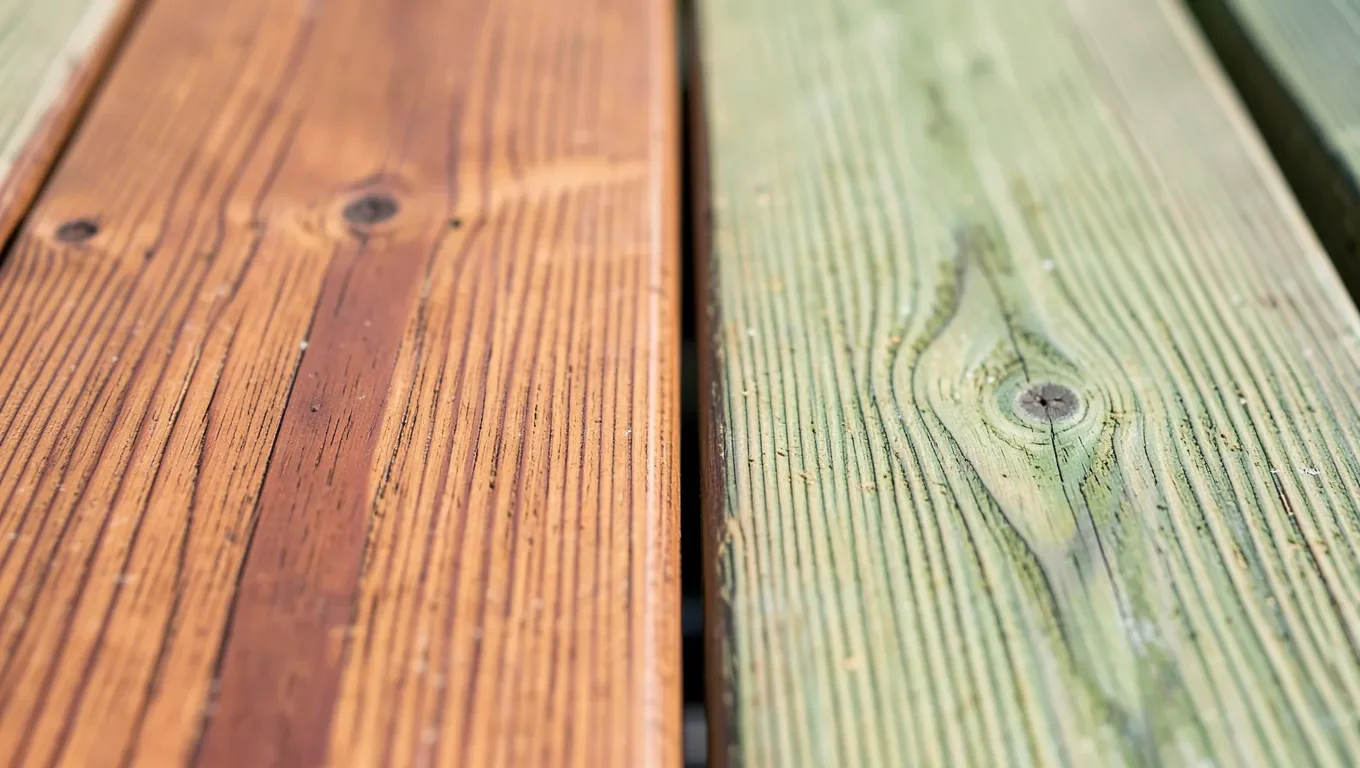
Because the preservative is doing the durability work instead of the wood’s own chemistry, pressure-treated lumber is significantly cheaper and more widely available at any home center. It’s also heavier and denser than cedar, which some builders actually prefer for structural framing, though it can be harder to hand-cut and drill. Fresh from the treatment plant, it often has a faint greenish tint that fades to a tan-brown over the following months.
The Practical Difference Most Guides Skip: Dry-Out Period vs Natural Weathering
Almost every cedar-vs-pressure-treated comparison online stops at price and durability. Two practical timing issues matter just as much once you’re actually building and finishing the deck.
Pressure-treated lumber needs a dry-out period before you stain it. Freshly treated boards are often still wet from the treatment process itself, not just from weather. If you stain or seal the wood before it’s actually dry, that moisture gets trapped underneath the finish, and the result is peeling, blistering, or a stain that never fully cures. Most manufacturers recommend waiting anywhere from a few weeks to a couple of months depending on your climate and the lumber’s original moisture content – the reliable way to know for sure is to check with a moisture meter rather than guessing by the calendar. A reading at or below roughly 15% moisture content is the general threshold most stain manufacturers look for before they’ll warranty the finish.
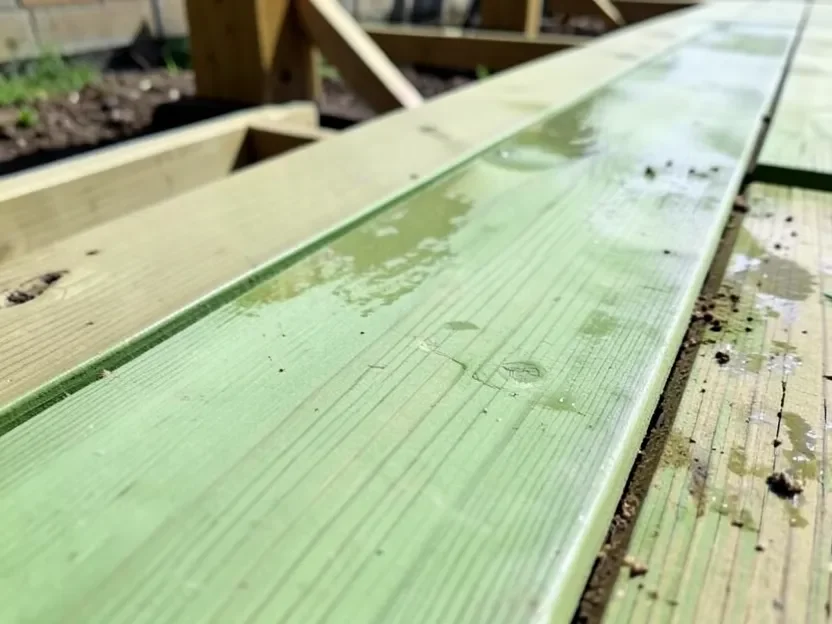
Cedar offers a no-finish option that pressure-treated pine doesn’t really have. Because cedar’s rot resistance is built into the wood itself rather than a coating, you can leave it completely unfinished and it will weather to an attractive silvery-gray patina over a year or two outdoors. Pressure-treated pine can also gray with age, but it doesn’t weather nearly as evenly or attractively, and skipping a finish on PT lumber means losing some of the surface protection against splitting and splintering that a sealer provides. If a genuinely low-maintenance, no-stain deck is the goal, that’s a choice cedar offers in a way PT lumber doesn’t.
Cost Comparison
Pressure-treated lumber wins on upfront price every time – expect to pay noticeably less per board foot than cedar for the same dimensional lumber. Cedar’s premium buys you the natural look and the option to skip finishing altogether, but if your budget is the deciding factor, pressure-treated lumber is the more affordable path to a structurally sound deck.
Durability and Lifespan
Both materials can last 15 to 25+ years with reasonable care, but the type of durability differs. Pressure-treated lumber’s chemical protection makes it the better choice for any part of the structure in direct ground or soil contact, since cedar’s natural resistance isn’t strong enough for sustained ground contact. Cedar’s advantage shows above grade, where its natural oils resist rot and insects without relying on a maintained finish – if you do let the sealer lapse for a season, cedar tends to tolerate that gap better than bare, unsealed pressure-treated wood does.
Maintenance Requirements
Cedar needs a UV-protective sealer every one to three years to keep its color from fading gray (or you can let it weather on purpose, as covered above). Pressure-treated lumber needs sealing on a similar schedule to prevent surface checking and splintering, but only after that initial dry-out period has passed. Both benefit from an annual wash with mild soap and water and a quick inspection for loose fasteners, splits, or soft spots.
Which Should You Choose?
Pick pressure-treated lumber if: your budget is the top priority, part of the structure touches the ground, or you want the widest availability at any lumberyard. Pick cedar if: you want a natural warm color and aroma, you’re willing to pay 30-50% more, and you like having the option to skip finishing entirely and let it weather to gray. Many decks actually mix both – pressure-treated joists and framing underneath for ground-level durability, with cedar decking boards on top for the look and feel you actually see and walk on. If your project is an overhead patio cover rather than a walking-surface deck, the wood selection considerations are different since beam spans and roof loads matter more than foot traffic – see our guide to what kind of wood works best for a patio cover.
Frequently Asked Questions
Which wood is more durable, cedar or pressure-treated?
Both are durable in different ways. Pressure-treated wood’s chemical preservative gives it stronger resistance to rot and insects in demanding conditions like ground contact, while cedar’s durability comes from its own natural oils and holds up well above grade, though it’s a softer wood that dents more easily.
Is cedar more expensive than pressure-treated wood?
Yes. Cedar typically costs 30 to 50 percent more than pressure-treated lumber for the same board footage, which is the main reason budget-conscious builders lean toward pressure-treated wood.
How long should pressure-treated lumber dry before staining?
It depends on the lumber’s original moisture content and your climate, but plan on anywhere from a few weeks to a couple of months. Rather than guessing by the calendar, check the wood with a moisture meter and stain once it reads at or below roughly 15% moisture – staining it wet traps moisture under the finish and causes peeling or blistering.
Can cedar decks be used for ground contact?
Generally, no. Cedar’s natural resistance isn’t as robust as pressure-treated lumber’s chemical protection, and sustained ground contact can lead to rot even in cedar. Use pressure-treated, ground-contact-rated lumber for posts and any framing that touches soil.
Are modern pressure-treated woods safe for decks?
Yes. Modern pressure-treated lumber uses preservatives like ACQ or copper azole, which replaced the older arsenic-based CCA treatment for residential use decades ago. These modern treatments are considered safe for decks, fences, and play structures with normal handling precautions.
Summary
Cedar and pressure-treated lumber both make solid decks – the real decision comes down to budget, ground contact, and how much finishing work you want to commit to. Pressure-treated wood is the cheaper, more available, ground-contact-rated option, but give it time to dry before staining. Cedar costs more but lets you skip finishing altogether if you’re fine with it weathering to a natural gray. Check moisture content before you stain either one, and you’ll avoid the single most common deck-finish failure.
Sponsored / affiliate links. As an Amazon Associate I earn from qualifying purchases. I may earn additional commission from eligible campaigns.