Cedar vs Pine: Ultimate Wood Comparison Guide
Picking the right wood can seem tricky at first. Many people wonder about the differences, making the Cedar vs Pine: Ultimate Wood Comparison Guide a common search. It’s easy to get lost with all the options out there.
But don’t worry! We’ll break it down simply. This guide will walk you through everything, step by step, so you can choose with confidence.
Let’s start by looking at what makes each wood special.
Understanding Wood Properties
When we talk about wood for projects, two big names often come up: cedar and pine. They’re popular for many reasons, but they’re also quite different. Knowing these differences helps you pick the best one for what you want to build.
This section will explore the basic traits of each wood type so you can see their unique strengths.
Grain and Appearance
The way wood looks is a big part of its appeal. Cedar and pine have distinct patterns that set them apart.
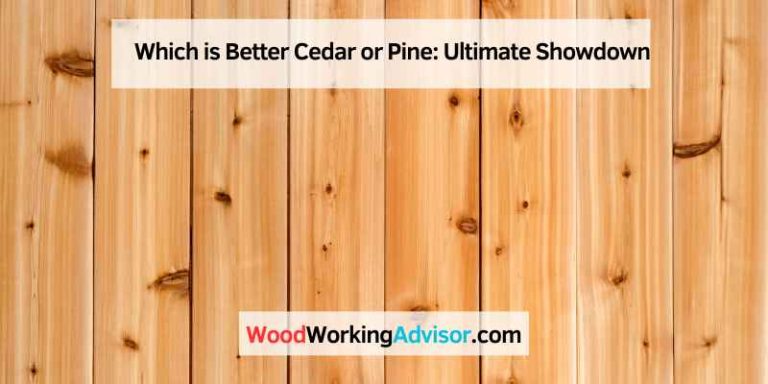
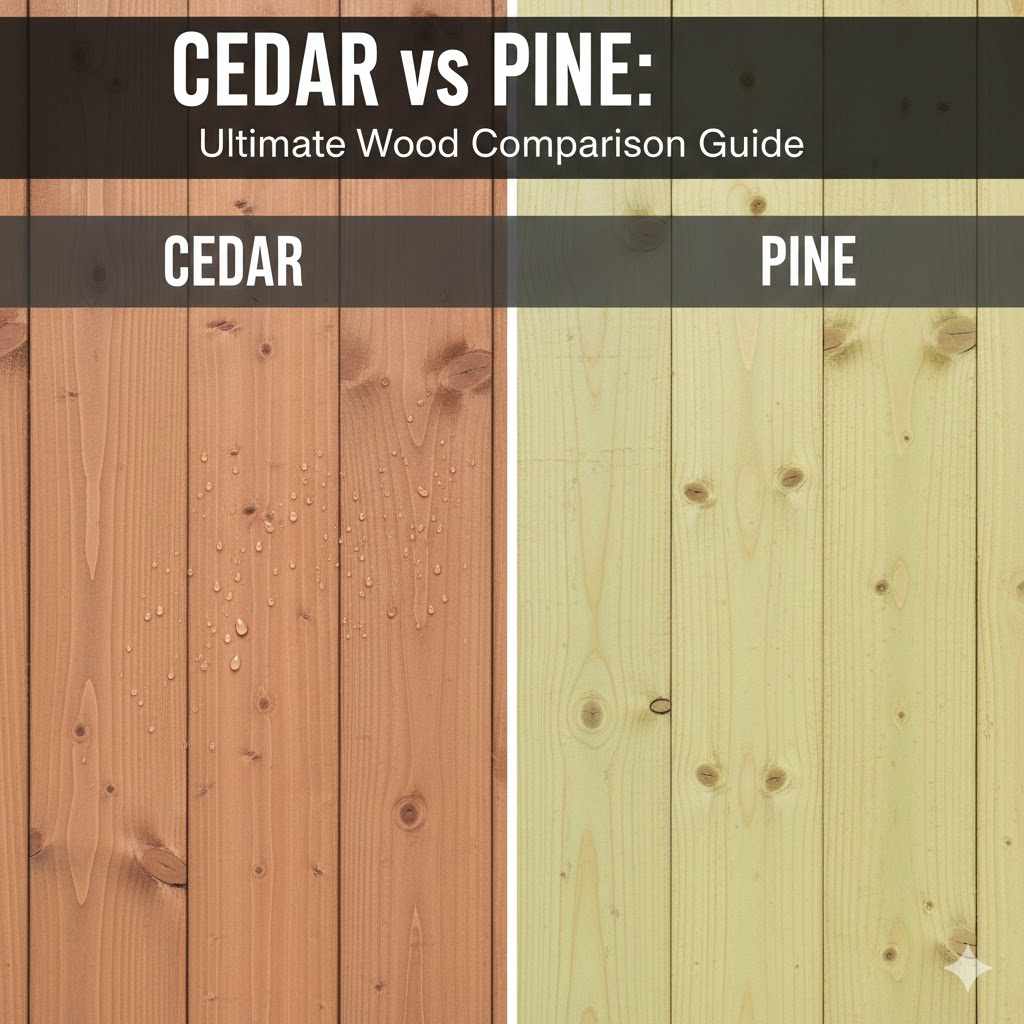
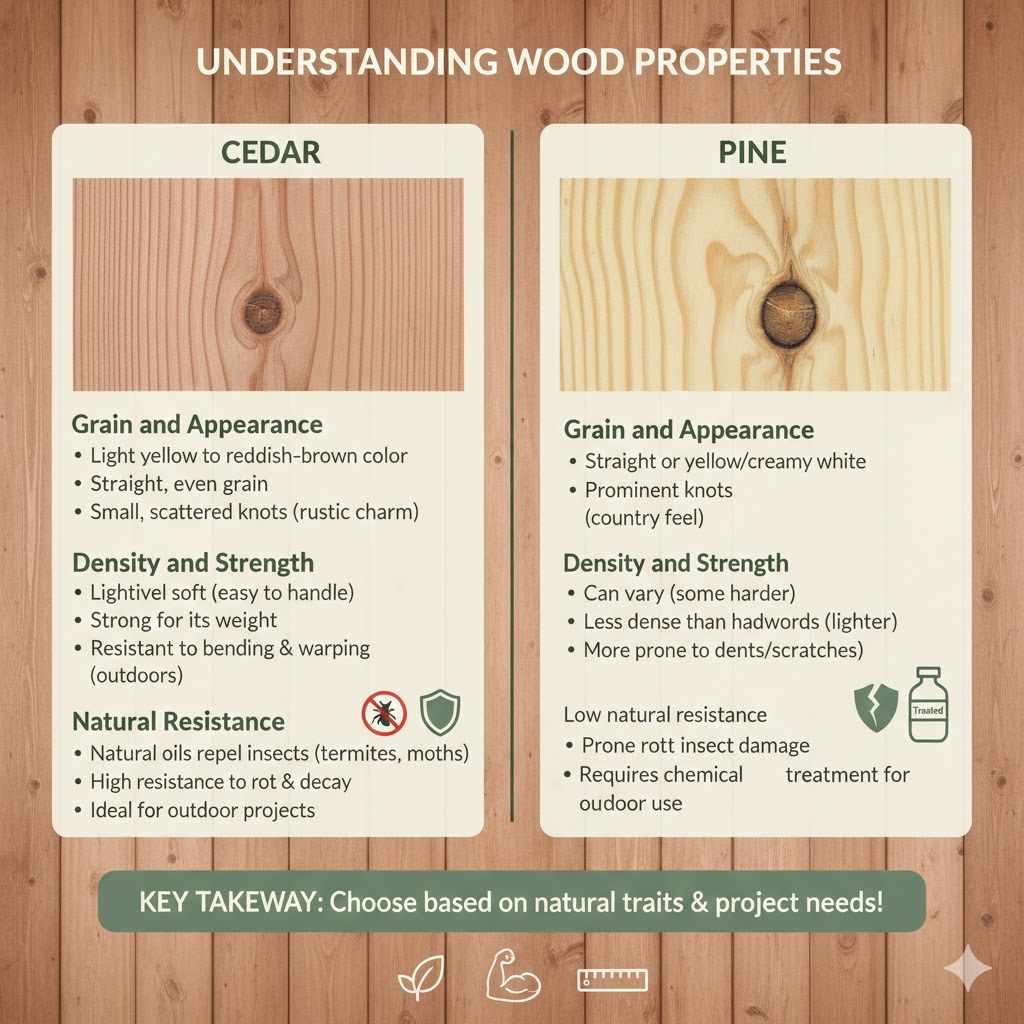
Cedar wood often has a beautiful, natural color that ranges from light yellow to reddish-brown. Its grain is usually straight and even, which makes it easy to work with. You might also notice small knots scattered throughout.
These knots give it a rustic charm that many people love for outdoor furniture or decorative items.
Pine wood, on the other hand, can vary a lot. It’s typically lighter in color, often a pale yellow or creamy white. The grain can be straight or wavy, and it often has more prominent knots than cedar.
Some people like the knotty look of pine for a country feel. Others prefer clear pine without many knots for a cleaner appearance.
Density and Strength
How strong and heavy a wood is matters for durability.
Cedar is known for being relatively soft and lightweight. This makes it easy to carry and handle, which is a plus for DIY projects. Despite being soft, it’s surprisingly strong for its weight.
It holds up well against bending and warping, especially when used outdoors.
Pine can also be soft, but its strength can vary depending on the type of pine. Some pines are harder and denser than others. Generally, pine is less dense than many hardwoods, making it lighter than woods like oak.
This means it might dent or scratch more easily than some other woods.
Natural Resistance
One of the biggest differences between cedar and pine is how well they fight off bugs and rot.
Cedar is famous for its natural resistance to insects and decay. This is due to natural oils and compounds found in the wood. These compounds act like a shield, keeping away termites, moths, and other pests.
They also help the wood last longer in damp conditions without rotting. This is why cedar is a top choice for outdoor projects like decks, fences, and outdoor furniture.
Pine, especially untreated pine, does not have the same level of natural resistance. It is more prone to rot and insect damage, especially when exposed to moisture. To use pine outdoors or in damp areas, it usually needs to be treated with chemicals to protect it.
This treatment helps it last longer, but untreated pine is best kept for indoor use.
Cedar vs Pine for Outdoor Projects
When you’re planning to build something that will sit outside, like a deck, fence, or garden bench, choosing the right wood is super important. You want it to look good and last a long time, even with rain, sun, and bugs. This part of our Cedar vs Pine: Ultimate Wood Comparison Guide looks at which wood works better outside and why.
Durability in the Elements
Outdoor projects face harsh weather. Wood needs to withstand sun, rain, and temperature changes without falling apart.
Cedar wood is a champion in the outdoors. Its natural oils make it very good at resisting moisture and decay. This means it’s less likely to rot, warp, or crack when exposed to the weather.
Cedar can handle direct sunlight and rain for many years without needing much upkeep. It maintains its shape and strength, making it a reliable choice for decks and fences that need to last.
Pine wood, if not treated, is not as suited for outdoor conditions. It can absorb moisture easily, leading to rot and mildew. The sun can also dry it out, causing it to warp or split.
For pine to be used outdoors, it must be pressure-treated with preservatives. This treatment protects it from bugs and moisture, making it last much longer. However, even treated pine might not last as long as naturally resistant cedar.
Pest Resistance
Bugs are a major problem for outdoor wood. Termites, carpenter ants, and beetles can quickly destroy a structure.
Cedar wood naturally repels many common wood-boring insects. The aromatic oils in cedar are a natural deterrent. This means you’re much less likely to see termites or other pests damage your cedar fence or deck.
This built-in protection saves you from having to use chemical treatments to keep bugs away, making it a safer choice for your home and family.
Pine wood, particularly untreated pine, is very attractive to wood-boring insects. Termites and carpenter ants can easily infest it, weakening the structure over time. If you use pine outdoors, it’s almost essential to use treated lumber or apply pest-repellent finishes.
Without these protections, pine structures can be significantly damaged within a few years.
Cost and Availability
When starting a project, the price of materials is a big factor.
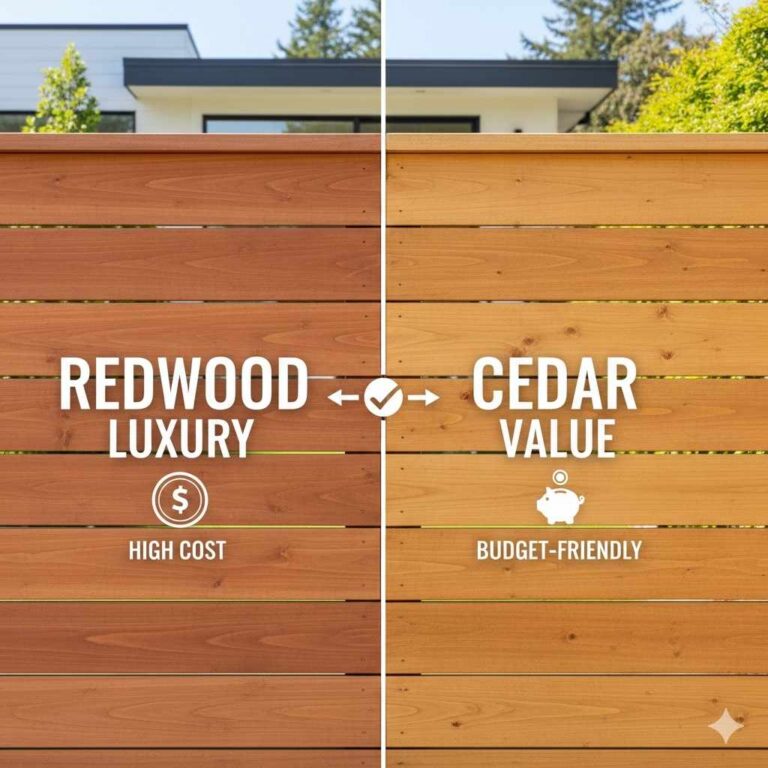
Cedar can sometimes be more expensive than pine. This is because it grows more slowly and takes longer to mature. However, its natural durability often means it’s a better long-term investment for outdoor projects.
You might pay more upfront, but you’ll likely spend less on repairs and replacements over time compared to less resistant woods.
Pine is generally more affordable and widely available than cedar. This makes it a budget-friendly option, especially for large projects. If you choose pine for outdoor use, remember to factor in the cost of treatments or sealants needed for protection.
While the initial material cost is lower, the ongoing maintenance and potential for shorter lifespan might balance out the savings.
Sample Outdoor Project Scenario
Imagine you want to build a beautiful backyard fence. You want it to look great for years without constant worries about rot or bugs.
- Option 1: Cedar Fence You choose cedar boards. They have a lovely reddish-brown color and a nice scent. You assemble the fence easily because cedar is lightweight. Over the next ten years, you only need to wash it down now and then. It stays strong, looks good, and you never see termites or rot.
- Option 2: Pine Fence You decide to save money and choose pine. You buy pressure-treated pine to make it last longer outside. You build the fence, which feels a bit heavier than cedar. After five years, you notice some boards are starting to warp a little from the sun. After eight years, you might need to
This scenario shows how cedar’s natural resistance can lead to less work and a longer-lasting fence, even if it costs more upfront. Pine can work, but it requires extra steps for protection.
Cedar vs Pine for Indoor Projects
When building furniture, cabinets, or decorative items for inside your home, the needs can be a bit different. You’re not as worried about rain and bugs, but appearance, ease of use, and cost become more important. This part of the Cedar vs Pine: Ultimate Wood Comparison Guide explores how cedar and pine stack up for indoor use.
Aesthetics and Finishing
How the wood looks and how well it takes finishes are key for indoor pieces.
Cedar has a distinct aroma and color that many find appealing. Its reddish hues and unique grain patterns can add a lot of character to furniture or decorative items. Cedar can be left natural to showcase its beauty, or it can be finished with oils or clear coats to enhance its look.
While it can be painted, its natural grain and color are often its best features.
Pine is a versatile wood for finishing. Its light color acts like a blank canvas, making it easy to stain in a wide range of colors to match any decor. It also takes paint very well, allowing for a smooth, uniform finish.
Whether you want a rustic knotty look or a sleek, modern surface, pine can achieve it. This flexibility makes pine a popular choice for a variety of indoor applications.
Workability and Ease of Use
For DIY enthusiasts and woodworkers, how easy a wood is to cut, shape, and assemble is crucial.
Cedar is known for being very easy to work with. It’s soft and lightweight, which means it cuts cleanly and sands smoothly. It doesn’t dull tools as quickly as harder woods.
This makes it a great choice for beginners or for projects where you need to do a lot of cutting and shaping. Its lightness also makes it easier to handle during assembly.
Pine is also considered a soft wood and is generally easy to work with. It cuts, sands, and glues well. However, some varieties of pine can be a bit softer or have more pitch (a sticky resin) than cedar, which can sometimes make it a little messier to work with.
The knots in pine can also be tricky; they can sometimes break off or cause tear-out if you’re not careful when cutting. Still, for most indoor projects, pine is a very user-friendly wood.
Cost Effectiveness for Interiors
Budget is always a consideration for home projects.
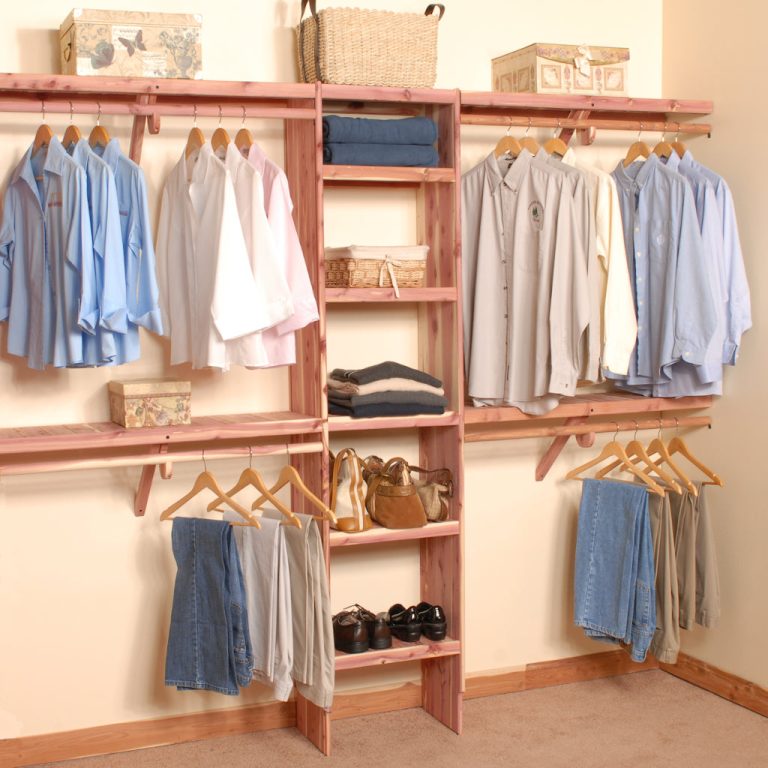
While cedar is often more expensive than pine, its use indoors can sometimes be justified by its unique aesthetic appeal and natural scent. For projects where a distinct look or aroma is desired, like cedar closets or chests, the higher cost can be worthwhile. For general indoor furniture or shelving, however, cedar might be more than necessary if other woods can achieve a similar look at a lower price.
Pine is typically one of the most affordable wood options available. This makes it an excellent choice for large indoor projects where cost savings are important, such as building entire sets of shelves, cabinets, or simple furniture. The lower cost allows for more experimentation and the possibility of larger builds without breaking the bank.
Its availability in many different grades and sizes also adds to its cost-effectiveness.
Sample Indoor Project Scenario
Let’s say you want to build a cozy window seat with built-in storage. You want it to look nice and be easy to build.
- Option 1: Cedar Window Seat You decide to use cedar. Its warm color gives the seat a natural, inviting look. It’s easy to cut the pieces for the seat and the storage drawers. The natural scent of cedar is a pleasant bonus, making the space feel fresh. The finished seat looks beautiful and feels sturdy.
- Option 2: Pine Window Seat You opt for pine to save some money. You choose pine boards with fewer knots for a cleaner look. You can easily paint or stain the pine to match your room’s decor perfectly. Building the seat is straightforward, and the storage drawers are simple to construct. The finished seat is functional and fits your budget.
This comparison highlights how both woods can work for indoor projects. Cedar offers natural beauty and scent, while pine provides affordability and finishing versatility.
Key Differences Summarized
Understanding the main points where cedar and pine differ is crucial for making informed decisions. This section offers a quick look at their most significant distinctions, helping you remember what matters most for your project.
Natural Resistance vs. Treatment Needs
One of the most significant differences lies in how well they stand up to nature’s challenges without help.
Cedar wood contains natural oils and compounds that make it highly resistant to decay, insects, and moisture. This means it performs exceptionally well in outdoor environments without needing chemical treatments. Its natural defenses protect it, leading to a longer lifespan and less maintenance when exposed to the elements.
Pine wood, especially common varieties, lacks this inherent resistance. It is susceptible to rot, mold, and insect infestation. For pine to be used effectively in outdoor or damp conditions, it requires pressure treatment with preservatives.
This treatment adds to the cost and can alter the wood’s appearance and feel. For indoor use, this is less of a concern, but it’s a critical factor for outdoor applications.
Appearance and Scent
The visual and olfactory qualities of wood play a big role in its appeal.
Cedar often has a rich, reddish-brown color and a distinct, pleasant aroma. This aroma is often associated with freshness and is a primary reason people choose cedar for closets, chests, and outdoor furniture. The grain is typically straight and uniform, contributing to its attractive, natural look.
Pine varies more in color, usually appearing light yellow or creamy white. It can have more prominent knots and a more varied grain pattern. While it doesn’t have a strong, distinctive scent like cedar, its neutral appearance makes it a great base for stains and paints, allowing for a wide range of aesthetic possibilities.
Weight and Density
The physical properties of the wood affect handling and structural integrity.
Cedar is a relatively lightweight wood. This makes it easier to transport, handle, and assemble, which is beneficial for DIY projects. Despite its lightness, it offers good stability and is resistant to warping and shrinking, contributing to its durability.
Pine is also generally considered a softwood and is lightweight. Its density can vary among different species. While easy to handle, its lower density compared to hardwoods means it can be more prone to dents and scratches, especially if used in high-traffic areas or for furniture that experiences a lot of wear.
Cost Comparison
Budget is a primary driver for many project decisions.
Cedar is often more expensive than pine due to its slower growth rate and natural resistance properties. The higher initial cost is frequently offset by its longevity and reduced need for maintenance, especially in outdoor settings.
Pine is typically more affordable and widely available, making it a popular choice for budget-conscious projects. The lower material cost can be attractive, but it’s important to consider the potential added costs for treatments or the possibility of a shorter lifespan for certain applications.
Comparison Table
Here’s a quick look at how cedar and pine compare side-by-side:
| Feature | Cedar | Pine |
|---|---|---|
| Natural Resistance (Pest/Rot) | High | Low |
| Outdoor Suitability (Untreated) | Excellent | Poor |
| Appearance | Reddish-brown, straight grain, aromatic | Light yellow/white, varied grain, knots |
| Weight | Light | Light |
| Workability | Easy | Easy |
| Cost | Higher | Lower |
| Finishing | Best natural or clear coat | Excellent for stain/paint |
This table provides a clear, at-a-glance overview of the key differences between cedar and pine, helping you quickly assess which wood might be best for your specific needs.
Choosing the Right Wood for Your Project
With all the information laid out, the next step is to figure out how to make the best choice for your specific project. This section will guide you in applying what you’ve learned about cedar and pine to your own building plans.
Consider the Project Location
Where will your project be used? This is a critical question.
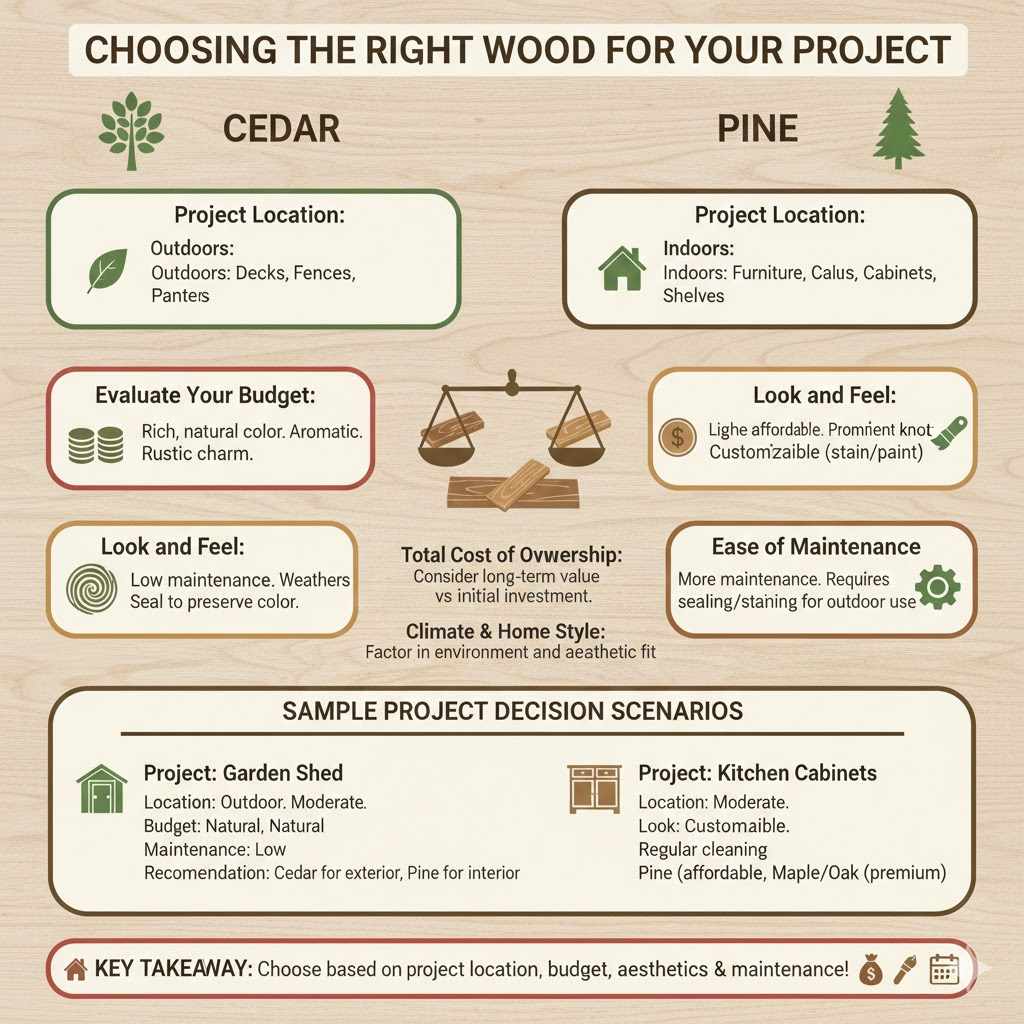
If your project is going to be outdoors, like a deck, fence, planter box, or outdoor furniture, cedar is often the superior choice. Its natural resistance to rot, insects, and moisture means it will last much longer and require less maintenance. While treated pine can be an option, cedar offers a more naturally durable solution that is also aesthetically pleasing and aromatic.
For indoor projects, such as furniture, cabinets, shelving, or decorative items, the decision can be more flexible. You have more freedom to choose based on looks, ease of finishing, and budget. Pine is often a great choice here because it’s more affordable and takes stains and paints very well, allowing you to achieve a wide variety of looks.
Evaluate Your Budget
Cost is always a major factor in any project. Think about how much you want to spend.
If your budget is tight, pine is usually the more economical option. Its lower price per board foot makes it accessible for larger projects or for those on a strict budget. Remember to factor in the cost of any necessary treatments, finishes, or extra hardware if using pine for certain applications.
Cedar generally comes with a higher price tag. However, for outdoor projects where longevity is key, the initial investment in cedar can save you money in the long run by avoiding frequent repairs and replacements. Consider the total cost of ownership rather than just the upfront material cost.
Think About the Desired Look and Feel
The aesthetic qualities of wood can greatly impact the final result.
Do you want a rich, natural color and a pleasant aroma? Cedar offers a distinctive look with its reddish hues and characteristic scent, which is often preferred for projects where natural beauty is the main focus, like cedar chests or high-end outdoor furniture.
If you need a wood that can be easily customized to match your home decor, pine is an excellent choice. Its light color and consistent grain make it ideal for staining to mimic other woods or for painting to create a specific finish. It’s very versatile for achieving different styles, from rustic to modern.
Ease of Maintenance
How much time and effort are you willing to put into maintaining your project?
Cedar requires very little maintenance, especially for outdoor use. It can be left to weather naturally to a silvery-gray color, or it can be sealed to preserve its original color. Its inherent resistance means you won’t need to worry about frequent treatments for rot or pests.
Pine, particularly untreated pine, will require more maintenance if exposed to the elements. It will need regular sealing or staining to protect it from moisture and UV damage. Even treated pine benefits from occasional reapplication of sealants or finishes to ensure it lasts as long as possible.
Sample Project Decision Scenarios
Let’s walk through a couple of common project types to see how to apply these considerations.
- Project: Building a Garden Shed
- Location: Outdoor.
- Budget: Moderate.
- Look: Natural, durable.
- Maintenance: Low.
- Recommendation: Cedar would be ideal for the exterior due to its superior resistance to weather and insects. Pine could be used for interior framing if budget is a concern, provided it’s protected from moisture.
- Project: Creating Custom Kitchen Cabinets
- Location: Indoor.
- Budget: Moderate.
- Look: Customizable, smooth finish.
- Maintenance: Regular cleaning.
- Recommendation: Pine is a very practical choice. It’s affordable and can be stained or painted to match any kitchen style. Its workability makes it easy to build custom sizes. For a more premium look and feel, a hardwood like maple or oak might be considered, but pine is a strong contender for budget and flexibility.
These scenarios illustrate how different project requirements lead to different wood choices, even when comparing just cedar and pine.
Frequently Asked Questions
Question: Is cedar more expensive than pine?
Answer: Yes, cedar is generally more expensive than pine. This is due to its slower growth rate and natural resistance properties, which make it a more premium material.
Question: Which wood is better for outdoor decks cedar or pine?
Answer: Cedar is generally better for outdoor decks because of its natural resistance to rot, decay, and insects. Pine, especially if not pressure-treated, is much more susceptible to these issues.
Question: Can you paint cedar or pine?
Answer: Yes, both cedar and pine can be painted. Pine is often preferred for painting because its light color provides a more uniform base, while cedar’s natural color and grain are often desired and look best with clear finishes.
Question: Does cedar smell good?
Answer: Yes, cedar has a distinct, pleasant, aromatic smell that many people find appealing. This is one of the reasons it’s used for closets and chests.
Question: Which wood is easier to work with cedar or pine?
Answer: Both cedar and pine are considered softwoods and are relatively easy to work with. They cut, sand, and shape well, making them good choices for DIY projects.
Summary
Choosing between cedar and pine depends on your project. Cedar offers unmatched natural durability for outdoor use and a lovely aroma. Pine is budget-friendly and highly versatile for indoor finishing.
Both are workable. For outdoor projects, cedar often wins for longevity. For indoor projects, pine offers great value and flexibility.
Your project’s location, budget, and desired look will guide you to the perfect wood choice.