How to Tell If Cedar Is Treated: 7 Signs Pros Check
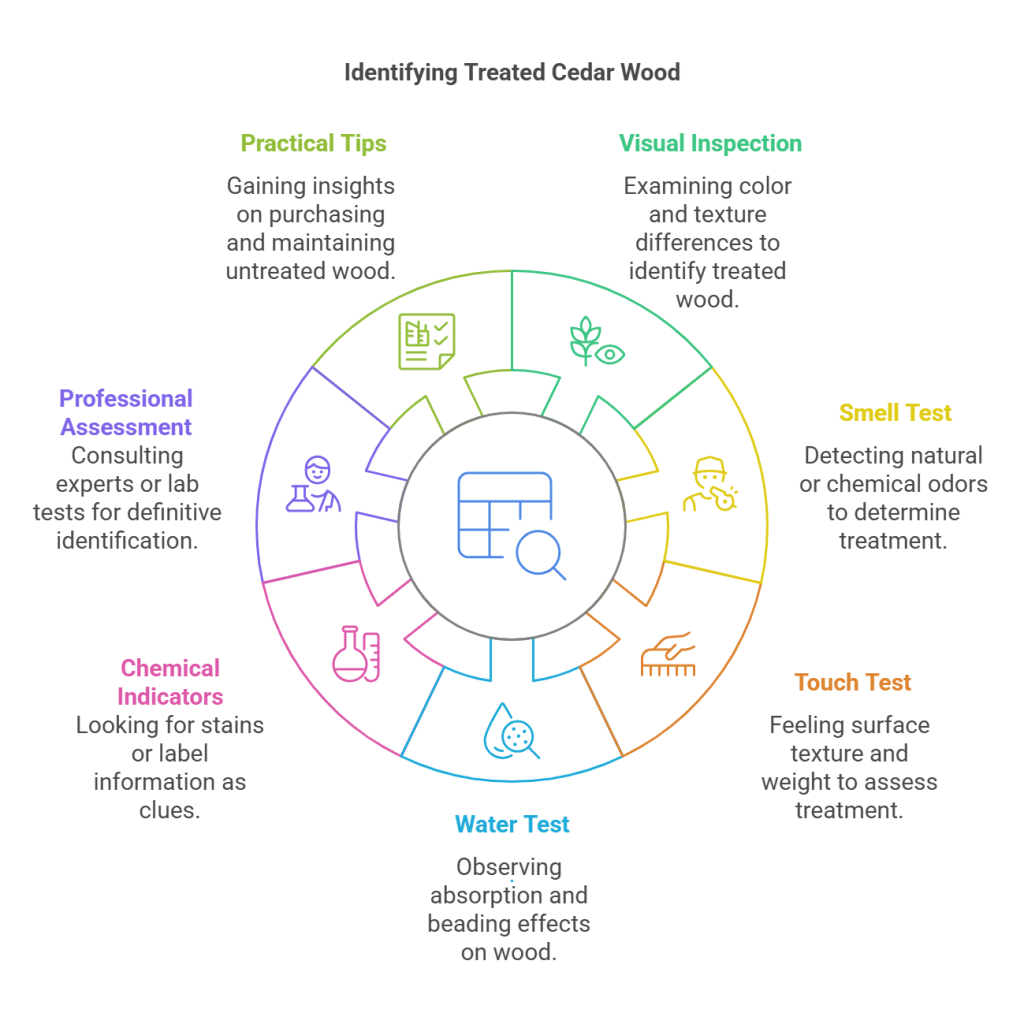
Cedar is rarely actually pressure-treated — its natural oils already resist rot and insects, so what people call “treated cedar” is usually a different species (southern yellow pine or Douglas fir) sold on the same shelf. Sealing a copper-treated board with a finish meant for untreated wood can trap moisture and cause early failure. This guide covers 7 checks — color, smell, weight, the end tag — that tell them apart in under two minutes.
Quick Answer
Genuine cedar is almost never pressure-treated commercially, so if a board looks treated (greenish/brown tint, chemical smell, an “PT” end tag stamped on it), it’s very likely a different species — not cedar. Confirm with the water-bead test and the end tag before you buy or finish it.
Why “Treated Cedar” Is Rarer Than You Think
Pressure-treated wood is lumber forced into a sealed cylinder with preservative chemicals (usually copper azole or ACQ) under vacuum pressure so the wood absorbs them deep into its cells — the same chemistry that keeps Treated wood for decades. Cedar rarely goes through this process for one simple reason: its heartwood already contains natural oils (thujaplicins) that resist decay and repel insects on their own, so treating it adds cost without adding much protection. Western red cedar utility poles are a rare commercial exception — dimension lumber sold at a home center almost never is.
That means when someone finds a board at the lumberyard stacked near the cedar wood that looks treated, it’s usually a completely different species — southern yellow pine or Douglas fir — not cedar that happens to have been treated. Retailers sometimes shelve them side by side because both are used for the same outdoor jobs (fencing, decking, siding), and that proximity is where most of the confusion starts. Confirming the species before you confirm the treatment saves a wasted trip back to the store.
Best Wood Moisture Meter Pick
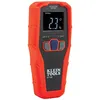 |
Klein Tools ET140 Pinless Moisture Meter Reads relative moisture up to 3/4” deep without leaving pin holes — useful for the water-bead check below and for confirming a board is dry enough to seal.
|
As an Amazon Associate we earn from qualifying purchases.
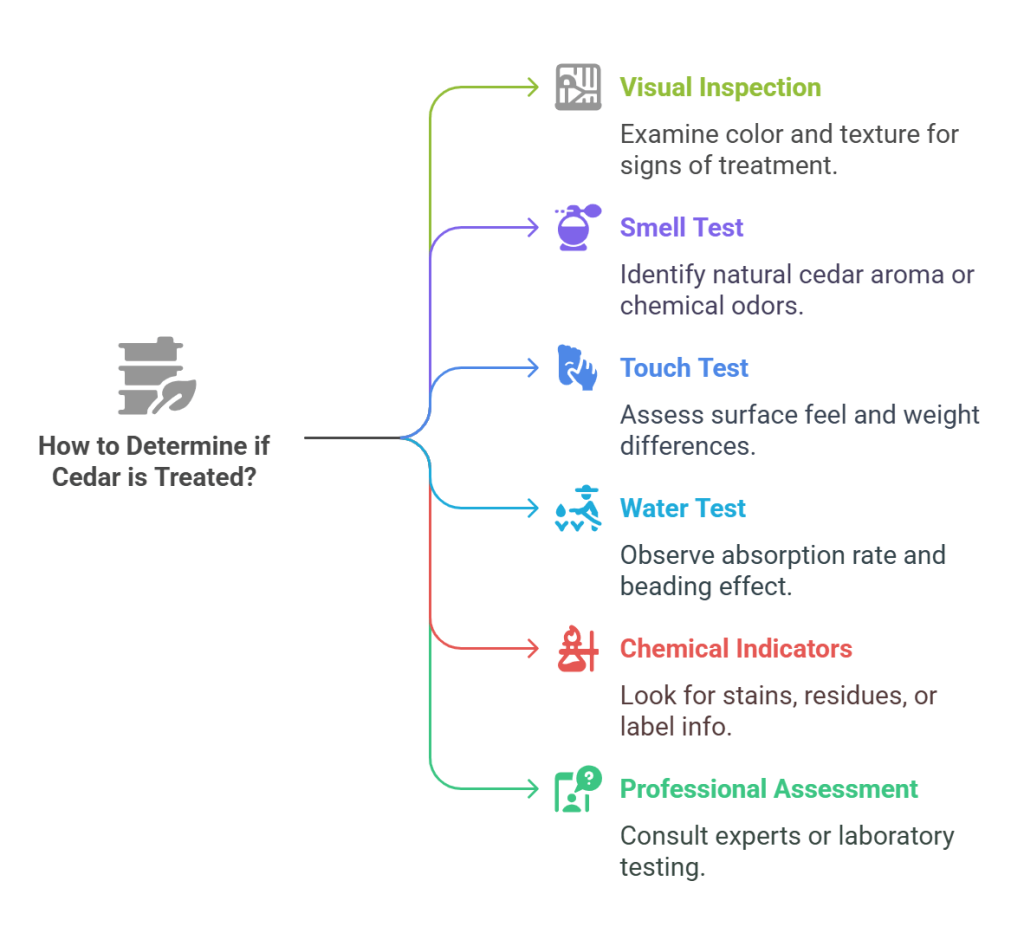
5 Ways to Check If a Board Is Treated or Natural Cedar
Run through these in order — color and the end tag settle most cases in under a minute; smell and the water test are the tie-breakers.
1. Color and Tint
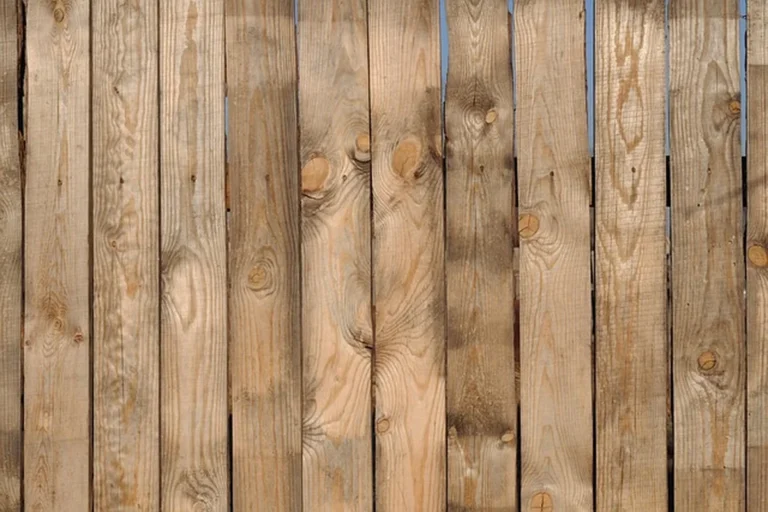
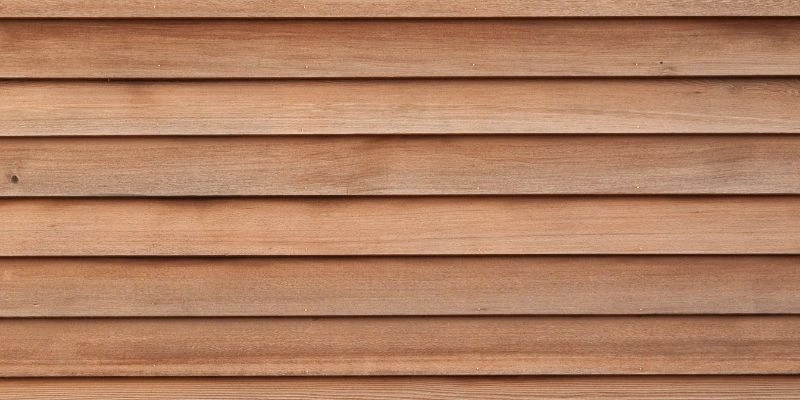
Natural cedar heartwood runs reddish-brown and fades to silvery gray with UV exposure — an even, honey-to-gray transition with no green or olive cast anywhere in the grain. Copper-based preservatives (ACQ, copper azole) leave a greenish or brownish tint that sits uniformly across the whole board, including the end grain, and that tint doesn’t fade the way natural weathering does.
| Sign | Natural Cedar | Pressure-Treated (Pine/Fir) |
|---|---|---|
| Color | Reddish-brown, fades to silver-gray | Greenish/brownish tint, doesn’t fade to gray |
| Smell | Sweet, aromatic, woodsy | Sharp, chemical, sometimes oily |
| End grain | No tag, or a species/grade stamp only | AWPA end tag: use category, chemical, retention |
| Surface | No incise marks | Small diamond-shaped incise cuts (on some PT species) |
| Water test | Absorbs within seconds | Beads and sits on the surface |
2. Smell
Natural cedar has a sweet, cedar-chest aroma from its own oils — identical whether the board is fresh-cut or ten years old. Treated lumber carries a sharper, chemical smell right after treatment that can read as paint or glue, though it fades over months of outdoor exposure — so an older treated board may not smell like much of anything, which is itself a clue it isn’t cedar (cedar’s scent doesn’t fully disappear).
3. Weight and Texture
Fresh from the treating plant, PT lumber holds extra moisture from the chemical bath and feels noticeably heavier than a same-size cedar board — the difference shrinks as it dries out over a few weeks. Cedar itself is one of the lightest commercial softwoods (roughly 23 lb per cubic foot dry), so a board that feels dense for its size is more likely pine, fir, or a treated species than cedar at all. Texture follows the same logic: cedar is soft and a bit fibrous to the fingernail; PT pine feels harder and the surface is often glassier where the chemical has sealed the pores.
4. The Water-Bead Test
Drip a few drops of water on a flat, unfinished section of the board. Untreated cedar soaks the water in within 10–20 seconds because its cell structure is open. Treated wood repels it — the droplets sit and bead on the surface for a minute or more before slowly spreading. This test only works on bare wood; a stained or sealed board will bead water regardless of species, so scrape a small test spot first if the surface has a finish on it.
5. The End Tag and Stamp
Every piece of commercially pressure-treated lumber sold in the US carries a small colored end tag required by the American Wood Protection Association (AWPA). It lists the use category (UC3B for above-ground, UC4A for ground contact), the preservative used, the retention level in pounds per cubic foot, and the treating company. Cedar boards never carry this tag — at most they’re stamped with a species and grade mark (e.g., “WRC” for western red cedar). No end tag and no chemical stamp is the single most reliable sign you’re holding real, untreated cedar.
When to Get a Lab Test Instead of Guessing
The checks above settle the question for almost every home project, but two situations call for certainty a visual check can’t give: buying reclaimed or salvaged lumber with no tag history, or any wood going into a food-contact surface (a cutting board, a planter for edibles) where residual arsenic-era CCA treatment would be a real hazard. A wood testing lab can identify preservative chemicals from a small sample, and a certified home inspector carries a chemical swab kit for on-site checks. For a routine deck or fence board, the end tag and water test above are enough.
Caring for Untreated Cedar vs. Treated Lumber
Once you know which one you have, the maintenance differs. Untreated cedar holds up 15–20 years outdoors on its own natural oils, but those oils fade with UV exposure, so a UV-blocking oil finish every 2–3 years keeps the color from graying prematurely and adds real water resistance. Treated lumber needs the chemical to fully dry first — wait until a water-bead test on the board itself shows absorption (roughly 2–4 weeks in summer) before applying any sealer or stain, or the finish won’t bond and will peel within a season. Either type should be checked yearly for cracking, cupping, or soft spots and repaired before rot has a chance to spread into the surrounding wood.
Frequently Asked Questions
How can you tell if wood is pressure treated or cedar?
Check the end grain for an AWPA tag listing a use category and preservative chemical — cedar never carries one. Pressure-treated wood usually shows a greenish or brownish tint and a sharp chemical smell; cedar has a natural reddish-brown color and a sweet, woodsy aroma instead.
Can cedar actually be pressure treated?
Technically yes — cedar can absorb preservative chemicals under pressure, and treated cedar utility poles do exist. But it’s rarely done for dimension lumber sold at retail, because cedar’s natural oils already resist rot and insects, so treating it adds cost without much added protection. A board labeled “treated” next to the cedar is almost always a different species.
How can you tell if wood is treated or untreated?
Look for a greenish or brownish tint that doesn’t fade with weathering, smell for a chemical odor, and check the end grain for an AWPA end tag or stamp. Untreated wood absorbs water within seconds; treated wood makes it bead on the surface.
What year did they stop putting arsenic in treated lumber?
The EPA phased out CCA (chromated copper arsenate) for residential use at the end of 2003. Lumber treated after that date uses copper azole or ACQ instead, neither of which contains arsenic.
How long will untreated cedar last outside?
Untreated cedar typically lasts 15–20 years outdoors thanks to its natural oils, which resist decay and insect damage on their own. Regular cleaning and an occasional UV-blocking oil finish can extend that further by slowing how fast the surface grays and dries out.
Conclusion
Most of the time, “treated cedar” is a labeling shortcut for a different species sitting next to real cedar at the yard — not cedar that’s actually been through a preservative treatment. Check the color, smell, weight, water-bead reaction, and end tag, and you’ll know which one you’re holding before you buy or finish it. Once you know, cedar is important means it usually needs less maintenance than the treated alternative, not more.
Sponsored / affiliate links. As an Amazon Associate I earn from qualifying purchases. I may earn additional commission from eligible campaigns.