Cedar vs Treated Wood: A Durability Showdown
Choosing the right wood for your outdoor project can be tricky. A common question, especially for beginners, is about the lifespan of different wood types. Figuring out the differences between Cedar vs Treated Wood: Which Lasts Longer? is a puzzle many people face when building things like decks or fences. Don’t worry, though! We’re going to explore this topic in a simple way. We’ll break down everything you need to know. Get ready to find out which wood is the best fit for you!
Evaluating Cedar Wood’s Lifespan
Cedar is a beautiful and fragrant wood, popular for its natural resistance to rot, decay, and insects. It is a softwood, which means it’s generally easier to work with than hardwoods. However, its natural properties significantly impact its longevity in outdoor environments. Different types of cedar, such as Western Red Cedar and Eastern White Cedar, have slightly different characteristics, but they all share key advantages. Many people value the natural appearance and the pleasant aroma cedar provides. Examining cedar’s durability helps you make informed choices about your next project.
Natural Resistance and Decay
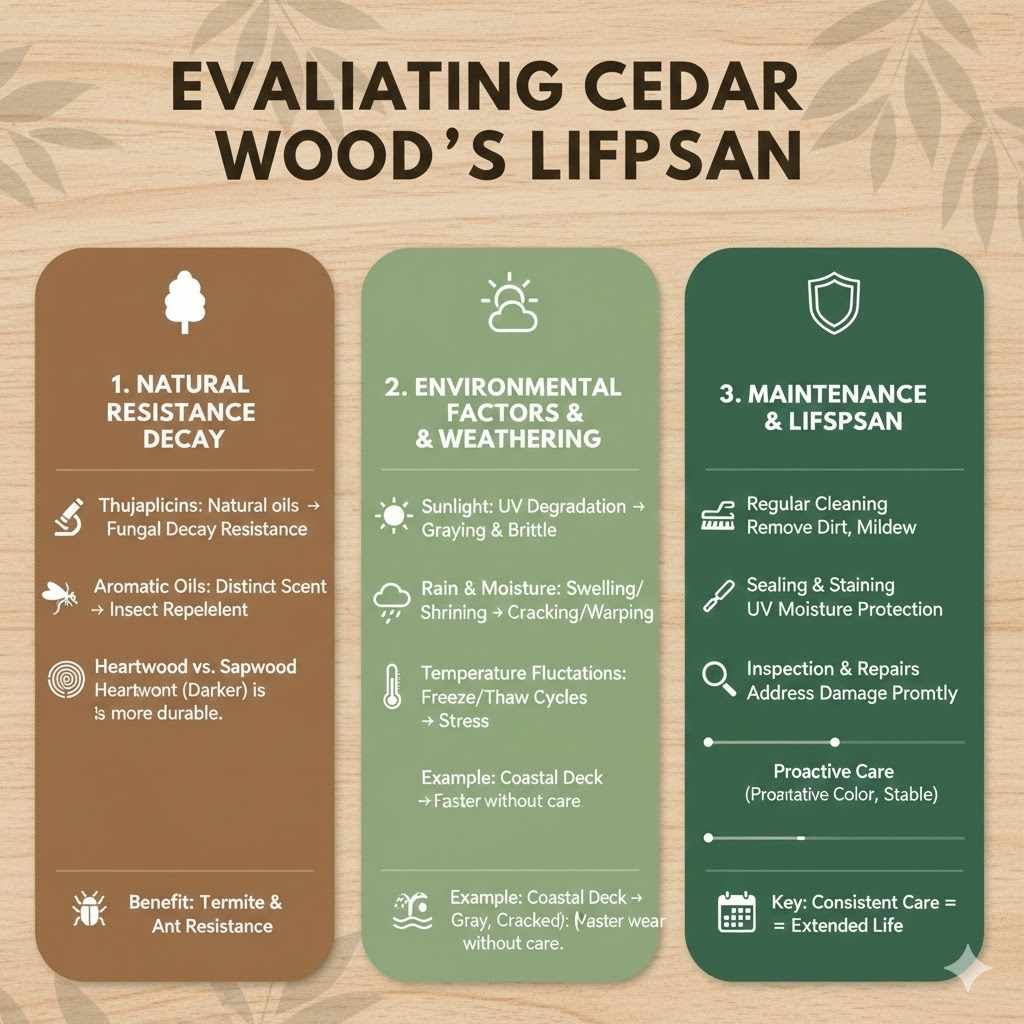
One of the main reasons cedar lasts longer than some other woods is its natural resistance to rot. Cedar contains natural oils and compounds, like thujaplicins, that act as preservatives. These oils protect the wood from fungal decay, a common cause of wood breakdown in damp conditions. Because of this, cedar is great for building projects like decks and fences, where it’s exposed to the weather. The level of protection can vary depending on the type of cedar, but all cedar varieties offer some level of natural decay resistance. The presence of these oils helps the wood withstand the test of time, making it a good investment for outdoor construction.
- Thujaplicins: These are the natural oils in cedar that act as preservatives. They make the wood less appealing to fungi that cause rot, extending the wood’s life.
- Aromatic Oils: Cedar has a distinct smell due to the presence of aromatic oils. While these are great for the scent, they also help repel some insects, protecting the wood from damage.
- Durability Factors: The durability of cedar is influenced by several factors, including the climate in which it’s used and the amount of sun and rain exposure.
Cedar’s natural oils aren’t just for keeping it from rotting. They also protect against insect attacks. Certain insects, like termites, are less likely to attack cedar compared to untreated wood. The wood’s natural defenses make it less attractive and less suitable for insect nests. This natural protection helps the wood stay intact longer, which is a major advantage for outdoor use. You get both natural decay and insect resistance, which contributes to cedar’s extended lifespan.
Environmental Factors and Weathering
While cedar is naturally resistant, its lifespan is still affected by the environment. Exposure to sunlight, rain, and temperature changes causes weathering. Weathering can cause cedar to change color and, over time, can impact its structural integrity if not properly maintained. Regular maintenance helps cedar last for many years, even in tough weather conditions. Using the right finishes or treatments is vital for keeping cedar in good shape, so it resists the elements.
- Sunlight: Direct sunlight can fade cedar’s color and break down its surface fibers. This can cause the wood to become dry and brittle.
- Rain and Moisture: Constant exposure to moisture can lead to swelling and shrinking, which can cause cracking and warping over time.
- Temperature Fluctuations: Changes in temperature, especially freezing and thawing cycles, can put stress on the wood. This can accelerate the weathering process.
Here’s a scenario to better illustrate the impact of environmental factors: Imagine you build a cedar deck in a coastal area. The constant exposure to salt spray, sun, and moisture will accelerate weathering. Without proper treatment and maintenance, like regular cleaning and sealing, the deck will likely show signs of wear and tear faster than a deck built in a drier climate. So, where you build makes a difference.
Maintenance Requirements and Lifespan Expectations
Cedar does require some maintenance to keep it in its best condition. Regular cleaning is needed to remove dirt and debris, and a quality finish should be applied to protect it from the elements. Regular maintenance includes reapplying the finish as needed, which is usually every few years, depending on the conditions. With proper care, cedar can last for many years, often 20-30 years or more. A lack of maintenance will reduce its lifespan.
- Regular Cleaning: Cleaning your cedar structure will get rid of any dirt or mildew. Using a soft brush and mild soap can help.
- Sealing and Staining: Applying a sealant or stain helps protect the wood from the sun and moisture. These finishes slow down the weathering process.
- Inspection and Repairs: Inspect the wood for any signs of damage or decay. Address any issues promptly to prevent them from worsening.
Consider two situations to help visualize maintenance impacts. First, a well-maintained cedar fence that is cleaned and sealed every few years may last over 30 years. On the other hand, a cedar deck left untreated and exposed to the elements might show significant wear and tear within 10-15 years. Maintenance makes a big difference in the wood’s lifespan.
Exploring Treated Wood’s Durability
Treated wood is designed to resist decay, rot, and insect attacks. This makes it a popular choice for outdoor projects. The process involves adding preservatives to the wood to improve its durability. The lifespan of treated wood can vary depending on the treatment type, the wood species, and the level of exposure to the elements. The main goal of treating wood is to extend its service life.
Treatment Processes and Preservatives
Treated wood goes through a process where preservatives are forced into the wood fibers under pressure. This process helps the preservatives penetrate the wood deeply. Common preservatives include copper-based compounds, which are effective in protecting against decay and insects. The type and amount of preservative used depend on the intended use of the wood and the environment. Different treatments are available, each offering a specific level of protection and influencing the wood’s longevity.
- Pressure Treatment: Wood is placed in a closed cylinder and subjected to high pressure. This forces the preservative deep into the wood cells.
- Common Preservatives: Copper azole and alkaline copper quaternary (ACQ) are commonly used because they are effective and less harmful to the environment.
- Treatment Levels: Wood is treated to different levels based on the intended use. Ground contact wood needs more protection than wood used above ground.
An example of this is a deck built with treated lumber. The lumber used for the deck’s support posts, which are in direct contact with the ground, would receive a higher level of treatment than the decking boards. This difference is important to ensure that parts of the deck exposed to the highest risks of decay and insect damage are protected. This helps to extend the life of the deck and prevents premature failure. The treatment level is key.
Environmental Impacts and Longevity
The lifespan of treated wood is greatly affected by the environment. Exposure to sun, rain, and soil contact can lead to degradation over time. The effectiveness of the preservatives can decrease over time, which reduces the wood’s resistance to decay. Proper installation and maintenance practices are crucial to extending the lifespan of treated wood. Protective measures, like proper drainage and the use of sealants, can make a significant difference in how long the wood lasts.
- Sun Exposure: Direct sunlight can break down the preservatives and cause the wood to fade and crack.
- Moisture: Constant exposure to moisture can cause swelling, shrinking, and the leaching of preservatives.
- Ground Contact: Wood in contact with the ground is more susceptible to decay and insect damage.
Think about a fence built with treated wood in a very wet area versus a dry area. In a wet location, the wood will be exposed to more moisture, leading to faster deterioration. Proper drainage, such as ensuring the fence posts are not directly in contact with standing water, can help. Also, sealing the wood with a water-repellent coating can add an extra layer of protection, which is vital in these conditions. Good installation and maintenance practices are always helpful.
Maintenance and Care
Treated wood does require maintenance to maintain its lifespan. Regular cleaning is needed to remove dirt and mildew. Applying a water-repellent sealant is vital to protect the wood. Inspection and prompt repairs are also important. The level of maintenance can influence how long treated wood lasts. Keeping up with maintenance helps the wood stay in good shape and extends its durability, regardless of the treatment type.
- Cleaning: Use a mild soap and water solution to clean the wood surface, removing dirt and mildew.
- Sealing: Applying a water-repellent sealant helps prevent moisture from penetrating the wood.
- Inspection and Repairs: Look for any signs of decay, insect damage, or cracks, and address them promptly.
Imagine two decks made with treated wood. One deck is cleaned and sealed every few years, while the other is neglected. The maintained deck will show signs of wear and tear much slower than the neglected one. It will require less repair work over time. The difference in appearance and lifespan would be noticeable after only a few years. It shows how much maintenance matters.
Comparing Cedar and Treated Wood Head-to-Head
When selecting between cedar and treated wood, it’s vital to consider their strengths, weaknesses, and suitability for various projects. Both have their advantages and disadvantages. Cedar is valued for its natural beauty and decay resistance, while treated wood is prized for its affordability and insect protection. Examining these factors helps in making a suitable choice.
Durability and Resistance Comparison
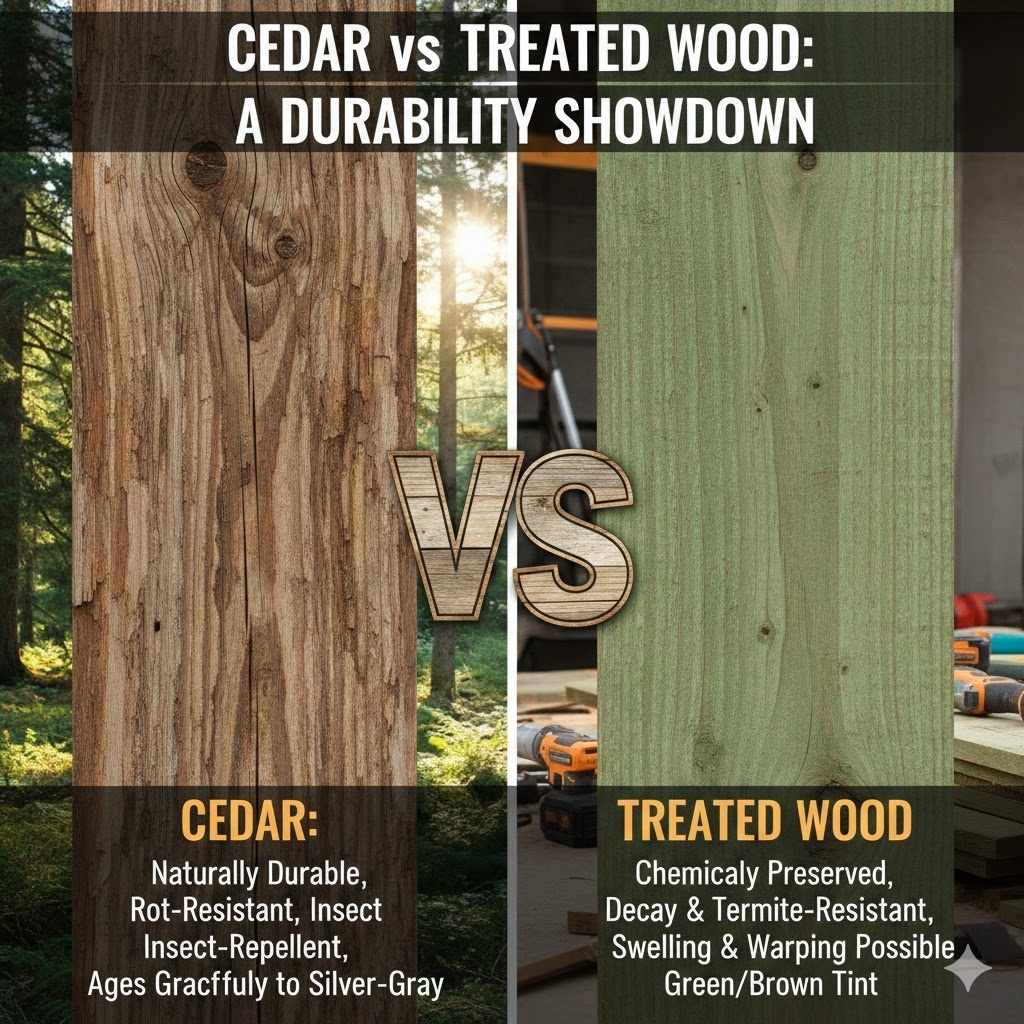
Cedar’s natural oils provide inherent decay resistance. Treated wood is chemically treated to resist decay and insects. These different methods affect how long each wood lasts. Cedar typically lasts longer than untreated wood. Treated wood can often last longer than cedar, especially in environments where it is protected from excessive moisture. Both woods offer advantages in terms of durability, but the best choice depends on the specific demands of the project and the conditions to which it will be exposed. Making a balanced evaluation is essential.
| Feature | Cedar Wood | Treated Wood |
|---|---|---|
| Natural Decay Resistance | High (due to oils) | High (due to chemical treatment) |
| Insect Resistance | Moderate | High |
| Moisture Resistance | Moderate | Variable (depending on treatment) |
| Lifespan (with maintenance) | 20-30+ years | 15-40+ years |
Here’s a comparison: consider two decks. One is made of cedar, exposed to the elements but regularly maintained. The other is made of treated wood, similarly exposed and maintained. The treated wood deck might last a bit longer, especially if it is treated for ground contact. Both decks would last many years with good care. The longevity will depend a lot on how the wood is protected and maintained.
Cost and Appearance Considerations
Cedar is generally more expensive than treated wood, due to its natural properties and the more complex harvesting processes. Treated wood is often a more budget-friendly option, making it popular for many construction projects. In terms of appearance, cedar has a warm, natural look that many people like. Treated wood typically has a more uniform appearance, although it can be stained or painted to improve its aesthetics. The best choice is often a balancing act between budget and the desired aesthetic look.
- Cedar: Offers natural beauty, with rich colors and a pleasant aroma. It is often preferred for its aesthetic appeal.
- Treated Wood: Can be painted or stained to match the desired look. It is often more cost-effective.
- Cost Differences: The cost of materials often influences choices. Budget and aesthetic look are both important.
Consider the case of building a fence. If you want a fence that looks great and has a natural look, cedar might be the right option, even if the budget is tighter. If cost is a major constraint, treated wood offers a more affordable solution that can still last many years with regular maintenance. Both options provide functional and aesthetic benefits.
Suitability for Different Projects
The type of project influences the choice of wood. Cedar is often great for decks, fences, and siding because of its natural look and resistance to rot. Treated wood is a good choice for decks, patios, and projects that are in constant contact with the ground. Knowing the specific demands of the project and the location helps in making the right choice. Consider the specific advantages of each wood when selecting the best option.
- Decks: Both cedar and treated wood are popular choices. Treated wood is usually a little more affordable.
- Fences: Cedar offers a beautiful look. Treated wood offers cost savings and strong insect protection.
- Siding: Cedar’s natural resistance and attractive look makes it a good option. Treated wood may be suitable depending on the finish.
Imagine building a playset for children. For a playset, where safety is a top priority, treated wood is often the best choice, especially if any part of the structure will be in direct contact with the ground. For a deck, the choice depends on the budget, appearance, and maintenance preferences. If budget isn’t a factor and you want that natural look, cedar is a great option. Both options are great, depending on the circumstances.
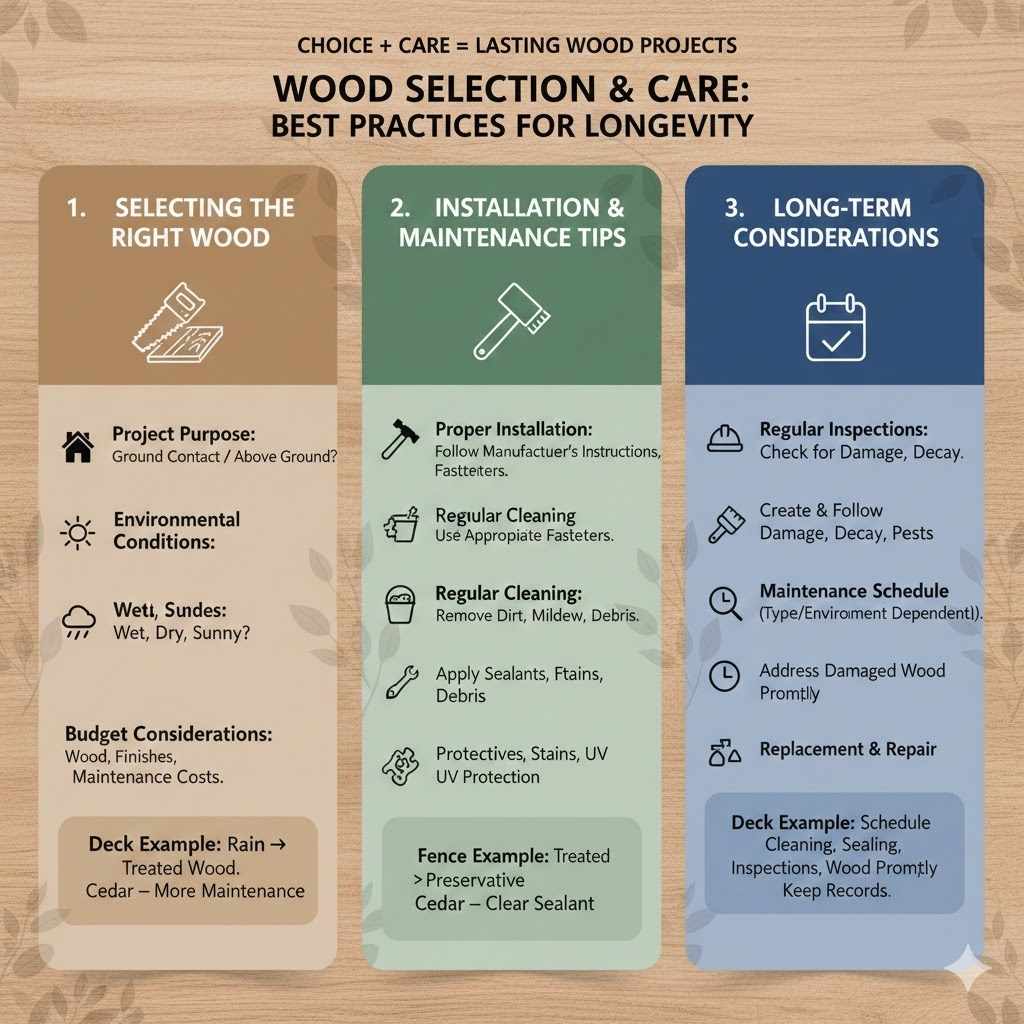
Best Practices for Wood Selection and Care
Choosing the right wood and caring for it properly are essential to extending its lifespan and maintaining its appearance. There are some guidelines for making a good choice and keeping your wood in excellent condition. Selecting the right wood for the project and taking the time to maintain it is vital for longevity.
Selecting the Right Wood
When selecting wood, consider factors like the project’s purpose, the environment, and your budget. Knowing where the wood will be used and the conditions it will be exposed to helps in deciding between cedar and treated wood. Proper preparation and maintenance are also vital. Considering these factors increases the longevity of your wood.
- Project Purpose: Consider the intended use of the wood. Will it be used in direct contact with the ground, or above ground?
- Environmental Conditions: Think about the climate in which the project will be constructed. Will it be in a wet, dry, or sunny area?
- Budget Considerations: Calculate the cost of the wood, finishes, and maintenance to ensure you stay within your budget.
Consider a deck project. If you live in an area with a lot of rain and moisture, treated wood might be the better choice because it is more resistant to moisture. If you prefer the look of cedar and are willing to take on more maintenance, then cedar might be right for you. Your decisions depend on factors such as the climate, your budget, and how much time you want to spend on maintenance.
Installation and Maintenance Tips
Proper installation and regular maintenance are vital for maximizing the lifespan of both cedar and treated wood. Following these steps helps keep your wood in great shape. By taking these steps, you can help make sure your project lasts as long as possible. Remember to regularly inspect, clean, and protect your wood.
- Proper Installation: Follow the manufacturer’s instructions for installing your wood. Make sure you use appropriate fasteners.
- Regular Cleaning: Clean your wood regularly to remove dirt, mildew, and debris.
- Protective Finishes: Apply sealants, stains, or other protective finishes to protect the wood from weathering.
Consider a fence. Install the fence posts deep enough into the ground to provide stability. If you use treated wood posts, make sure to use a wood preservative for the ground contact portions. For cedar, apply a clear sealant to protect the wood from the elements. Regularly inspect your fence for any signs of damage. Making sure you follow the installation guidelines will ensure your project lasts. Regular maintenance, such as cleaning and refinishing, will help.
Long-Term Considerations and Planning
Planning for the long term helps ensure the longevity of your wood projects. Regular inspection, maintenance, and the use of the right materials are crucial. Being prepared and following these recommendations will extend the life of your wood projects. Long-term planning helps you enjoy your projects for many years.
- Regular Inspections: Inspect the wood periodically for any signs of damage, decay, or insect infestation. Address any issues promptly.
- Maintenance Schedules: Create a maintenance schedule. The frequency of maintenance will depend on the wood type and the environment.
- Replacement and Repair: Be prepared to replace or repair damaged wood as needed to maintain the integrity of the structure.
Let’s say you’re building a deck. Create a maintenance schedule, including cleaning, sealing, and inspections. Keep a record of the work that is performed, and any repairs that are made. Plan to replace the decking boards if the surface becomes too worn or damaged. Regular planning is essential for long-term enjoyment of your outdoor projects.
Frequently Asked Questions
Question: Is cedar better than treated wood?
Answer: Both cedar and treated wood have their strengths. Cedar offers natural beauty and good decay resistance. Treated wood is usually more cost-effective and provides better insect protection. The better choice depends on the project’s specific requirements.
Question: How long does cedar wood last?
Answer: With proper maintenance, cedar can last for 20-30 years or even longer. Factors like environmental conditions and maintenance practices influence the wood’s lifespan.
Question: Is treated wood safe for children?
Answer: Modern treated wood uses preservatives that are considered safe for use in residential construction. It is always a good idea to follow safety guidelines when working with treated wood.
Question: Do I need to paint or stain cedar wood?
Answer: Painting or staining cedar is a choice to enhance its look and protection. While not required, applying a finish helps protect the wood from the elements and extends its life.
Question: Can I use cedar and treated wood together?
Answer: Yes, cedar and treated wood can be used together in projects. Treated wood is often used in areas where the wood is in direct contact with the ground, and cedar is used for aesthetic or above-ground applications.
Final Thoughts
Choosing between Cedar vs Treated Wood: Which Lasts Longer? is a common challenge, but it’s not a difficult decision once you have all the facts. We’ve explored the strengths and weaknesses of each type of wood. You’ve learned about their resistance to rot, insect attacks, and how environmental factors impact them. The advantages of each type of wood vary. You now have a good base of knowledge to select the right wood for your project. Remember, the best choice depends on what you want in terms of appearance, budget, and the kind of weather conditions your project will face. So, the next time you’re planning a project, make sure to consider your location and how much upkeep you can do. Then, you’ll be well on your way to building something that will last for years to come!