Cementing Glue: The Ultimate Adhesive Solution
Cementing glue is a strong adhesive used for bonding various materials, particularly in construction and crafts. It provides a durable and long-lasting hold.
Cementing glue has become a vital tool for both DIY enthusiasts and professionals alike. This versatile adhesive excels in creating strong bonds for different materials, including wood, metal, ceramics, and plastics. Its unique formula ensures a quick-setting time, making projects efficient and hassle-free.
Whether you’re repairing a broken item or working on a new construction project, cementing glue offers reliability and strength. Various types are available, catering to specific needs, from household repairs to industrial applications. Understanding its properties and applications will help you choose the right glue for your project, ensuring optimal results and lasting durability.
Introduction To Cementing Glue
Cementing glue has become popular in many industries. Its strong bond makes it ideal for various materials. This adhesive works well on wood, metal, and plastic.
The versatility of cementing glue is impressive. It can be used for home repairs, crafts, and construction. Many people prefer it for quick fixes due to its fast-setting properties.
Its ability to withstand heat and moisture adds to its appeal. Different types of cementing glue are available for specific tasks. This ensures users can find the right product for their needs.
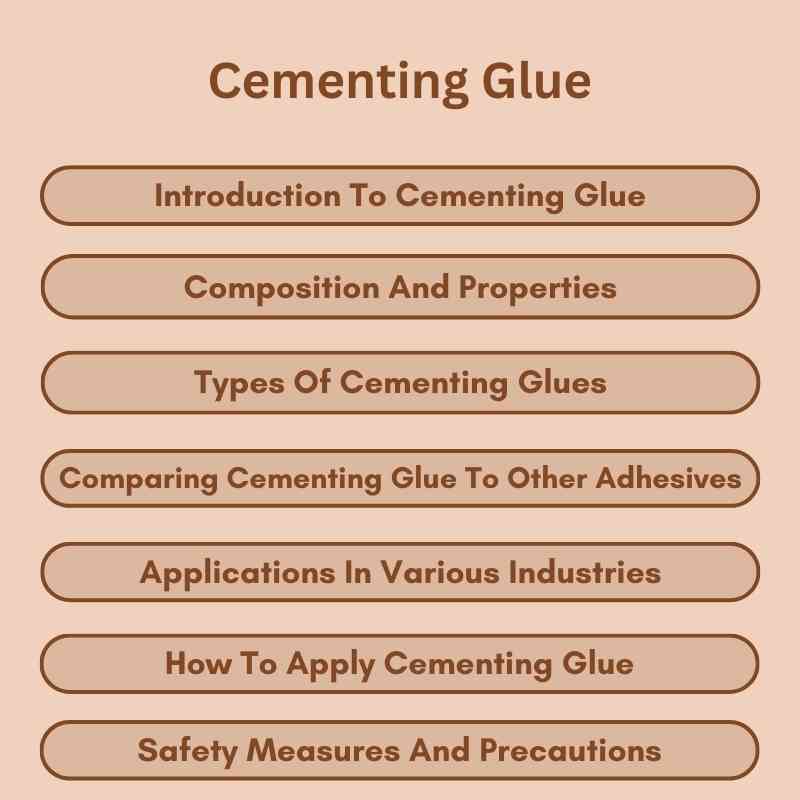
Composition And Properties
The composition of cementing glue includes several key ingredients. These ingredients work together to create strong bonds.
Common components are cement, water, and aggregates. Each ingredient plays a vital role in the glue’s effectiveness.
| Ingredient | Function |
|---|---|
| Cement | Acts as the main binding agent. |
| Water | Helps activate the cement. |
| Aggregates | Provide strength and structure. |
The chemical makeup affects the bonding strength. Stronger bonds result from a well-balanced mixture.
Proper ratios lead to better durability and performance. Always follow guidelines for the best results.
Types Of Cementing Glues
Water-based formulas are popular for their easy use and quick drying time. They are safe and non-toxic, making them great for indoor projects. These glues bond well with paper, wood, and fabric. They clean up easily with just water.
Epoxy resins are known for their strong and durable bonds. They are perfect for heavy-duty repairs. Mixing the two components is essential for a successful application. Once cured, epoxy becomes water-resistant and can withstand harsh conditions.
| Type of Glue | Features |
|---|---|
| Water-Based Formulas | Non-toxic, easy cleanup, quick drying |
| Epoxy Resins | Strong bond, durable, water-resistant |
Comparing Cementing Glue To Other Adhesives
Cementing glue is known for its remarkable strength and durability. It often outperforms other adhesives in tough conditions. This makes it a favorite in many construction projects.
Other adhesives may not hold up as well under pressure. Cementing glue bonds quickly and forms a strong seal. It is resistant to moisture and temperature changes.
Using cementing glue is easy and straightforward. It usually requires minimal preparation. Just clean the surfaces and apply the glue. Wait for it to cure to achieve the best results.
Other adhesives may require special tools or techniques. This simplicity makes cementing glue a popular choice for many users.
Applications In Various Industries
Cementing glue has many important applications in the construction and building industries. It helps to bond materials like concrete, wood, and metal. This glue ensures strong and durable structures. Builders rely on it for foundation work and finishing touches.
In the automotive and aerospace sectors, cementing glue is crucial. It bonds parts in vehicles and aircraft. Strong adhesion improves safety and performance. This glue withstands extreme temperatures and pressure, making it ideal for these industries.
How To Apply Cementing Glue
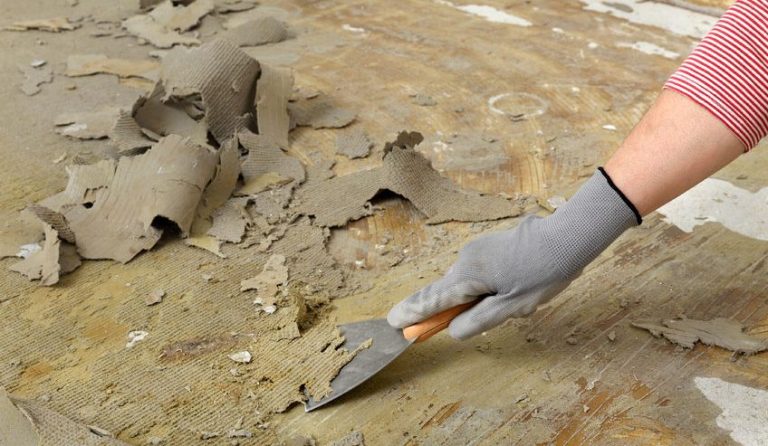
Preparing the surface is crucial for effective cementing glue application. Clean the area to remove dirt, dust, or grease. Use a scraper or sandpaper for tough spots. Make sure the surface is dry before applying glue.
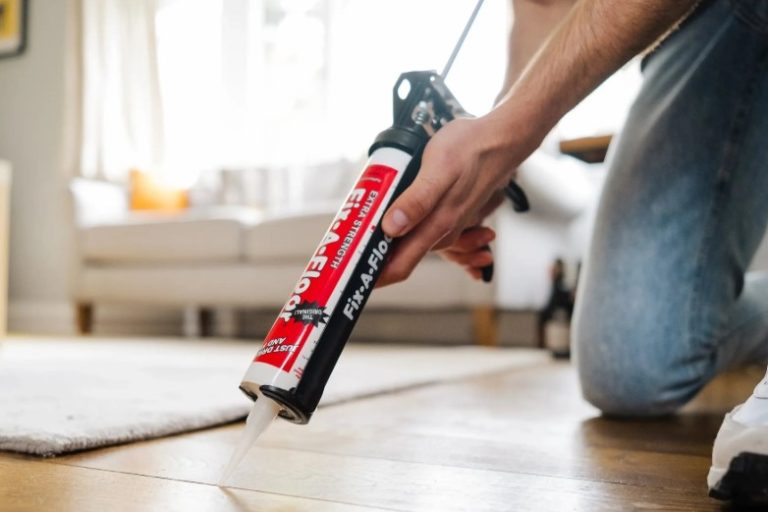
Applying cementing glue requires precision. Use a brush or roller for even coverage. Apply the glue in a thin layer. Avoid using too much glue, as it can create a mess. Press the surfaces together firmly and hold for a few seconds.
Check for any leaks after the glue has dried. If needed, reapply glue to seal any gaps. Regularly inspect the area to ensure the bond remains strong.
Safety Measures And Precautions
Always store cementing glue in a cool, dry place. Keep it away from heat sources and direct sunlight. Ensure containers are tightly sealed to prevent spills.
Use protective gear like gloves and goggles when handling the glue. Avoid skin contact and inhaling fumes. Wash hands thoroughly after use.
| First Aid Measures | Emergency Procedures |
|---|---|
| For skin contact, wash with soap and water. | Seek medical help if irritation continues. |
| If ingested, do not induce vomiting. | Call poison control immediately. |
| If in eyes, rinse with water for 15 minutes. | Get medical attention right away. |
Innovations And Future Trends
Innovations in adhesives focus on eco-friendly solutions. Many companies aim to reduce environmental impact. Natural materials are increasingly used in glue production. These materials can be biodegradable and non-toxic.
Smart glues offer exciting new technologies. They can change properties based on conditions. For example, some glues bond stronger with heat. Others can be reversible, allowing easy removal.
Using advanced technologies helps create better adhesives. New methods improve strength and flexibility. This leads to safer and more efficient products.
Case Studies: Success Stories
Many major infrastructure projects have benefited from cementing glue. This product provides strong bonds, making structures safer and more durable. Roads, bridges, and buildings have all seen improvements in stability.
In recent years, companies have achieved breakthroughs in manufacturing cementing glue. New techniques have made production faster and more efficient. This helps meet the growing demand for high-quality adhesives in the construction industry.
| Project Type | Location | Impact |
|---|---|---|
| Bridge | City A | Improved traffic flow |
| Highway | Region B | Reduced travel time |
| Building | Town C | Enhanced safety standards |
Choosing The Right Cementing Glue
Choosing the right cementing glue is important for your projects. Several factors can influence your choice. Consider the material you are working with. Some glues work better on wood, while others suit metal or plastic.
Check the strength of the glue. Stronger glues provide better bonds. Drying time is also key. Some glues dry fast, while others take longer.
Look for water resistance if your project is outdoors. Ease of use matters too. A glue that is easy to apply saves time.
| Product Name | Material Compatibility | Drying Time | Water Resistant |
|---|---|---|---|
| Super Glue | Wood, Metal, Plastic | 10-30 seconds | No |
| Epoxy Resin | Wood, Metal, Ceramic | 5-10 minutes | Yes |
| PVA Glue | Wood | 30 minutes | Yes |
Troubleshooting Common Issues
Adhesion failures can occur for various reasons. Ensure surfaces are clean and dry before applying cementing glue. Dust, grease, or moisture can prevent a strong bond. Test the glue on a small area first. This helps identify any issues before full application.
For removal and cleanup, use a sharp tool to scrape off excess glue. A solvent like acetone can help dissolve the glue. Always wear gloves and work in a well-ventilated area. Clean the surface with a damp cloth after removing the glue.
Tips for better adhesion include:
- Use the right type of glue for your materials.
- Apply an even amount of glue.
- Press surfaces together firmly.
Frequently Asked Questions
What Is Cementing Glue Used For?
Cementing glue is primarily used for bonding various materials together. It’s commonly utilized in construction, crafts, and repairs. Its strong adhesive properties make it ideal for both porous and non-porous surfaces. Whether you’re fixing a broken item or working on a project, cementing glue provides a reliable hold.
How To Apply Cementing Glue Effectively?
To apply cementing glue effectively, start with clean surfaces. Ensure they are dry and free from dust or grease. Apply a thin, even layer of glue to one surface. Press the materials together firmly and allow sufficient curing time. Following these steps ensures optimal adhesion for your project.
Is Cementing Glue Waterproof?
Yes, many types of cementing glue are waterproof. This feature makes it suitable for both indoor and outdoor applications. However, always check the product specifications to confirm its waterproof capabilities. Using the right type will help ensure durability in wet conditions or environments.
How Long Does Cementing Glue Take To Dry?
Cementing glue typically takes about 24 hours to fully cure. However, initial bonding often occurs within minutes. Factors like temperature and humidity can affect drying times. Always refer to the manufacturer’s instructions for the best results and to ensure optimal bonding strength.
Conclusion
Cementing glue plays a vital role in various projects. Its strong bond and versatility make it an essential choice for both professionals and DIY enthusiasts. Whether for home repairs or crafting, using the right cementing glue can enhance durability. Explore your options to find the perfect adhesive for your needs.