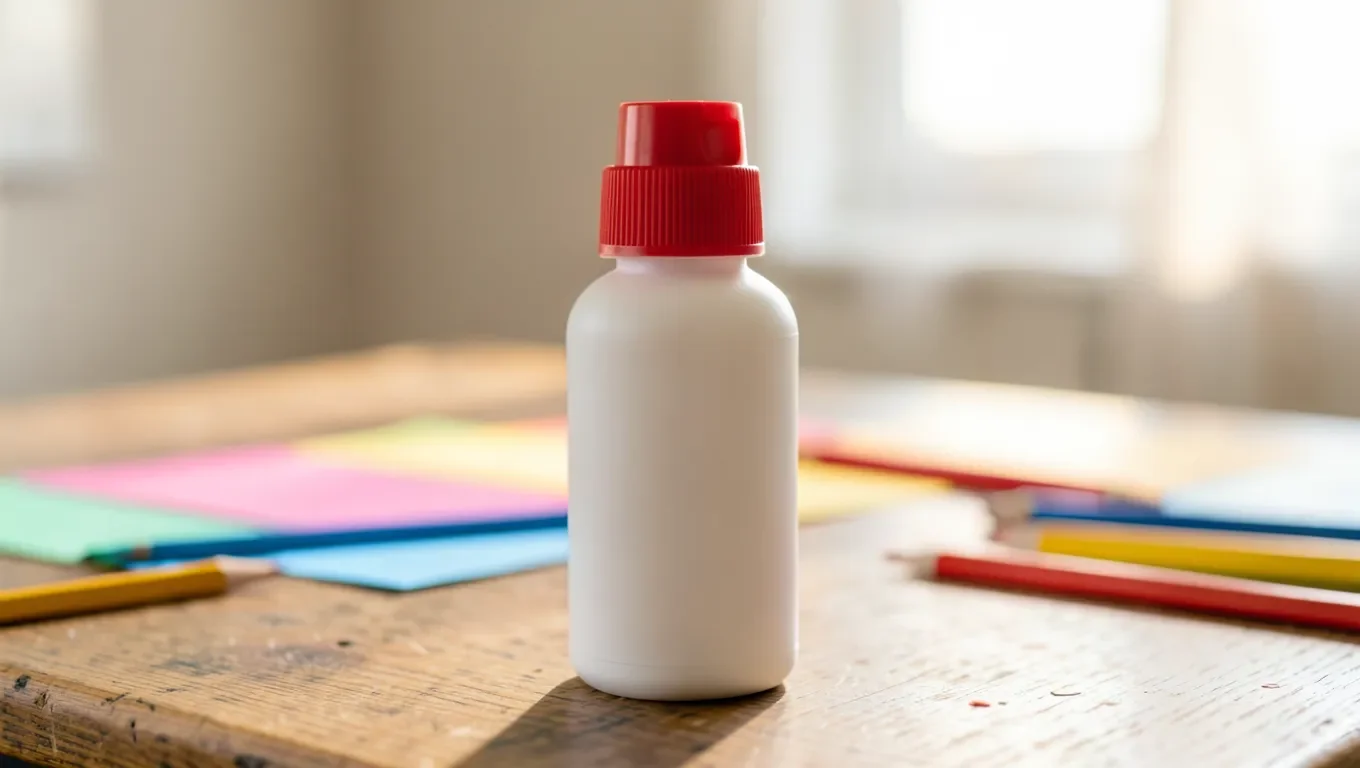
Can You Eat Elmer’s Glue? Is It Actually Safe?
If a small child just licked or swallowed a bit of white school glue, the short answer is: don’t panic. Elmer’s School Glue and Glue-All are labeled non-toxic and formulated to meet ASTM D-4236, the U.S. standard for art materials that must be reviewed for chronic health hazards. A small accidental taste is very different from deciding to eat glue on purpose, though, and not every glue in a woodworking shop or craft drawer carries the same safety profile. Below is what the ingredients actually are, what “non-toxic” really means on a label, what happens if glue is swallowed in a small or large amount, and exactly when to call Poison Control instead of just waiting it out.
Is Elmer’s Glue Safe to Eat? The Short Answer
A small, accidental taste of Elmer’s School Glue or Glue-All is not considered a poisoning emergency. Both products are PVA (polyvinyl acetate) based, non-toxic under ASTM D-4236, and the National Capital Poison Center’s own guidance is that swallowing a small amount of PVA school glue is “expected to cause only minor stomach upset, if any.” That is not the same as saying it’s fine to eat on purpose or in quantity. Eating glue as food serves no purpose nutritionally, a large amount can cause real stomach upset or a choking hazard, and the “non-toxic” label only covers the specific PVA formula it’s printed on, not every glue in the house.
Safer Pick For Young Kids
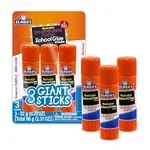 |
Elmer’s Disappearing Purple School Glue Sticks (3-Pack) – $3.99 A washable, non-toxic glue stick is a lower-risk choice than liquid glue for young kids because there’s no open bottle to squeeze or sip from.
|
What’s Actually Inside Elmer’s Glue
The main ingredient in both Elmer’s School Glue and Glue-All is polyvinyl acetate, a synthetic polymer that’s also used in paint binders, paper coatings, and wood glue formulas across the industry. It’s suspended in water along with a small amount of stabilizers to keep the emulsion from separating, a preservative to stop mold growth in the bottle, and, for colored glue sticks, a pigment. None of that ingredient list is designed to be eaten, but none of it is acutely poisonous in the small quantity a child would realistically swallow either. That combination, low hazard but not food, is exactly what “non-toxic” is supposed to communicate.
The ASTM D-4236 Label, Explained
If you look at the back of a bottle of Elmer’s Glue-All, you’ll see a small “Conforms to ASTM D-4236” notice. That’s a real U.S. Consumer Product Safety Commission requirement for art and craft materials, not a marketing phrase. Under the Labeling of Hazardous Art Materials Act, any art material sold in the U.S. has to be reviewed by a toxicologist for chronic hazards, and if it contains anything that could cause long-term harm, the label has to say so with a specific warning. Elmer’s PVA formulas passed that review as non-toxic, which is why the bottle doesn’t carry a warning label the way a can of solvent-based contact cement or a tube of cyanoacrylate super glue does.
- PVA (polyvinyl acetate) is the adhesive base, suspended in water.
- Stabilizers keep the glue from separating in the bottle over time.
- A preservative prevents mold and bacterial growth once the bottle is opened.
- ASTM D-4236 review is what allows the “non-toxic” claim on the label in the first place.
Non-Toxic Doesn’t Mean Edible
This is the part a lot of old articles on this topic get wrong by only answering half the question. “Non-toxic” is a specific regulatory term about acute and chronic poisoning risk from ordinary accidental exposure, like a toddler licking a glue stick or getting a dab of glue near their mouth. It is not a statement that a product is safe to eat as food, in any quantity, on purpose. Plenty of things are technically non-toxic and still a bad idea to swallow, from a bar of soap to a handful of crayons. Elmer’s own packaging reflects this: the label says non-toxic, and it also says the product isn’t intended for consumption. Both statements are true at the same time, and treating “non-toxic” as a green light to eat something is the actual myth worth correcting here.
What Actually Happens If Glue Gets Swallowed
A Small, Accidental Amount
If a child licks glue off their fingers, tastes a glue stick, or swallows a small dab that got on a sandwich or a craft project, the realistic outcome is nothing at all, or at most a brief, mild stomach ache. PVA glue isn’t digested or absorbed the way food is; it largely passes through the digestive tract unchanged. There’s no need to induce vomiting, and there’s usually no need to call anyone for a single small taste with no symptoms. Offering a normal drink of water is a reasonable, low-key response.
A Larger Amount, Eaten on Purpose
Swallowing several tablespoons or more of glue, or eating it as a “dare” or a game, is a different situation, and this is the honest caveat that matters: a large glob of thick, gluey material can realistically cause nausea, vomiting, stomach cramping, or in a young child, a choking or gagging risk while it’s still going down. It is not going to poison someone the way a chemical toxin would, but “not toxic” and “fine to eat in quantity” are not the same claim, and treating glue as a snack isn’t something to encourage even as a joke.
- Small accidental taste: expect no symptoms, or very mild, short-lived stomach upset.
- Larger intentional amount: possible nausea, vomiting, cramping, or choking risk from the volume and texture, not from toxicity.
- Neither scenario is a reason to force vomiting on your own; that can do more harm than the glue itself.
Wood Glue and Super Glue Are Not the Same “Non-Toxic” Category
Because this is a woodworking site as much as a parenting one, it’s worth being specific about a mistake some older glue-safety articles make: lumping every glue in a workshop into the same “it’s basically Elmer’s, it’s fine” bucket. It isn’t. Standard yellow wood glue, like Titebond-style aliphatic resin glue, is also PVA-based and carries similar low-toxicity labeling to white school glue, so a small accidental taste falls into roughly the same “watch and wait” category. But two other common shop adhesives do not:
- Cyanoacrylate (super glue): bonds skin and mucous membranes almost instantly and releases heat as it cures; swallowing it or getting it near the mouth is a genuinely different hazard than PVA glue, and manufacturer safety sheets treat it accordingly.
- Two-part epoxy: the hardener component is a reactive chemical, not an inert polymer, and many epoxy hardeners are labeled as irritants or worse to skin, eyes, and if swallowed.
The practical takeaway for a shop with kids around: it’s fine to be relaxed about a child mouthing a glue stick or a bit of white school glue, and it is not fine to apply that same relaxed standard to super glue, epoxy, or solvent-based adhesives sitting on the same workbench. Read the label on the specific product, not just the general reputation of “glue.”
When to Call Poison Control
For a real ingestion where there’s any doubt, the accurate move is to call Poison Control at 1-800-222-1222 (U.S.), available 24/7, rather than guessing or searching forums. This is the same free line the National Capital Poison Center and other U.S. poison control centers staff with real pharmacists and nurses, and it costs nothing to call even if the situation turns out to be minor. Call, or see a doctor, if any of the following apply:
- More than a taste or lick of PVA glue was swallowed.
- The glue involved is not plain white/school PVA glue, meaning it’s super glue, epoxy, contact cement, or an unlabeled/unknown adhesive.
- There are symptoms: repeated vomiting, difficulty breathing or swallowing, drooling that won’t stop, or visible distress.
- The person who swallowed it is very young, has an underlying health condition, or you’re simply unsure.
Don’t try to induce vomiting on your own advice; let the poison control staff or a doctor guide next steps based on what and how much was actually swallowed.
Safer Crafting Alternatives for Young Kids
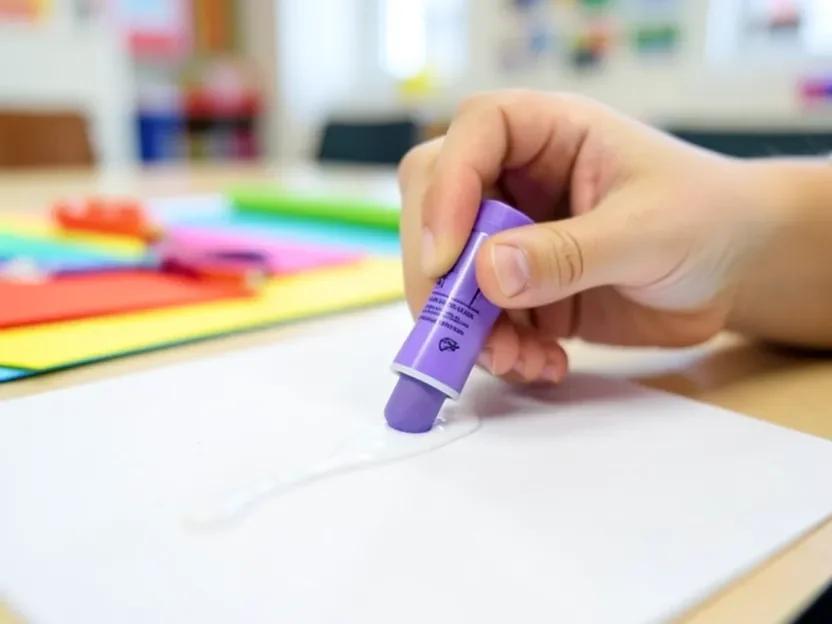
If a child has a habit of putting glue in their mouth, the simplest fix isn’t a different brand of liquid glue, it’s a different format. Glue sticks are solid, go on in a thin controlled layer, and there’s no open bottle to tip over or squeeze into a mouth, which is why they show up as the standard “safer for young kids” recommendation from teachers and occupational therapists alike. Look for the same non-toxic, ASTM D-4236, and washable claims on the label, keep glue supervised for kids under about 3-4, and store it out of reach between projects rather than left open on a table.
- Choose a glue stick over a squeeze bottle for kids who still mouth objects.
- Confirm the label says non-toxic and, ideally, ASTM D-4236 or an ACMI (Art and Creative Materials Institute) seal.
- Supervise craft time for toddlers and close the cap or twist the stick down immediately after use.
- Keep super glue, epoxy, and any workshop adhesives in a separate, higher, locked space, never in the same drawer as kid-safe craft supplies.
Frequently Asked Questions
Is it OK if my kid ate a small amount of Elmer’s glue?
Yes, in most cases. A small accidental taste of Elmer’s PVA school glue is expected to cause little to no symptoms beyond, at most, a mild stomach ache. Watch for symptoms and offer water; you generally don’t need to call anyone for a single small taste.
What happens if you eat a lot of Elmer’s glue?
Eating a large amount can cause nausea, vomiting, stomach cramping, or a choking risk from the sheer volume and texture going down, even though the glue itself is labeled non-toxic. It isn’t a poisoning risk in the chemical sense, but it also isn’t something to eat on purpose or in quantity.
Is wood glue as safe to accidentally swallow as Elmer’s school glue?
Standard yellow PVA wood glue carries similar low-toxicity labeling to white school glue, so a small accidental taste falls into the same low-concern category. Super glue (cyanoacrylate) and two-part epoxy are a different story and are not covered by the same “it’s basically school glue” assumption.
When should I call Poison Control about swallowed glue?
Call 1-800-222-1222 if more than a small taste of glue was swallowed, if the glue isn’t plain white PVA school or wood glue (for example super glue or epoxy), or if there are symptoms like repeated vomiting, trouble breathing or swallowing, or visible distress.
What’s a safer glue option for young kids who mouth things?
A washable, non-toxic glue stick is generally a better choice than an open bottle of liquid glue for toddlers and young kids, since there’s no bottle to squeeze open or spill into their mouth. Confirm the label still says non-toxic and ASTM D-4236 compliant before buying any brand.
Final Thoughts
Can you eat Elmer’s glue? A small accidental taste, yes, without much to worry about, because the PVA formula is genuinely labeled non-toxic under ASTM D-4236 and reviewed for exactly this kind of exposure. Eating it on purpose or in any real quantity is still a bad idea, not because it’s secretly poisonous, but because it isn’t food and a large amount can upset a stomach or create a choking risk. Keep the distinction between “non-toxic” and “edible” in mind, keep super glue and epoxy well away from anything labeled kid-safe, and if there’s ever real doubt about how much was swallowed or what was actually in the bottle, Poison Control at 1-800-222-1222 is free, fast, and exactly what it’s there for.
Sponsored / affiliate links. As an Amazon Associate I earn from qualifying purchases. I may earn additional commission from eligible campaigns.