Contractor Table Saws Explained: Specs, Safety and Our Pick
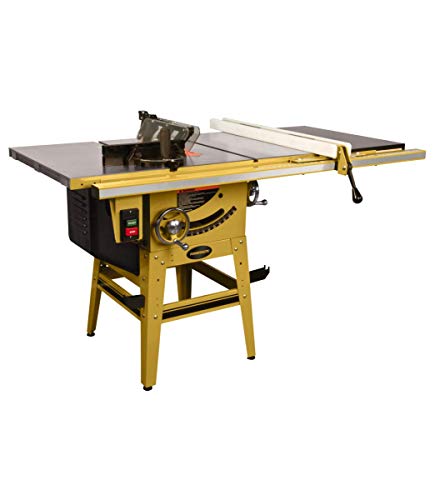
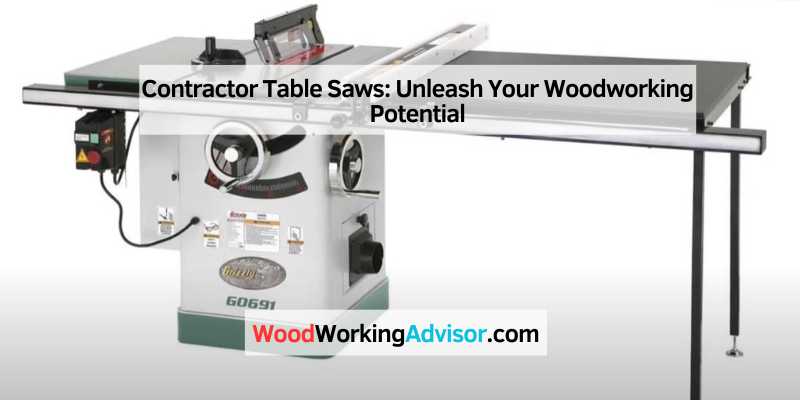
A contractor table saw is a mid-weight 10-inch saw (typically 90-250 lbs) built around a belt-driven induction motor mounted outside the cabinet, on a stand or mobile base – heavier and more accurate than a lightweight jobsite saw, but far less rigid than a cabinet saw. Most confusion around this category comes from modern “hybrid jobsite” saws blurring the line: a saw like the DEWALT DWE7491X is marketed as a jobsite saw but has the rip capacity and fence rigidity that used to define the contractor category.
Contractor vs. Jobsite vs. Cabinet Saw
OUR PICK IN THE CONTRACTOR/HYBRID CATEGORY
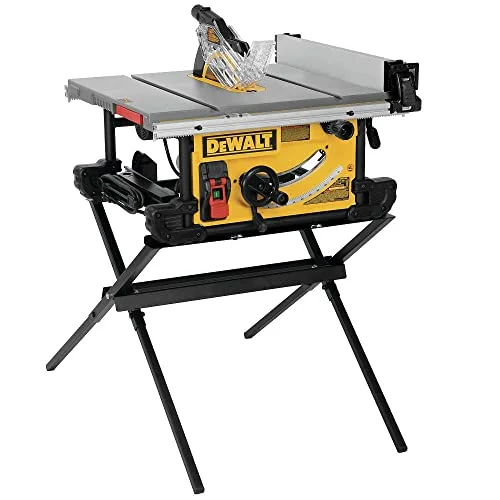 |
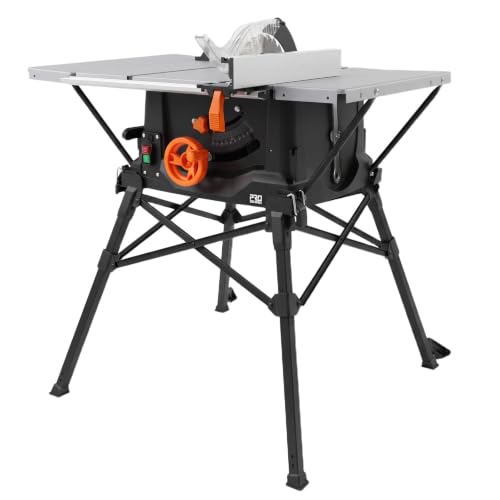
DEWALT DWE7491X Table Saw – $729.00 32-1/2″ rip capacity and a 15-amp motor give it contractor-saw cutting range in a package that still rolls out of the way on its folding stand.
|
The three categories differ mainly in weight, motor location, and how rigid the fence and table are under load. A jobsite saw (40-60 lbs) uses a small universal motor and folds onto a compact stand for daily transport – convenient, but the table and fence flex more under a hard rip cut. A contractor saw (90-250 lbs) steps up to a belt-driven induction motor hanging off the back of the cabinet, giving smoother, quieter power and a heavier table for less flex, usually on a stand with wheels rather than a folding leg set. A cabinet saw (300-500+ lbs) fully encloses the motor and trunnions inside a closed base, with a cast-iron table and heavier fence rail system built for daily, precision production work. Contractor saws are the middle ground: more capable and accurate than a jobsite saw, more affordable and portable than a cabinet saw.
Core Specs That Actually Matter
- Rip capacity: the maximum distance from blade to fence. 24-30″ handles most sheet-goods work; 30″+ is needed to comfortably rip a full 4×8 sheet in half.
- Motor: belt-driven induction motors (typical on contractor saws) run cooler, quieter, and longer under sustained load than the universal motors in most compact jobsite saws.
- Arbor size and blade compatibility: nearly all 10″ contractor saws use a standard 5/8″ arbor, so blade upgrades are interchangeable across brands.
- Fence type: a rack-and-pinion or T-square style fence stays parallel to the blade more reliably than a basic clamp-style fence, which matters more as rip capacity increases.
- Dust collection: a fully or partially enclosed cabinet with a dust port collects far more dust than an open-stand design, which matters both for cleanup and for indoor air quality during extended cutting.
Weight Is a Feature, Not Just a Spec
A heavier saw resists walking or vibrating during a rip cut, which directly affects cut quality and consistency – this is the main practical reason contractor saws outperform lightweight jobsite saws even at similar horsepower. The trade-off is genuinely reduced portability: a 150+ lb saw on wheels can still be rolled around a shop, but it’s not something you load into a truck bed for a jobsite the way a folding 45 lb saw is. If the saw is staying in one shop permanently, weight is a straightforward upgrade with no real downside.
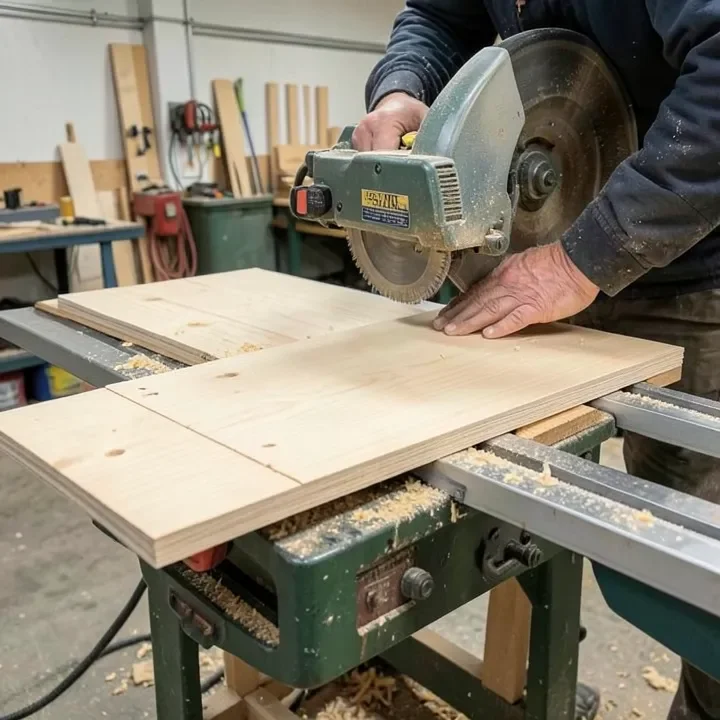
When to Step Up to a Cabinet Saw Instead
If the saw runs daily production work, needs to hold precise tolerances across hundreds of repeat cuts, or regularly cuts thick hardwood where a contractor saw’s motor starts to bog down, a cabinet saw’s fully enclosed base, heavier trunnions, and larger motor (often 3+ HP on 220V) are worth the added cost, weight, and permanence. For most home workshops and remodeling/finish-carpentry work, a well-built contractor or hybrid saw covers the actual cutting demands without that jump in cost and footprint.
Safety Features Worth Prioritizing
- Riving knife: a curved piece of metal behind the blade that rises and falls with it, keeping the kerf open to prevent kickback – a genuine upgrade over the older rigid splitter design, and now standard on most modern contractor saws.
- Blade guard that’s easy to remove and reinstall: a guard that’s a hassle to take off gets left off permanently for non-through cuts, which defeats the point. Tool-free removal makes it far more likely to actually get reinstalled.
- Anti-kickback pawls: spring-loaded teeth that dig in if the workpiece tries to move backward toward you. Standard on nearly all current saws, but worth confirming they move freely and aren’t seized from the factory.
- Large, clearly marked power switch: a paddle-style switch you can hit with a knee or forearm in an emergency, positioned where sawdust buildup won’t block it.
Mobile Base vs. Fixed Stand
Most contractor and hybrid saws ship with either a folding leg stand or a wheeled mobile base; a few are sold as a bare saw meant to be bolted to a shop-built or aftermarket base. A quality mobile base with a foot-pedal lock (lift-and-lock rather than a separate wheel-by-wheel brake) makes a real difference in daily use – it should roll easily when unlocked and sit rock-solid when locked, with no play in the fence or table from the base itself. If a saw is staying permanently in one spot in a home shop, bolting it to a simple fixed plywood or steel stand is often more rigid, and cheaper, than a mobile base you’ll rarely actually move.
Frequently Asked Questions
What’s the difference between a contractor saw and a jobsite saw?
A contractor saw is heavier (90-250 lbs) with a belt-driven induction motor for smoother, more sustained power. A jobsite saw is lighter (40-60 lbs) with a universal motor and a folding stand, built for daily transport rather than maximum rigidity.
Can a contractor table saw cut a full sheet of plywood?
Yes, as long as its rip capacity is 24″ or more (30″+ is more comfortable), and with outfeed support to keep a full 4×8 sheet from tipping off the back of the table during the cut.
Do I need a cabinet saw instead of a contractor saw?
Only if you’re running daily production work, cutting thick hardwood regularly, or need cabinet-saw-level tolerance across hundreds of repeat cuts. Most home and remodeling woodworking is well served by a solid contractor or hybrid saw at a fraction of the cost and footprint.
Bottom Line
A contractor table saw earns its place between a portable jobsite saw and a full cabinet saw: enough weight and motor to cut cleanly and consistently, without the size, cost, or permanence of a full cabinet setup. Prioritize rip capacity, fence quality, and dust collection over raw horsepower – those are the specs that actually determine whether the saw fits how you work.
Sponsored / affiliate links. As an Amazon Associate I earn from qualifying purchases. I may earn additional commission from eligible campaigns.