DeWalt DWS779 12-Inch Double Bevel Miter Saw: Specs, Setup, and Buying Guide
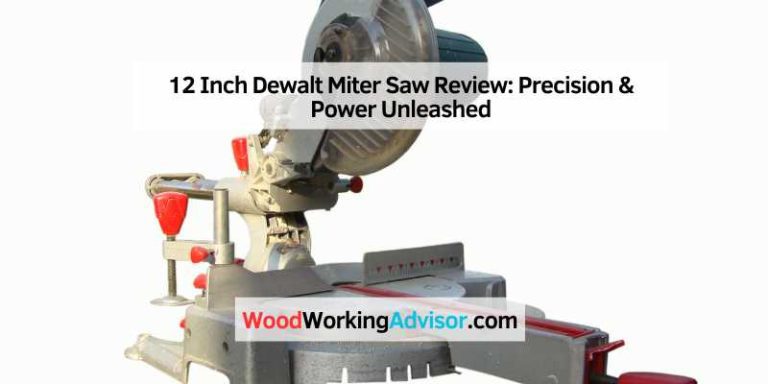
The DeWalt DWS779 is a 12-inch double bevel sliding compound miter saw built for trim carpenters and serious DIYers who need to cut both left and right bevels without flipping the workpiece. Here’s what the “double bevel” spec actually means, how the DWS779 stacks up against the pricier DWS780, and how to set it up correctly the first time.
What Does “Double Bevel” Actually Mean?
Best 12-Inch Double Bevel Pick
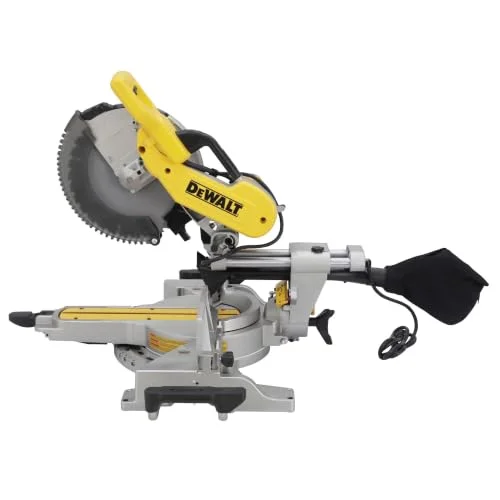 |
DeWalt DWS779 12″ Double Bevel Miter Saw – $393 The exact saw this guide covers – a 15-amp double bevel miter saw that cuts both directions without flipping your stock.
|
On a single bevel saw, the blade only tilts one direction, so cutting crown molding or trim that needs an opposite-angle bevel means flipping the board over – which flips the profile and can throw off your layout marks. A double bevel saw like the DWS779 tilts the blade up to 49° left and right, so you cut both bevels with the stock face-up the entire time. That single feature is the whole reason double bevel saws cost more than single bevel models of the same size – you are paying for a second bevel gearbox and detent mechanism on the opposite side of the head, not just marketing.
DWS779 Real Specs
| Spec | DWS779 |
|---|---|
| Motor | 15 Amp, 3,800 RPM |
| Miter range | 60° right / 50° left |
| Bevel range | 49° left and right |
| Crosscut capacity | 2×14 lumber at 90°, 2×10 at 45° |
| Crown molding capacity | Up to 7-1/2″ nested against the fence |
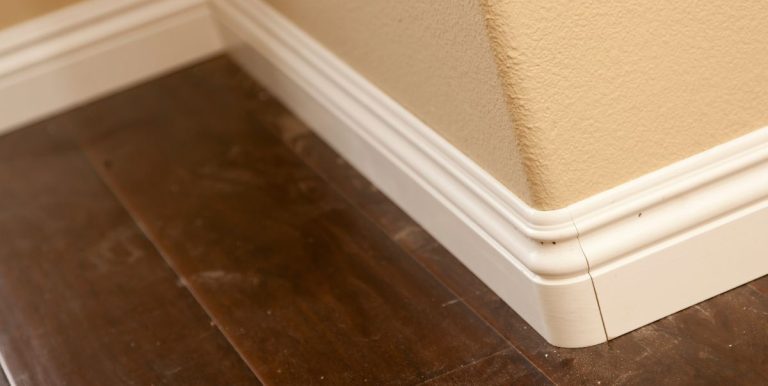
| Base molding capacity | Up to 6-3/4″ vertically against the fence |
| Dust collection | Captures 75%+ of dust via included bag |
| Weight | ~56 lbs |
| Blade included | 32-tooth carbide-tipped combination blade |
| Warranty | 3-year limited warranty, 1-year free service contract, 90-day money-back guarantee |
Setting Up and Making Your First Cut
Bolt the saw to a stand or workbench before doing anything else – a miter saw that can shift or tip is a genuine safety hazard, not just an accuracy problem. Once it’s secured, run through these steps for a clean first cut:
- Check the fence is square to the blade. Set a speed square against the fence and the blade (unplugged) and adjust the fence bolts if there’s a gap.
- Mark your cut line clearly on the workpiece with a sharp pencil, not a marker – a thick line adds real error at longer lengths.
- Set the miter angle first, then the bevel. Lock the miter detent, then tilt the head to your bevel angle and lock the bevel lever.
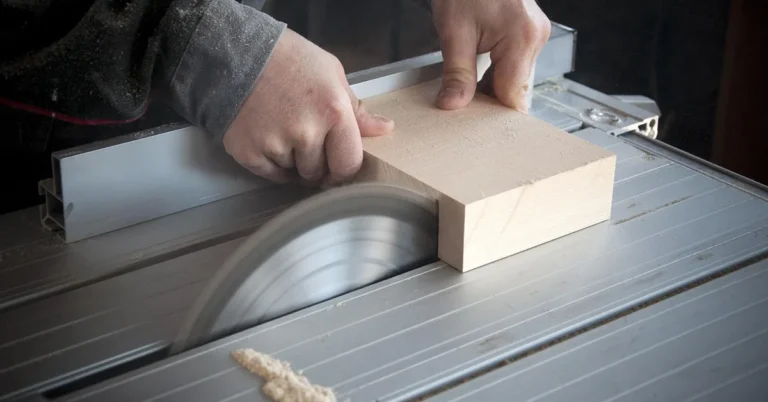
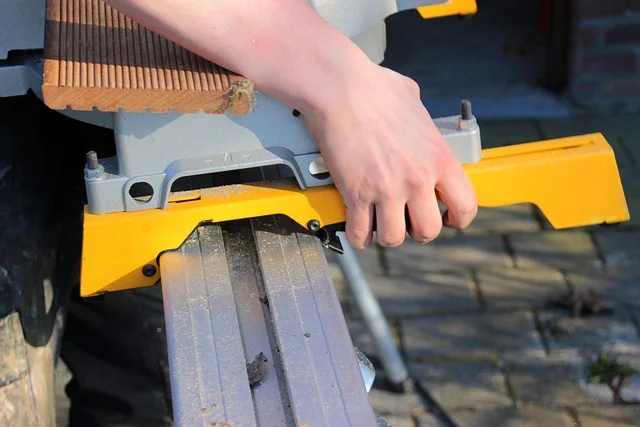
- Clamp the workpiece against the fence with the included material clamp before cutting – never hold trim by hand for a compound cut.
- Let the blade reach full speed before it touches the wood, then lower it in one smooth motion. Let the blade stop spinning completely before lifting it back up.
DWS779 vs. DWS780: What’s Actually Different
These two saws share the same motor, miter range, and bevel range – the real difference is the DWS780’s built-in XPS crosscut positioning system, a shadow-line indicator that shows exactly where the blade will land on the wood without a separate laser diode to calibrate. That convenience is roughly a $250 premium over the DWS779.
| Feature | DWS779 | DWS780 |
|---|---|---|
| Price (typical) | ~$393 | ~$649 |
| Cut-line indicator | None – align by eye | XPS shadow-line system |
| Motor / miter / bevel range | Same as DWS780 | Same as DWS779 |
| Best for | Budget-focused buyers who don’t need a built-in guide | Repetitive precision trim work where the shadow line saves real time |
Common Mistakes to Avoid
- Setting bevel and miter at the same time without double-checking either. Set and lock one, then the other – verify both before cutting.
- Cutting without clamping trim down. Thin trim can lift or shift under blade pressure, especially on a bevel cut.
- Ignoring blade wear. A dull or resin-caked blade burns the cut edge and makes miter joints gap – swap blades roughly every 200-300 cuts in hardwood, sooner if you see burning.
- Skipping the test cut on scrap. Always confirm a compound angle setting on scrap material before cutting your actual trim piece.
Safety Guidelines
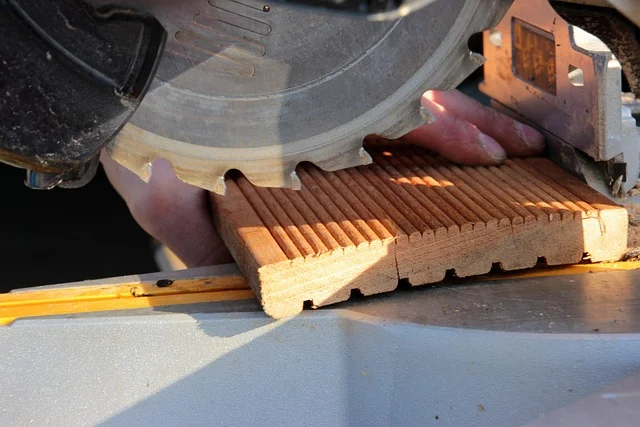
- Wear eye and hearing protection every time – a 15-amp miter saw motor runs well past 90 dB.
- Never remove or bypass the blade guard, even for an “easier” angle.
- Keep hands at least 6 inches from the blade path on both sides of the cut.
- Unplug the saw before changing blades or making any adjustment to the fence.
- Let the blade fully stop before lifting the arm back to the up position.
Choosing the Right Blade for the DWS779
The saw ships with a general-purpose blade, but swapping it for the right tooth count makes a real difference in cut quality. A 60-80 tooth carbide-tipped blade gives the cleanest, splinter-free cut on trim and crown molding – the higher tooth count means each tooth removes less material, which matters most on visible finish surfaces. For rough framing lumber where speed matters more than a glass-smooth edge, a 24-40 tooth blade cuts faster and clears sawdust more efficiently. Stick with a 12-inch blade rated for at least 4,000 RPM, since the DWS779’s arbor spins the blade well above typical benchtop-saw speeds.
Mounting Options: Stand vs. Workbench
The DWS779 doesn’t include a stand, so you’re choosing between bolting it to a fixed workbench or pairing it with a rolling miter saw stand. Both work – which one makes sense depends on how often the saw moves between jobs.
| Setup | Best for | Trade-off |
|---|---|---|
| Fixed workbench mount | A dedicated shop where the saw stays in one place | Not portable; needs permanent bench space |
| Rolling stand (e.g. DWX726) | Job-site work or a shop where floor space is shared | Extra cost (~$260), takes a few minutes to fold/unfold |
| Portable base plate | Occasional use, storage between projects | Less stable for long workpieces; needs extra support at both ends |
Whichever base you choose, make sure both ends of a long workpiece are supported at the same height as the saw table – an unsupported board end is one of the most common causes of an inaccurate or unsafe cut.
Useful Accessories for the DWS779
The saw comes with one material clamp, a dust bag, and a blade wrench, which covers the basics. A second material clamp is worth adding if you cut a lot of trim solo, since one clamp on a long board still leaves the far end unsupported. Outfeed rollers or a second folding stand set at table height solve that same problem for longer stock. If you cut a high volume of crown molding, a set of crown stops (fence-mounted blocks that register the molding at the correct spring angle) speeds up repeat cuts significantly compared to marking each piece by hand.
Frequently Asked Questions
What’s the difference between the DWS779 and DWS780?
They share the same motor, miter range, and bevel range. The DWS780 adds a built-in XPS shadow-line cut indicator and costs roughly $250 more.
Can beginners use the DeWalt 12 miter saw double bevel?
Yes – the DWS779 is a common first miter saw. The controls (miter detent, bevel lever, material clamp) are straightforward, but always practice compound cuts on scrap before cutting finished trim.
What projects can I do with this saw?
Crown molding, baseboard, picture frames, deck framing, and any project needing compound-angle cuts on both sides of a board without flipping it.
How do I keep the saw clean?
Empty the dust bag after every session, brush sawdust off the fence and detent plate, and wipe the rails with a dry cloth – resin buildup on the rails will make the slide feel gritty over time.
Is the DeWalt DWS779 worth the price?
At roughly $393 with a 4.8-star rating across 9,000+ reviews, it’s one of the better value double bevel saws in the 12-inch class – especially if you don’t need the DWS780’s built-in shadow line.
How do I make bevel cuts?
Unlock the bevel lever behind the saw head, tilt the head to your target angle (up to 49° either direction on the DWS779), and re-lock it before cutting. Always re-check the angle against a protractor or speed square on the first cut of a new setting.
Where can I buy a DeWalt 12 miter saw double bevel?
The DWS779 is sold through Amazon and major home improvement retailers – see the product box above for a current-price link.
The DWS779 covers the vast majority of double bevel trim and framing work at a price well below the DWS780 – the shadow-line guide on the pricier model is a real convenience, not a necessity. Set the fence square, clamp your stock, and test every new angle on scrap before cutting your finished piece.
Sponsored / affiliate links. As an Amazon Associate I earn from qualifying purchases. I may earn additional commission from eligible campaigns.