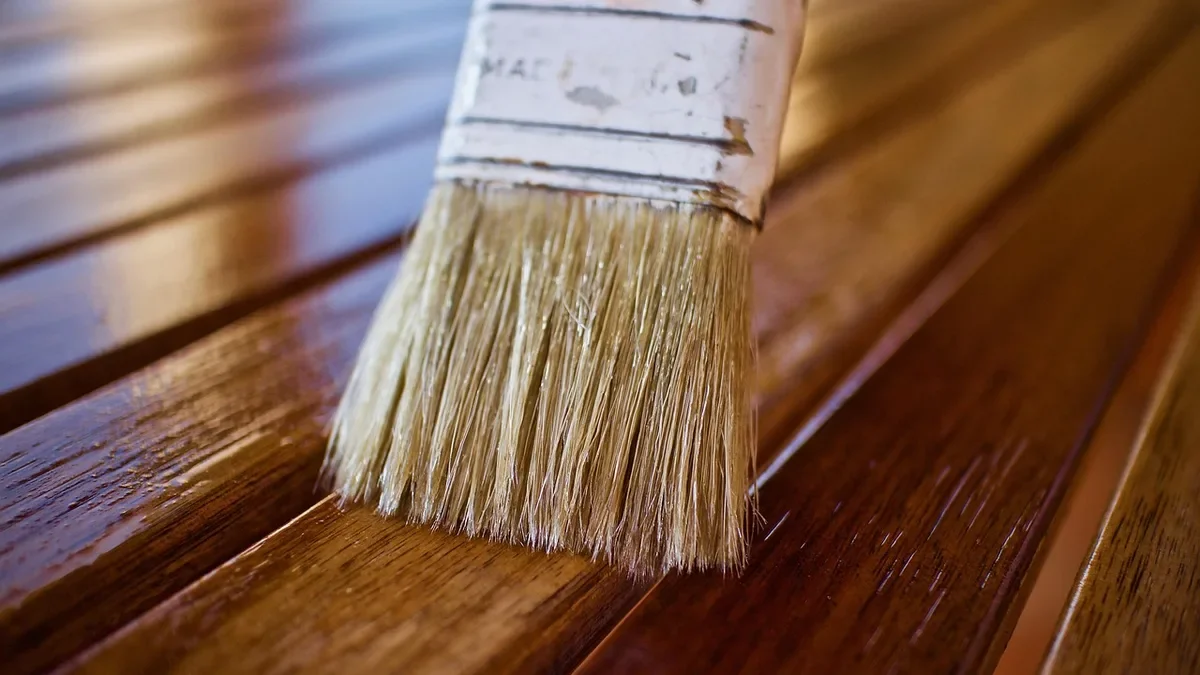
How Long to Let Stain Dry Before Polyurethane (+ Other Drying Times)
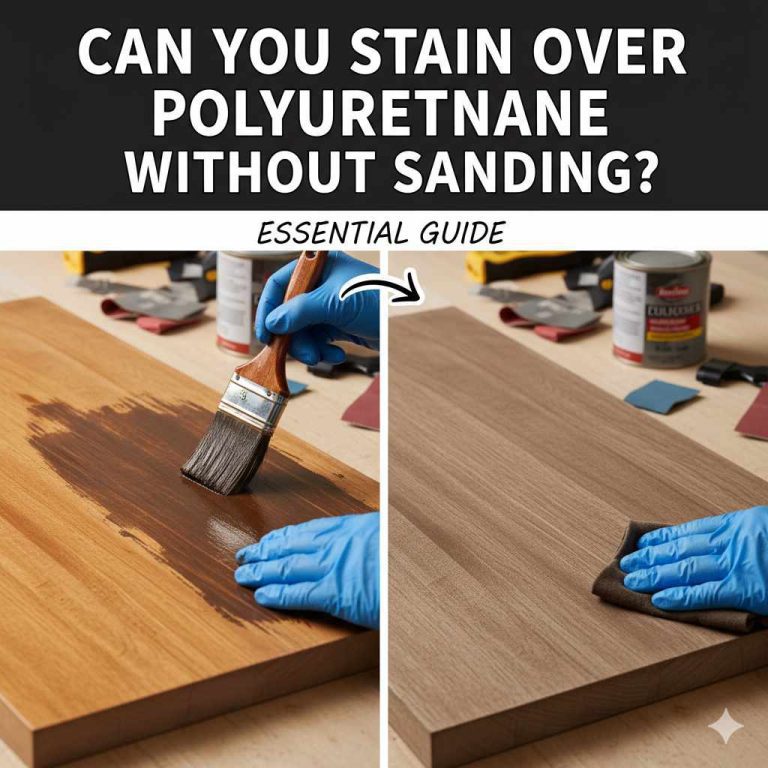
Let oil-based stain dry at least 8 hours before brushing on polyurethane, and a full 24 hours is the safer call in cool or humid rooms. Water-based stain is faster: once it is completely dry, usually a few hours, you can topcoat. The number on the stain can only tells half the story, though, because the polyurethane label sets its own minimum wait. This page covers that stain-to-poly timing in detail, then the dry and cure times for polyurethane itself, wood glue, Liquid Nails, caulk and a few related finishing questions.
Quick Answer
Oil-based stain: 8 hours minimum before polyurethane, 24 hours if it is cool, humid or heavily applied. Water-based stain: wait until it is bone dry, typically 2-6 hours. Always check which polyurethane you are using, because Minwax lists 8 hours for its water-based oil-modified poly but at least 24 hours for its One Coat poly over the same stain.
How Long Should Wood Stain Dry Before Polyurethane?
Best Fast-Dry Topcoat Pick
 |
Minwax Fast-Drying Polyurethane, Warm Satin, 1 Quart, $15.97 A common oil-based topcoat to brush over a stain you have given the full dry time, with a short wait between coats.
|
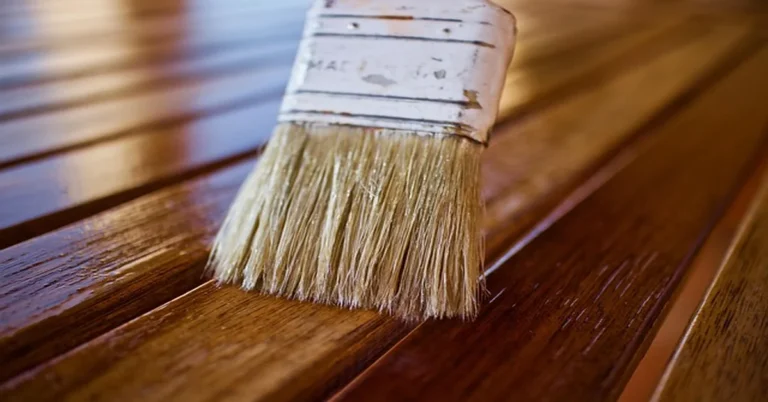
Stain does not behave like a clock you can read off one number. Oil-based stain keeps releasing solvent long after the surface stops feeling wet, and the pigment sitting in the grain is what the polyurethane will bond to. Cover it too early and the solvent has nowhere to go, which leaves a hazy, slow-curing or tacky film. Minwax lists its oil-based Wood Finish stain as dry in 2-3 hours, yet that is not the same as ready for polyurethane, as the table shows.
Stain Dry Time Before Polyurethane by Product Combination
| Stain | Polyurethane over it | Wait before topcoat |
|---|---|---|
| Oil-based (Minwax Wood Finish) | Minwax Water Based Oil-Modified Polyurethane | 8 hours after staining |
| Oil-based (Minwax Wood Finish) | Minwax One Coat Polyurethane | At least 24 hours |
| Oil-based (Minwax Wood Finish) | Minwax Ultra Fast-Drying Polyurethane for Floors | 8-12 hours |
| Water-based (Minwax Water-Based Color Stain) | Water-based polyurethane | Until completely dry; the label lists 2-3 hours to dry |
| Gel stain | Any | Follow the can; thick gel films are the slowest, so plan on the long end |
These figures come from the manufacturer’s product pages for Minwax Wood Finish and its One Coat Polyurethane, and they are minimums at normal room conditions. Minwax also notes that high humidity, low temperatures, poor ventilation and a heavy coat all stretch dry time. For any other brand, read the stain can and the polyurethane can: the longer of the two waits wins.
That is the part most quick answers skip. The wait depends on the pairing. A stain that is fine to topcoat in 8 hours under one polyurethane can need 24 hours under another, so reading only the stain label is how people end up with a finish that stays soft.
How to Tell Stain Is Ready for Polyurethane
- The color is even, with no wet-looking sheen or dark glossy patches sitting in the pores.
- A clean fingertip pressed lightly in an out-of-sight spot picks up no stain and leaves no fingerprint.
- There is no strong solvent smell hanging over the piece. A sharp smell means it is still off-gassing.
- You wiped off excess stain at the time. Stain left puddled on the surface is the usual reason a board is still tacky a day later.
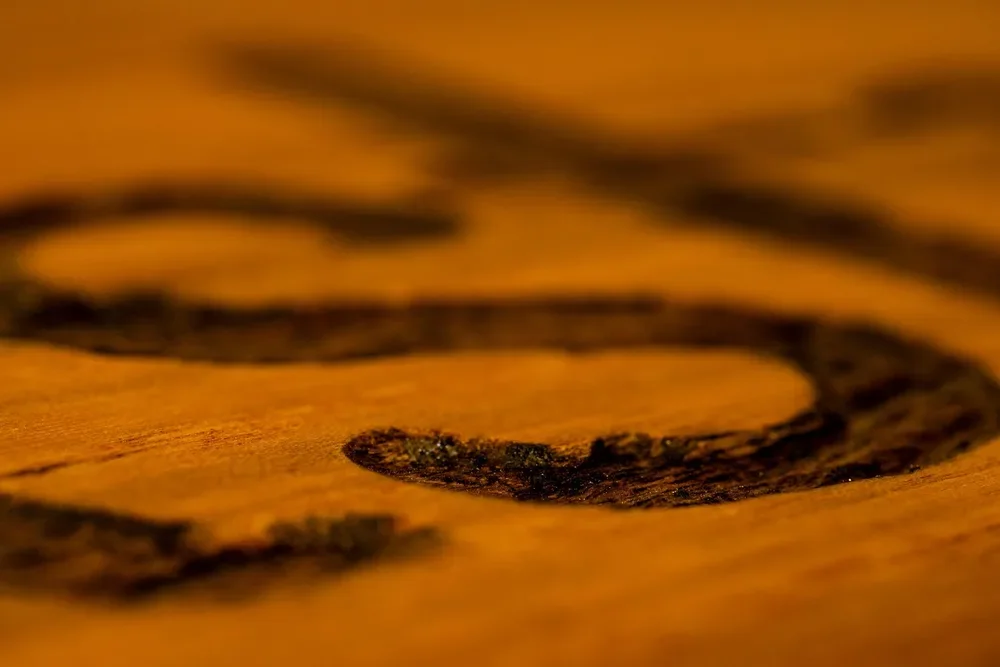
Pores and end grain hold the most stain, so test the end grain and any carved or recessed detail, not just the flat face. Those areas dry last. If your stain is slow to dry, here is how to dry wood stain faster without risking a fire or a tacky finish.
What If You Wait Too Long?
Waiting several days is rarely a problem for adhesion as long as the surface is clean. If the piece has sat for a week or more, wipe it with a dry cloth to remove dust, and scuff it lightly with a fine abrasive if the stained surface feels glassy before the first coat of polyurethane. Wipe the dust off again before you start.
One safety note for oil-based stain: rags soaked with it can heat up and ignite on their own as the oil cures. Lay them flat to dry outdoors, or seal them in a metal can filled with water, before you throw them away.
Related reading: our guide to gel stain vs. oil stain covers how each behaves on different species, and Danish oil vs. polyurethane helps if you are still choosing a finish. For a broader overview of finishes, see the wood finishing guide. For the stain-only timeline (wipe-off window, brand dry times, tacky stain fixes), see how long oil-based stain takes to dry.
Wood Finishing Drying & Curing Times at a Glance
| Product / Material | Dry-to-Touch | Recoat / Handling Time | Full Cure Time or Typical Lifespan |
|---|---|---|---|
| Water-based polyurethane | 2-4 hours | 2-4 hours between coats | 14-21 days full cure |
| Oil-based polyurethane | 6-8 hours | 24 hours between coats | ~30 days full cure |
| Wood glue (PVA / carpenter’s) | 20-30 minutes (tacky) | 30-60 minutes clamp time | 24 hours full cure |
| Polyurethane glue (e.g. Gorilla Glue) | 1-2 hours | 4-8 hours clamped | 24 hours full cure |
| Liquid Nails (construction adhesive) | 15-30 minutes initial tack | 24 hours before load/stress | Up to 7 days full cure |
| Silicone caulk | ~30 minutes (skins over) | N/A | 24-48 hours full cure |
| Acrylic latex caulk | 30 minutes-1 hour | N/A | 2-4 hours (paintable) |
| Polyurethane caulk | 1-2 hours (skins over) | N/A | 24-72 hours full cure |
| Wood stain, water-based (before polyurethane) | 2-3 hours (Minwax label) | 2-6 hours before topcoat, longer if humid | N/A, see the stain section above |
| Wood stain, oil-based (before polyurethane) | 2-3 hours (Minwax label) | 8-24 hours before topcoat, depending on the polyurethane | N/A, see the stain section above |
| Minwax Gel Stain (opened can) | N/A | N/A | 1-2 years shelf life if sealed well |
| Olympic WaterGuard (deck/fence sealer) | 24-48 hours before foot traffic | N/A | 3-4 yrs decks, up to 6 yrs fences/siding |
| Cedar siding (untreated/maintained wood) | N/A | N/A | 20-40 years typical (50+ old-growth) |
Polyurethane Drying Times (Oil-Based vs. Water-Based)
Water-based polyurethane dries to the touch in 2-4 hours and can typically be recoated in the same window, but it needs 14-21 days to reach full hardness. Oil-based polyurethane feels dry in 6-8 hours, needs a full 24 hours between coats, and takes about 30 days to fully cure, the surface can look and feel finished long before it actually is. For label times on specific Minwax finishes, see our guide to Minwax polyurethane drying times by product.
Warmer temperatures (70-80°F) and lower humidity speed up both types; cold or humid air can roughly double the wait. Thin, even coats always dry faster and harder than one thick coat, a heavy coat can stay tacky for days and trap dust.
How to Test If Polyurethane Is Actually Dry
Touch is not proof. Press a fingertip lightly on an inconspicuous spot: if it leaves a mark or feels tacky, it needs more time. A more reliable test is to rub a small section with fine sandpaper, fully dry polyurethane produces a fine white dust, while wet or under-cured finish gums up the paper.
Common Polyurethane Drying Mistakes
- Applying a thick coat to save time, it dries slower and unevenly, and often stays soft underneath.
- Sanding or recoating before the manufacturer’s stated window, which can lift the previous coat.
- Skipping ventilation, still air traps solvent vapor and roughly doubles real-world dry time.
- Using the finished piece hard (books on a shelf, foot traffic on a floor) before the 24-30 day full-cure mark, even though it feels dry.
Wood Glue Drying & Curing Times
Most wood glues set enough to leave clamps on within an hour, but the joint isn’t at full strength until it fully cures, usually 24 hours for standard PVA and carpenter’s glue, up to 48 hours for epoxy. Leave clamps in place for the full clamp window even if the glue looks dry at the squeeze-out line; the bond inside the joint cures slower than the exposed surface.
| Wood Glue Type | Clamp / Handling Time | Full Cure Time |
|---|---|---|
| White glue (PVA) | 20-30 minutes | 24 hours |
| Carpenter’s glue (yellow PVA) | 30-60 minutes | 24 hours |
| Polyurethane glue (e.g. Gorilla Glue) | 1-2 hours | 24 hours |
| Hide glue | Several hours | Overnight |
| Epoxy | Varies by formula (minutes-hours) | 24-48 hours |
Dense hardwoods and cooler, more humid rooms slow every glue type down. Keep the shop around 70°F and 45-55% relative humidity, apply a thin even layer, and don’t stress a glued joint until the full cure time has passed, rushing this step is the most common cause of a joint that looks solid but fails later under load.
How Long Does Liquid Nails Take to Dry?
Liquid Nails forms an initial tack within 15-30 minutes of application, but the manufacturer recommends waiting a full 24 hours before subjecting the bond to any real weight or stress. Full cure, the point at which the adhesive reaches its maximum bond strength, can take up to 7 days depending on the formula, material, and how much adhesive was applied.
Temperature, humidity, and the porosity of the materials being bonded all affect the timeline: warmer, drier conditions cure faster, while cold or humid jobsites can stretch the wait well past 24 hours. Support or clamp heavy pieces until the adhesive has had time to grab, and always check the specific product label, heavy-duty and specialty Liquid Nails formulas have different cure windows than the general-purpose version.
Caulk Drying & Curing Time by Type
Caulk drying time depends heavily on the formula. Silicone caulk skins over in about 30 minutes but needs 24-48 hours to fully cure before it should touch water. Acrylic latex caulk is the fastest-drying common type, many formulas are paintable in as little as 30 minutes to 2-4 hours. Polyurethane caulk is the slowest, often needing 24-72 hours to fully cure.
Painting or wetting a caulk bead before it fully cures, not just dries to the touch, is the top reason beads crack, bubble, or peel loose later. To check readiness, press the bead lightly: a fully cured line feels firm and springs back without leaving a fingerprint, and the surface turns from glossy and wet-looking to a flat matte finish.
How Long Does Minwax Gel Stain Last After Opening?
An opened can of Minwax Gel Stain typically lasts about 1-2 years if it’s stored properly: lid pressed on tight immediately after each use, kept in a cool, dry spot out of direct sunlight, and never exposed to freezing temperatures. Air exposure is the main enemy, every time the can sits open, the stain skins over and slowly thickens.
Before reusing an older can, check for warning signs: a foul or sour smell, a thick or lumpy texture that won’t stir smooth, or noticeable separation and color change. Any of these mean the stain has gone bad and should be tested on scrap wood, or replaced, before it goes anywhere near a real project, expired stain can dry blotchy, refuse to penetrate evenly, or fail to bond with a topcoat.
How Long Does Olympic WaterGuard Last?
Olympic WaterGuard’s labeled protection window depends on the exact formula: the current transparent WaterGuard product page states up to 3 years on decks and 4 years on fences and siding, while the semi-transparent technical data sheet states up to 4 years on decks and 6 years on fences and siding. These are maximum claims under ideal application conditions, not a guaranteed maintenance calendar, foot traffic, direct sun, standing water, and how well the deck was prepped before application can all shorten real-world performance.
A semi-transparent WaterGuard data sheet allows roughly 24-48 hours before foot traffic under normal conditions; cooler or more humid weather extends that. Rather than recoating on a fixed schedule, inspect the surface annually and recoat when water stops beading and starts soaking into the wood.
How Long Does Cedar Siding Last?
Well-maintained, correctly installed cedar siding typically lasts 20-40 years. Old-growth cedar, with its tight growth rings and higher density, has been known to last 50 years or more, though it’s rarer and costs more than younger, faster-grown cedar.
Lifespan comes down to four factors: the quality and age of the cedar itself, the climate it’s exposed to (humidity, rainfall, and direct sun all accelerate wear), how well and how often it’s maintained, and the quality of the original installation. Regular cleaning, periodic sealing or staining, annual inspection for cracks or rot, and keeping overhanging branches trimmed back are the biggest levers for pushing a cedar siding job toward the long end of that range. For a lower-maintenance alternative with a similar look, see our T-111 cedar plywood siding guide.
Bonus: How Long Does It Take Wood to Petrify?
This one isn’t a finishing product, it’s a geology question we get asked often enough to include. Wood doesn’t have one universal petrification time. According to the National Park Service, minerals crystallized inside the buried logs at Petrified Forest National Park over hundreds to thousands of years, even though those fossils are now more than 200 million years old. The age of a petrified log and the speed of its mineralization are two different measurements, a common mix-up.
The short version: rapid burial protects wood from normal decay, mineral-rich groundwater (often carrying dissolved silica) then moves through the wood’s pores over centuries to millennia, and minerals gradually fill or replace the original material while preserving the wood’s structure. The specimen can then sit buried in rock for millions of years afterward, which is why fossil age and mineralization speed get confused so often. See the NPS explanation of permineralization and replacement for the full process, or our agatized wood vs. petrified wood comparison for how the two are related.
Ready to put the finish on? Our tabletop polyurethane application guide covers brush technique, how much finish a table uses, and fixing bubbles and brush marks.
Frequently Asked Questions
How long does polyurethane take to dry?
Water-based polyurethane dries to the touch in 2-4 hours and fully cures in 14-21 days. Oil-based polyurethane dries to the touch in 6-8 hours and fully cures in about 30 days.
How long should you wait between coats of polyurethane?
Wait 2-4 hours between coats of water-based polyurethane, and a full 24 hours between coats of oil-based polyurethane. Always check the product label, since fast-drying formulas can differ.
How long does wood glue take to dry and cure?
Most wood glue (PVA and carpenter’s glue) can come out of clamps in 30-60 minutes but needs a full 24 hours to reach maximum bond strength. Epoxy typically needs 24-48 hours to fully cure.
How long does Liquid Nails take to dry?
Liquid Nails tacks up in 15-30 minutes and is generally safe to load after 24 hours, but full cure and maximum bond strength can take up to 7 days depending on the formula and conditions.
How long does caulk take to dry?
Acrylic latex caulk is paintable in as little as 30 minutes to 2-4 hours. Silicone caulk skins over in about 30 minutes but needs 24-48 hours to fully cure. Polyurethane caulk is the slowest, needing 24-72 hours.
How long should wood stain dry before applying polyurethane?
Oil-based stain needs at least 8 hours before polyurethane, and Minwax lists at least 24 hours before its One Coat Polyurethane; humid or cool rooms need longer. Water-based stain needs to be completely dry, typically 2-6 hours. Applying polyurethane too soon traps solvent and moisture and causes a cloudy, poorly adhered finish.
What happens if you apply polyurethane over stain too soon?
It traps moisture and solvent underneath the topcoat, which can cause a cloudy or hazy finish, poor adhesion, bubbling, and a surface that stays tacky far longer than normal.
How long does Minwax Gel Stain last after opening?
An opened can of Minwax Gel Stain typically lasts 1-2 years if the lid is kept tight and it’s stored in a cool, dry place away from sunlight and freezing temperatures.
How long does Olympic WaterGuard last?
Olympic WaterGuard is labeled for up to 3-4 years on decks and up to 4-6 years on fences and siding, depending on the exact formula. Inspect annually and recoat based on wear, not a fixed schedule.
How long does cedar siding last?
Well-maintained cedar siding typically lasts 20-40 years, and old-growth cedar can last 50 years or more with proper installation, cleaning, and periodic sealing.
How long does it take wood to petrify?
There’s no single fixed duration. The National Park Service notes that minerals crystallized inside buried logs at Petrified Forest National Park over hundreds to thousands of years, even though the fossils themselves are more than 200 million years old.
Every product on this page shares the same rule: dry-to-touch is not the same as fully cured, and rushing the gap between them is what causes cloudy finishes, weak glue joints, and caulk that peels loose. When in doubt, check the specific product’s label for its stated drying and cure times, work in a well-ventilated space at a moderate temperature, and give the full cure window, not just the dry-to-touch time, before putting a finish or bond to real use.
Sponsored / affiliate links. As an Amazon Associate I earn from qualifying purchases. I may earn additional commission from eligible campaigns.