Dual Bevel DEWALT Miter Saw: DWS779 vs DWS780 Compared
A dual-bevel DEWALT miter saw tilts the blade in both directions, so you cut compound angles on either side without flipping the workpiece. On a single-bevel saw, cutting a mirror-image angle means physically turning the board around — which is fine for a one-off cut, but adds up fast on crown molding or picture frames where you’re cutting the same angle dozens of times in alternating directions. If you’re weighing bevel range against blade size and sliding capacity more broadly, our double-bevel sliding compound miter saw guide covers that comparison in more depth.
What Dual Bevel Actually Buys You
Best Dual-Bevel Miter Saw Without the Shadow-Line Premium
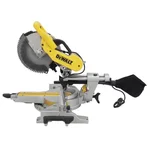 |
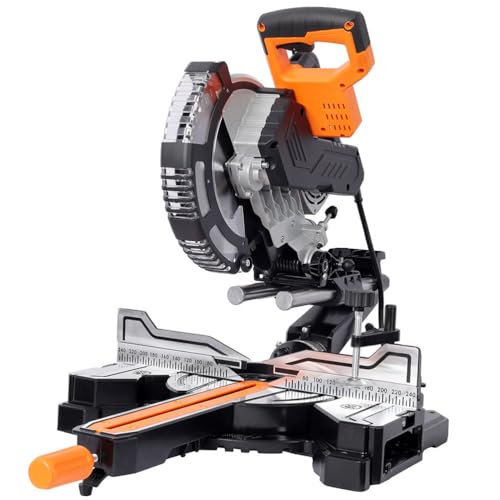
DEWALT DWS779 12″ Dual Bevel Sliding Miter Saw – $393.00 Same cutting performance as the pricier DWS780, without paying extra for a feature you may not need.
|
The real advantage isn’t cut quality — a single-bevel saw cuts just as cleanly. It’s workflow. Crown molding, for instance, typically needs opposing bevel angles on the left and right pieces of an inside corner. On a single-bevel saw, you flip the workpiece upside down or reverse it to get the mirror angle, which changes how the molding sits against the fence and can throw off your reference points. A dual-bevel saw tilts to either side at the push of a lever, so both cuts use the same face-up orientation and the same fence reference the whole time. For picture frames, cabinet trim, and any project with repeated left-and-right angle pairs, that consistency measurably speeds up the work and reduces the chance of a flipped, mismatched cut.
DWS779 vs. DWS780: The Two Common Dual-Bevel Models
DEWALT sells two 12-inch dual-bevel sliding miter saws that get compared constantly: the DWS779 and the DWS780. Mechanically they’re nearly identical — same 15-amp motor, same sliding rail system, same 0-48 degree bevel range on both sides. The DWS780 adds an XPS shadow-line cut system (a built-in LED that casts the blade’s shadow directly onto the cut line, rather than a laser that can drift out of calibration) and typically costs more. If you don’t need the shadow-line feature, the DWS779 delivers the same cutting performance for less money.
Cutting Capacity and Precision
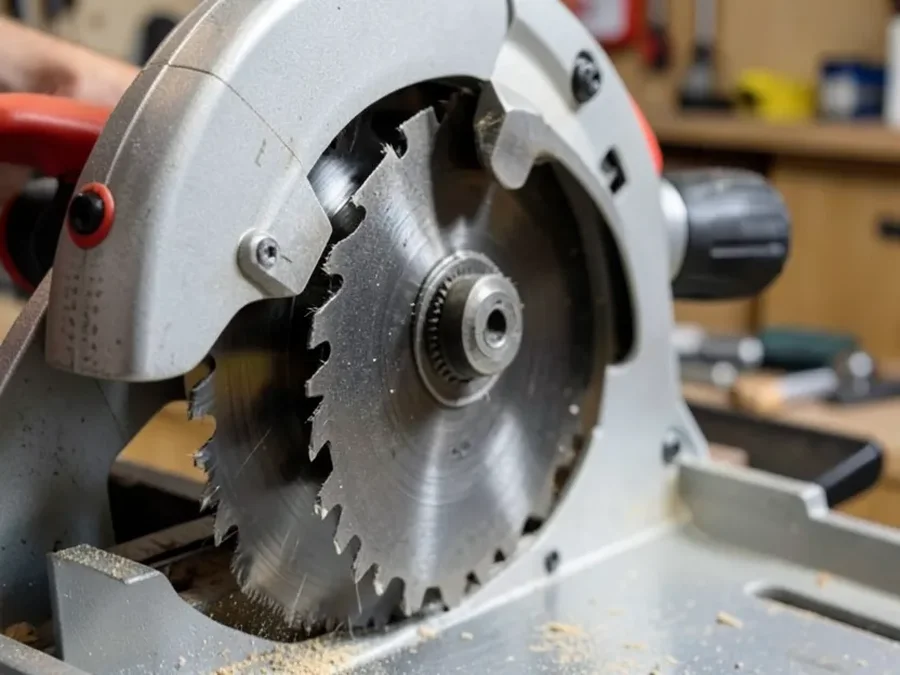
Both saws use a sliding rail system that extends crosscut capacity well beyond what a non-sliding miter saw of the same blade size can handle — wide enough to cut a 2×12 or a piece of base trim in a single pass rather than flipping and re-cutting. The bevel and miter scales lock down firmly once set, and the saw’s rigid fence and base keep the workpiece from shifting mid-cut, which matters more for accuracy than the marketing around laser guides or shadow lines usually suggests.
Safety Features Worth Knowing About
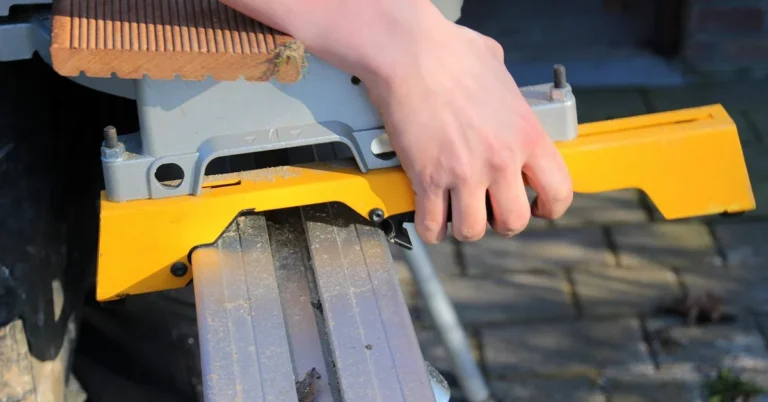
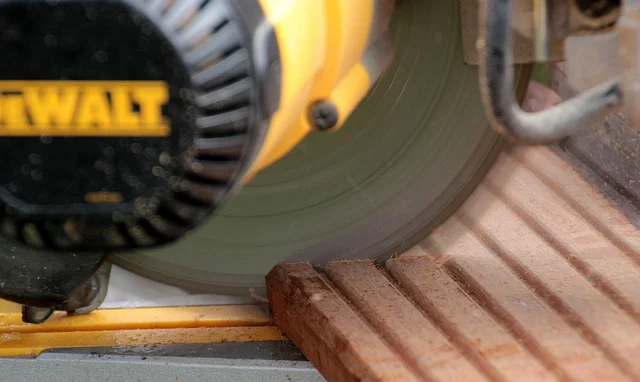
An electric brake stops the blade within a few seconds of releasing the trigger, rather than letting it spin down freely for 10-15 seconds the way older saws do — a meaningful safety improvement when you’re repositioning material quickly between cuts. The blade guard is spring-loaded and automatically covers the blade the instant the head lifts, and both models include a horizontal material clamp to keep hands well clear of the cut line on narrower workpieces.
Maintenance That Actually Matters
Sawdust buildup around the bevel pivot and sliding rails is the most common cause of a miter saw drifting out of calibration over time — clean these areas with a brush after heavy use rather than waiting for visible dust buildup. Check the blade for chips or dullness periodically; a dull blade doesn’t just cut worse, it also increases motor strain and can cause the saw to bog down on thicker stock. Keep the rail bearings lightly lubricated per DEWALT’s manual, and recheck the bevel stops against a square every few months, since repeated hard use can very gradually shift the factory calibration.
Is a Dual-Bevel Saw Worth the Extra Cost?
If your projects are mostly straight crosscuts — framing, deck boards, general lumber — a single-bevel saw does the job for less money, since you rarely need opposing angles on the same piece. If you regularly build crown molding, picture frames, cabinetry, or any trim work with mirrored angle cuts, the time saved by not flipping stock adds up quickly, and the price difference between single- and dual-bevel DEWALT saws is usually modest relative to the saw’s total cost.
Frequently Asked Questions
What Is a Dual-Bevel Miter Saw?
A dual-bevel miter saw tilts its blade in both directions, letting you cut mirror-image angles on either side of a workpiece without flipping it over. This is especially useful for crown molding and picture frames, where opposing angle cuts are common.
What’s the Difference Between the DWS779 and DWS780?
Both are 12-inch, 15-amp dual-bevel sliding miter saws with the same cutting capacity and bevel range. The DWS780 adds DEWALT’s XPS shadow-line cut indicator; the DWS779 skips that feature and typically costs less for the same core performance.
Can a DEWALT Dual-Bevel Saw Handle Wide Boards?
Yes. The sliding rail mechanism on both the DWS779 and DWS780 extends crosscut capacity well beyond a fixed-head miter saw of the same blade size, allowing single-pass cuts through wide dimensional lumber and trim boards.
Is a Dual-Bevel DEWALT Saw Good for Beginners?
Yes. The bevel and miter scales are clearly marked, adjustments lock securely, and the electric blade brake and spring-loaded guard add a real safety margin. The learning curve is mostly about practicing clean, controlled feed rates rather than the saw’s controls themselves.
Bottom Line
A dual-bevel DEWALT miter saw earns its keep on any project with repeated opposing-angle cuts — crown molding, frames, cabinet trim. For straightforward crosscutting, a single-bevel saw is just as capable for less money. Between the DWS779 and DWS780, skip the shadow-line premium unless you specifically want it; the cutting performance underneath is identical.
Sponsored / affiliate links. As an Amazon Associate I earn from qualifying purchases. I may earn additional commission from eligible campaigns.