DeWalt Brushless Circular Saw: Models Compared & Beginner Guide
A DeWalt brushless circular saw is a cordless saw that uses an electronically-commutated motor instead of physical brushes, giving more cuts per battery charge, less heat buildup, and a longer motor lifespan than DeWalt’s older brushed models. DeWalt sells these in 6-1/2″ and 7-1/4″ blade sizes across its 20V MAX and 60V FLEXVOLT battery lines.
This guide covers what a brushless motor actually changes, how to pick between the common DeWalt models, and the basics of a first cut – useful whether you’re replacing an older corded or brushed saw or buying your first circular saw.
What A Brushless Motor Actually Changes
Best Beginner-Friendly Brushless Model
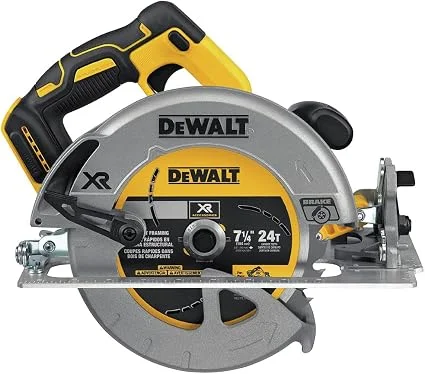 |
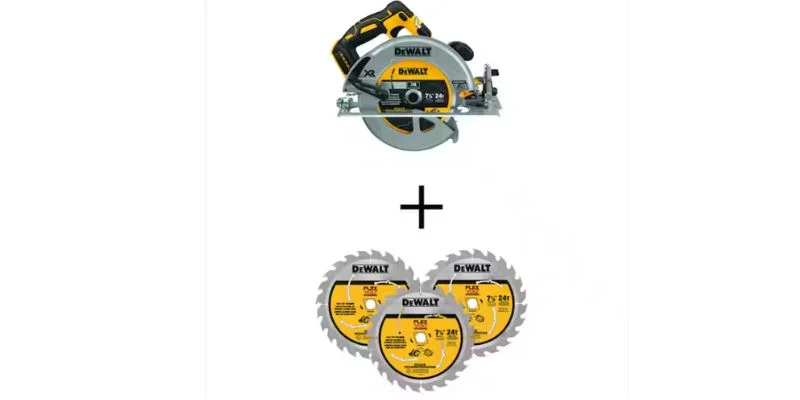
DEWALT DCS570B 20V MAX 7-1/4″ Brushless Circular Saw (Tool Only) – $244.52 A 20V MAX brushless saw with a 7-1/4″ blade, 57° max bevel, and an electronic brake – a solid balance of power and weight for general DIY work.
|
A brushed motor uses physical carbon brushes that press against a spinning commutator to deliver current – they wear down over time and create friction and heat as a byproduct. A brushless motor uses electronic sensors and a controller to switch current instead, so there’s no physical contact wearing down, less heat generated, and a real gain in run-time per battery charge (typically 20-30% more, depending on the specific comparison). The trade-off is upfront cost: brushless tools cost more than equivalent brushed models.
Comparing DeWalt Brushless Circular Saw Models
| Model | Blade Size | Battery Platform | Weight (bare tool) | No-Load RPM | Typical Price (Tool Only) |
|---|---|---|---|---|---|
| DCS565B | 6-1/2″ | 20V MAX | 6.3 lbs | 4,950 | ~$139 |
| DCS570B | 7-1/4″ | 20V MAX | ~7.5-8.2 lbs | 5,200 | ~$180-245 |
| DCS578B | 7-1/4″ | 60V MAX FLEXVOLT | 7.9 lbs | 5,800 | ~$199 |
The DCS565B is the lightest option, good for overhead cuts or smaller hands. The DCS570B is the most common general-purpose choice – a 7-1/4″ blade handles standard 2x lumber in a single pass at 90°. The DCS578B runs on the 60V FLEXVOLT platform (its batteries are also backward-compatible with 20V MAX tools), aimed at users doing heavier, more frequent cutting.
Getting Started: What You Need
- A compatible 20V MAX or FLEXVOLT battery – a 5Ah battery is a reasonable starting point for most users
- A blade matched to your material – a 24-tooth carbide blade for general wood cutting, a dedicated metal-cutting blade for metal
- Safety glasses, hearing protection, and gloves
- A tape measure, pencil, and speed square for marking accurate cut lines
- A stable work surface – a workbench or sawhorses to support the material being cut
Making A Basic Cut
- Mark your cut line clearly with a pencil and square.
- Set the blade depth so it extends about 1/4 inch past the material’s thickness – deep enough for a clean cut, not so deep that more blade than needed is exposed.
- Clamp the material securely to a stable work surface.
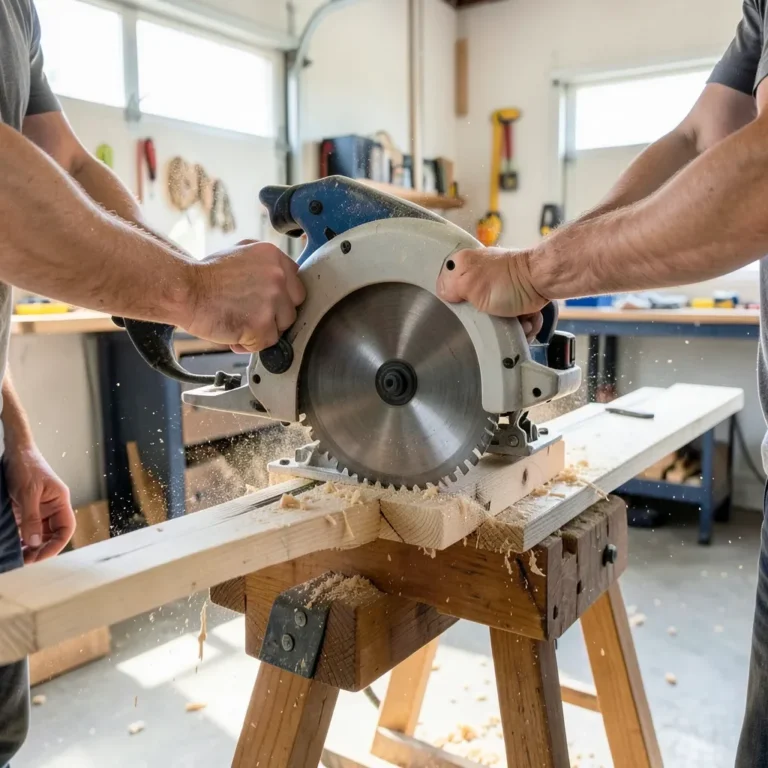
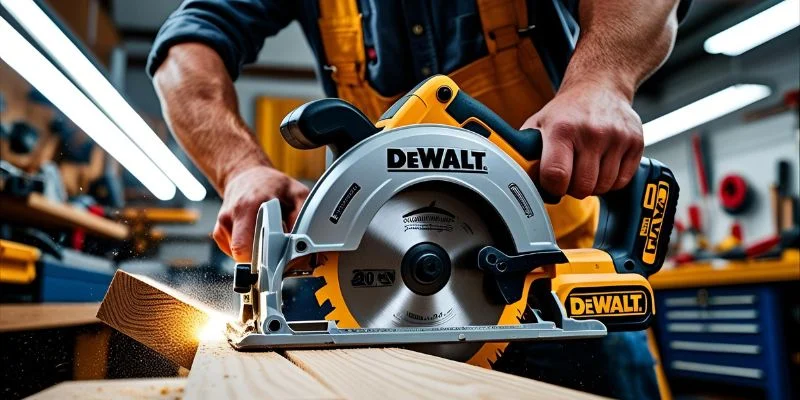
- Align the blade with the cut line, start the saw before the blade contacts the material, and guide it through at a steady, even pace.
- Let the saw come to a complete stop before setting it down.
Rushing the cut is the most common cause of a wobbly or binding blade. A straightedge clamped to the material as a guide rail helps produce a straighter cut than freehanding, especially for longer rips.
Safety And Maintenance
- Always wear eye and ear protection, and inspect the blade for damage or dullness before each use – a dull blade is more likely to bind or kick back
- Clamp the workpiece securely rather than holding it by hand
- Match the blade to the material – never use a wood blade on metal
- Clean dust from the motor housing with compressed air after use, and store the saw in a dry location
- Keep a charged spare battery on hand for longer projects
Alternatives To Consider
A corded DeWalt saw, such as the DWS535 worm-drive model, costs less than a cordless brushless option and never needs a battery, at the expense of mobility. Milwaukee and Makita also make comparable brushless circular saws; the main reason to stay within one brand is battery compatibility across your existing tools, not a meaningful difference in cut quality between the major brands.
Frequently Asked Questions
What is a brushless motor in a DeWalt circular saw?
A brushless motor uses electronic switching instead of physical carbon brushes, resulting in less heat, less wear over time, and more cuts per battery charge compared to a brushed motor of similar power.
Which DeWalt circular saw is best for beginners?
The DCS570B (7-1/4″) is a common starting point – it’s a general-purpose size and weight that handles standard lumber, and it runs on the widely-available 20V MAX battery platform.
Can a DeWalt circular saw brushless be used on metal?
Yes, with the correct blade. Swap to a dedicated metal-cutting blade, reduce feed speed to avoid overheating, and wear appropriate eye and hand protection.
What is the difference between 20V MAX and 60V FLEXVOLT DeWalt saws?
20V MAX saws are generally lighter and suited to general tasks. 60V FLEXVOLT saws deliver more sustained power for heavier material. FLEXVOLT batteries are backward-compatible with 20V MAX tools, but 20V MAX batteries cannot power a 60V-only tool.
Conclusion
A DeWalt brushless circular saw trades a higher upfront cost for real gains in run-time, heat management, and motor longevity over a brushed equivalent. For most general DIY use, a 7-1/4″ 20V MAX model like the DCS570B balances power, weight, and battery compatibility – lighter 6-1/2″ models suit overhead or detail work, and the 60V FLEXVOLT line suits heavier, more frequent cutting.
Sponsored / affiliate links. As an Amazon Associate I earn from qualifying purchases. I may earn additional commission from eligible campaigns.