Difference Drill And Impact Driver: Key Uses and Expert Tips
Are you confused about whether to use a drill or an impact driver for your next project? You’re not alone.
Both tools look similar but work very differently, and choosing the right one can save you time and effort. Understanding the key differences will help you get the job done faster and avoid frustration. Keep reading to discover exactly when to grab your drill and when an impact driver is the better choice for your toolbox.
Your projects will thank you.

Drill Basics
A drill is a common tool used for many tasks around the house or at work. It helps to make holes or drive screws with power. Understanding the basics of a drill is important before using one. This section explains the core parts and uses of a drill. It also covers the types of drill bits you might need.
Core Functions
A drill uses a motor to spin a bit fast. This spinning motion helps to bore holes in wood, metal, or plastic. It can also screw or unscrew fasteners. Most drills have a trigger to control speed. Some drills offer reverse rotation to remove screws easily.
Common Applications
Drills are great for making holes for shelves or furniture. They are used in building projects and home repairs. Many people use drills to insert screws quickly. Drills also help in assembling products or hanging pictures on walls. Their versatility makes them a must-have tool.
Types Of Drill Bits
Different bits suit different jobs. Twist bits are common for wood and metal drilling. Spade bits create larger holes in wood. Masonry bits are made for drilling into bricks or concrete. Screwdriver bits help drive screws easily. Choosing the right bit improves the work quality.
Impact Driver Essentials
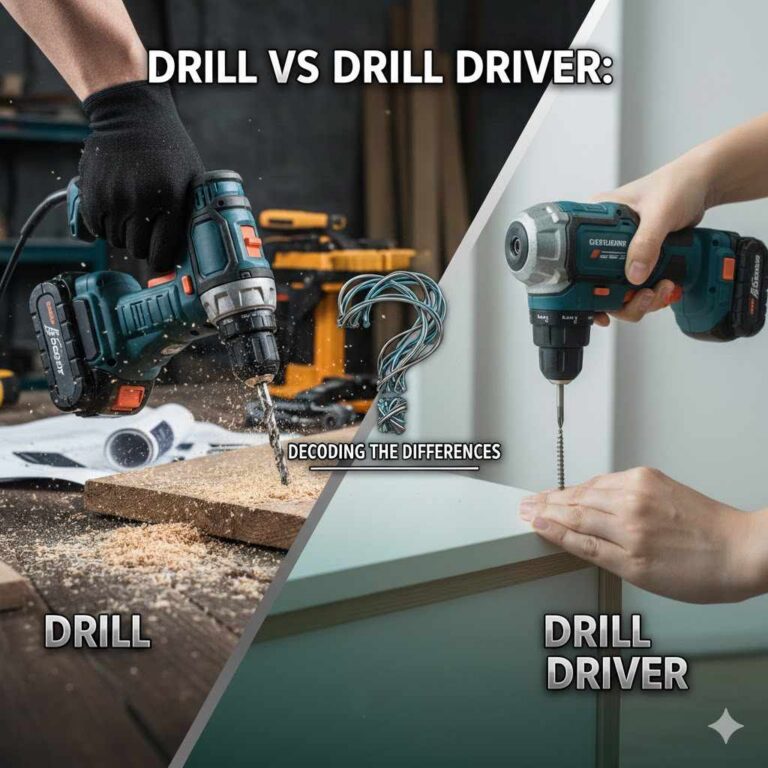
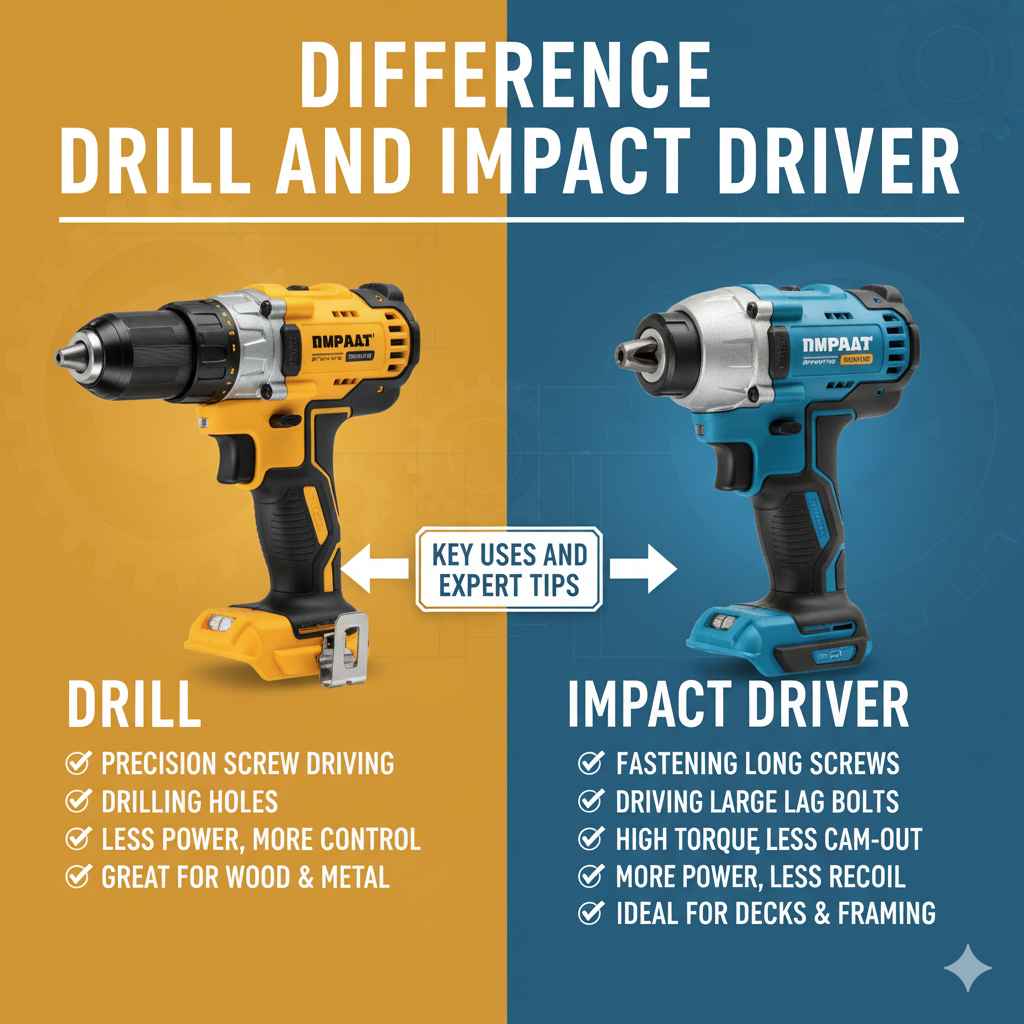
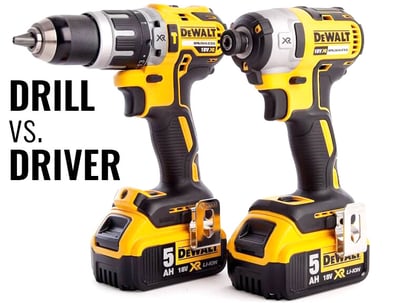
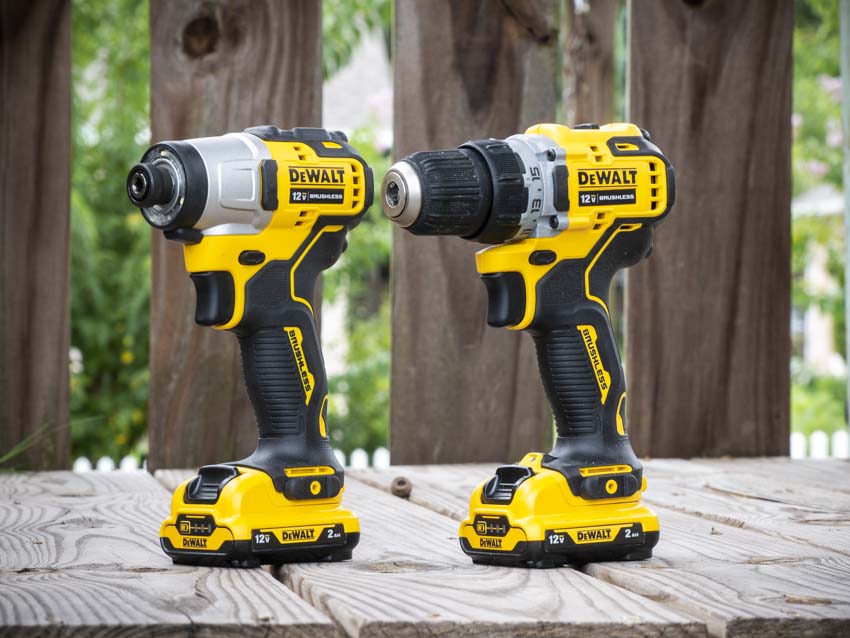
Drills use steady rotation to bore holes, while impact drivers deliver quick bursts of force for driving screws. Impact drivers are better for tough jobs and tight screws. Drills suit lighter tasks and precise drilling.
Primary Features
An impact driver delivers strong rotational force. It uses quick bursts of power to drive screws and bolts. This tool is compact and lightweight, making it easy to handle. It has a hex chuck that holds bits firmly. The motor provides high torque, which helps with tough jobs. Impact drivers reduce wrist strain compared to regular drills.
Typical Uses
Impact drivers excel at driving long screws and bolts into hard materials. They are perfect for building decks, installing cabinets, and framing. This tool is great for automotive work and heavy construction. It works faster on large fasteners than a drill. Impact drivers handle repetitive tasks with less effort.
Bit Compatibility
Impact drivers use 1/4-inch hex shank bits. These bits fit securely in the quick-change chuck. Many manufacturers offer impact-rated bits made from strong materials. Using the right bits prevents damage and ensures safety. Standard drill bits usually do not fit impact drivers. Always choose bits designed specifically for impact use.
Power And Torque Comparison
Power and torque are key factors that separate drills from impact drivers. Both tools serve different purposes depending on how much force and speed you need.
Understanding the differences helps you pick the right tool for your project. Power refers to the motor strength, while torque measures twisting force.
Power Output Of Drills And Impact Drivers
Drills usually have lower power compared to impact drivers. They run at slower speeds, ideal for drilling holes and light fastening.
Impact drivers have stronger motors that deliver quick bursts of power. This helps drive screws and bolts into hard materials easily.
Torque Levels Explained
Torque is the main advantage of impact drivers. They produce higher torque to turn tough fasteners without stripping them.
Drills provide moderate torque, enough for drilling and simple screw tasks. They struggle with very hard or large screws.
How Power And Torque Affect Performance
Higher torque means faster and easier screw driving. Impact drivers handle large screws and dense wood better.
Lower torque drills work well for precise drilling and small screws. They offer more control on delicate materials.
Speed And Control Differences
Speed and control are key factors in choosing between a drill and an impact driver. Both tools serve different purposes and perform differently under various tasks.
Understanding how speed and control vary can help you pick the right tool for your project. This section explains these differences clearly.
Speed Variations Between Drill And Impact Driver
Drills usually operate at lower speeds compared to impact drivers. They offer steady and consistent rotation suitable for drilling holes.
Impact drivers spin faster and deliver quick bursts of power. This speed helps drive screws faster and with less effort.
The higher speed in impact drivers makes them ideal for heavy-duty fastening work. Drills, on the other hand, focus on precision rather than speed.
Control Differences In Handling And Torque
Drills provide smooth and controlled torque. This makes them good for delicate tasks and precise drilling.
Impact drivers use short, strong bursts of torque. This action helps prevent stripping screws and reduces wrist strain.
Users find drills easier to control at low speeds. Impact drivers excel in tough fastening jobs where extra torque is needed.
Choosing Based On Speed And Control Needs
Pick a drill if you need slower speed and finer control. It works well for drilling and light screw driving.
Choose an impact driver for fast driving and strong torque. It suits projects with many screws or tough materials.
Knowing these speed and control traits helps you work more efficiently and safely.
When To Use A Drill
A drill is a versatile tool for many home and work projects. It uses a spinning motion to make holes or drive screws. Knowing when to use a drill helps you choose the right tool for your task. This saves time and keeps your work neat.
Drilling Holes
Drills are perfect for making holes in wood, metal, or plastic. They create clean, round holes quickly and easily. Use the correct drill bit size for the hole you need. The drill’s steady speed helps avoid cracks or damage. For precise hole placement, a drill is the best choice.
Light Screwing Tasks
Drills work well for light screwing jobs. They can drive small screws into soft materials like wood or drywall. Use a low speed setting to avoid stripping screws. Drills give you control when starting screws straight. For delicate tasks, a drill is safer than an impact driver.
When To Choose An Impact Driver
An impact driver is a powerful tool designed to deliver high torque with minimal effort. It uses quick bursts of force to drive screws and bolts deeper and faster than a regular drill. Choosing an impact driver makes sense when tasks require strong, steady power. This tool excels in specific jobs that demand more than just spinning force.
Driving Long Screws
Long screws can be hard to drive with a normal drill. They often strip or get stuck in wood. Impact drivers push screws in smoothly without slipping. The strong torque helps drive screws deep into tough materials. This makes work faster and less tiring.
Tightening Bolts
Bolts need strong force to tighten well. Impact drivers provide sudden bursts of power to lock bolts firmly. They reduce hand strain compared to manual wrenches or drills. This tool works well on rusted or stuck bolts too. It ensures a secure fit every time.
Expert Tips For Optimal Use
Using a drill and an impact driver properly makes your work easier and safer. Knowing the right tips helps you get the best results. Follow these expert tips to keep your tools in good shape and work smartly.
Maintenance Practices
Clean your tools after every use. Remove dust and dirt from vents and moving parts. Check batteries and charge them fully before storing. Oil the chuck of the drill regularly to keep it smooth. Tighten loose screws and parts to avoid damage. Store tools in a dry place away from moisture.
Safety Precautions
Wear safety glasses to protect your eyes from flying debris. Use gloves to avoid cuts and blisters. Keep your hands away from the drill bit or driver bit. Work in a well-lit area to see clearly. Avoid loose clothing that can get caught in the tool. Turn off and unplug tools before changing bits or cleaning.
Accessory Selection
Choose the right bit for the material you work on. Use drill bits for holes and driver bits for screws. Pick high-quality bits to avoid breaking or slipping. Match the bit size to the screw or hole needed. Keep spare bits handy to avoid delays. Change bits carefully to prevent damage to the tool or workpiece.
Frequently Asked Questions
What Is The Main Difference Between A Drill And Impact Driver?
A drill uses constant rotational force for drilling and driving screws. An impact driver delivers concussive force, ideal for driving large screws and bolts with less effort.
When Should I Use An Impact Driver Over A Drill?
Use an impact driver for heavy-duty screw driving and tight fasteners. A drill is better for drilling holes and light fastening tasks.
Can A Drill Replace An Impact Driver?
A drill can handle light driving tasks but lacks the torque and impact action. It cannot fully replace an impact driver for tough fastening jobs.
Are Drill And Impact Driver Bits Interchangeable?
Some bits fit both tools, but impact drivers require impact-rated bits. Using regular drill bits in impact drivers may cause breakage or damage.
Conclusion
Drills and impact drivers serve different tasks in your toolbox. Drills are great for making holes and driving screws gently. Impact drivers deliver extra power for tough screws and bolts. Knowing which tool fits your job saves time and effort.
Choose the right one to work smarter, not harder. Both tools have a place in DIY and professional work. Use them wisely to get the best results every time. Simple tools. Big difference.