Wood Drill Bit vs. Metal Drill Bit: What Actually Makes Them Different
Wood drill bits and metal drill bits can look almost identical sitting in the same case, but they’re ground for completely different jobs. A wood bit uses a centered spur point and wide flutes to slice through soft fibers fast; a metal bit uses a sharper conical point angle and narrower flutes ground to bite into hard alloys without skating across the surface. Grab the wrong one and you’ll either tear an oversized, splintered hole in wood or watch a bit dull to nothing in seconds on steel. Here’s what’s actually different between them, why the “118 vs. 135 degree” rule you may have read is only half the story, and which one to reach for.
Wood vs. Metal Drill Bits at a Glance
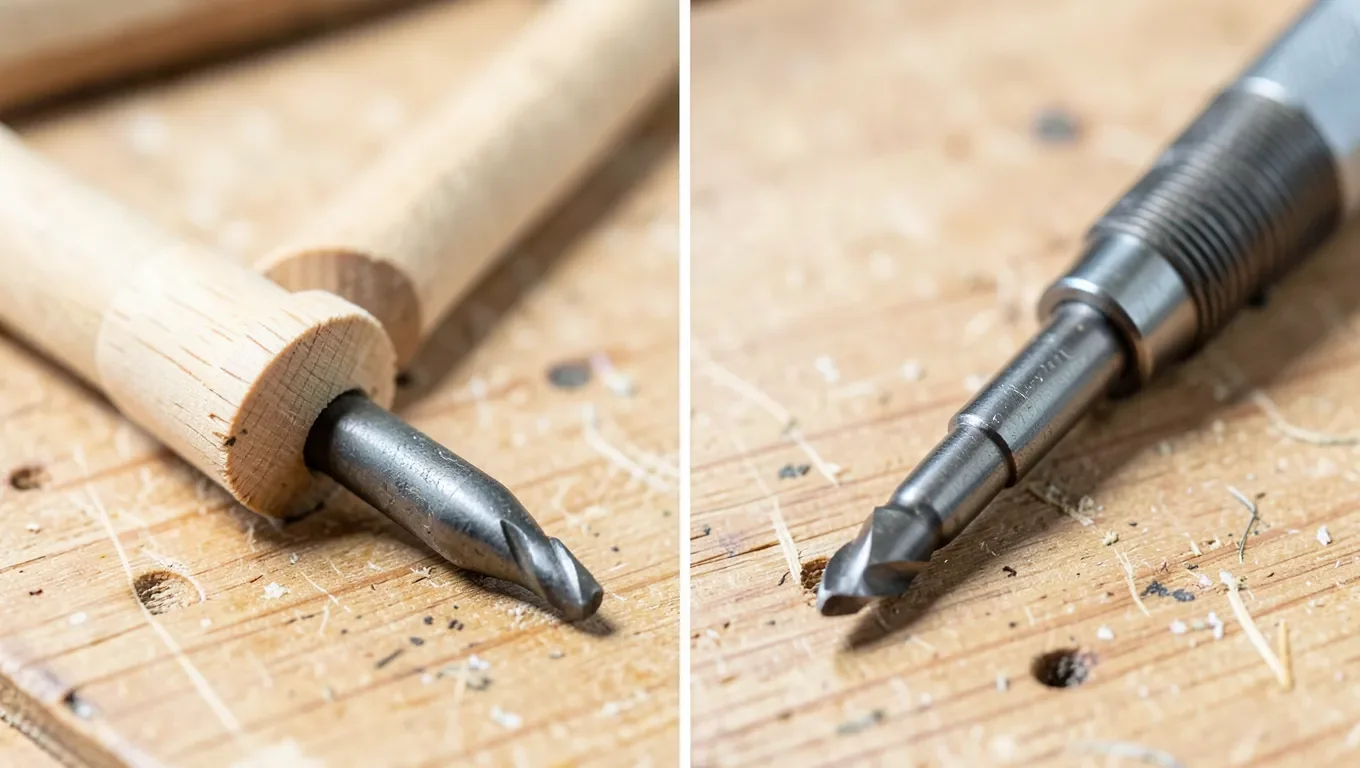
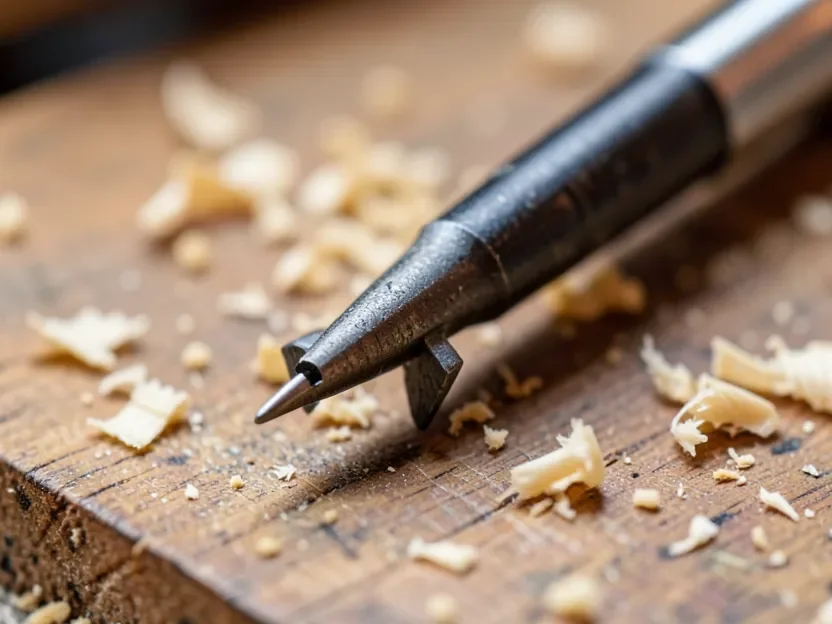
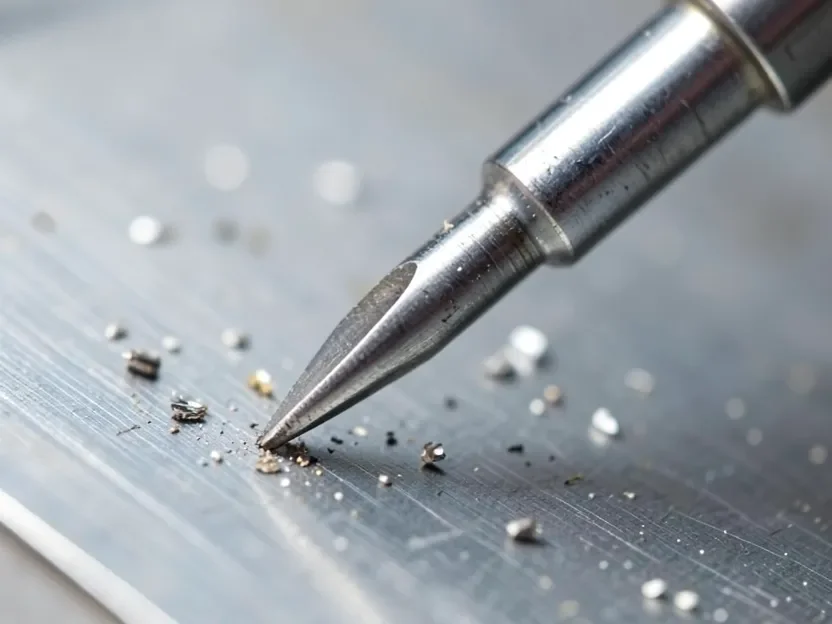
The fastest way to tell them apart: a true wood bit (brad point) has a sharp little center pin with two raised spurs on either side of it, almost like a tiny compass point flanked by two blades. A metal bit (twist bit) has a smooth cone-shaped tip with no separate center pin at all – the whole point is one continuous angled cutting edge. If you can see a distinct raised pin standing proud of the surrounding spurs, you’re holding a wood bit. If the tip is just a smooth cone, it’s a general-purpose or metal-cutting twist bit.
Best All-Purpose Bit Set
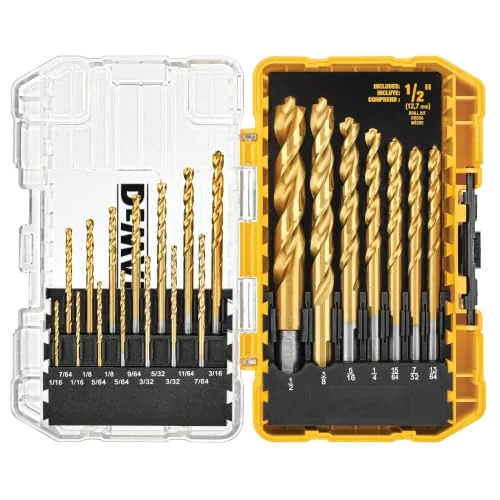 |
DEWALT DW1361 21-Pc. Titanium Pilot Point Drill Bit Set – $26.98 If you’re not sure yet whether you need a dedicated wood bit or a metal bit, this set covers both with pilot-point tips that start on contact and titanium coating that resists wear across wood, metal, and plastic.
|
Wood Drill Bits: Design and How They Cut
A brad-point wood bit starts with a centered spur point – a small pin that digs in first and keeps the bit from wandering off your mark the instant the drill touches the surface. Flanking that pin are two raised spurs that score a clean circular outline into the wood fibers before the main cutting edges ever engage. Once that outline is scored, wide, deep flutes take over, and their job is almost entirely chip clearance: wood produces bulky, curled shavings rather than fine dust, so the flute channel has to be wide enough to lift those shavings out of the hole fast, or they’ll pack the hole and burn the wood from friction.
Material and Coating
Most wood bits are still cut from high-speed steel (HSS) – the same base material used in general-purpose metal bits – because wood simply doesn’t demand the wear resistance of a harder alloy. What changes is the coating and the geometry, not the steel itself. A black-oxide coating is common mainly for rust resistance in a damp shop, not because wood is hard on the edge the way steel is.
Common Uses
Brad-point bits are the standard choice for furniture joinery, cabinet hardware holes, dowel holes, and anywhere a clean entry and exit hole matters more than raw speed – a torn edge on a cabinet face is much more visible than one buried inside a stud. They also work fine in plywood and MDF, though the spurs can chip out slightly on the exit side of thin plywood if you don’t back it with scrap.
Metal Drill Bits: Design and How They Cut
Metal-cutting bits are built around point angle rather than a spur point, and this is where a lot of the “118 vs. 135 degree” advice floating around gets muddled. Standard general-purpose twist bits – the kind sold for drilling wood, plastic, and mild steel – use a 118-degree point angle. That’s a workable middle ground: sharp enough to start reasonably well, wide enough not to be fragile. For harder material like stainless steel or hardened tool steel, a 135-degree split-point angle is ground instead, which flattens the cutting edge across a wider surface so the bit can start on contact without walking, without needing a center punch first. The 118-degree figure people sometimes attach to wood bits actually belongs to general-purpose twist bits, not to true brad-point wood bits, which don’t use a conical point angle at all.
Material and Coating
Metal bits are made from high-speed steel or cobalt steel, and the alloy choice matters more here than for wood bits because the bit is directly competing with a workpiece of similar or greater hardness. Cobalt bits (usually 5% to 8% cobalt content) hold an edge at higher temperatures and are the better pick for stainless steel and cast iron. Titanium nitride or black oxide coatings reduce friction and heat buildup, which extends life, but the coating wears through eventually – it’s a bonus layer, not the reason the bit cuts metal in the first place.
Common Uses
These bits handle bolt holes, pilot holes for tapping threads, sheet metal, angle iron, and pipe. Because the flutes are narrower than a wood bit’s, metal chips clear more slowly, which is part of why metal drilling runs at lower RPM – give the flute time to carry the shaving out instead of regrinding it against the hole wall.
Performance Comparison
Put the two side by side on their own home turf and the differences show up fast. In wood, a brad-point bit will outrun a metal-rated twist bit because it’s not fighting the material – it’s designed around wood’s grain and softness. Run that same wood bit into steel and it dulls within a few holes; the spur geometry that made it precise in wood has no edge retention against a harder surface. Flip it around and a metal bit forced into wood tends to grab and tear rather than cut cleanly, because it lacks the scoring spurs that keep a wood bit’s entry hole crisp – you’ll often get splintering or an oversized, ragged hole instead of a clean one.
Durability follows the same logic in reverse: a metal bit built from cobalt steel with a 135-degree split point will comfortably outlast a wood bit if you’re working hard material, precisely because it was engineered for that wear. Neither bit is “better” in an absolute sense – they’re each over-built for their own material and under-built for the other.
Choosing the Right Bit for Your Project
Match the bit to the material first, then think about finish quality and budget. Furniture, cabinetry, shelving, and anything where the hole is visible calls for a brad-point wood bit – the clean entry and exit are worth the small extra cost. Framing lumber and rough construction work are more forgiving; a general-purpose twist bit will get the hole done, just without the crisp edges. Once you’ve settled on the right bit, getting the size right matters just as much – see our guide on choosing the correct drill bit size for a fastener or anchor before you drill.
Cost Considerations
Wood-specific bits are usually cheaper per bit than cobalt or titanium-coated metal bits, but that’s a reflection of the alloy and coating cost, not a sign either type is disposable. Buying a cheap general-purpose set and using it on both wood and metal will cost more over time in replacements than buying two purpose-built sets that each last through their intended material.
Maintenance and Safety
Keep wood and metal bits in separate slots in your case – not for storage neatness, but because tossing them together lets the harder metal bits nick the softer spur points on wood bits every time the case gets jostled. Sharpen at the original angle: a bench grinder or sharpening jig set to match the factory point angle preserves the bit’s original cutting behavior, while a freehand sharpen at the wrong angle changes how the bit centers and clears chips. Dip metal bits in water periodically while grinding to avoid drawing the temper out of the steel, which softens the edge permanently. Once you’ve picked and sharpened the right bit, seating it correctly in the chuck matters too – see our guide on how to attach a drill bit.
Wear eye protection any time you’re sharpening or drilling overhead, keep fingers clear of the flutes while the bit is spinning down (they stay sharp enough to cut after the trigger is released), and inspect bits for hairline cracks near the shank before each use – a cracked bit can snap and eject fragments under load.
Frequently Asked Questions
What is the main difference between wood and metal drill bits?
Wood bits use a centered spur point with two raised spurs and wide flutes for fast chip clearance in soft material. Metal bits use a smooth conical point (118 degrees for general use, 135 degrees split-point for harder alloys) with narrower flutes, since they’re grinding through a harder surface rather than slicing fibers.
Can I use a wood drill bit on metal?
You can, but it’s not recommended. The spur point that makes a wood bit precise in wood has no wear resistance against metal, so it dulls within a handful of holes and produces a rough, imprecise result.
Why do metal drill bits have a different tip angle than wood bits?
Metal bits rely on point angle alone to start and center the hole, since they don’t have a separate spur point like wood bits. A 118-degree angle is the general-purpose standard; a 135-degree split point is ground for harder alloys so the bit bites in without walking. True wood bits don’t use a conical point angle at all – they center with a spur pin instead.
How does flute design differ between wood and metal drill bits?
Wood bits have wide, deep flutes built to carry bulky curled wood shavings out of the hole quickly. Metal bits have narrower flutes sized for fine metal shavings, and metal drilling is typically run at lower RPM to give those narrower flutes time to clear the cut before it packs and overheats.
Bottom Line
Wood and metal drill bits aren’t interchangeable, and the difference comes down to geometry: a spur point built to score and clear soft fibers versus a conical point angle ground to bite into hard alloy without walking. Match the bit to the material, keep them stored separately, and sharpen at the factory angle, and either type will outlast a mismatched one by a wide margin.
Sponsored / affiliate links. As an Amazon Associate I earn from qualifying purchases. I may earn additional commission from eligible campaigns.