DIY Paint Remover: What Actually Works (and the Lead Paint Check Most Guides Skip)
Before anything else: if your home or furniture piece was painted before 1978, assume the paint could contain lead until you know otherwise. Sanding or heat-gunning old lead paint releases toxic dust and fumes, and it’s a step almost every DIY paint-removal guide skips. Test with an inexpensive lead-check swab first, and if it’s positive, use a wet-sanding or chemical-stripping method (never dry-sand or torch it) or bring in a certified lead-abatement contractor for large areas.
What Actually Works, and What’s Overstated
Vinegar and baking soda are real methods, but not the all-purpose paint strippers a lot of blog posts make them out to be. The genuinely effective version of this trick is boiling small metal hardware (hinges, doorknobs, drawer pulls) in water with baking soda for 10–15 minutes — the heat and mild alkalinity loosen old paint from metal effectively. Plain vinegar wiped onto painted wood softens only old, already-failing paint; it won’t touch a solid, well-bonded paint film, so don’t count on it for a wall or a piece of furniture with intact paint.
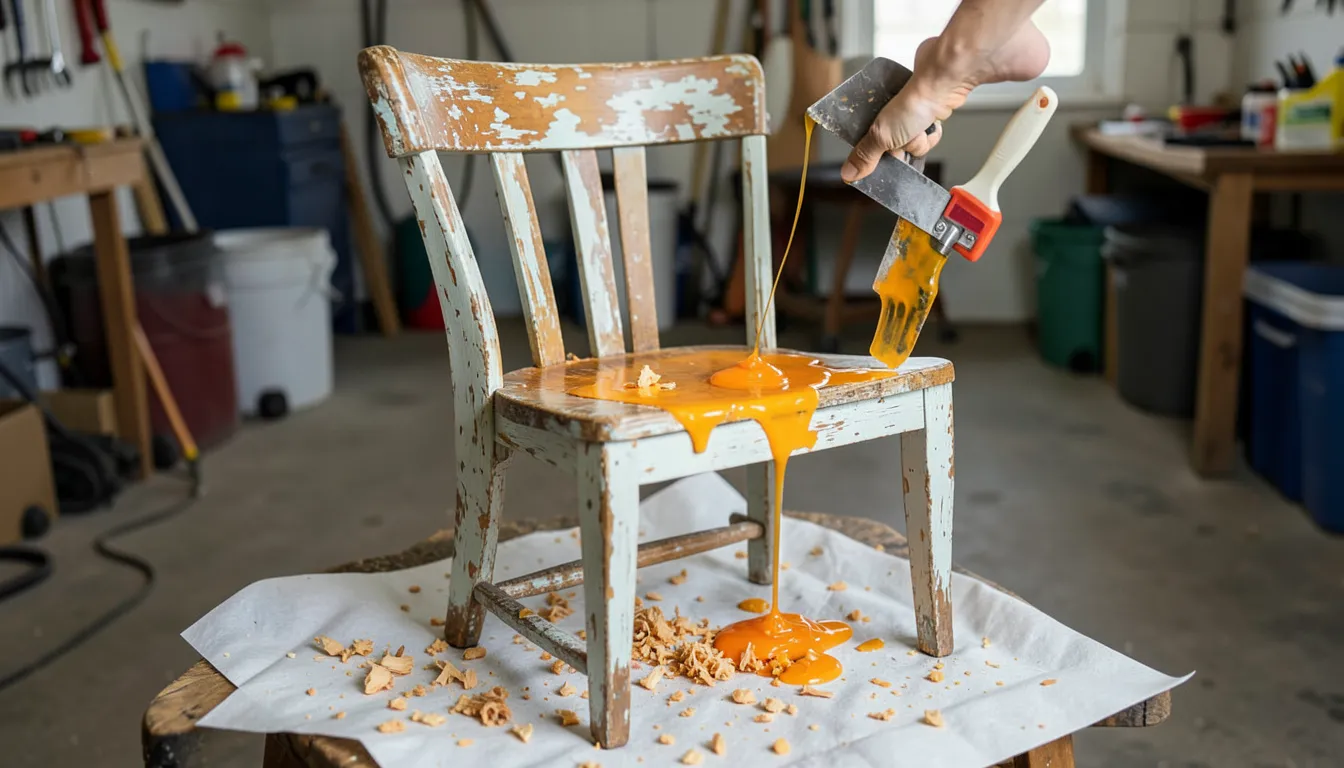
Citrus-based strippers (Citristrip and similar) are a different story — these work because of d-limonene, a real solvent extracted from citrus peels that breaks down paint and varnish resins similarly to (but with less harsh fumes than) traditional chemical strippers. This is the natural-ish option that actually performs like a real paint stripper on wood.
Get a Stripper That Actually Works on Wood
Best Citrus-Based Paint Stripper
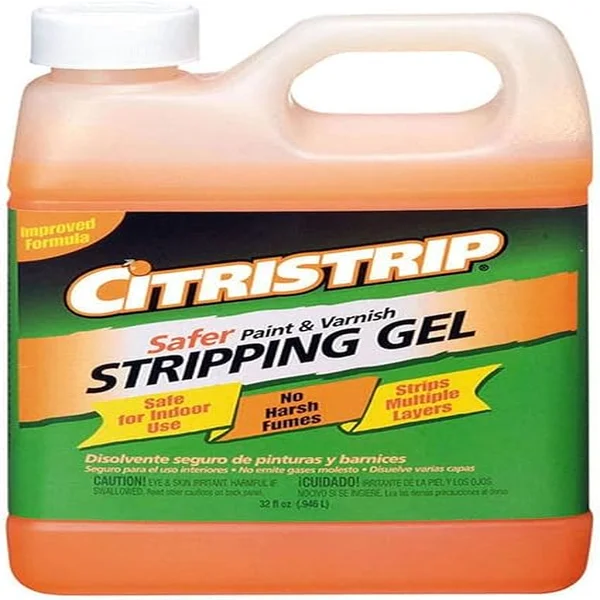 |
Citristrip Paint & Varnish Stripping Gel, 1 Quart – $26.87 Stays wet and active for up to 24 hours, so it can strip multiple layers in one application instead of the repeat-and-scrape cycle plain vinegar requires.
|
Safety First
- Check for lead paint on anything pre-1978 before sanding or heating it (see above — this is the step most guides skip entirely).
- Ventilate. Open windows, run a fan, or work outside — chemical strippers and sanding dust both need real airflow, not just an open door.
- Wear the right gear: gloves, safety glasses, and a respirator rated for the method you’re using (a dust mask for sanding, an organic-vapor respirator for chemical strippers).
- Never mix products. Combining different chemical strippers, or mixing bleach-based products with anything else, can create dangerous fumes.
Mechanical Removal: Sanding and Scraping
Sanding works well for small areas and final smoothing, but it’s slow for heavy paint buildup and creates fine dust that’s a genuine hazard on old paint. Start with a coarser grit to cut through the bulk of the paint, then step up to finer grits to smooth the bare surface. Always sand with the grain to avoid visible cross-grain scratches.
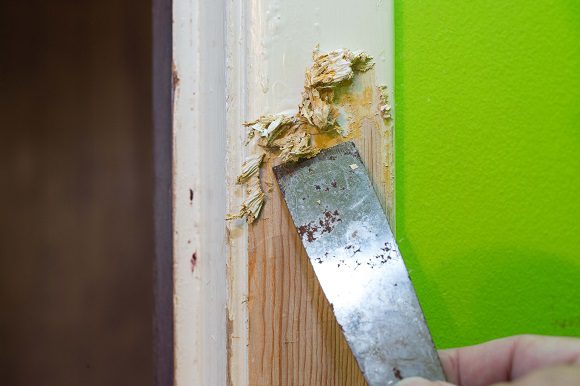
Scraping with a sharp putty knife or dedicated paint scraper is faster on flat surfaces and doesn’t generate airborne dust the way sanding does — a real advantage if lead paint is a possibility, since scraping (done gently, without gouging) creates larger chips rather than fine inhalable dust. It struggles on detailed molding profiles, where a chemical stripper reaches into the grooves that a scraper can’t.
Heat-Based Removal
A heat gun softens paint so it lifts off in a scraper-friendly ribbon rather than tiny fragments, and it’s genuinely fast on flat wood surfaces. It’s also a real fire risk (it can ignite dust, vapors, or the wood itself if held too long in one spot) and, critically, heat-gunning suspected lead paint releases toxic lead fumes — don’t use heat-based methods until you’ve ruled out lead. Keep the gun moving, never point it at yourself or bystanders, and never use it on plastic trim (it melts) or near glass (thermal shock can crack it).
Chemical Strippers: Beyond Citrus
Solvent-based strippers (methylene chloride or NMP-based) work fastest but carry the strongest health warnings and fumes — methylene chloride specifically has been restricted or banned for consumer sale in a number of jurisdictions due to acute inhalation risk. Caustic (lye-based) strippers handle heavy multi-layer buildup well but can damage wood grain and darken some species if left on too long. For most home projects, a citrus/bio-based gel strikes the best balance of real effectiveness with lower acute health risk, which is why it’s become the default recommendation over older solvent strippers.
Finishing Up
After stripping, neutralize and clean the surface per your stripper’s label (some citrus strippers just need a water rinse; some solvent strippers need a specific neutralizing wash) before repainting or refinishing — leftover stripper residue can prevent new paint or stain from bonding properly. Let the surface dry fully, do a final light sand to smooth any raised grain, and wipe away dust with a tack cloth before applying anything new.
Frequently Asked Questions
What household items can remove paint?
Baking soda works well boiled with water for stripping paint off small metal hardware. Plain vinegar only loosens paint that’s already failing, not solid intact paint. For real paint removal on wood, a citrus-based stripper (containing d-limonene) is the household-adjacent option that actually performs like a stripper.
What is the easiest way to remove paint fast?
A heat gun softens paint for fast scraping on flat wood or metal surfaces, provided you’ve first ruled out lead paint on anything from before 1978. A citrus or chemical stripper is slower but reaches detailed molding a scraper can’t.
Will vinegar and baking soda remove paint from wood?
Only loosely, and only on paint that’s already deteriorating. For solid, well-bonded paint on wood, a real paint stripper (citrus-based or solvent-based) is needed – vinegar and baking soda aren’t a substitute for one.
Why does baking soda work on paint?
Its mild alkalinity and abrasiveness help loosen paint, especially when combined with boiling water for small metal parts. It’s a real, useful method for hardware but not an effective way to strip paint off a wall or large wood surface.
Bottom Line
Check for lead paint before sanding or heat-gunning anything old, use boiled baking soda water for small metal hardware, and reach for a real citrus-based stripper like Citristrip for wood surfaces with intact paint — vinegar alone won’t cut it.
Sponsored / affiliate links. As an Amazon Associate I earn from qualifying purchases. I may earn additional commission from eligible campaigns.