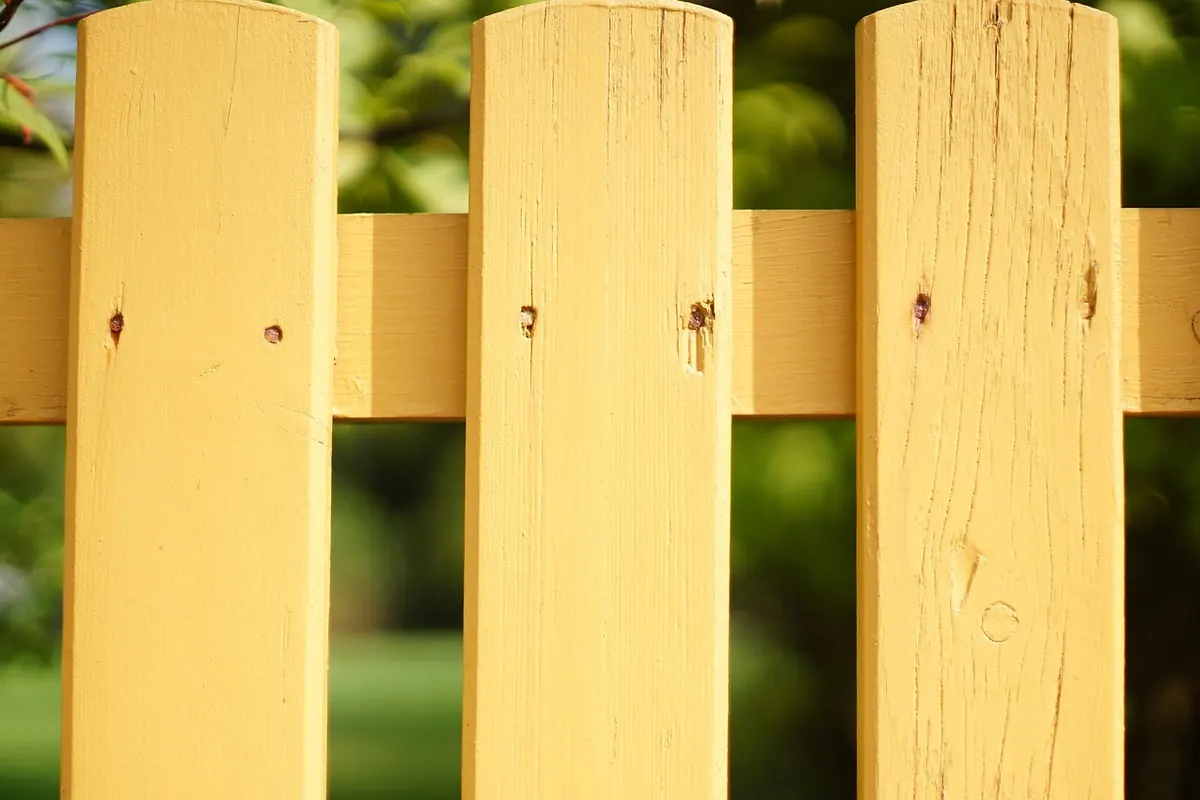
Wood Fence Paint: Is It Worth It? (Prep, Primer & Coats)
Wood fence paint costs $30 to $80 per gallon and can last three to five years outdoors, but only over a sanded, primed surface — paint applied straight onto raw or weathered wood peels within a single season. Skipping prep is the single biggest reason painted fences fail early, especially on tannin-rich woods like cedar and redwood. If you are leaning toward stain instead of paint for a cedar fence, see our guide on whether cedar can be stained right away before you start. This guide covers when paint beats stain, which paint type holds up outside, the exact prep-to-topcoat process, and what painting actually costs.
Quick Answer
Paint works on a wood fence, but stain is the better default for bare or weathered wood, since paint sits on the surface and cracks as the wood expands and contracts underneath it. Choose 100% acrylic latex exterior paint over an exterior primer, and reserve paint for old, mismatched, or already-painted fences rather than new cedar or redwood.
Should You Paint or Stain a Wood Fence?
Stain is the better default finish for a wood fence because it soaks into the grain and moves with the wood as it expands and contracts. Paint sits on top of the surface, looks more uniform at first, but blisters sooner on tannin-heavy woods like cedar.
A painted fence gets a flat, uniform color that fully hides old stains, patches, and mismatched boards — something a semi-transparent finish cannot do. If you’d rather keep the wood grain visible instead of covering it, compare the options in our guide to the best fence stain before you buy a gallon of anything.
The tradeoff with paint is movement. Wood swells when it absorbs moisture and shrinks as it dries out, and a paint film that can’t flex with that movement is what cracks and peels first — typically along board seams, knots, and end grain. Stain has no surface film to crack, so it wears by fading and thinning rather than peeling.
Paint is the better choice for an old, weathered, or already-painted fence with mismatched boards. Stain is the better choice for a new cedar, redwood, or pine fence where the grain is worth keeping visible. If you haven’t settled on a fence layout yet, our wood fence design comparison is worth reading before either finish goes on.
| Factor | Paint | Stain |
|---|---|---|
| How it sits on the wood | Forms a film on the surface | Soaks into the wood grain |
| Typical lifespan before redo | 3–5 years before peeling | 2–3 years before fading (semi-transparent) |
| Hides old damage or mismatched boards | Yes — fully opaque | No — grain and old marks still show |
| Risk on cedar or redwood | Higher — tannins can bleed through and blister the film | Lower — no film to blister |
| Refinishing work next time | Scrape and sand failed paint first | Clean and recoat, no scraping |
What Is the Best Paint for a Wood Fence?
The best paint for a wood fence is a 100% acrylic latex exterior paint formulated for wood, applied over an exterior-grade primer. Acrylic latex flexes with wood movement, resists UV fading, and cleans up with water — unlike oil-based paint, which dries harder and more brittle and yellows over time outdoors.
Look for a paint labeled “exterior” and “100% acrylic” on the can. Budget latex blends cut with vinyl acrylic cost less per gallon but flex less and fail sooner over knots and end grain, which are exactly the spots that move the most. For a wider look at how different exterior formulas hold up on wood generally, not just on a fence, see our guide to the best exterior paint finish for wood.
Self-priming formulas build a bonding primer into the paint itself, cutting the job from three coats down to two. Bare or repaired wood still benefits from a dedicated primer coat first regardless of what the topcoat label claims — self-priming paint is a shortcut for previously painted wood in sound condition, not a substitute for primer on raw wood.
A gallon of quality exterior acrylic fence paint costs $30 to $80 in 2026 and covers roughly 300 to 400 square feet per coat on smooth-sawn lumber. Rough-sawn cedar or board-and-batten fencing absorbs more paint and can cut that coverage by a third.
Fence Paint Pick
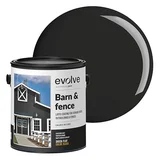
EVOLVE Barn & Fence Paint, Flat, 1 Gallon – $36.99
A 100% acrylic, water-based exterior formula built specifically for fences and outbuildings — the fast-dry, scratch-resistant type this guide recommends over a general-purpose interior/exterior can.
- Best for: repainting an old or weathered wood fence in one flat, uniform color
- Why we picked it: purpose-built fence formula, not a repurposed wall paint, with fast recoat time
- Main drawback: flat finish only — no satin or gloss option in this line
As an Amazon Associate we earn from qualifying purchases.
Do You Need to Prime a Wood Fence Before Painting?
Yes — bare, previously stained, or repaired wood needs an exterior wood primer before painting a fence. Primer blocks tannins in cedar and redwood from bleeding through as brown or pink stains, seals knots so resin doesn’t bleed through the topcoat, and gives the paint film a uniform surface to bond to.
Standard latex primer does not reliably stop tannin bleed on its own. A stain-blocking, shellac-based or oil-based primer spot-coated over knots — and over the full board on cedar or redwood — is what actually blocks the tannins. A plain latex primer alone still lets brownish streaks bleed through the topcoat within a few weeks of the first hot, humid stretch after painting.
Skip priming only when the paint is labeled “self-priming,” and only over previously painted wood that’s still in sound condition. Bare wood, and any board where old paint was fully stripped, still needs a dedicated primer coat no matter what the topcoat label promises.
How Do You Paint a Wood Fence Step by Step?
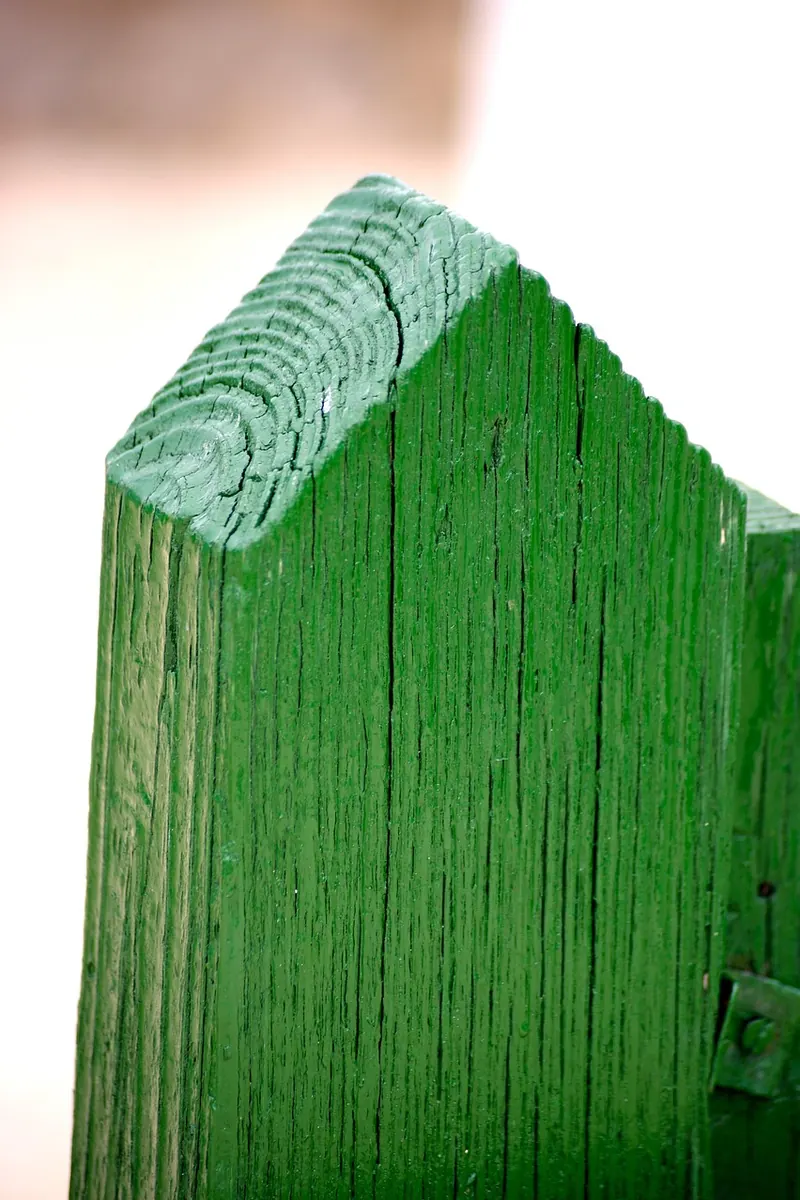
Painting a wood fence takes five steps: wash it and let it dry fully, scrape and sand any failing paint or rough grain, spot-prime bare wood and repairs, apply two thin coats of exterior acrylic latex, and let each coat dry per label time before recoating.
- Wash and dry the fence. Pressure-wash at a wide fan pattern to clear dirt, mildew, and loose fibers, then let the wood dry fully before doing anything else — 24 to 48 hours in dry weather, longer in humid climates. Painting over damp wood traps moisture under the film and causes early blistering.
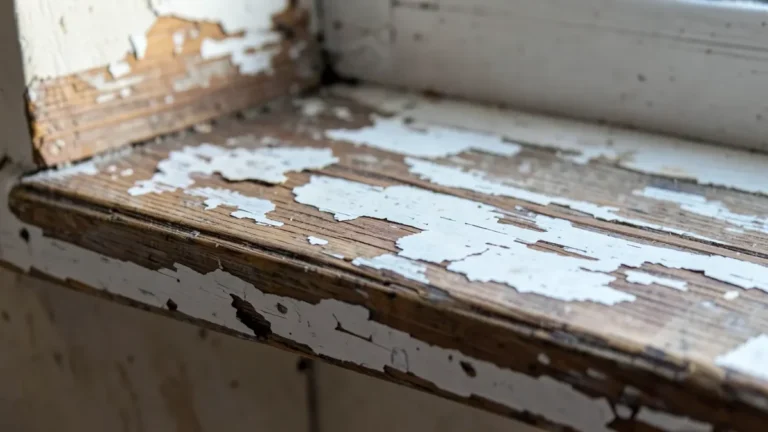
- Scrape, sand, and repair. Scrape flaking paint down to sound or bare wood, sand rough grain and old edges smooth, and fill splits or nail holes with exterior wood filler. Any paint you don’t remove now becomes the weak point the new coat fails at first.
- Mask and protect. Tape off hinges and hardware, and lay drop cloths or plastic sheeting over grass, patios, and anything nearby you don’t want overspray or drips on.
- Prime bare wood and repairs. Spot-prime any bare wood, knots, and filled repairs with an exterior primer, then let it cure per the label — commonly 1 to 4 hours — before the topcoat goes on.
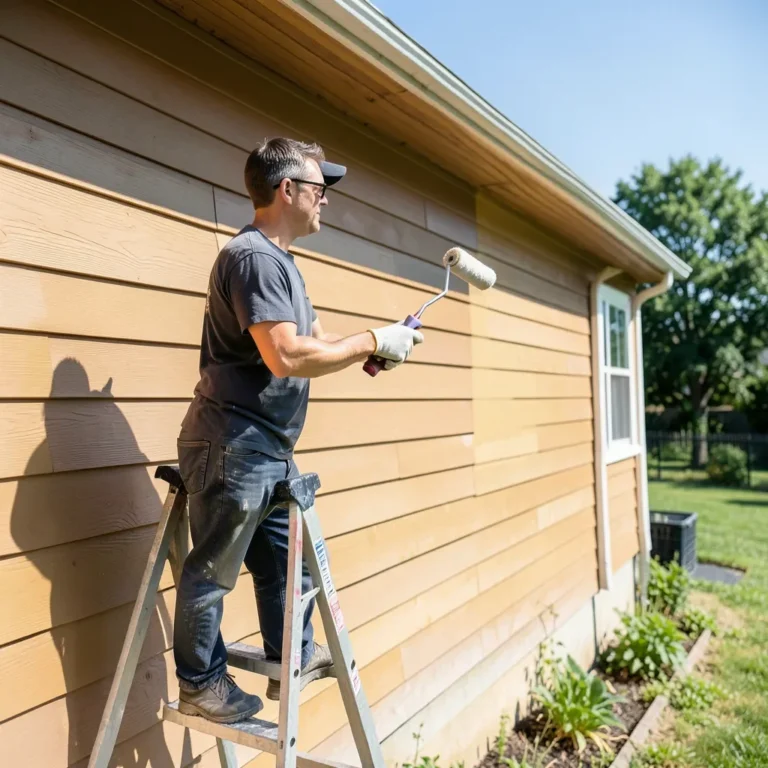
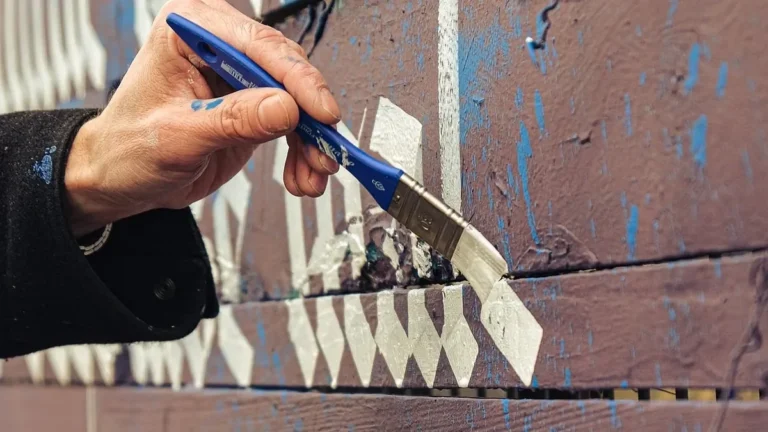
- Apply two coats of paint. Roll the flat panel faces and brush the corners, edges, and gaps a roller can’t reach, working top-down with vertical strokes on vertical boards and horizontal strokes on rails. Let the first coat dry fully — typically 4 to 6 hours in good weather, per Sherwin-Williams’ fence-painting guidance — before applying the second.
Paint in dry weather between 50°F and 85°F, and avoid direct afternoon sun on the section you’re working on. Paint applied in full sun that hot skins over before it can level out, which traps brush and roller marks in the finish.
How Long Does Paint Last on a Wood Fence?
Quality exterior acrylic paint lasts three to five years on a wood fence before it needs recoating, versus two to three years for semi-transparent stain. Paint fails by peeling and cracking rather than fading, and failure shows up first at board seams, end grain, and any spot that wasn’t primed.
Full sun exposure, ground contact at the bottom rail, and sprinkler overspray all shorten that window. A bottom rail that stays damp from lawn irrigation can start peeling in roughly half the time of the rest of the fence, since repeated wetting works against the paint film from underneath.
Cedar and redwood carry the highest peeling risk of any common fence wood, because their natural tannins keep working against the paint film for years, not just during the first cure. Pressure-treated pine and previously painted fences in sound condition hold paint the longest, since neither one fights the topcoat with its own natural chemistry.
How Much Does It Cost to Paint a Wood Fence?
Painting a 150-foot wood fence costs $450 to $1,200 in materials for a DIY job, based on 3 to 4 gallons of paint at $30 to $80 each plus primer. Hiring a professional typically runs $1,500 to $4,000 total, depending on fence height, board style, and how much prep the wood needs.
- Paint: 3–4 gallons at $30–$80 each = $90–$320
- Primer: 1–2 gallons at $25–$45 each = $25–$90
- Sundries: brushes, rollers, tape, drop cloths, wood filler = $40–$80
- Pressure washer rental (if you don’t own one): $40–$80 per day
Professional labor is what drives the total past DIY cost — most regional painting contractors price fence jobs by the linear foot, and a heavily weathered fence needing full scrape-and-sand prep costs more than one that’s just due for a fresh coat.
Frequently Asked Questions About Wood Fence Paint
Can you paint over an already-stained wood fence?
Not without extra prep. Stain soaks into the wood and leaves little surface texture for paint to grip, so a stained fence needs a full scrape-and-sand to bare wood in worn areas, plus a bonding or oil-based primer over the whole surface, before paint will hold long-term.
Brush, roller, or sprayer for painting a fence?
A roller covers flat panel faces fastest, a brush is needed for corners, edges, and gaps a roller can’t reach, and a sprayer is fastest for open picket or lattice-style fences but wastes 20 to 30% more paint to overspray and requires masking anything nearby.
Can you paint a pressure-treated wood fence right away?
No. Pressure-treated lumber needs to dry out first, which can take 60 to 90 days outdoors depending on humidity, or paint traps moisture under the film and blisters almost immediately. See our full guide on how to paint pressure-treated wood properly for the water-bead dryness test and full timeline.
Does painting a wood fence cause mildew?
No, paint itself doesn’t cause mildew, but a paint film that traps moisture against damp or poorly ventilated wood gives mildew more to feed on than stain does. Trimming vegetation back from the fence face and washing it annually prevents most mildew growth regardless of which finish is used.
Choosing the Right Finish for Your Fence
Paint and stain both protect a wood fence, but they solve different problems. Choose paint when a fence is old, mismatched, or already painted and needs one uniform new look; choose stain when the wood is new or in good shape and the grain is worth keeping visible. Whichever finish you choose, prep — washing, scraping, sanding, and priming bare or repaired wood — decides how long it lasts more than the brand on the can. If you’re finishing a fence you haven’t built yet, start with our guide to how to build a wood fence before any primer or paint goes on.
Sponsored / affiliate links. As an Amazon Associate I earn from qualifying purchases. I may earn additional commission from eligible campaigns.