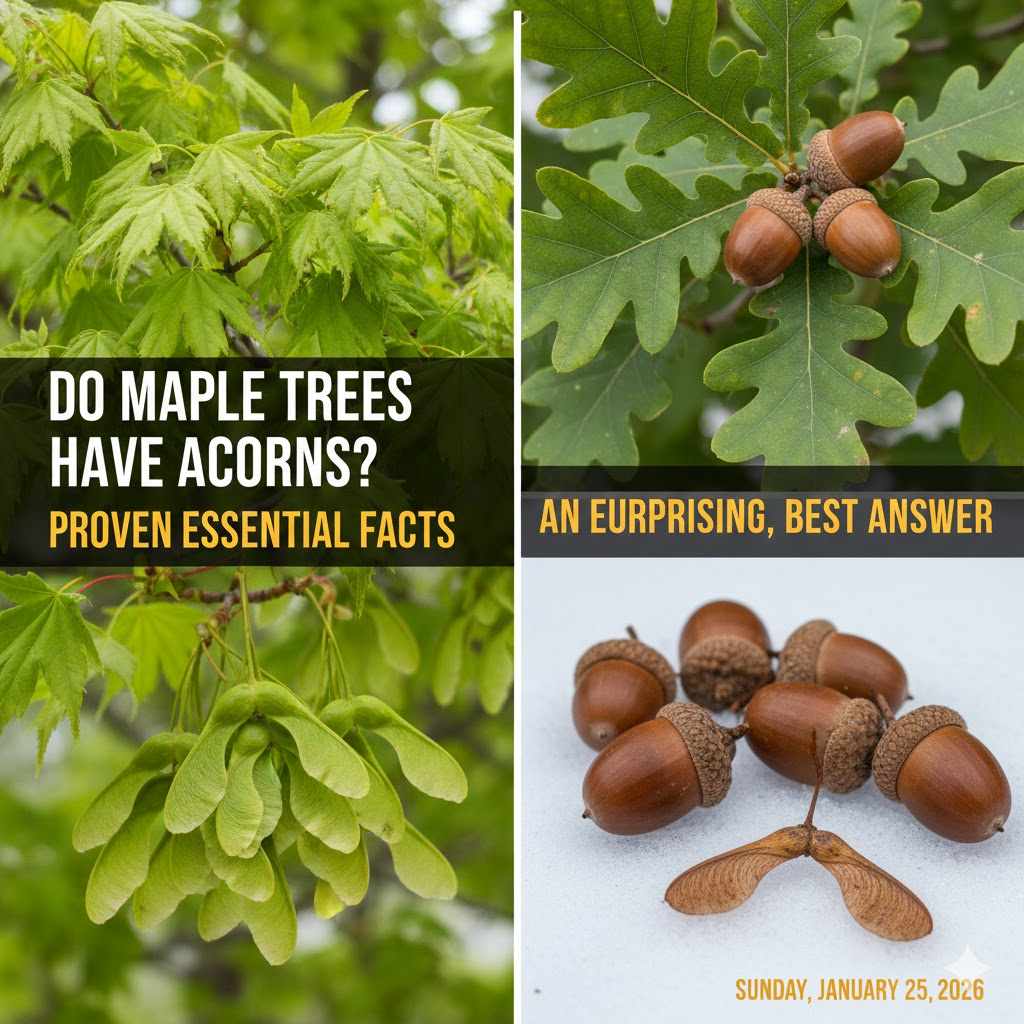
Do Maple Trees Have Acorns? An Essential Proven Fact
No, maple trees do not have acorns. Maple trees produce winged seeds called “samaras,” often known as “helicopters” or “whirlybirds.” Acorns are the nuts of oak trees. This is a fundamental difference that helps you easily identify these two very common and useful hardwood trees.
Hello, friends! Md Meraj here, your guide in the workshop and the woods. It’s a question I hear more often than you might think: “I found acorns under my maple tree, what’s going on?” It’s easy to get trees mixed up, especially when they grow side-by-side in our backyards and parks. Don’t worry, it’s a very common point of confusion. Getting it right is a great first step in understanding the world around you and the wood you might use for your next project.
Today, we’re going to clear this up once and for all. We’ll explore the simple ways to tell these wonderful trees apart, from their leaves to their seeds. By the end, you’ll be able to spot the difference with confidence. Let’s get started!
The Simple Answer: Maple Seeds vs. Oak Seeds
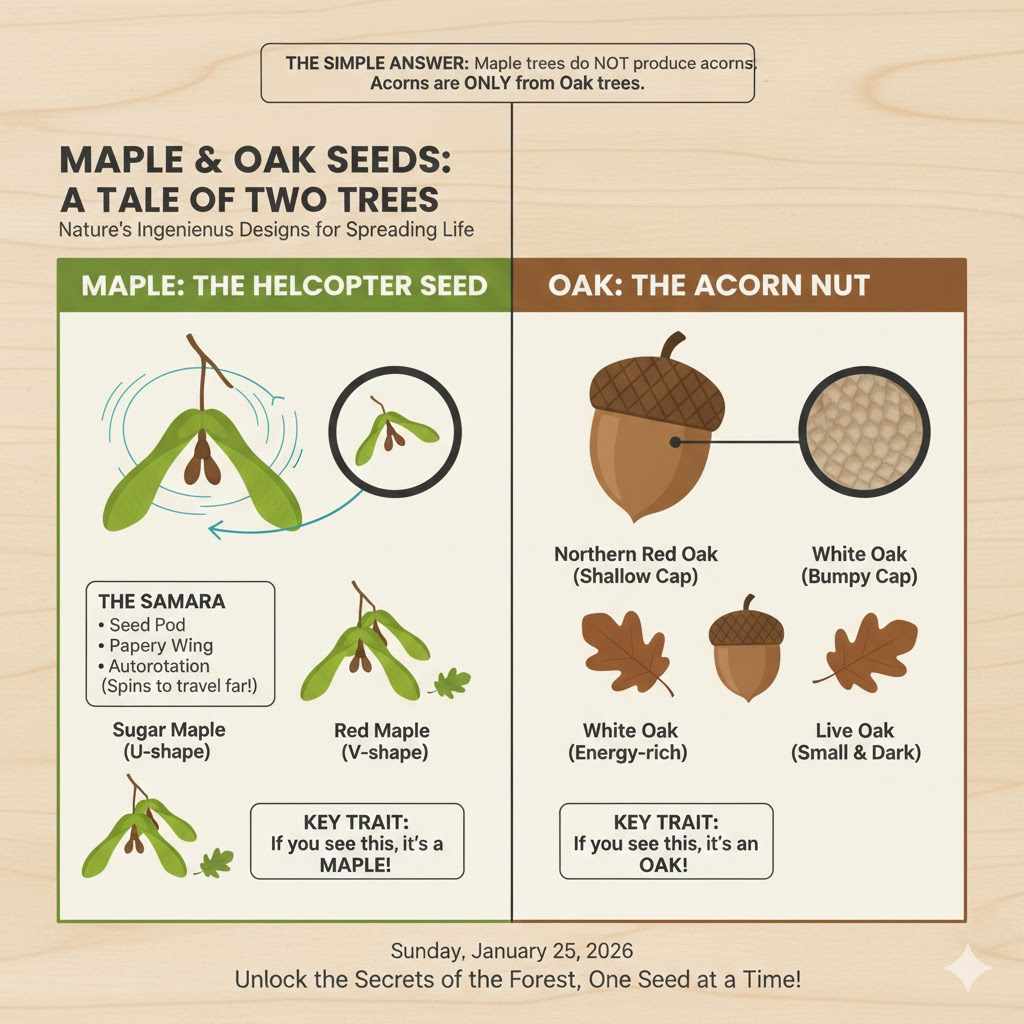
Let’s put the big question to rest right away. Maple trees do not produce acorns. Acorns are exclusively the fruit of oak trees, which belong to the Quercus genus. It’s one of nature’s clearest distinctions. If you find an acorn, you are near an oak tree, guaranteed.
So, what do maple trees have? They produce a fascinating and easily recognizable seed called a samara. You’ve definitely seen them before. These are the winged seeds that spin down from the trees in late spring or fall, twirling like tiny helicopter blades. Kids (and many of us adults!) love to pick them up and watch them fly.
Knowing this one simple fact is the most powerful tool you have for telling a maple tree from an oak tree. It cuts through any confusion about leaf shape or bark texture. See a helicopter seed? It’s a maple. See an acorn? It’s an oak. It’s as simple as that.
A Closer Look at the Maple’s Samara (The “Helicopter”)
The samara is a marvel of natural engineering. It’s not just a seed; it’s a seed with a built-in glider. This clever design allows the maple tree to spread its seeds over a much wider area than if they just dropped straight to the ground.
Here’s what makes a samara special:
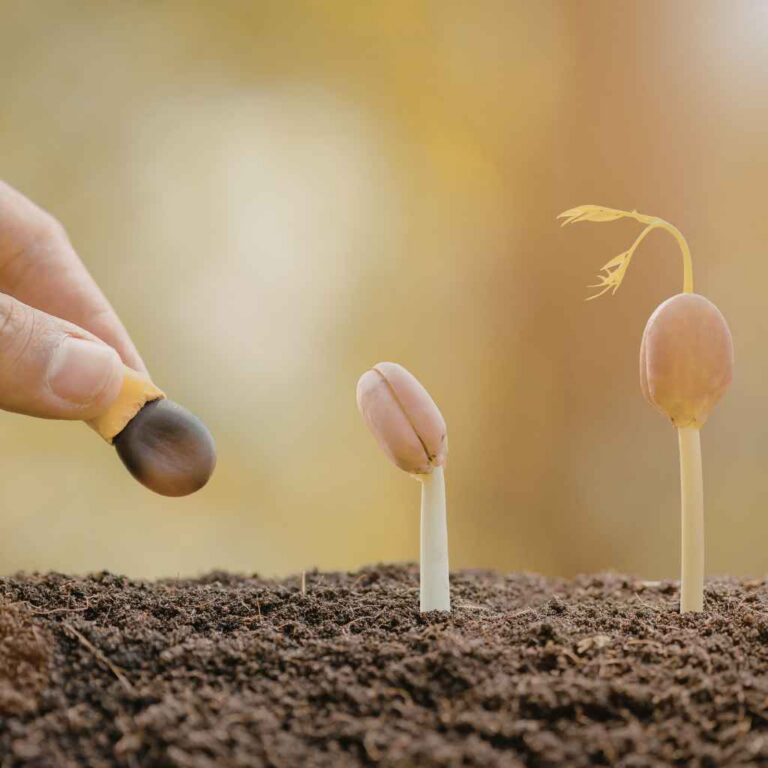
- The Seed: At the base of the wing, there’s a small, rounded pod that contains the actual maple seed.
- The Wing: A flat, papery wing extends from the seed pod. Its shape and weight are perfectly balanced to catch the wind.
- The Spin: When a samara falls, air flowing over the wing creates lift, causing it to autorotate, or spin. This spinning motion slows its descent, allowing a gentle breeze to carry it far away from the parent tree. This gives the new seedling a better chance to find sunlight and soil without competing with its parent.
Different maple species have slightly different samaras. Some are small, some are large, and the angle between the two wings in a pair can vary. For example, the samaras of a Sugar Maple form a U-shape, while those of a Red Maple form a narrower V-shape.
Understanding the Oak’s Acorn
The acorn is just as distinct as the samara. It’s a type of nut and serves a very different purpose. While the samara is built for travel, the acorn is packed with nutrients, designed to be a food source that kick-starts the new oak tree’s life.
An acorn consists of two main parts:
- The Nut: This is the main body of the acorn, containing the seed and a rich supply of food.
- The Cupule: This is the cap that sits on top of the nut. Its texture can be scaly or bumpy, and it’s a key feature for identifying different oak species.
Acorns play a vital role in the ecosystem. They are a primary food source for a huge variety of wildlife, including squirrels, chipmunks, deer, turkeys, and bears. This is actually part of the oak tree’s strategy. Animals like squirrels will gather many more acorns than they can eat and bury them for later. They often forget where they buried them, and these forgotten acorns sprout into new oak trees the following spring. You can learn more about this relationship from university resources like the Penn State Extension.
How to Tell Maple and Oak Trees Apart: A Practical Guide
Now that we know the key difference in their seeds, let’s build on that knowledge. Being able to identify these trees year-round is a great skill for any homeowner or woodworker. We can do this by looking at three main features: their leaves, their bark, and their branching pattern.
1. Look at the Leaves
The leaves are often the easiest way to identify a tree during the growing season.
Maple Leaves
Maple leaves are famous! One is even on the Canadian flag. Most maple leaves have a palmate shape, meaning they look like an open hand with fingers stretching out from the palm. They typically have 3 to 5 distinct, pointed lobes. The edges of the lobes are often toothed or serrated. Think of the classic, sharp-pointed Sugar Maple leaf.
Oak Leaves
Oak leaves are also lobed, but their shape is different. They are pinnately lobed, meaning the lobes are arranged along a central vein, like a feather. Some oak leaves, like those from the White Oak group, have rounded lobes. Others, from the Red Oak group, have pointed lobes with tiny bristles at the tips.
2. Check the Branching Pattern
This is a great trick for identifying trees in the winter when the leaves are gone. You just need to look at how the smaller branches and twigs grow from the larger branches.
Maple Branching
Maple trees have an opposite branching pattern. This means that two twigs or branches grow directly opposite each other from the same point on a larger branch. There’s a helpful mnemonic to remember trees with opposite branching: MAD Buck. It stands for Maple, Ash, Dogwood, and Buckeye. If you see opposite branching, it’s very likely one of those four.
Oak Branching
Oak trees have an alternate branching pattern. Twigs and branches are staggered, growing from different points along the main branch. They do not appear in pairs. Most deciduous trees have an alternate branching pattern, but knowing that oaks do is a key way to distinguish them from maples.
3. Examine the Bark
Bark can be tricky because it changes as a tree ages, but there are some general clues to look for.
Maple Bark
Young maple trees tend to have smooth, light gray bark. As they get older, the bark becomes rougher. Sugar Maples develop deep furrows and irregular ridges. Silver Maples develop long, shaggy plates that can peel off. Red Maples have rough, shaly bark.
Oak Bark
Oak bark is rugged and rough from a fairly young age. It typically has deep, blocky ridges and dark furrows. White Oak bark is often a lighter ashy gray and can look a bit shaggy, while Red Oak bark is darker with long, flat-topped ridges that look like ski tracks.
Quick Identification Table: Maple vs. Oak
Let’s put all of that information into an easy-to-read table. This is your go-to cheat sheet when you’re out in the yard!
| Feature | Maple Tree | Oak Tree |
|---|---|---|
| Seeds | Winged samaras (“helicopters” or “whirlybirds”). Always in pairs. | Acorns (a nut in a cap). Always single. |
| Leaves | Palmate shape (like a hand) with 3-5 pointed lobes. | Pinnate shape (like a feather) with rounded or pointed lobes. |
| Branching | Opposite (branches grow in pairs directly across from each other). | Alternate (branches are staggered along the main stem). |
| Bark | Smooth and gray when young. Becomes furrowed, shaggy, or scaly with age. | Rough, with deep, blocky ridges and furrows, even on younger trees. |
Why This Matters for Woodworkers and DIY Enthusiasts
Okay, so it’s fun to know your trees. But for those of us who love to build, this knowledge is incredibly practical. Identifying a tree correctly is the first step to understanding the properties of its wood. Maple and oak are two of the most popular and versatile hardwoods in North America, but they behave very differently.
Working with a piece of maple when you thought it was oak (or vice versa) can lead to unexpected challenges with cutting, joining, and finishing. Knowing what you have helps you plan your project for success.
Comparing Maple and Oak Wood
Let’s break down the key differences you’ll find in the workshop. Hard Maple (from Sugar Maples) and Red Oak are two of the most common species you’ll find at a lumberyard, so we’ll compare those.
| Wood Property | Hard Maple (Acer saccharum) | Red Oak (Quercus rubra) |
|---|---|---|
| Hardness (Janka Scale) | Very hard (1,450 lbf). Resists dents and scratches well. | Hard (1,290 lbf). Durable and strong. |
| Grain Pattern | Fine, straight, and uniform grain. Can have beautiful “figured” patterns like curly or bird’s-eye. | Prominent, open, and coarse grain. Often straight with large, visible pores. |
| Color | Creamy white to light golden brown sapwood. Heartwood is darker reddish-brown. | Light reddish-brown with a distinctive porous end-grain. White Oak is more golden-brown. |
| Staining & Finishing | Can be tricky to stain evenly due to its dense grain; prone to blotching. Looks stunning with a clear, natural finish like oil or lacquer. | Takes stain beautifully. The large pores soak up stain, highlighting the strong grain pattern. |
| Common Uses | Cutting boards, cabinets, flooring, workbenches, musical instruments, modern furniture. | Traditional furniture, flooring, cabinetry, trim, Mission and Arts & Crafts style pieces. |
As you can see, their properties make them suitable for different kinds of projects. If you want a smooth, modern look for a set of kitchen cabinets, maple’s fine grain is a perfect choice. If you’re building a classic, sturdy dining table where you want the wood grain to be a star feature, oak is your best friend. For more detailed specs on dozens of wood types, a resource like The Wood Database is a fantastic reference for any woodworker.
Embracing the Variety
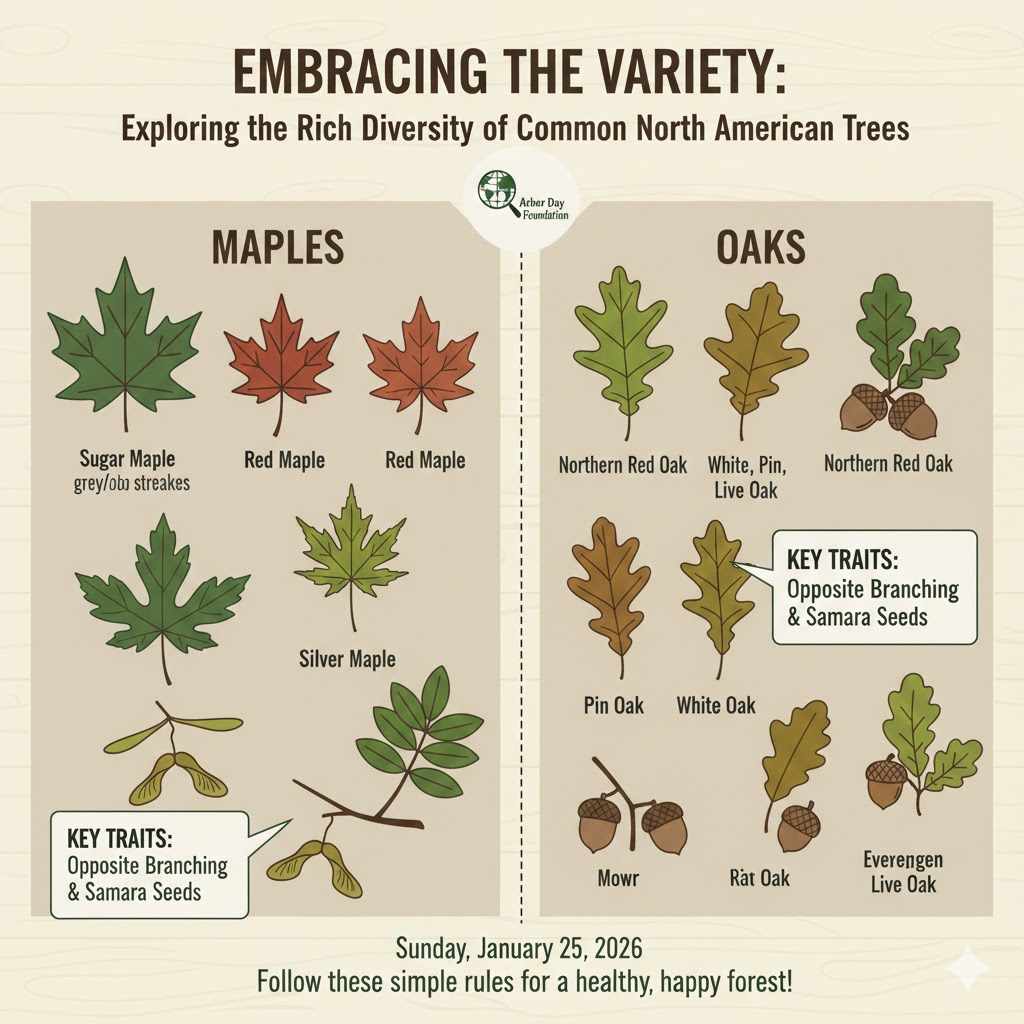
One of the joys of working with wood is discovering its incredible diversity. There isn’t just one type of maple or one type of oak. The Arbor Day Foundation is a great place to explore this diversity.
In North America alone, you might encounter:
- Common Maples: Sugar Maple, Red Maple, Silver Maple, Boxelder (which has compound leaves but still has classic samara seeds!).
- Common Oaks: Northern Red Oak, White Oak, Pin Oak, Bur Oak, and even evergreen Live Oaks in warmer climates.
But don’t feel overwhelmed! The fundamental rules we’ve covered today apply across the board. Every single one of those maples will have helicopter-like samaras and opposite branching. And every single one of those oaks will have acorns and alternate branching. Master these basics, and you’ll have the key to identifying them all.
Frequently Asked Questions (FAQ)
1. What are the helicopter seeds from maple trees officially called?
They are called samaras. A samara is a type of dry fruit with a flattened wing of papery tissue that helps it get carried by the wind.
2. Do any other trees have acorns besides oak trees?
No. Acorns are the nuts produced exclusively by trees in the oak (Quercus) genus. If you find an acorn, you can be 100% certain an oak tree is nearby.
3. Are maple seeds edible?
Yes, the small pea-like seed inside the samara is edible. When harvested in early spring while still green, they can be roasted or boiled. However, always be absolutely sure of your plant identification before eating anything from the wild.
4. How can I easily tell a maple leaf from an oak leaf at a glance?
Think of their general shape. Maple leaves are shaped like a hand with sharp points (palmate). Oak leaves are more oblong and shaped like a feather with rounded or bristle-tipped lobes on the sides (pinnate).
5. Why is my lawn covered in maple seeds every year?
Maple trees are prolific seed producers! It’s their strategy to ensure the survival of the species. A mature maple can produce thousands of samaras in a single season to increase the odds that at least a few will land in a good spot and germinate.
6. Is maple a good wood for making furniture?
Absolutely. Hard maple is incredibly strong, dense, and durable, making it an excellent choice for furniture that needs to withstand heavy use, like tables, chairs, and dressers. Its smooth, fine grain also gives it a clean, modern appearance.
7. What is the main difference between Red Oak and White Oak wood?
The biggest difference for a woodworker is porosity. Red Oak has open pores that allow air and water to pass through (you can blow bubbles through a short piece!). White Oak has closed pores (blocked by structures called tyloses), making it naturally water-resistant and ideal for outdoor furniture and boat building.
Conclusion: Knowledge You Can Build On
So, there you have it. The essential, proven fact: maple trees have samaras, and oak trees have acorns. It seems like a small piece of information, but it’s a key that unlocks so much more. It gives you the power to identify trees with confidence, to understand the ecosystem in your own backyard, and, most importantly for us, to make smarter choices in the workshop.
The next time you’re on a walk or planning a project, take a closer look at the trees and the wood around you. Notice the leaves, check the branching, and search for the seeds. This simple knowledge connects you more deeply to your craft and the natural world that provides our beautiful materials.
Keep asking questions, stay curious, and happy building!