Do Oak Trees Grow Fast Growth Rate Explained
Lots of people wonder, “Do Oak Trees Grow Fast?” It can be tricky to figure out because there are so many kinds of oak trees! Some grow quicker than others. This guide will make it super simple to learn all about it.
We will show you step by step. Get ready to see how your oak tree might grow!
How Fast Do Oak Trees Grow
Figuring out how fast oak trees grow is a common question for gardeners and nature lovers. Many people think oaks are slow, but this isn’t always true. The speed of growth depends on many things.
This section will explain what makes oak trees grow. We will look at the factors that help them get bigger and taller. You will learn what to expect from your own oak tree.
Understanding Oak Tree Growth Factors
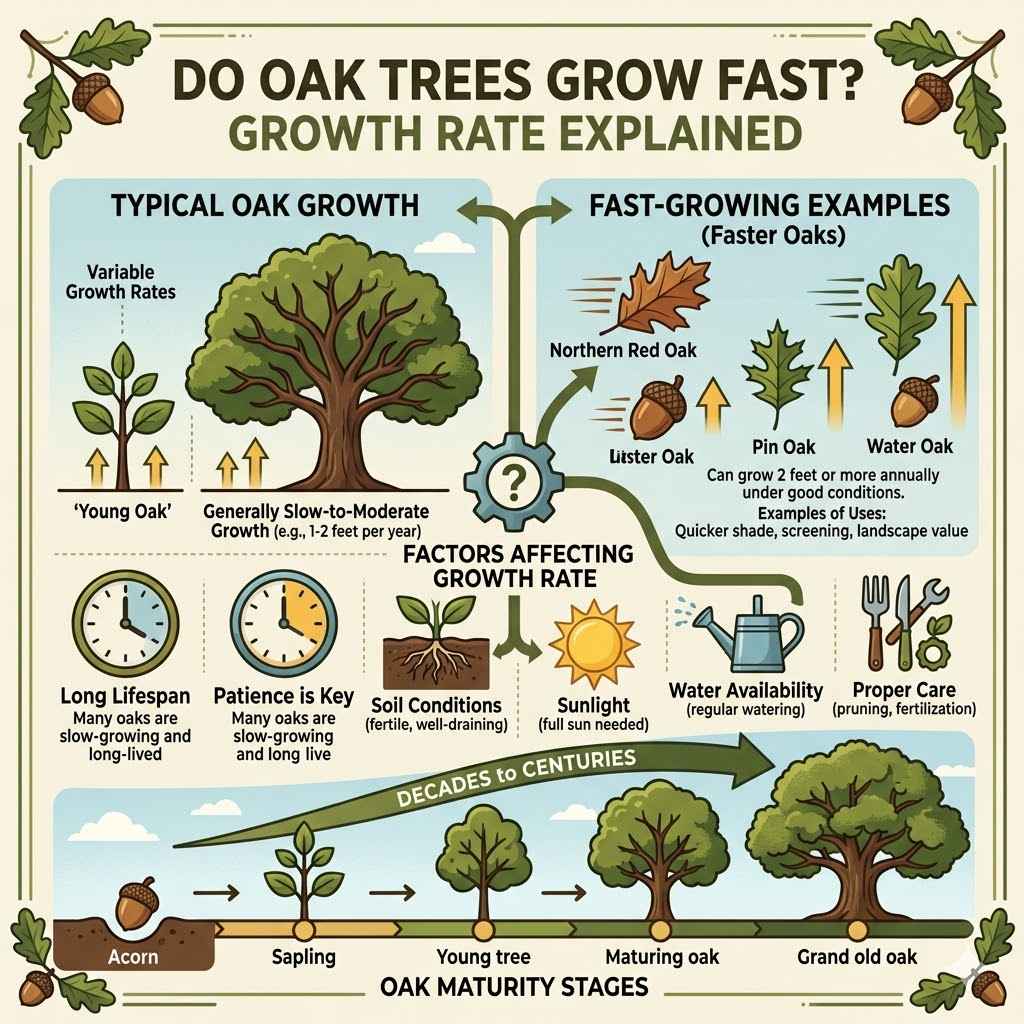
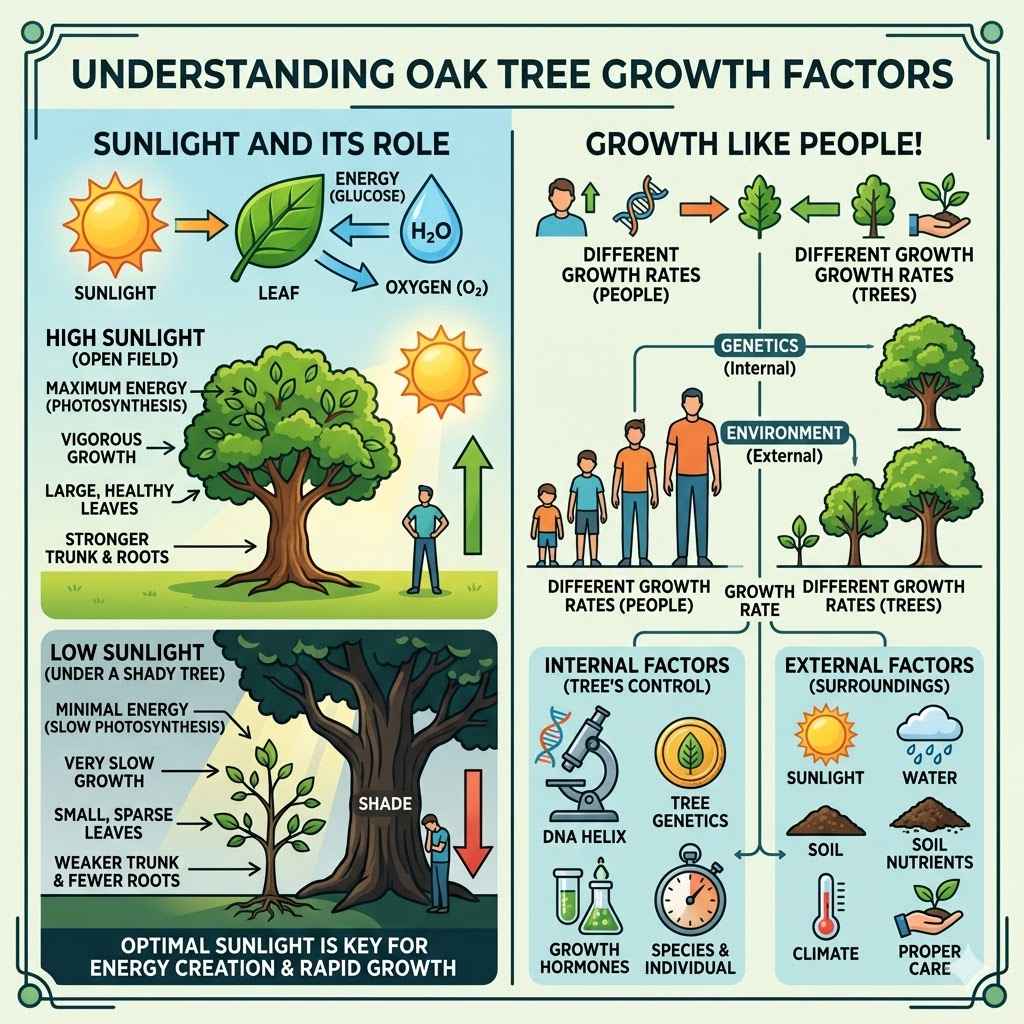
Many things affect how quickly an oak tree grows. It is like how people grow differently! Some things are in the tree’s control, and some are from its surroundings.
Sunlight and Its Role
Oak trees need plenty of sunlight to grow well. Sunlight is like food for plants. It helps them make energy through a process called photosynthesis.
The more sunlight an oak tree gets, the more energy it can create. This energy is used for growing new leaves, branches, and roots. Trees that don’t get enough sun will grow much slower.
Think about a young oak tree planted under a big, shady tree. It will likely grow very slowly, if at all. Its leaves might be small, and it might look weak.
On the other hand, an oak tree growing in an open field with lots of sun will probably grow much faster. It will have more leaves and a stronger trunk. This is why choosing the right spot for your oak tree is very important for its growth.
Water Needs for Healthy Growth
Water is also super important for oak trees. Just like we need water to live, trees do too. Water helps move nutrients from the soil up into the tree.
It also helps keep the tree firm and strong. When there is not enough water, the tree cannot grow as well. Its leaves might droop, and growth can stop.
During dry spells, oak trees can suffer. This can slow down their growth significantly. However, too much water can also be bad!
If the soil stays waterlogged, the tree’s roots can rot. This is because the roots need air to breathe. So, good drainage is key.
The ideal amount of water helps the tree thrive and grow at its best pace.
Soil Quality and Nutrients
The type of soil an oak tree grows in makes a big difference. Oak trees like soil that is healthy and full of good stuff. This good stuff is called nutrients.
Nutrients are like vitamins for the tree. They help it build strong wood and leaves. Soil that is sandy or has too much clay might not be as good.
Well-draining soil is best. It should have plenty of organic matter, like decomposed leaves and wood. This organic matter breaks down over time and releases nutrients that the tree can use.
If the soil is poor, the tree will not get enough food. This will make it grow much slower. Adding compost or mulch can help improve poor soil over time.
Climate and Temperature Effects
The weather where the oak tree lives plays a huge role. Oak trees grow best in areas with specific temperature ranges and seasons. They often need a period of cold in the winter to rest and prepare for spring growth.
Too much heat or not enough cold can affect them.
Extreme temperatures, whether very hot summers or very cold winters, can stress an oak tree. This stress can slow down its growth. For example, a young oak tree planted in an area that gets too hot might struggle to survive, let alone grow fast.
Understanding the climate is key to knowing how an oak tree will perform.
Average Oak Tree Growth Rates
So, how fast do oak trees grow on average? It is not a single number because there are so many kinds of oak trees! Each one has its own pace.
Some are quick growers, while others are quite slow. Knowing the type of oak helps us guess its speed.
Fast-Growing Oak Species
Some oak trees are known for growing relatively quickly. These might add a foot or more to their height each year. Examples include the Pin Oak or the Red Oak.
These trees are good choices if you want to see some quick shade or growth in your yard. They still need good conditions, but they have a natural tendency to speed up their growth compared to others.
These faster-growing oaks often have thinner bark when young and a more upright growth habit. They might reach a good size in 20-30 years, which is fast for a tree! When we talk about “fast,” we are comparing them to other oak varieties.
They are not as fast as a poplar tree, but they are quick for an oak.
Slow-Growing Oak Species
Other oak trees grow much slower. These might only add a few inches to their height each year. The White Oak is a good example.
These trees are known for their strength and long lives. They might take 50 years or more to reach a large size. They are slow and steady growers.
These slower oaks often have very strong, dense wood. They are built to last for hundreds of years. Their slow growth contributes to their hardiness and longevity.
Planting a slow-growing oak means you are planting a tree for future generations. You enjoy its beauty over a very long time.
Factors Influencing Individual Tree Growth
Even within the same type of oak, individual trees can grow at different speeds. A young oak tree planted in perfect soil with plenty of sun and water will grow much faster than another of the same kind planted in a poor spot. Age also matters.
Young trees tend to grow faster than older, mature trees.
Health is another big factor. A tree that is free from pests and diseases will grow better. Proper care, like occasional pruning and mulching, can also help.
It is like how a healthy person grows better than someone who is often sick. The individual tree’s journey affects its speed.
Common Oak Tree Types and Their Growth
Let’s look at some popular oak trees and how fast they tend to grow. This will give you a better idea of what to expect for specific types of oaks.
Red Oak (Quercus rubra)
The Northern Red Oak is a popular choice. It is known for its good fall color and relatively fast growth rate for an oak. These trees can grow 1 to 2 feet per year under good conditions.
They can reach heights of 60 to 80 feet and spread 60 to 80 feet wide.
Red oaks are adaptable and can grow in a variety of soils, but they prefer well-drained, slightly acidic soil. They also need full sun to grow at their best. Their strong, straight trunks make them valuable for timber and as shade trees.
White Oak (Quercus alba)
The White Oak is a majestic tree that grows much more slowly. It might only grow about 1 foot per year. However, they can live for hundreds of years, eventually reaching heights of 50 to 80 feet and spreading 50 to 80 feet wide.
They are known for their very strong and durable wood.
White oaks prefer moist, well-drained soil and full sun. They are a symbol of strength and longevity. Their slow and steady growth leads to a very dense and sturdy structure.
Pin Oak (Quercus palustris)
The Pin Oak is another relatively fast-growing oak, often reaching 1 to 2 feet per year. It is famous for its pyramidal shape and often planted as a shade tree. These trees can grow to be 60 to 70 feet tall with a spread of 30 to 40 feet.
They get their name from the small, pin-like twigs that grow on their branches.
Pin oaks tolerate a wide range of soil conditions, including wet soils, which is why they are often planted near water. They need full sun to develop their best form. Their branches tend to droop slightly, giving them a distinctive look.
Bur Oak (Quercus macrocarpa)
The Bur Oak is a very hardy and adaptable oak tree. Its growth rate can be moderate, around 1 to 1.5 feet per year, but it is known for its toughness and longevity. It can reach heights of 70 to 80 feet and spread 70 to 80 feet wide.
It has large, distinctive acorns.
Bur oaks can tolerate drought, poor soils, and urban conditions. They prefer full sun and well-drained soil but are very forgiving. Their massive size and strength make them impressive landscape trees.
How to Help Your Oak Tree Grow Faster
If you have an oak tree and want to help it grow as well as it can, there are several things you can do. These steps focus on giving the tree the best possible environment and care.
Proper Planting Techniques
How you plant your oak tree is the first step to good growth. Make sure the planting hole is wide enough. It should be about two to three times the width of the root ball.
The depth should be just right, so the top of the root ball is level with the ground. Planting too deep can suffocate the roots and slow growth.
When you plant, gently loosen the roots if they are circling. This helps them spread out into the new soil. Do not pack the soil too tightly around the roots.
Leave it a little loose so water and air can get in. Avoid adding fertilizer directly into the planting hole, as it can burn the roots of a young tree.
Consistent Watering and Mulching
Watering is critical, especially for young trees. For the first few years, make sure your oak tree gets consistent moisture. Water deeply, so the water reaches the roots.
Let the soil dry out slightly between waterings. Too much water can be as bad as too little.
Mulching is a great way to help. Put a layer of organic mulch, like wood chips or shredded bark, around the base of the tree. Keep the mulch a few inches away from the trunk to prevent rot.
Mulch helps keep the soil moist, keeps weeds down, and regulates soil temperature. This creates a better environment for root growth.
Soil Amendments and Fertilization
If your soil is not ideal, you might need to improve it. Adding compost or other organic matter can help a lot. This makes the soil richer in nutrients and improves drainage.
For very poor soil, a soil test can tell you what nutrients are missing. You can then add a balanced fertilizer designed for trees.
Fertilize sparingly. Too much fertilizer can actually harm the tree or encourage weak, fast growth. Generally, fertilizing in the spring before new growth begins is best.
Follow the product instructions carefully. Healthy soil provides the best foundation for growth.
Pest and Disease Management
Oak trees can be affected by various pests and diseases. If you notice signs like wilting leaves, spots, or insect damage, it is important to act. Identifying the problem early is key.
Healthy trees are less susceptible to pests and diseases, but even strong trees can be attacked.
Consult with a local arborist or garden center if you are unsure about a problem. They can help you identify the issue and suggest safe treatment options. Keeping your tree healthy means it can focus its energy on growing, not fighting off problems.
The Long-Term Perspective of Oak Tree Growth
When we ask “Do Oak Trees Grow Fast?”, it is easy to focus on immediate results. But oaks are trees meant for the long haul. Their true value often comes with time.
Lifespan and Maturity
Oak trees are known for their incredible lifespan. Many species can live for hundreds of years, some even over a thousand. This means they are planted for future generations.
A young oak tree today might be a giant landmark in 200 years. Their slow growth contributes to their strength and ability to withstand the test of time.
Reaching full maturity can take many decades. During this time, they provide habitat for wildlife and improve the environment. Their slow and steady approach to growth is a sign of their resilience.
They mature at a pace that builds immense strength and character.
Ecological Benefits Over Time
As oak trees grow, they provide immense ecological benefits. Their acorns feed many animals, from squirrels to deer. Their branches offer homes for birds and insects.
A mature oak tree can support an entire ecosystem. This is true even if it did not grow at a record-breaking speed.
They also improve air and water quality. They help prevent soil erosion and provide cooling shade. The impact of a healthy, mature oak tree on its environment is substantial.
This long-term contribution is a key part of their value.
Value as Landscape and Timber Trees
For landowners, oak trees offer both aesthetic and practical value. As landscape trees, their majestic presence enhances any property. Even a moderately fast-growing oak can provide significant shade within a decade.
This makes them a worthwhile investment for outdoor living spaces.
In forestry, oak wood is highly prized. It is strong, durable, and beautiful. It is used for furniture, flooring, and construction.
The time it takes for an oak to mature for timber is long, but the quality of the wood makes it very valuable. This long-term growth strategy pays off in high-quality products.
Do Oak Trees Grow Fast? Growth Rate Explained
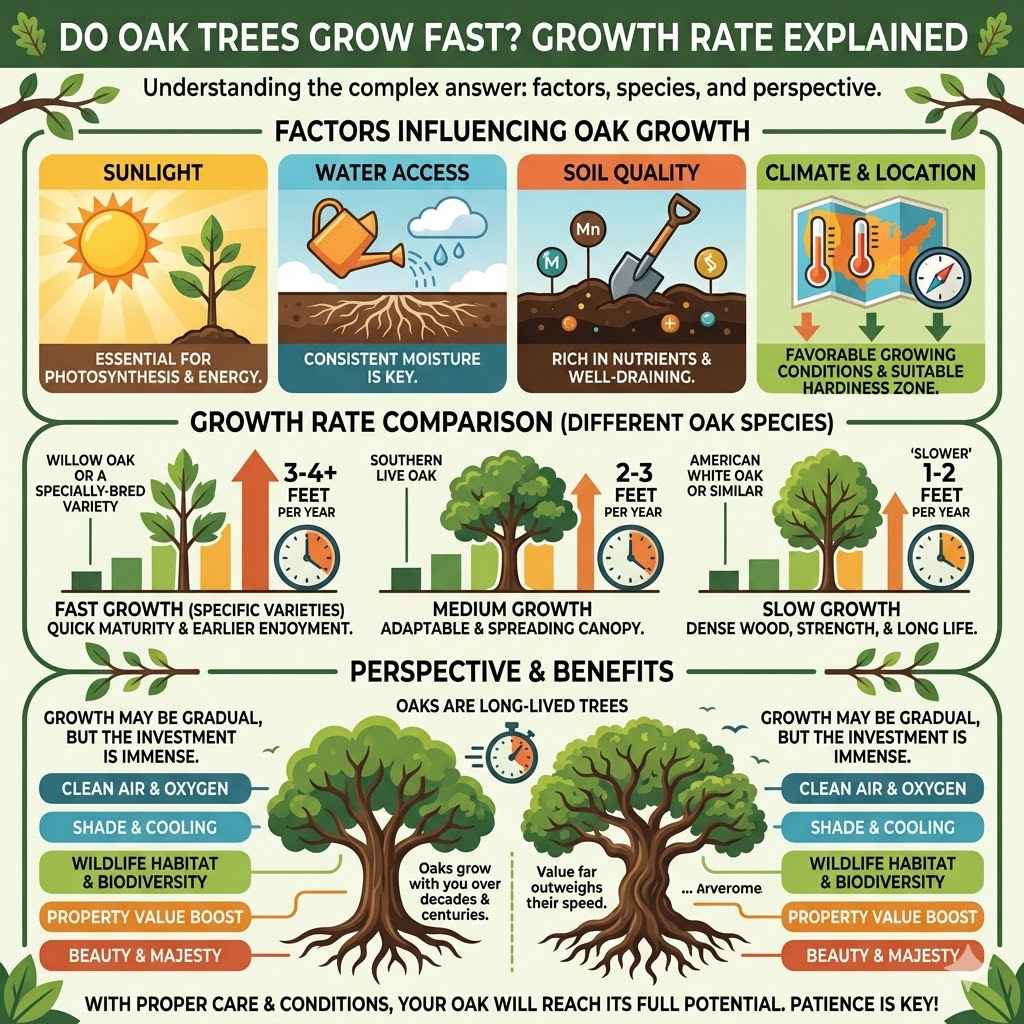
The question of whether oak trees grow fast is complex. This article has explored the many factors that influence oak tree growth. We’ve looked at how sunlight, water, soil, and climate play a role.
We also compared the growth rates of different oak species.
Remembering that oaks are long-lived trees with immense value helps put their growth speed into perspective. By providing the right conditions and care, you can help your oak tree reach its full potential. Enjoy watching your tree grow over the years!
Frequently Asked Questions
Question: Are there specific times of year when oak trees grow fastest?
Answer: Oak trees typically grow fastest during the spring and early summer. This is when temperatures are warming up, and there is plenty of sunlight and moisture. New leaves and shoots emerge, and the tree focuses its energy on expansion during these months.
Question: Can planting oak trees in containers affect their growth rate?
Answer: Yes, planting oak trees in containers can affect their growth rate. While it can protect young trees, the roots can become restricted in a pot. This restriction can slow down overall growth compared to planting them directly in the ground where roots have more space to spread.
Question: Do ornamental oak trees grow differently than shade oak trees?
Answer: The term “ornamental oak” is not common. Most oaks are considered landscape or shade trees. Growth rates are primarily determined by the specific oak species and its environment, rather than whether it’s labeled ornamental or for shade.
Question: How long does it typically take for an oak tree to produce acorns?
Answer: It can take quite a while for an oak tree to produce acorns, often 20 to 50 years or even longer, depending on the species. Some factors like adequate sunlight and good health can influence when acorn production begins.
Question: Is it okay to prune oak trees to encourage faster growth?
Answer: Pruning is generally done to shape the tree, remove dead or diseased branches, or improve structure, not to significantly speed up overall growth. Excessive pruning can stress a tree and actually slow its growth. Proper pruning helps maintain health, which indirectly supports good growth.
Summary
Do oak trees grow fast? It varies by species and conditions. Fast growers add over a foot yearly, while slow ones grow inches.
Good soil, sun, and water are key for all oaks. Oaks are long-lived, providing shade and habitat for many years. With the right care, your oak will grow strong and healthy.